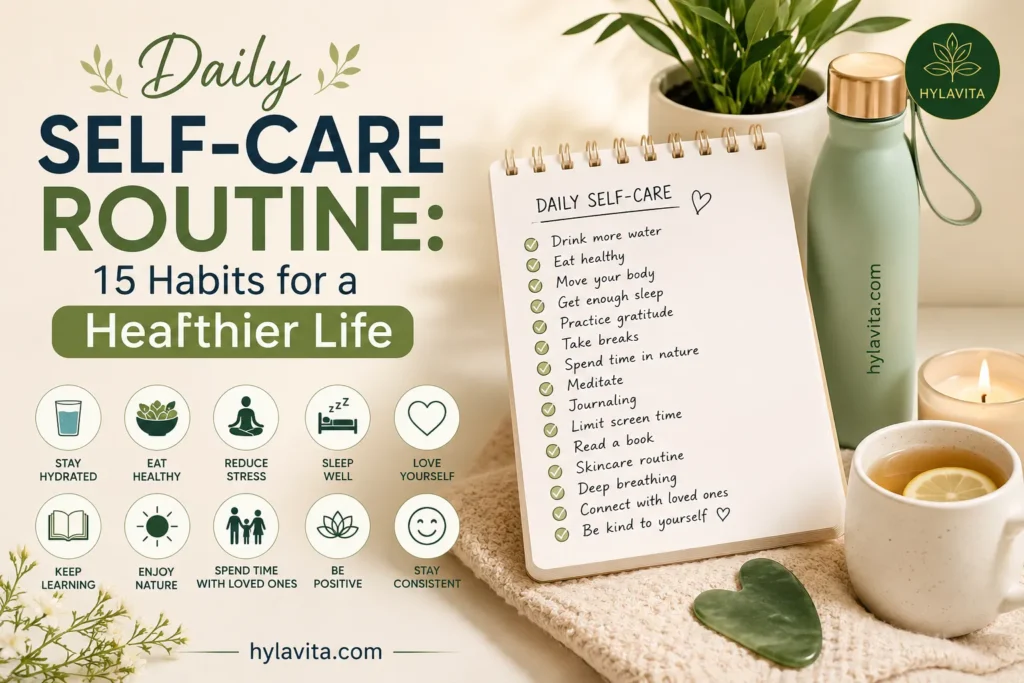
Disclaimer: This article is for general informational and educational purposes only and is not intended as medical, psychological, or professional health advice.
Why Daily Care Habits Matter
Your body and mind work like a car. Skip the maintenance, and things start to break down.
When you build daily care habits, you give yourself fuel to handle stress, focus better, and feel more in control. Moreover, small habits add up over time. A five-minute stretch or a glass of water may seem tiny, but repeated daily, it becomes a strong foundation for health.
Self-care habits also protect your mental health. Life brings deadlines, bills, and family responsibilities. Without a routine to reset, stress can pile up quietly until it becomes overwhelming. If you want a deeper dive into how stress affects the body, see our guide on managing everyday stress.
Morning Care Habits to Start Your Day Right
How you start your morning often sets the tone for the rest of your day.
1. Drink Water First Thing Your body loses water overnight through breathing and sweat. Drinking a glass of water as soon as you wake up helps rehydrate you and can improve focus. For more on daily hydration targets, check out our complete hydration guide.
2. Stretch or Move for 5-10 Minutes You do not need a full workout. A short stretch or a quick walk gets your blood flowing and wakes up your muscles.
3. Eat a Balanced Breakfast Skipping breakfast may leave you low on energy by mid-morning. A mix of protein, whole grains, and fruit keeps you fuller for longer.
4. Avoid Checking Your Phone Right Away Reaching for your phone first thing can flood your brain with notifications and stress before you even get out of bed. Instead, try giving yourself 15-20 phone-free minutes to ease into the day.
Healthy Daily Habits for Physical Wellness
Physical health is one of the biggest parts of any self-care routine.
5. Move Your Body Daily Exercise does not have to mean the gym. Walking, dancing, gardening, or cycling all count. Aim for movement most days of the week. Browse our beginner-friendly home workouts if the gym isn’t for you.
6. Eat Whole, Real Foods Try to fill your plate with vegetables, fruits, lean proteins, and whole grains. Processed foods are fine occasionally, but whole foods give your body better fuel.
7. Get Enough Sleep The CDC recommends that adults get at least 7 hours of sleep per night, and notes that people who consistently sleep less face higher risks of chronic health problems (CDC, Sleep and Sleep Disorders). Poor sleep affects mood, memory, and even your immune system. For tips on building a wind-down routine, see our better sleep checklist.
8. Take Care of Your Skin A simple skincare routine, like washing your face and using sunscreen, protects your skin from damage over time. Dermatologists at the Mayo Clinic recommend a broad-spectrum sunscreen with an SPF of 30 or higher, applied daily regardless of the weather (Mayo Clinic, sunscreen guidance). You do not need ten products; two or three good ones are enough.
Mental and Emotional Care Habits
Physical health matters, but your mind needs care too.
9. Practice Deep Breathing or Meditation Just five minutes of deep breathing can lower stress levels, and slow, controlled breathing has been shown to trigger the body’s relaxation response (American Heart Association, stress management). Apps and free videos online make this easy to try, even for beginners.
10. Write in a Journal Writing down your thoughts helps you process emotions instead of bottling them up. It does not have to be fancy; even three sentences a day can help.
11. Set Boundaries Saying no to things that drain you is a form of self-care. For example, you can decline extra work when you are already overwhelmed, without feeling guilty.
12. Limit Negative News and Social Media Constant exposure to bad news or comparing yourself to others online can hurt your mental health. Set a time limit for scrolling, and stick to it.
Social and Lifestyle Care Habits
Humans are social creatures. Isolation can quietly damage your well-being.
13. Stay Connected With Loved Ones A quick call or text to a friend or family member can lift your mood. Even small check-ins remind you that you are not alone.
14. Spend Time Outdoors Fresh air and sunlight can improve mood and energy. Even a short walk in a park counts as self-care.
15. Reflect on Your Day Before Bed Take a few minutes each night to think about what went well. This habit builds gratitude and helps you sleep with a calmer mind.
Advantages and Disadvantages of a Daily Self-Care Routine
No routine is perfect for everyone. Here is a balanced look at what you gain — and what to watch out for — before you commit.
Advantages
- Builds resilience over time. Small, repeated habits compound, making it easier to handle stress and setbacks.
- Low or no cost. Most of the habits above — water, stretching, journaling, walking — require no special equipment or subscriptions.
- Improves both body and mind. Unlike routines that focus only on fitness or only on mental health, this approach covers physical, emotional, and social wellness together.
- Flexible and personal. You can adapt the order, timing, and intensity of each habit to fit your schedule and personality.
- Supports long-term health. Habits like adequate sleep and regular movement are linked to lower risk of chronic conditions.
Disadvantages
- Requires consistency. The benefits build up slowly, so people looking for quick results may feel discouraged early on.
- Can feel overwhelming if rushed. Trying to adopt all 15 habits at once often backfires and leads to burnout or giving up.
- Not a substitute for medical or mental health care. Self-care can support well-being, but it will not resolve underlying medical conditions, chronic pain, or clinical mental health disorders.
- Progress is hard to measure. Unlike a fitness plan with clear metrics, self-care improvements (mood, focus, stress levels) are subjective and can be harder to track.
- Time commitment adds up. Even short habits, when stacked together, need to be scheduled into an already busy day.
How to Build a Self-Care Routine That Sticks
Starting all 15 habits at once can feel overwhelming, and that often leads to giving up. Instead, pick two or three habits to start.
For example, begin with drinking water in the morning and a short evening reflection. Once these feel automatic, add another habit. Small, steady steps work better than big changes you cannot keep up with. Our habit-tracking template can help you monitor progress without adding pressure.
However, remember that self-care habits look different for everyone. What works for your friend or a wellness influencer online may not fit your life. Adjust these tips to match your schedule, needs, and personality.
FAQ: Common Questions About Care Habits
What are the best daily care habits for beginners? Start simple. Drinking water, stretching for a few minutes, and getting enough sleep are easy healthy care habits that do not require much time or money.
How long does it take to build a self-care routine? It varies by person, but many people find that repeating a habit daily for a few weeks helps it start to feel natural. Consistency matters more than speed.
Can self-care habits improve mental health? Yes. Habits like journaling, deep breathing, and setting boundaries can reduce stress and support better emotional balance over time. However, self-care is not a replacement for professional help if you are struggling with your mental health.
Do I need to spend money for good self-care habits? No. Many of the most effective care habits, like drinking water, sleeping well, walking outside, and connecting with loved ones, cost nothing.
How many self-care habits should I start with? Most experts suggest starting with just two or three habits at a time. Trying to change everything at once often leads to burnout and giving up early
Conclusion
Building strong care habits does not require a complete life overhaul. Small, consistent actions, like drinking water in the morning, moving your body, and checking in with your emotions, add up to real change over time. Explore more of our wellness guides on HylaVita to keep building your routine. self-care habits?
No. Many of the most effective care habits, like drinking water, sleeping well, walking outside, and connecting with loved ones, cost nothing