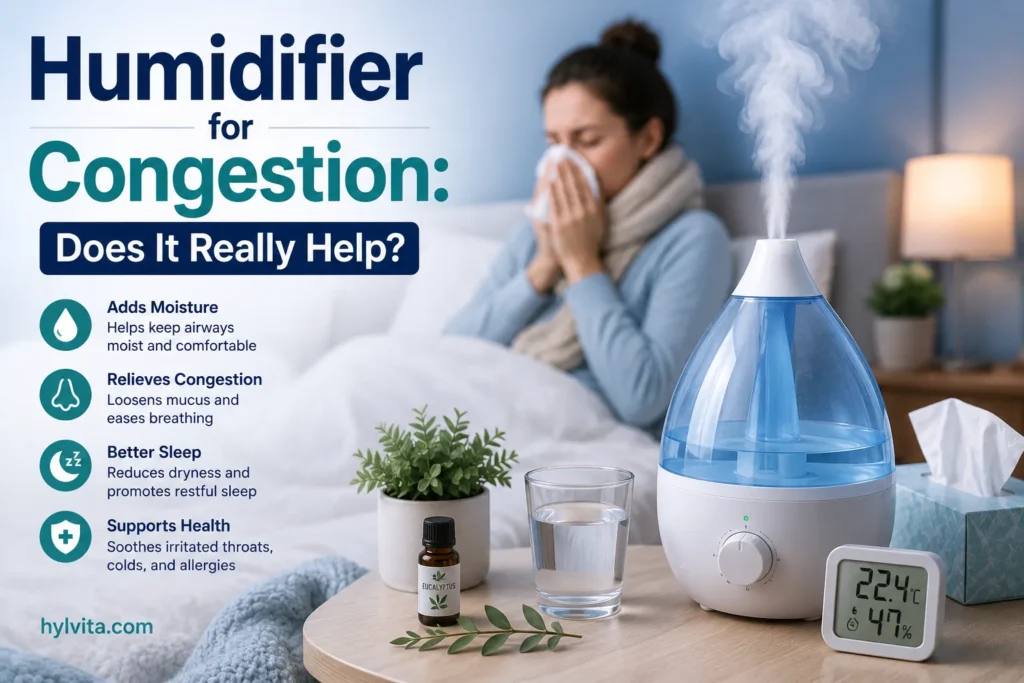
Waking up with a stuffy nose is no fun. You can’t breathe well, your head feels heavy, and even simple things like sleeping or talking feel harder.
If you’ve ever wondered whether a humidifier for congestion actually works, you’re not alone. Many people turn to humidifiers when a cold, allergy, or dry winter air leaves them stuffed up. But does adding moisture to the air really clear a blocked nose, or is it just a myth?
In this article, we’ll break down how humidifiers work, whether they truly help with congestion, and how to use one the right way for the best results.
What Causes Nasal Congestion?
Before we talk about humidifiers, it helps to understand why your nose gets stuffy in the first place.
Nasal congestion happens when the tissues and blood vessels inside your nose become swollen. This swelling is usually caused by extra mucus production or inflammation.
Common Causes of a Stuffy Nose
- Colds and flu – viral infections that irritate the nasal lining
- Allergies – reactions to pollen, dust, or pet dander
- Sinus infections – bacterial or viral buildup in the sinus cavities
- Dry air – especially common in winter or in heated indoor spaces
- Irritants – smoke, strong smells, or pollution
Dry air deserves special attention here. When the air lacks moisture, it can dry out your nasal passages. This makes mucus thicker and harder to clear, which often makes congestion feel worse.
Does a Humidifier Help With Congestion?
The short answer is yes, in most cases, a humidifier can help ease congestion. However, it works best as part of a bigger plan, not as a magic fix.
Here’s the simple science behind it. Dry air thickens the mucus in your nose and sinuses. Thick mucus is harder for your body to drain naturally. A humidifier adds moisture back into the air, which helps loosen that mucus.
Think of it like this: dry mucus is like old glue, sticky and hard to move. Moist air softens it, kind of like adding water to dried paint so it flows again.
The Mayo Clinic notes that dry indoor air can irritate the sinuses, and that a cool-mist humidifier can ease a stuffy nose by adding moisture back into the air. Similarly, the CDC lists using a clean humidifier or cool-mist vaporizer as one of the recommended ways to feel better during a cold. That said, a humidifier won’t cure the actual cause of congestion, like a virus or allergy. It simply makes breathing more comfortable while your body heals.
Humidifier Benefits for Congestion
Using a humidifier offers more than just moisture in the air. Here are the main benefits people notice.
Loosens Thick Mucus
Moist air helps thin out mucus, making it easier for your body to clear naturally. This can reduce that heavy, blocked feeling in your nose and chest.
Soothes Irritated Nasal Passages
Dry air can leave your nose feeling raw, especially if you’ve been blowing it a lot. A humidifier adds moisture that helps calm that irritation.
Eases Sinus Pressure
Moist air can help open up swollen sinus passages. This may reduce the pressure and headache-like feeling that often comes with congestion.
Improves Sleep Quality
Congestion often gets worse at night when you lie down. A humidifier running in the bedroom can make breathing easier while you sleep.
Supports Skin and Throat Comfort
As a bonus, humidifiers also help with dry skin, chapped lips, and a scratchy throat, common side effects of dry winter air. MedlinePlus confirms that humidified air can relieve some of the discomfort that comes with colds and the flu.
Benefits and Risks: Is a Humidifier Right for You?
Like most home remedies, a humidifier has upsides and downsides. It helps to know both before you plug one in.
The Benefits
- Loosens thick mucus so it drains more easily
- Soothes dry, irritated nasal passages and throat
- May ease sinus pressure and improve sleep
- Helps with dry skin and chapped lips in winter
The Risks
- Too much humidity can encourage mold and dust mite growth
- A dirty tank can spread bacteria or mold into the air you breathe
- Warm-mist units carry a small burn risk, especially for children
- It may not help much, or could even worsen symptoms, if your congestion comes purely from allergies to indoor allergens
In short, the benefits usually outweigh the risks when a humidifier is cleaned and used correctly. The risks mostly show up when the unit is neglected or humidity levels run too high.
How to Use a Humidifier for a Stuffy Nose the Right Way
A humidifier only helps if you use it correctly. Used the wrong way, it can actually cause problems, like mold growth or worsened allergies.
Choose the Right Type
There are two main types: cool mist and warm mist humidifiers. Cool mist humidifiers are generally recommended for congestion, especially for children, since warm mist carries a small risk of burns.
Keep Humidity Levels Balanced
Aim for indoor humidity between 30% and 50%. Too much moisture can encourage mold and dust mites, which can actually make congestion worse.
Clean It Regularly
Humidifiers can grow bacteria and mold if not cleaned often. Wash the tank every few days with mild soap and water, and let it dry fully between uses.
Use Distilled or Filtered Water
Tap water can contain minerals that build up in the tank and get released into the air. Distilled water helps prevent this buildup.
Place It at the Right Distance
Keep the humidifier a few feet away from your bed or seating area. This helps avoid dampness on nearby fabrics or furniture.
Best Humidifier for Nasal Congestion: What to Look For
Not all humidifiers are built the same. If you’re shopping for one specifically to ease congestion, here’s what to consider.
Size of the Room
Match the humidifier’s coverage area to the size of your room. A small unit won’t do much in a large bedroom or living room.
Easy-to-Clean Design
Look for a humidifier with a wide opening and removable parts. This makes regular cleaning much easier, which matters for hygiene.
Adjustable Mist Settings
A humidifier with adjustable settings lets you control humidity levels more precisely, which helps avoid over-humidifying the room.
Built-In Humidistat
Some models include a humidistat, a sensor that tracks humidity and automatically adjusts output. This takes the guesswork out of maintaining the right moisture level.
Since product models and prices change often, it’s best to check current reviews and ratings from trusted retailers or health sites before buying. If you like comparing home and health-related gadgets side by side,hylavita.com also reviews everyday tools and products that might be useful for your home setup.
When a Humidifier Might Not Be Enough
While a humidifier can ease congestion, it’s not a cure-all. It’s worth knowing when to seek other options.
- If congestion lasts more than 10 days, it could be a sign of a sinus infection
- If you have a high fever alongside congestion, see a doctor
- If symptoms worsen despite home care, medical advice is a good next step
- If you have asthma or a lung condition, Mayo Clinic advises keeping the unit clean and monitoring humidity closely, since excess moisture or a poorly maintained humidifier can sometimes affect breathing
A humidifier works well alongside other remedies like saline sprays, steam inhalation, staying hydrated, and rest. It’s one tool in a bigger toolbox, not a standalone treatment.
FAQ: Humidifier for Congestion
Does a humidifier help with a stuffy nose at night?
Yes, many people find relief using a humidifier at night since congestion often worsens when lying down. The added moisture helps loosen mucus and makes breathing more comfortable while sleeping.
How long should I run a humidifier for congestion?
Running it for several hours, especially at night while you sleep, is usually enough. Some people keep it running throughout the day during peak cold or allergy season, as long as humidity stays balanced.
Can a humidifier make congestion worse?
Yes, if humidity gets too high or the humidifier isn’t cleaned properly. Too much moisture can trigger mold growth and dust mites, which can worsen allergy-related congestion.
Is cool mist or warm mist better for congestion?
Cool mist is generally recommended, especially for children, since it carries less risk and is easier to maintain safely. Both types can help with congestion when used correctly.
Can I use a humidifier and a decongestant together?
Yes, using both is generally safe and can work well together. However, it’s best to check with a doctor or pharmacist, especially if you’re using medication regularly or have other health conditions.
Conclusion
So, does a humidifier help with congestion? In most cases, yes. It won’t cure a cold or allergy, but it can ease dryness, loosen mucus, and make breathing more comfortable while your body recovers.
The key is using it the right way: keep humidity levels balanced, clean the unit regularly, and use it alongside other home remedies for the best results. If congestion sticks around for a long time or comes with other serious symptoms, it’s always a good idea to check in with a doctor.
If you’ve been dealing with a stuffy nose lately, adding a humidifier to your routine might be a simple, natural way to breathe a little easier tonight.
Disclaimer:
This article is for general information only and is not medical advice. Talk to a doctor about your specific symptoms, especially if they are severe or don’t improve.