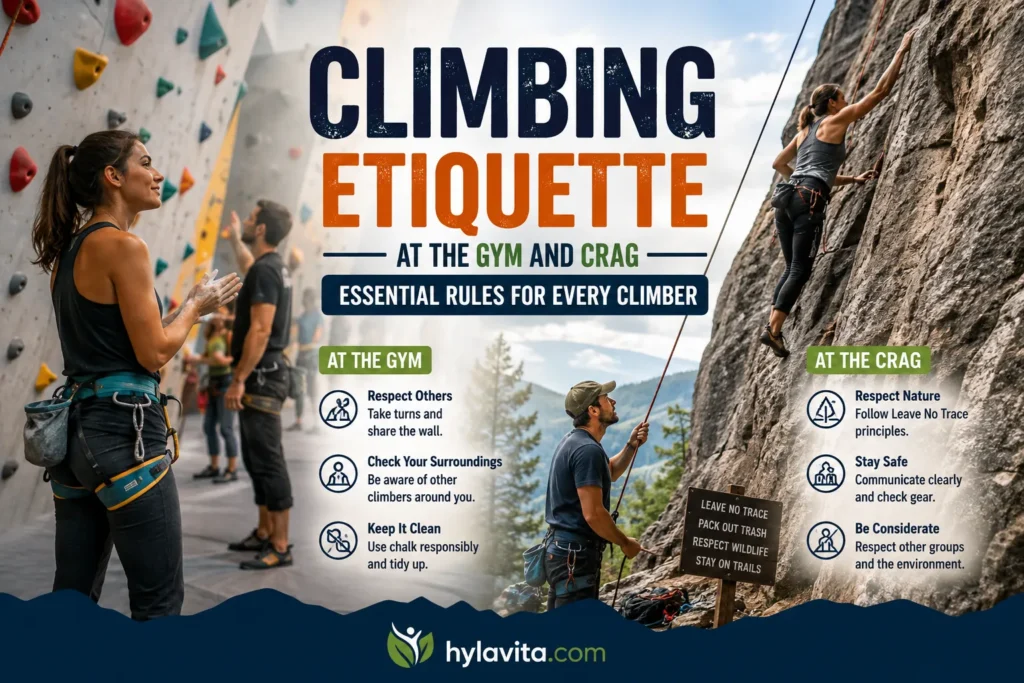
Safety Disclaimer: This article is for general educational purposes only and is not a substitute for formal climbing instruction, certified belay training, or professional guidance. Climbing, bouldering, and belaying carry inherent risks of serious injury or death.
You just clipped into a route, and someone walks under your rope without looking up. It happens more than you’d think, and it’s one of the fastest ways to turn a fun climbing day into a stressful one.
Climbing etiquette at the gym and crag isn’t about being fancy or following unwritten “cool kid” rules. It’s about keeping everyone safe, keeping the vibe friendly, and making sure the walls and cliffs stay in good shape for the next person. Whether you’re new to bouldering or you’ve been trad climbing for years, a quick refresher never hurts.
In this guide, we’ll walk through the basics of climbing gym etiquette, outdoor manners, belay etiquette, and crag safety rules. By the end, you’ll know exactly how to act so you’re the climber people actually want to share a wall with.
Why Climbing Etiquette Actually Matters
Climbing is a shared space, whether that’s a gym with padded floors or a crag with real rock and real consequences. Good etiquette isn’t just politeness. It’s part of staying safe.
Think of it like driving on a highway. Rules exist so cars don’t crash into each other. Climbing has similar unwritten rules, and ignoring them can lead to dropped gear, hurt feelings, or worse, an actual accident.
Beginners sometimes feel embarrassed asking about etiquette, thinking everyone else already knows the “secret rules.” However, most experienced climbers were once beginners too, and most are happy to explain things if you ask.
Gym Climbing vs. Outdoor Climbing: Advantages and Disadvantages
Etiquette looks different depending on where you climb. Before diving into the specific rules, it helps to understand what each environment offers — and where each one falls short.
Gym Climbing
Advantages:
- Controlled environment with padded floors, set routes, and staff on hand
- Easier to learn belay and spotting basics with lower consequences for small mistakes
- Consistent access regardless of weather or season
- Built-in community, making it easy to find partners and ask questions
Disadvantages:
- Can get crowded, which increases waiting times and fall-zone risks
- Routes are reset regularly, so you don’t build long-term familiarity with a single line
- Doesn’t fully prepare you for outdoor variables like loose rock or route-finding
- Etiquette mistakes (hogging a route, standing in a fall zone) affect more people at once due to close quarters
Outdoor Climbing
Advantages:
- Real rock, natural movement, and terrain that gyms can’t replicate
- Fewer people at most crags, so less waiting and more space
- Builds skills gyms don’t teach, like anchor building, route-finding, and weather judgment
- Deeper connection to the climbing community and the outdoors
Disadvantages:
- Real consequences for mistakes: loose rock, unpredictable falls, remote locations
- Weather, wildlife, and seasonal closures can cancel or complicate plans
- Requires more gear, more judgment, and more self-sufficiency
- Environmental impact is a real concern; poor etiquette can damage trails, vegetation, and wildlife habitat
Most climbers end up doing both, using the gym to build technique and fitness, then applying it outdoors with extra caution. Neither environment is “better” outright — they just carry different trade-offs.
Climbing Gym Etiquette Every Beginner Should Know
Gyms are usually where people start climbing, so this is a good place to build good habits early.
Sharing Routes and Boulder Problems
Only one climber should be on a route at a time. If someone is already climbing, wait your turn instead of jumping on next to them.
For example, if a boulder problem is busy, stand back and let the group finish before you try it. It’s a small wait, but it avoids collisions and confusion.
Watch Where You Stand
Never stand directly under someone who is climbing or bouldering. Falling climbers and falling holds are both real risks.
This is called being in the “fall zone.” Gyms usually mark this with mats or floor lines, so pay attention to them.
Clean Up After Yourself
Chalk bags, shoes, and water bottles left in the middle of the floor are tripping hazards. Keep your gear against the wall or in a cubby.
Also, brush off excess chalk when you’re done with a hold if the gym allows it. It keeps the grips from getting slippery for the next climber.
Give Feedback Kindly
If you see someone climbing unsafely, it’s okay to say something, but do it kindly. A simple “hey, just wanted to check if you knew about X” goes a long way.
Belay Etiquette: The Most Important Rules
Belaying is where climbing etiquette overlaps directly with safety. A distracted belayer can cause serious injury, so this section deserves extra attention.
Never Take Your Eyes Off the Climber
Your one job as a belayer is to watch the person climbing and manage the rope. Texting, chatting with a friend, or looking away, even for a few seconds, is not worth the risk.
Always Do a Partner Check
Before anyone leaves the ground, check the knot, the harness buckle, and the belay device setup. This takes less than 30 seconds and catches most common mistakes.
Many gyms actually require this check before you’re allowed to climb. Treat it as standard practice everywhere, gym or crag.
Communicate Clearly
Use clear, simple commands like “climbing,” “climb on,” “take,” and “lower.” Confusing or mumbled commands are a leading cause of miscommunication accidents. REI’s guide to climbing communication is a solid reference if you want to standardize commands with a new partner.
If you’re climbing with someone new, agree on your commands before you start. Don’t assume they use the exact same words you do.
Communication breakdowns around lowering are a real and documented risk. The American Alpine Club’s incident reports, covered by REI, found a rise in lowering accidents tied to unclear or assumed communication between climber and belayer — a good reminder that “small talk” during a takeoff or lower isn’t harmless.
Don’t Belay if You’re Not Confident
If you haven’t belayed in a while or you’re unsure of a certain device, say so. It’s better to ask for a refresher than to guess with someone’s safety on the line. REI’s how-to-belay guide is a good refresher, though it’s not a substitute for hands-on instruction.
Climbing Rules and Etiquette for Bouldering Areas
Bouldering has its own culture, since there’s no rope involved but plenty of falling.
Spotting Basics
A spotter’s job isn’t to catch the climber’s full weight. Instead, they guide the fall so the climber lands safely on the pad and doesn’t hit their head or land awkwardly.
Pad Placement Outdoors
At outdoor bouldering areas, move your crash pads as the climber moves across the wall. A pad in the wrong spot doesn’t help much if the fall lands somewhere else.
Keep Noise and Excitement in Check
Celebrating a send is great, but be mindful of climbers working on nearby problems. Loud outbursts right next to someone mid-crux can throw off their focus.
Crag Safety Rules for Outdoor Climbing
Outdoor climbing adds real-world variables that gyms don’t have, like loose rock, weather, and wildlife. These crag safety rules help keep everyone protected.
Helmet Use
Helmets are strongly recommended at most outdoor crags, especially trad climbing, multi-pitch routes, or anywhere with loose rock overhead. Gym rules don’t usually apply outside, so don’t assume it’s optional just because you skip it indoors.
Rockfall Awareness
If you knock a rock loose, yell “rock!” loudly and immediately. This single word warning has prevented countless injuries over the years.
Sharing Routes Outdoors
If another party is already racking up gear at the base of a route, that route is generally considered “theirs” for the moment. Ask before hopping on a line someone else is clearly about to climb.
Respect Fixed Anchors and Gear
Don’t mess with bolts, anchors, or fixed gear left by other climbers unless you know exactly what you’re doing. These systems are often trusted with someone’s life.
Weather and Conditions
Check weather forecasts before heading out, since conditions can change fast at outdoor crags. Wet rock, for example, is significantly more dangerous and can also damage soft or sandstone-type rock.
Leave No Trace: Environmental Etiquette at the Crag
Climbing areas only stay open because climbers take care of them. This is a huge part of climbing safety etiquette that people often overlook. The nonprofit Leave No Trace Center for Outdoor Ethics publishes a detailed crag-specific guide covering staging, chalk use, and waste disposal that’s worth bookmarking before your next trip.
Pack Out What You Bring In
This includes tape, food wrappers, and even chalk balls. Nothing should be left behind at the base of a climb.
Stay on Marked Trails
Cutting new paths through vegetation damages the area and speeds up erosion. Stick to the trail even if it seems like a shortcut exists.
Keep Chalk Use Reasonable
Excessive chalk marks on holds are unsightly and can affect rock friction over time. Brush off tick marks when you’re done with a route if possible.
Respect Wildlife and Seasonal Closures
Some crags close during certain seasons to protect nesting birds or other wildlife. These closures are usually posted at the crag or through local climbing organizations, so it’s worth checking before a trip.
General Etiquette Tips for Every Climbing Environment
A few habits work well no matter where you’re climbing, gym or crag.
- Ask before offering unsolicited advice, since not everyone wants tips mid-climb.
- Don’t hog a route or boulder problem for too long if others are waiting.
- Keep music and phone calls to a minimum, especially outdoors.
- Introduce yourself if you’re sharing a small crag or wall section with strangers; it makes communication easier later.
- Say thank you to belayers, spotters, and anyone who helps you out. It’s a small thing, but it builds a friendlier climbing community.
Since climbing also puts real demand on your joints, grip, and shoulders, it pairs well with a basic strength and injury-prevention routine off the wall. If that’s an area you want to shore up, Hylavita covers general fitness and injury-prevention topics that complement a climbing habit.
FAQ: Climbing Etiquette at the Gym and Crag
What is the most important rule of climbing gym etiquette?
Always watch where you’re standing and never walk under someone who’s climbing or bouldering. This single habit prevents most gym-related close calls.
Do I really need a helmet at the crag?
For most outdoor climbing, yes, especially trad routes, multi-pitch climbs, or anywhere with loose rock above. Gym rules don’t apply outside, so it’s worth having one even if you’re not used to wearing it.
How do I politely ask to share a boulder problem or route?
Just ask directly, like “mind if we rotate in?” Most climbers are happy to share as long as everyone takes turns.
What should I do if I see unsafe belaying?
Speak up calmly and offer a friendly reminder rather than criticism. Something like “hey, just want to double check your knot” usually works well and isn’t confrontational.
Is bouldering etiquette different from rope climbing etiquette?
Some rules overlap, like waiting your turn and staying aware of others. However, bouldering adds specific needs like spotting and crash pad placement that rope climbing doesn’t really involve.
Conclusion
Climbing etiquette at the gym and crag really comes down to one idea: look out for the people around you. From belay checks to crag safety rules to simple things like not standing in someone’s fall zone, these habits keep climbing fun and safe for everyone.
You don’t need to memorize every rule perfectly overnight. Just stay aware, ask questions when you’re unsure, and adjust as you learn. That’s really all it takes to become the kind of climbing partner other people are glad to see at the wall.
If you’re heading out soon, take a few minutes to review your belay etiquette and pack the right gear. A little preparation goes a long way toward a safer, more enjoyable climb.