Medical Disclaimer: This article is for informational and educational purposes only and is not a substitute for professional medical advice, diagnosis, or treatment. Yoga is a physical activity that carries some risk of injury.
Do you feel stiff after sitting all day, but full yoga classes feel too intense? You are not alone.
Many people want a workout that calms the mind and loosens the body without leaving them exhausted. This is exactly where vin yoga comes in.
Vin yoga is the popular short name for vinyasa yoga, a style that links breath with movement in a smooth flow. It is gentle enough for beginners, yet flexible enough for advanced students to build strength and focus.
In this guide, you will learn what vin yoga really means, its key benefits and drawbacks, common poses, and how to start your first practice with confidence.
What Is Vin Yoga?
Vin yoga is short for vinyasa yoga, a style of yoga where you move from one pose to the next using your breath as a guide. Instead of holding a single pose for a long time, you keep flowing.
Think of it like a dance. Each inhale and exhale tells your body when to move. For example, you might raise your arms as you breathe in, then fold forward as you breathe out.
Where Vin Yoga Comes From
Vinyasa yoga grew out of older yoga traditions in India. It became especially popular through Ashtanga yoga, a structured style that links poses using set breathing patterns.
Over time, teachers began creating their own flowing sequences. This gave rise to the more flexible, modern-day vinyasa classes seen in gyms and studios today.
How Vin Yoga Differs From Other Yoga Styles
Vin yoga is not the same as yin yoga, even though the names sound similar. Yin yoga involves holding poses for several minutes to stretch deep connective tissue.
Vin yoga, on the other hand, keeps you moving. It is more active and heart-pumping. This makes it a great choice if you want a practice that still feels calming, but with more energy and movement involved. If you’re also working on everyday posture, our guide on improving posture through targeted stretching and strength work pairs well with a vinyasa practice.
Vin Yoga Benefits: Why People Love This Practice
Vin yoga benefits go beyond flexibility. Because it blends movement, breath, and focus, it supports both your body and your mind.
Physical Benefits
Regular practice can improve flexibility, muscle tone, and balance. Moving through poses builds strength in your core, arms, and legs over time.
It can also ease stiffness caused by sitting at a desk all day. Many students notice better posture after a few weeks of consistent practice.
Mental and Emotional Benefits
Because vin yoga links breath to movement, it naturally calms racing thoughts. This breath focus works a bit like a moving meditation.
Many practitioners say it helps lower stress and improve sleep quality. According to the U.S. National Center for Complementary and Integrative Health (NCCIH), research on yoga generally supports its use for improving fitness and relieving stress, though the agency notes that the strength of the evidence varies by health condition. However, results vary from person to person, so give your body time to adjust.
Who Benefits Most From Vin Yoga
This style suits a wide range of people. Beginners like it because classes are often adaptable. Busy professionals enjoy it as a quick way to release tension after work.
Even experienced yoga students use vin yoga to build strength and stamina before trying more advanced styles.
Advantages and Disadvantages of Vin Yoga
No style of exercise is right for everyone. Here’s a balanced look at what vin yoga does well, and where it may fall short.
Advantages
- Builds strength and cardiovascular fitness together. Because poses flow continuously, vin yoga raises your heart rate more than static styles like yin or restorative yoga.
- Improves flexibility and joint mobility over time. Regular flow work gradually lengthens muscles and improves range of motion.
- Supports stress reduction. The breath-to-movement rhythm functions as a moving meditation, which many practitioners find calming.
- Highly adaptable. Poses can be modified with blocks, straps, or bent knees, so the same flow can suit beginners and advanced students alike.
- No equipment required. A mat and a small patch of floor are enough to get started.
Disadvantages
- Faster pace can increase injury risk for beginners. Because you move quickly between poses, it’s easier to use incorrect form than in slower styles, especially without a teacher present.
- Less deep stretching than yin yoga. Since poses aren’t held for long, vin yoga does less to target deep connective tissue and fascia.
- Not ideal immediately post-injury. The continuous movement may not suit people recovering from certain joint, back, or muscle injuries without medical clearance.
- Class quality varies widely. Because “vinyasa” isn’t a strictly regulated term, pacing, difficulty, and teaching quality can differ a lot between studios and instructors.
- Can feel intimidating at first. The flow format assumes some familiarity with basic poses, which can be overwhelming for absolute beginners in a fast-paced group class.
Vin Yoga Poses for Beginners
You do not need to be flexible to start. Vin yoga poses are usually simple, and most classes build up slowly.
Standing Poses
Standing poses form the base of most vin yoga sequences.
- Mountain Pose (Tadasana): Stand tall with feet together, arms by your sides. This pose teaches you good posture and balance.
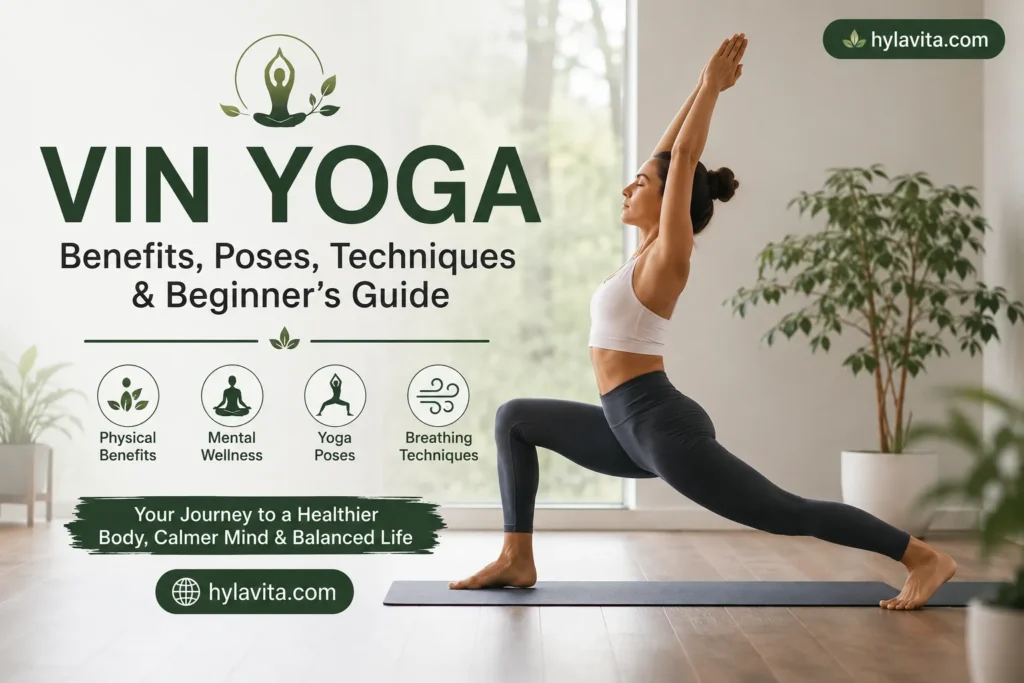
- Warrior I (Virabhadrasana I): Step one foot forward into a lunge, arms raised overhead. This builds leg strength and opens the chest.
- Downward-Facing Dog (Adho Mukha Svanasana): Form an upside-down V shape with your body. This stretches the back, shoulders, and hamstrings.
Seated and Floor Poses
These poses often come near the middle or end of a class, when the body has warmed up.
- Cat-Cow (Marjaryasana-Bitilasana): On hands and knees, arch and round your spine with each breath. This warms up the back gently.
- Child’s Pose (Balasana): Kneel and fold forward with arms stretched out. This is a resting pose used between more active poses.
- Seated Forward Fold (Paschimottanasana): Sit with legs extended and fold forward. This stretches the hamstrings and lower back.
Sun Salutations: The Heart of Vin Yoga
Sun salutations, or Surya Namaskar, are a set sequence of poses linked together with breath. They usually appear at the start of class to warm up the whole body.
A typical round moves from standing, to a forward fold, to a plank, then to downward-facing dog, and back to standing. Most classes repeat this sequence several times.
Vin Yoga Techniques to Get the Most Out of Your Practice
Good technique matters more than how deep you can stretch. Focusing on the basics will help you avoid injury and build a stronger practice.
Breath Control (Ujjayi Breathing)
Many vin yoga classes use a breathing style called ujjayi, sometimes called “ocean breath.” You breathe in and out through the nose while slightly tightening the back of the throat.
This creates a soft, wave-like sound. It helps you stay focused and paces your movement through each pose.
Linking Movement With Breath
The main rule in vin yoga is simple: one breath, one movement. For example, inhale as you lift your arms, and exhale as you fold forward.
This rhythm keeps the flow smooth. In short, if you find yourself rushing, slow down and let your breath set the pace instead.
Using Modifications Safely
Not every pose fits every body, and that is normal. Use blocks, straps, or bent knees to modify poses as needed.
For example, if you cannot touch your toes in a forward fold, simply bend your knees. Moreover, most teachers welcome questions about modifications, so do not hesitate to ask.
How to Start Your Vin Yoga Practice as a Beginner
Starting a new practice can feel intimidating, but it does not need to be complicated.
Setting Up Your Space
You only need a yoga mat and a bit of open floor space. A quiet room with enough space to stretch your arms and legs fully is enough.
Choosing a Class Level
Look for classes labeled “beginner” or “gentle vinyasa.” These usually move slower and explain poses in more detail than intermediate or advanced classes.
Building a Simple Routine
Start with two or three short sessions per week. Fifteen to twenty minutes is enough when you are just beginning.
As your strength and comfort grow, you can add more time or try longer classes. Consistency matters more than duration, especially in the first few weeks. The Mayo Clinic notes that yoga combines physical and mental disciplines that can help people relax and manage stress and anxiety, which is one reason it’s often recommended alongside other forms of exercise rather than as a replacement for them.
FAQs About Vin Yoga
Is Vin Yoga the Same as Vinyasa Yoga? Yes, vin yoga is simply a shortened, informal name for vinyasa yoga. Both terms describe the same flowing, breath-linked style of practice.
Is Vin Yoga Good for Beginners? Yes, many vin yoga classes are beginner-friendly, especially those labeled “gentle” or “slow flow.” However, it helps to tell your teacher you are new so they can suggest modifications.
How Often Should I Practice Vin Yoga? Two to three sessions per week is a good starting point for most people. You can increase frequency once your body adjusts to the movements.
What Should I Wear for Vin Yoga? Wear comfortable, stretchy clothing that allows a full range of motion. Avoid loose fabric that might get in the way during forward folds or inversions.
Can Vin Yoga Help With Weight Loss? Vin yoga can support weight management as part of a balanced lifestyle, since it raises your heart rate more than slower styles. That said, it works best when combined with a healthy diet and regular activity, not as a stand-alone solution.
Conclusion
Vin yoga offers a simple way to build strength, ease stress, and improve flexibility, one breath at a time. Like any exercise style, it comes with trade-offs — a faster pace than yin or restorative yoga means more room for benefit, but also more room for error if your form slips. From beginner-friendly poses to calming breathing techniques, this practice fits easily into a busy schedule when approached thoughtfully.
Whether you are completely new to yoga or looking to deepen an existing practice, vin yoga gives you room to grow at your own pace. If you have a pre-existing injury or health condition, check with your doctor before starting. Why not roll out your mat and try a short session today?