
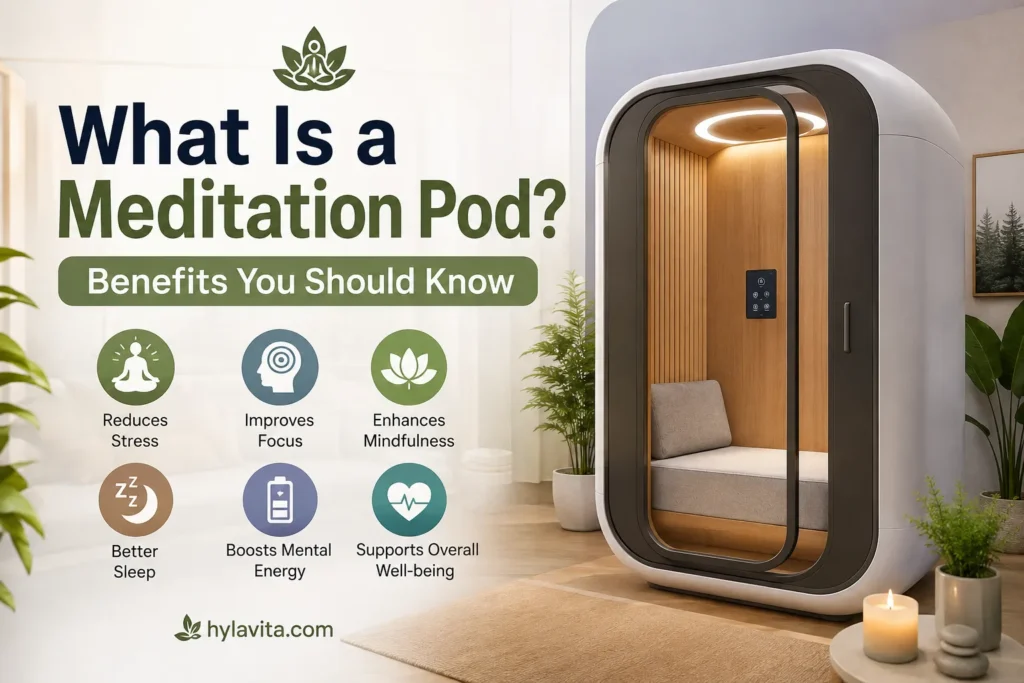
Picture a small, quiet room that blocks out noise, phone alerts, and nosy coworkers. That’s a meditation pod, and it might be the calmest spot in your entire building.
If you’ve ever tried to meditate in a busy house or a loud office, you know how hard it is to find real quiet. A meditation pod solves that problem by giving you a private, enclosed space built just for rest and focus.
In this article, you’ll learn what a meditation pod is, how it works, and why more homes and offices are adding one. We’ll also cover meditation pod benefits, the honest advantages and disadvantages, options for home and office use, and meditation pod therapy. Wherever possible, we’ve backed claims with sources like Mayo Clinic, the American Psychological Association, and Harvard Health Publishing rather than manufacturer marketing. By the end, you’ll know if a pod is right for you.
What Is a Meditation Pod?
A meditation pod is a small, enclosed space designed for meditation, breathing exercises, or simply sitting in silence. Think of it as a mini room within a room.
Most pods are soundproof or at least sound-dampening. Many also block out bright light and outside distractions. Some are as simple as a padded booth with a comfortable seat. Others come with dim lighting, calming sounds, and even guided meditation apps built in.
How a Meditation Pod Works
You step inside, close the door, and the outside world fades away. No ringing phones. No chatty coworkers. No barking dogs.
Inside, you might sit, lie down, or use a cushion on the floor. Many pods include ventilation systems so the air stays fresh even with the door shut. Some higher-end models add features like adjustable lighting, air purifiers, or built-in speakers for calming music.
Meditation Pods vs. Regular Meditation Rooms
A meditation room is usually a full-sized room set aside for quiet practice. A meditation pod is smaller and more compact. It’s often a standalone unit that can fit in a corner of an office, a garden, or even a bedroom.
In short, a meditation room needs space you may not have. A meditation pod is a practical alternative when square footage is limited.
Why Meditation Pods Are Becoming Popular
Stress at work and at home has pushed more people to look for quick ways to reset. Meditation pods fit that need well because they don’t require a whole room or a long commute to a yoga studio.
Companies are also catching on. Some workplaces now install pods so employees can take short mental breaks during the day. This isn’t just a trend for tech offices anymore — it’s showing up in hospitals, schools, and airports too, as a way to give people a moment of calm in busy environments.
The Rise of Wellness at Work
Employers are paying more attention to burnout and mental health. A meditation pod is one simple tool that supports this goal without needing a major renovation.
For example, an employee dealing with a stressful morning can step into a pod for ten minutes, breathe, and return to their desk with a clearer head. That short reset can make a real difference in focus and mood, and it pairs well with broader workplace stress management practices.
Meditation Pod Benefits You Should Know
Meditation pods offer more than just a quiet corner. Here are the main meditation pod benefits people notice.
Reduces Stress and Anxiety
Sitting in a calm, enclosed space for even a few minutes can lower stress levels. The quiet environment makes it easier to slow your breathing and settle your thoughts. According to the American Psychological Association, mindfulness meditation has been shown to change brain and biological stress responses in positive ways.
This matters because chronic stress affects both mental and physical health over time. A regular pause, even a short one, can help take the edge off a hard day. For more on building this into a routine, see our guide to stress management.
Improves Focus and Productivity
It’s hard to concentrate when your brain is overloaded. A short break in a meditation pod can clear mental clutter, similar to closing too many browser tabs on your computer.
Many people find they return to work with sharper focus after just ten to fifteen minutes of quiet time.
Supports Better Sleep Habits
Practicing calming breathing techniques in a pod, especially in the evening, can help signal to your body that it’s time to wind down. Harvard Health Publishing reports that mindfulness meditation may ease insomnia and improve sleep quality by triggering the body’s relaxation response. This is useful for people who struggle to relax before bed — see our sleep health resources for more tips.
Gives You Privacy in Shared Spaces
Not everyone has a quiet room at home or at work. A meditation pod offers a private space where you won’t be interrupted, even in a busy household or an open-plan office.
Encourages a Consistent Meditation Habit
Having a dedicated space makes it easier to build a routine. When meditation requires effort just to find a quiet spot, it’s easy to skip it. A pod removes that barrier and supports the kind of consistent self-care habit that tends to matter more than any single session.
Advantages and Disadvantages of Meditation Pods
Meditation pods aren’t a fit for everyone, and no wellness product is without trade-offs. Here’s a balanced look before you consider buying or installing one.
Advantages
- Creates a genuinely private, distraction-free space in homes or offices where quiet is otherwise hard to find.
- Can make it easier to build a consistent mindfulness or meditation habit, since the space is always ready to use.
- Portable and compact compared to renovating or setting aside a full meditation room.
- Supports short workplace breaks that may help with focus and stress recovery during the day.
- Works for more than meditation — many people also use pods for quiet calls, reading, or short rest breaks.
Disadvantages
- Manufactured pods can be expensive, and cost doesn’t guarantee a better meditation practice than a quiet corner with a cushion.
- Cheaper models may only dampen noise rather than fully block it, which can undercut the “private and silent” selling point.
- A pod takes up dedicated floor space, which isn’t realistic in every home or office layout.
- Sitting in an enclosed space can feel uncomfortable or even mildly claustrophobic for some people.
- A pod supports relaxation, but it doesn’t treat or cure anxiety, depression, or other mental health conditions on its own.
- The evidence behind meditation itself is solid, but there’s limited independent, product-specific research on manufactured “meditation pods” as a category — most of the benefit comes from the meditation practice, not the enclosure itself.
Meditation Pod for Home Use
Adding a meditation pod for home use doesn’t have to mean a big renovation. Compact models are designed to fit into a spare corner, home office, or even a section of a bedroom.
What to Look for in a Home Meditation Pod
Consider the size of your space first. Some pods are freestanding and can be moved if needed, while others are built into a wall or nook.
Ventilation and comfort matter too. Look for a pod with good airflow and enough room to sit or stretch out comfortably. If budget is a concern, some people build a simple version using soundproofing panels and a curtain, though this won’t offer the same level of privacy as a dedicated unit.
Who Benefits Most from a Home Pod
Parents who need a break from a noisy household, remote workers without a private office, and anyone living in a shared space can benefit from having a small, quiet retreat at home.
Meditation Pod for Office Use
A meditation pod for office use is becoming a common feature in modern workplaces, especially in open-plan offices where privacy is hard to find.
Benefits for Employers
Companies that offer wellness spaces often see better employee morale. A quiet pod gives staff a place to decompress, which may reduce burnout over time. It also shows employees that their mental health is taken seriously.
Benefits for Employees
Instead of stepping outside or sitting in a car for a break, employees can use a nearby pod. This saves time and keeps the break convenient, which makes it more likely people will actually use it.
Practical Considerations for Offices
Office pods are often designed to be soundproof from both directions, so meetings outside won’t disturb the person inside, and vice versa. Placement matters too. A pod tucked away from high-traffic areas works best.
Meditation Pod Therapy: What It Means
The term “meditation pod therapy” refers to using a pod as part of a broader mental wellness or stress-management practice. This isn’t formal medical therapy. Instead, it means using the pod space for guided breathing exercises, mindfulness sessions, or short meditation practices as a self-care tool.
Some wellness centers and therapy offices have started adding pods for clients to use before or after sessions. The idea is simple: a calm environment can make it easier to process emotions and lower stress before jumping back into daily life.
It’s worth noting that a meditation pod is a tool to support relaxation, not a replacement for professional mental health care. The Mayo Clinic notes that mindfulness practice can support overall well-being, but if you’re dealing with ongoing anxiety, depression, or other mental health concerns, talking to a licensed therapist or doctor is still important.
How to Choose the Right Meditation Pod
Not all pods are the same, so it helps to think through a few basics before buying one.
Size and Placement
Measure your available space first. A pod that’s too large for the room will feel cramped rather than calming.
Soundproofing Quality
If the main goal is escaping noise, check how well the pod blocks sound. Cheaper models may only reduce noise slightly rather than fully block it.
Comfort Features
Look for good ventilation, comfortable seating, and adjustable lighting. These small details make a big difference in how often you’ll actually use the pod.
Budget
Prices vary widely based on size, materials, and features. It’s a good idea to compare a few options and read recent reviews, since pricing and available models can change over time.
FAQ: Common Questions About Meditation Pods
Is a meditation pod worth the cost? For people who meditate regularly or need a quiet space in a busy home or office, a pod can be a worthwhile investment. If you’re new to meditation, it may help to try shorter sessions in a quiet room first before committing to a purchase.
Can I build a DIY meditation pod at home? Yes, some people create simple versions using soundproofing panels, curtains, or a small tent-like structure. It won’t offer the same soundproofing as a manufactured pod, but it can still create a calmer space.
How long should I meditate in a pod each day? There’s no fixed rule, but many people start with five to fifteen minutes a day, a range consistent with general beginner guidance from sources like Mayo Clinic. You can adjust the time based on your schedule and comfort level.
Are meditation pods only for meditation? No, many people also use them for quiet reading, short naps, phone calls, or simply taking a break from noise. The enclosed, private space works for any activity that needs focus or calm.
Do meditation pods actually reduce stress? A quiet, private space can help you relax and slow your breathing, which supports stress reduction. The American Psychological Association reports that mindfulness meditation practice specifically — not the pod itself — is what’s linked to measurable stress reduction. Results vary by person, and a pod works best when paired with consistent practice, not as a one-time fix.
Conclusion
A meditation pod is a simple idea with a real impact: a private, quiet space designed to help you slow down and reset. It comes with genuine advantages — privacy, consistency, and convenience — as well as real trade-offs, including cost, space requirements, and the fact that the enclosure itself isn’t a substitute for an actual meditation practice or professional mental health support.
Whether it’s a meditation pod for home, a meditation pod for office use, or part of a wider self-care and stress management routine, the core benefit stays the same — a few quiet minutes can help clear your head and ease stress.
If you’re dealing with a noisy home, a distracting office, or just want a place to breathe, a meditation pod might be worth exploring. Start small, even a few minutes a day, and see how it fits into your routine.
Medical Disclaimer: This article is for informational purposes only and does not offer medical or mental health advice, diagnosis, or treatment.