Your legs are shaking, your arms feel heavy, and you’re only 20 seconds into the hold. Sound familiar? That’s Warrior 2 pose for you.
This standing yoga posture looks simple. But it works your whole body at once — legs, hips, core, and shoulders. If you’ve ever wondered why yoga teachers love this pose so much, or how to hold it without your knee wobbling, you’re in the right place.
In this guide, we’ll break down the Warrior 2 pose in plain language. You’ll learn the correct steps, the alignment cues that actually matter, the honest pros and cons, and simple tips for beginners. By the end, you’ll understand why this one pose shows up in almost every yoga class — and when it might not be the right choice for you.
What Is Warrior 2 Pose?
Warrior 2, also called Virabhadrasana II in Sanskrit, is a standing yoga pose. It gets its name from a fierce warrior in Hindu mythology.
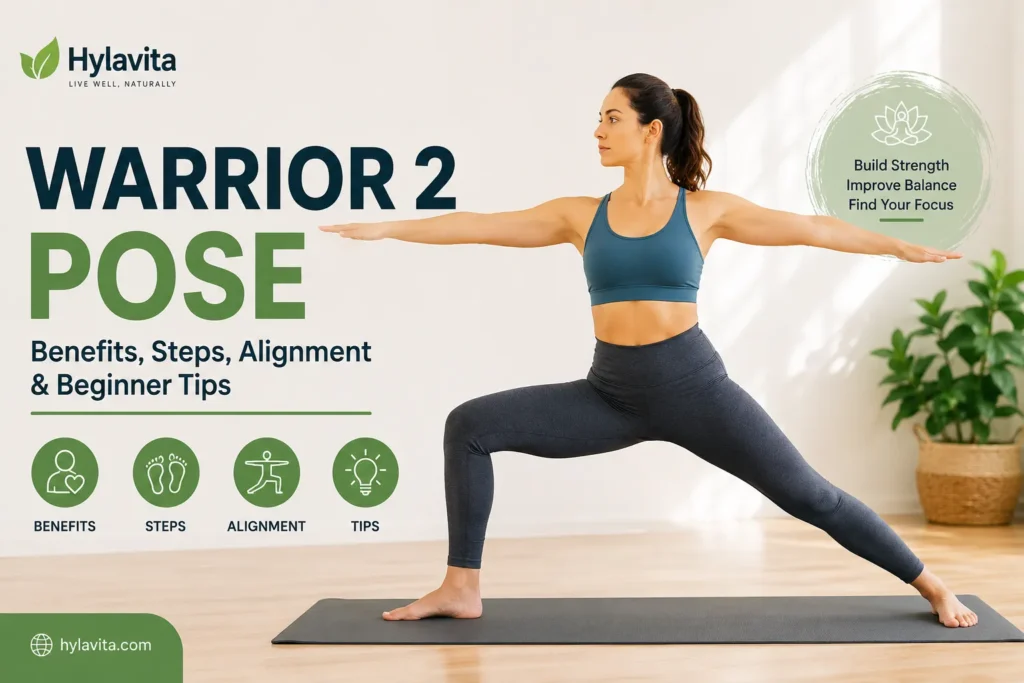
In this pose, you stand with your legs wide apart. One knee bends deeply while the other leg stays straight. Your arms stretch out to the sides, parallel to the floor, and your gaze looks past your front hand.
Unlike some yoga poses that focus on just stretching or just strength, Warrior 2 yoga pose does both. That’s part of why it’s so popular in classes for all levels, from beginner to advanced.
Where Warrior 2 Fits in a Yoga Practice
Warrior 2 usually shows up in the middle of a class, after your body has warmed up. It often connects to other poses like Extended Side Angle or Triangle Pose.
Teachers also use it as a building block. Once you understand Warrior 2 yoga alignment, other standing poses become easier to learn.
Benefits of Warrior 2 Pose
This pose isn’t just about looking strong. It offers real physical and mental benefits that build up over time with regular practice. Yoga more broadly has been linked to improved strength, flexibility, balance, and stress relief, according to the Cleveland Clinic.
Physical Benefits
Warrior 2 strengthens the legs, especially the quadriceps, hamstrings, and calves. Holding the deep knee bend also works your glutes.
At the same time, it opens the hips and groin. This is one reason people search for Warrior 2 pose for flexibility — the pose stretches the inner thighs and hips while the legs stay active.
Your core and shoulders get a workout too. Keeping your arms lifted and your torso upright takes real effort, even though it may not look like it from the outside.
Mental and Focus Benefits
Warrior 2 asks you to hold a steady position for several breaths. This builds patience and focus, similar to how a runner learns to pace themselves during a long race.
Many people also find the pose grounding. Standing wide and strong on the mat can help calm a busy mind, especially after a stressful day.
Who Benefits Most
Beginners benefit from the strength-building. Athletes often use it to improve hip mobility. Office workers with tight hips from sitting all day may find it especially useful for loosening stiff joints.
That said, always check with a doctor or physical therapist first if you have knee, hip, or shoulder injuries.
Advantages and Disadvantages of Warrior 2 Pose
No pose is right for everyone in every situation. Here’s a balanced look at what Warrior 2 does well — and where it can fall short or carry risk.
Advantages
- Builds functional strength. It works the quads, glutes, hamstrings, core, and shoulders in a single hold, making it efficient for full-body conditioning.
- Improves hip and groin flexibility over time. Regular practice can gradually increase range of motion in the hips.
- Low equipment, low cost. It requires only a mat (or none at all) and can be modified for most fitness levels.
- Builds mental focus and breath control. Holding the pose for several breaths trains patience and body awareness.
- Serves as a foundation pose. Mastering its alignment makes other standing poses (Triangle, Extended Side Angle, Half Moon) easier to learn.
Disadvantages
- Knee strain risk if misaligned. Letting the front knee travel past the ankle, or twisting it inward, can stress the knee joint. According to the National Center for Complementary and Integrative Health (NCCIH), the knee and lower leg are among the body parts most commonly injured in yoga overall, which makes correct alignment in knee-bending poses like this one especially important.
- Physically demanding for true beginners. The deep lunge and extended hold can be tiring or shaky for people new to standing poses, or those with limited leg strength.
- Not ideal with certain existing injuries. People with knee, hip, or shoulder problems, sciatica, or balance issues may need to modify or skip the pose without guidance from a qualified instructor.
- Pregnancy considerations. The wide stance and hip opening can be done in later pregnancy, but often needs modification — pregnant practitioners should check with their healthcare provider and instructor first.
- Easy to do with poor form when self-taught. Without a mirror, video, or instructor feedback, it’s common to develop habits like leaning the torso forward or letting the shoulders creep up, which reduce the pose’s benefits and increase strain.
How to Do Warrior 2 Pose: Step-by-Step
Now let’s walk through the Warrior 2 pose steps. Take it slow the first few times, especially if you’re new to yoga.
Step 1: Set Up Your Stance
Stand at the top of your mat. Step your feet wide apart, roughly 3.5 to 4 feet, depending on your height.
Turn your right foot out 90 degrees, so it points to the side. Turn your left foot in slightly, about 15 degrees.
Step 2: Align Your Heels
Check that your right heel lines up with the arch of your left foot. This creates a stable base, like the wide stance of someone bracing to push a heavy door open.
Step 3: Bend Your Front Knee
Bend your right knee until your thigh is close to parallel with the floor. Your knee should stay directly above your ankle, not pushing past your toes.
Step 4: Extend Your Arms
Raise both arms out to the sides at shoulder height, palms facing down. Reach actively through your fingertips, as if someone is pulling your hands in opposite directions.
Step 5: Turn Your Head and Gaze
Turn your head to look over your right fingertips. Keep your shoulders relaxed and away from your ears.
Step 6: Hold and Breathe
Hold the pose for 5 to 10 breaths. Then straighten your front leg, turn your feet, and repeat on the other side.
Warrior 2 Pose Alignment: Common Mistakes to Avoid
Good alignment is what separates a helpful pose from one that strains your joints. Here are the most common alignment errors.
Knee Going Past the Ankle
If your front knee shoots forward past your ankle, it puts extra stress on the knee joint. Pull your hip back slightly and check the angle before you settle into the hold.
Leaning the Torso Forward
Your torso should stay upright, stacked directly over your hips. Imagine a straight line running from your head down to your back heel.
Collapsing the Back Leg
The back leg needs to stay active and straight, not locked or floppy. Press firmly through the outer edge of your back foot to keep it engaged.
Shoulders Creeping Up
It’s common to tense the shoulders during a long hold. Every few breaths, do a quick check and relax them down and back.
Getting the Warrior 2 pose alignment right takes practice. Don’t worry if it doesn’t feel natural right away — most people need several sessions before it clicks.
Warrior 2 Pose for Flexibility: What to Expect
If you’re doing Warrior 2 mainly for flexibility, here’s what’s happening in your body.
The pose stretches your hip flexors and inner thighs on the front leg side. Over weeks of practice, this can improve your range of motion in the hips.
However, flexibility gains take time. Think of it like slowly loosening a stiff hinge on a door — one session won’t fix it, but regular practice will.
Pairing Warrior 2 with Other Stretches
For better results, combine Warrior 2 with hip-opening poses like Pigeon Pose or Lizard Pose. This gives your hips a more complete stretch from different angles. For more on hip mobility and building out a full flexibility routine, browse Hylavita’s fitness and yoga guides.
Beginner Tips for Warrior 2 Pose
Starting something new can feel awkward. These tips make Warrior 2 yoga more approachable for first-timers.
Use a Mirror or Record Yourself
It’s hard to check your own alignment while holding a pose. A mirror, or a quick video on your phone, helps you spot issues like knee position or a leaning torso.
Shorten the Hold Time
There’s no rule that says you must hold the pose for a full minute right away. Start with just a few breaths and build up gradually.
Widen or Narrow Your Stance as Needed
If your stance feels too wide and unstable, bring your feet a little closer together. Comfort and control matter more than a “perfect” wide stance.
Use a Wall for Support
Practicing Warrior 2 with your back against a wall can help you feel your alignment more clearly. It’s a simple trick many yoga teachers recommend for beginners.
Don’t Skip the Warm-Up
Jumping straight into Warrior 2 with cold muscles increases the chance of strain. A few minutes of gentle movement first makes the pose feel much smoother.
When to Modify or Avoid Warrior 2
Consider skipping or modifying this pose, and checking with a healthcare provider first, if you have:
- Acute or chronic knee pain or a knee injury
- Hip or shoulder injuries
- Balance issues or a history of falls
- Sciatica or lower back conditions
- A pregnancy, particularly later trimesters, without instructor guidance
The NCCIH notes that while yoga is generally low-risk for healthy adults when practiced correctly, learning yoga without supervision has been associated with higher injury risk — so if you’re new to standing poses like this one, a qualified instructor is worth the investment, at least at first.
Frequently Asked Questions
Is Warrior 2 good for beginners? Yes, Warrior 2 is considered a beginner-friendly pose. It teaches key alignment principles used throughout yoga, though it still takes practice to master the details.
How long should you hold Warrior 2 pose? Most classes hold Warrior 2 for 5 to 10 breaths per side. As your strength and comfort improve, you can gradually extend the hold time.
What muscles does Warrior 2 pose work? Warrior 2 primarily works the quadriceps, hamstrings, glutes, and core. It also engages the shoulders and arms since they stay lifted throughout the pose.
Can Warrior 2 pose help with hip flexibility? Yes, Warrior 2 pose for flexibility is a common goal, since it stretches the hips and inner thighs while strengthening the legs. Consistent practice over weeks tends to show the best results.
Is Warrior 2 pose safe for people with knee pain? It can be, but alignment is key. If you have existing knee pain, keep the front knee directly above the ankle and consider a shallower bend, and check with a healthcare provider if pain continues.
Conclusion
Warrior 2 pose is one of those postures that rewards patience. It builds leg strength, opens the hips, and sharpens your focus, all in one stance — but like any physical activity, it comes with real trade-offs and isn’t automatically right for every body or every condition.
Remember the basics: keep your front knee over your ankle, your torso upright, and your arms reaching wide. Small adjustments in alignment make a big difference in how the pose feels, and knowing when to modify or skip it is just as important as knowing how to do it.
If you’re just starting out, be patient with yourself. Try practicing Warrior 2 pose a few times this week, ideally with a qualified instructor’s feedback, and notice how your strength and flexibility begin to shift over time.