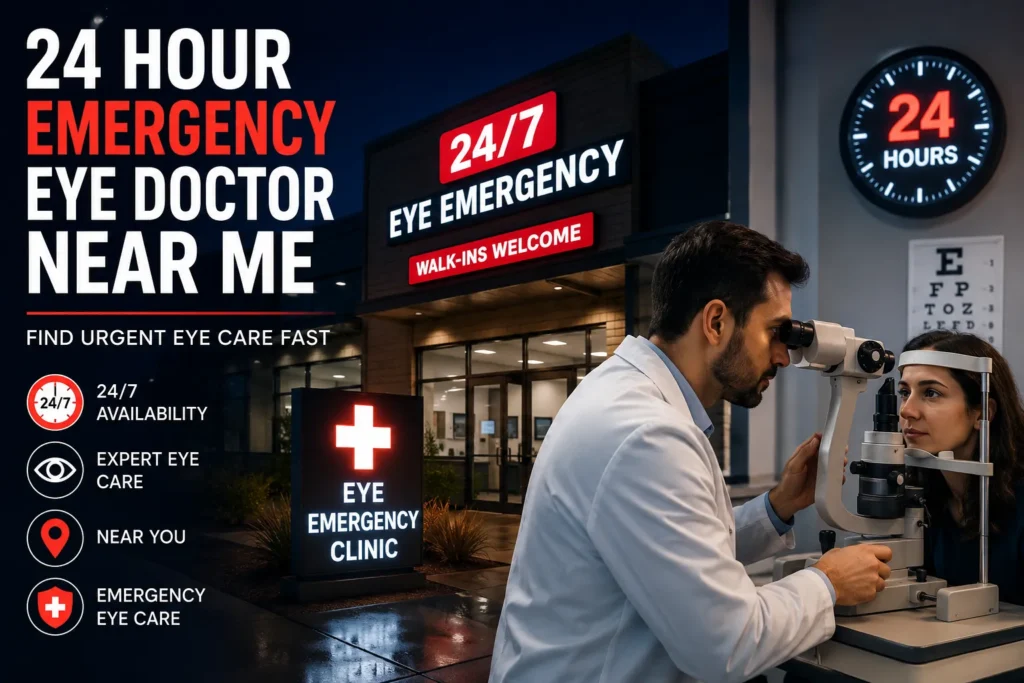
Something feels wrong with your eye, and it’s the middle of the night. Your regular eye doctor’s office is closed, and you don’t know what to do next.
This is a scary moment for a lot of people. Eyes are sensitive, and eye problems can feel urgent even when you’re not sure how serious they are. If you’re searching for a 24 hour emergency eye doctor near me, you’re probably dealing with pain, sudden vision changes, or an injury that just happened.
The good news is that help is usually closer than you think. This guide will walk you through what counts as a real eye emergency, where to find urgent eye care, what each option is actually good (and not so good) at, and what to expect once you get there.
What Counts as an Eye Emergency?
Not every eye problem needs a trip to urgent care in the middle of the night. However, some symptoms mean you should not wait until morning.
Symptoms That Need Immediate Attention
Call for help or head to an emergency room right away if you have:
- Sudden loss of vision, even partial
- A chemical splash in the eye (acid, cleaning products, or similar)
- A deep cut or puncture near or in the eye
- Something stuck in the eye that won’t come out with blinking or rinsing
- Sudden, severe eye pain
- Flashes of light with a curtain-like shadow in your vision (this can signal a detached retina)
- A blow to the eye that causes swelling, bruising, or trouble seeing
These situations are true emergencies. Waiting could lead to permanent vision loss in some cases. For a full clinical breakdown of injury types and warning signs, the American Academy of Ophthalmology’s guide to recognizing and treating eye injuries is a reliable reference point.
Symptoms That Can Usually Wait Until Morning
Some eye issues are annoying but not urgent. For example:
- Mild redness without pain
- A minor scratchy feeling that improves with blinking
- Slight eye strain after screen time
- Watery eyes from allergies
If your symptoms fall into this list, you can likely wait for your regular eye doctor’s office to open. Still, if something feels off to you, it’s always okay to get it checked. If you want to build better everyday eye health habits so fewer of these issues come up in the first place, Hylvita’s guide to [link placeholder — tell me the exact Hylvita.com page] is a good next read.
Where to Find a 24 Hour Emergency Eye Doctor Near Me
Finding urgent eye care fast depends on knowing where to look, and knowing what each option is actually built for. Here’s a side-by-side look at the four main choices.
| Option | Advantages | Disadvantages |
|---|---|---|
| Hospital Emergency Room | Handles all emergency types, including life- or vision-threatening trauma and chemical burns; open 24/7 everywhere; can coordinate immediate surgery or specialist transfer | Wait times can be long for non-critical cases; ER staff may not include an on-site ophthalmologist; can be significantly more expensive than other options |
| 24 Hour Eye Clinic | Staffed by ophthalmologists with eye-specific equipment (slit lamps, tonometry, etc.); faster, more specialized diagnosis than a general ER | Not available in every city; may still refer you out for non-eye-related trauma or if surgery is needed |
| Urgent Care Center | Faster than most ERs for minor issues; lower cost; convenient for scratches or mild infections | Staff are usually general practitioners, not eye specialists; not equipped for serious symptoms like sudden vision loss, chemical burns, or penetrating injuries |
| Telehealth Eye Consultation | Fast, low-cost, works from home; helpful for triage when you’re unsure if something is serious | Cannot physically examine the eye or treat anything; not appropriate for any true emergency; may still end with a referral to go in person |
A quick way to decide: if there’s any chance of permanent vision loss (chemical exposure, sudden vision changes, penetrating injury, major trauma), go straight to an ER or 24-hour eye clinic — don’t start with telehealth or urgent care.
Hospital Emergency Rooms
Most hospital ERs can handle eye emergencies, especially serious ones like chemical burns or major injuries. This is often the safest choice if your symptoms are severe or if you’re not sure how bad the problem is.
Keep in mind that ER wait times can be long if your case isn’t life-threatening. However, staff will usually check eye injuries quickly since vision problems are treated with urgency.
24 Hour Eye Clinics
Some cities have a dedicated 24 hour eye clinic that focuses only on eye care. These clinics are staffed by eye doctors, called ophthalmologists, who specialize in treating the eye.
A 24 hour eye clinic is often a better choice than a general ER because the staff have specific eye equipment and training. Not every city has one, so it helps to search and save the nearest option before you actually need it.
Urgent Care Centers
Urgent care centers can treat some eye problems, like minor scratches or mild infections. If you search for urgent eye care near me, you may find one of these centers open late or around the clock.
However, urgent care staff are not always eye specialists. For serious symptoms like sudden vision loss or a deep injury, go to an ER or eye clinic instead.
Telehealth Eye Consultations
If your symptoms are mild but you’re worried, some telehealth services now offer virtual eye consultations. A doctor can look at your eye through video and tell you whether you need to go in person.
This option is not for emergencies like chemical burns or major injuries. But for something like sudden redness or discomfort, it can be a helpful first step.
How to Search for an Eye Doctor Open 24 Hours
When you’re in pain, you don’t have time to scroll through pages of search results. Here’s how to search smart.
Use Specific Search Terms
Typing simply “eye doctor” into Google may show you offices that are closed. Instead, search using terms like eye doctor open 24 hours or “emergency eye clinic near me” to get more accurate results.
Check Google Maps Hours
Once you find a few options, check their listed hours on Google Maps. Some places say “24 hours” in their name but actually close overnight, so it helps to double-check.
Call Before You Go
If you can, call ahead. This confirms the clinic or ER is open and lets them know you’re coming with an eye issue. Some clinics can also prep for your visit, which saves time once you arrive.
Save Options Before You Need Them
Here’s a tip a lot of people miss: search for a 24 hour eye doctor near me before there’s an emergency. Save the number and address of your nearest 24 hour eye clinic or ER in your phone. This way, you’re not scrambling to search while your eye is hurting.
What Happens During an Emergency Eye Visit
Knowing what to expect can make the visit feel less stressful.
Initial Check-In
A nurse or staff member will usually ask about your symptoms first. Be ready to explain what happened, when it started, and how bad the pain or vision change is.
Eye Examination
The doctor will likely check your vision, look at the surface of your eye, and may use a special light or dye to spot scratches or foreign objects. This part is usually quick and not painful.
Treatment
Depending on what they find, treatment might include:
- Flushing the eye to remove debris or chemicals
- Antibiotic or antibiotic-steroid eye drops
- A protective eye patch or shield
- Pain relief
- A referral to a specialist for follow-up care
Most minor injuries are treated on the spot. More serious cases, like a detached retina or a deep injury, may need surgery or a same-day referral to a specialist.
First Aid Tips While You’re On Your Way
If you’re heading to get emergency care, a few simple steps can help protect your eye in the meantime. These align with first-aid guidance published by the American Academy of Ophthalmology.
For a Chemical Splash
Rinse the eye with clean water for at least 15 to 20 minutes before you leave, if possible. Keep rinsing on the way if you can.
For an Object in the Eye
Do not rub the eye. Do not try to remove anything that’s stuck deep in the eye yourself. Cover it loosely with a clean cloth and get help right away.
For an Eye Injury from a Blow or Impact
Avoid pressing on the eye. Use a cold compress on the area around the eye, not directly on it, to reduce swelling.
FAQs About 24 Hour Emergency Eye Care
Is it safe to wait until morning for eye pain?
It depends on the symptoms. Mild discomfort can often wait, but sudden vision loss, severe pain, or a chemical exposure should never wait. When in doubt, it’s safer to get checked sooner.
What’s the difference between an ER and a 24 hour eye clinic?
An ER treats all types of emergencies and may not have eye specialists on-site at all times. A 24 hour eye clinic focuses only on eye care and usually has ophthalmologists trained specifically for eye emergencies.
Can urgent care treat eye emergencies?
Urgent care can handle minor eye issues like small scratches or mild infections. However, for serious symptoms like sudden vision loss or deep injuries, an ER or specialized eye clinic is a better choice.
How much does an emergency eye visit cost?
Costs vary widely depending on your location, insurance, and the type of facility you visit. It’s a good idea to check with your insurance provider or the clinic directly, since prices can change over time.
What should I bring to an emergency eye appointment?
Bring your ID, insurance card if you have one, a list of any medications you take, and your regular eyeglasses or contact lens details if relevant. If you wear contacts, it’s best to remove them before you go, unless a chemical is involved and rinsing is more urgent.
Final Thoughts
Eye emergencies are stressful, but knowing where to turn makes a real difference. If you ever search for a 24 hour emergency eye doctor near me again, you’ll already know your options: hospital ERs, dedicated 24 hour eye clinics, urgent care centers, or a quick telehealth check for milder symptoms.
The most important step is not waiting too long when something feels seriously wrong with your vision. Save a nearby eye clinic or ER’s contact info today, so you’re ready if an emergency ever comes up.
If you’re dealing with eye symptoms right now, don’t wait on this article for a diagnosis. Contact a local emergency room, 24 hour eye clinic, or call your nearest urgent care center right away.