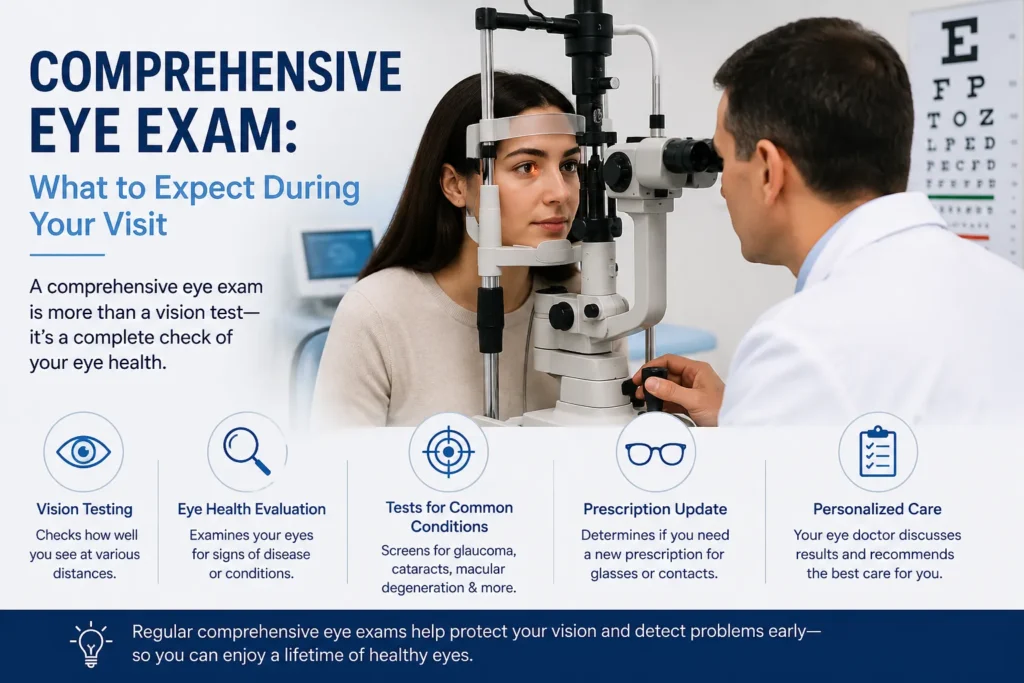
Your eyes work hard every single day, yet most people only think about them when something goes wrong. That’s a problem, because many eye conditions show no early symptoms at all.
A comprehensive eye examination is the best way to catch issues before they affect your vision. It checks far more than just whether you need glasses.
If you have never had a full eye exam, the whole process can feel a little mysterious. This guide walks you through exactly what happens, step by step, so you can walk in feeling confident instead of confused.
Why a Comprehensive Eye Exam Matters
A basic vision screening only tells you if you can read letters on a chart. A comprehensive eye exam goes much deeper.
It looks at the health of your entire eye, not just your ability to see clearly. Doctors use it to spot early signs of conditions like glaucoma, cataracts, and diabetic eye disease. According to the National Eye Institute (NIH), many eye diseases have no symptoms or warning signs at all, which is exactly why a full exam — not just a vision check — matters.
For example, diabetes can damage the tiny blood vessels in your retina long before you notice any change in your vision. A complete eye examination can catch this damage early, when treatment works best.
In short, this exam protects your eyesight for the long run, not just for the next year.
Advantages and Disadvantages of a Comprehensive Eye Exam
Like any health screening, a comprehensive eye exam has real benefits — and a few trade-offs worth knowing about ahead of time.
Advantages
- Catches silent diseases early. Conditions like glaucoma, diabetic retinopathy, and age-related macular degeneration often have no early symptoms. A full exam can flag them years before vision loss starts.
- Looks at more than just your prescription. It evaluates eye pressure, muscle coordination, pupil response, and the retina and optic nerve — a basic vision screening checks none of this.
- Can reveal signs of systemic disease. Because blood vessels and nerves are visible in the eye, exams can pick up early indicators of diabetes, high blood pressure, and some neurological conditions.
- Gives you an accurate prescription. The refraction test provides a precise glasses or contact lens prescription, rather than a rough estimate.
- Builds a health baseline. Regular exams let your doctor track subtle changes over time, which is harder to do from a single visit.
- Often covered by insurance. Many vision or health plans cover part or all of the cost, especially for children, adults over 60, or those with diabetes.
Disadvantages
- Takes time. Most visits run 30–60 minutes, longer for first-time patients or complex health histories — more than a quick vision screening at a pharmacy or school.
- Dilation side effects. If your pupils are dilated, expect blurry vision and light sensitivity for a few hours afterward. You’ll likely need sunglasses and possibly a ride home.
- Cost without insurance. Out-of-pocket costs can add up, particularly if follow-up testing or specialist referrals are needed.
- Mild discomfort for some tests. The eye pressure (tonometry) test — a puff of air or a brief instrument touch — feels odd to some first-timers, even though it isn’t painful.
- Access barriers. Finding an in-network provider or getting a timely appointment can be harder in some areas, especially for specialist follow-ups.
- Occasional false positives. As with most screenings, an exam can occasionally flag something that turns out not to be a problem, leading to extra (but usually reassuring) follow-up tests.
Before Your Visit: How to Prepare
A little preparation makes your appointment smoother and more useful for your eye doctor.
Bring the Right Information
Bring your current glasses or contact lenses, even if you think you won’t need them. Also bring a list of any medications you take, since some drugs affect your eyes.
If you have a family history of eye disease, jot it down too. Conditions like glaucoma often run in families.
Plan for Dilation
Many full eye exams include pupil dilation, which involves eye drops that widen your pupils. This lets the doctor see the back of your eye more clearly.
Your vision may stay blurry for a few hours afterward, and bright light can feel uncomfortable. Because of this, it helps to bring sunglasses or arrange a ride home, just in case.
Step-by-Step: What Happens During the Exam
Every eye clinic works a little differently, but most comprehensive eye examinations follow a similar pattern.
Reviewing Your Health History
The visit usually starts with questions. The staff will ask about your vision problems, general health, and any medications you take.
This step matters more than people realize. Your overall health, including blood pressure and blood sugar levels, is closely tied to eye health.
Visual Acuity Test
Next comes the classic eye chart test. You will read letters that get smaller as you go down the chart.
This measures how sharp your vision is at different distances. It’s one of the simplest parts of the exam, but it gives a useful baseline.
Refraction Test
The refraction test figures out your exact eyeglass or contact lens prescription. The doctor will show you different lens options and ask, “Which looks clearer, one or two?”
This might feel like a guessing game, but there are no wrong answers. Just pick whichever option looks sharper to you.
Eye Muscle and Movement Test
The doctor will ask you to follow a moving object, like a pen or a small light, with your eyes. This checks how well your eye muscles work together.
It helps detect issues like lazy eye or problems with eye coordination. These issues are especially important to catch early in children.
Pupil Response Test
A small light is shone into each eye to see how your pupils react. Healthy pupils shrink quickly when light hits them and expand again in the dark.
This simple test can reveal nerve problems that are not obvious in daily life.
Eye Pressure Test (Tonometry)
This test measures the pressure inside your eye. High eye pressure is a major warning sign for glaucoma, a disease that can quietly damage your optic nerve.
You may feel a quick puff of air, or the doctor may gently touch the surface of your eye with a special device after using numbing drops. Neither method should hurt.
Examining the Front and Back of the Eye
Using a microscope called a slit lamp, the doctor examines the front parts of your eye, including your cornea, iris, and lens. This helps spot cataracts, scratches, or infections.
If your pupils are dilated, the doctor will also examine your retina and optic nerve at the back of your eye. This is where signs of diabetes, high blood pressure, and glaucoma often first appear.
How Long Does a Comprehensive Eye Exam Take?
Most eye health checkups take between 30 and 60 minutes. The exact time depends on your eye health history and whether dilation is included.
If you’re new to the clinic or have a complex health history, expect the visit to run a bit longer. First-time patients usually need extra time for paperwork and history-taking.
Who Should Get a Full Eye Exam and How Often?
Eye care needs change with age and health status, so there is no single answer that fits everyone. The American Optometric Association recommends adults ages 18–64 be examined at least every two years if healthy, and at least annually if they have risk factors — with annual exams recommended for everyone 65 and older.
General Guidelines by Age
Children should have their first eye exam around age one, then again before starting school. Healthy adults with no vision problems typically benefit from an exam every one to two years.
Adults over 60 usually need yearly exams, since the risk of age-related eye conditions increases. Your eye doctor can recommend a schedule based on your personal risk factors.
Special Cases That Need More Frequent Exams
People with diabetes, high blood pressure, or a family history of eye disease often need more frequent checkups. Contact lens wearers should also get regular exams to make sure their eyes stay healthy.
If you notice sudden vision changes, eye pain, or flashes of light, do not wait for your next scheduled visit. See an eye doctor right away.
[HYLVITA-LINK: link this sentence to a relevant Hylvita.com page — e.g., a product or article about supporting eye health for at-risk groups (diabetics, screen users, etc.). Replace with the real URL.]
What Happens After the Exam
Once the exam is done, your eye doctor will explain the results in plain language. If you need glasses or contacts, you’ll get a written prescription.
If any concerns come up, such as early signs of a condition, the doctor may recommend follow-up testing or refer you to a specialist. Moreover, they may suggest lifestyle changes, like taking screen breaks or wearing sunglasses outdoors.
Either way, you’ll leave with a clear picture of your eye health, not just a pair of new glasses.
Frequently Asked Questions
Is a comprehensive eye exam painful?
No, a comprehensive eye exam is not painful. Some parts, like the eye pressure test or dilation drops, might feel slightly odd, but they should not hurt.
How is a comprehensive eye exam different from a basic vision test?
A basic vision test only checks how clearly you see, usually with an eye chart. A complete eye examination also checks eye pressure, eye muscle function, and the health of the retina and optic nerve.
Do I need to get my eyes dilated every time?
Not always. Some clinics use advanced imaging tools instead of dilation, though traditional dilation is still common and often preferred for a thorough check.
Can a comprehensive eye exam detect health problems beyond the eyes?
Yes. Eye exams can sometimes reveal early signs of diabetes, high blood pressure, and even certain neurological conditions, since blood vessels and nerves in the eye reflect overall body health.
How much does a full eye exam typically cost?
Costs vary widely depending on your location, the clinic, and whether you have vision insurance. It’s best to check directly with local providers or your insurance plan for accurate pricing.
Conclusion
A comprehensive eye exam is about far more than reading letters off a chart. It checks your vision, your eye pressure, and the overall health of your eyes, helping catch problems before they become serious.
Whether it has been one year or five since your last visit, now is a good time to schedule a comprehensive eye examination. Your eyes only get one chance to stay healthy, so give them the checkup they deserve.