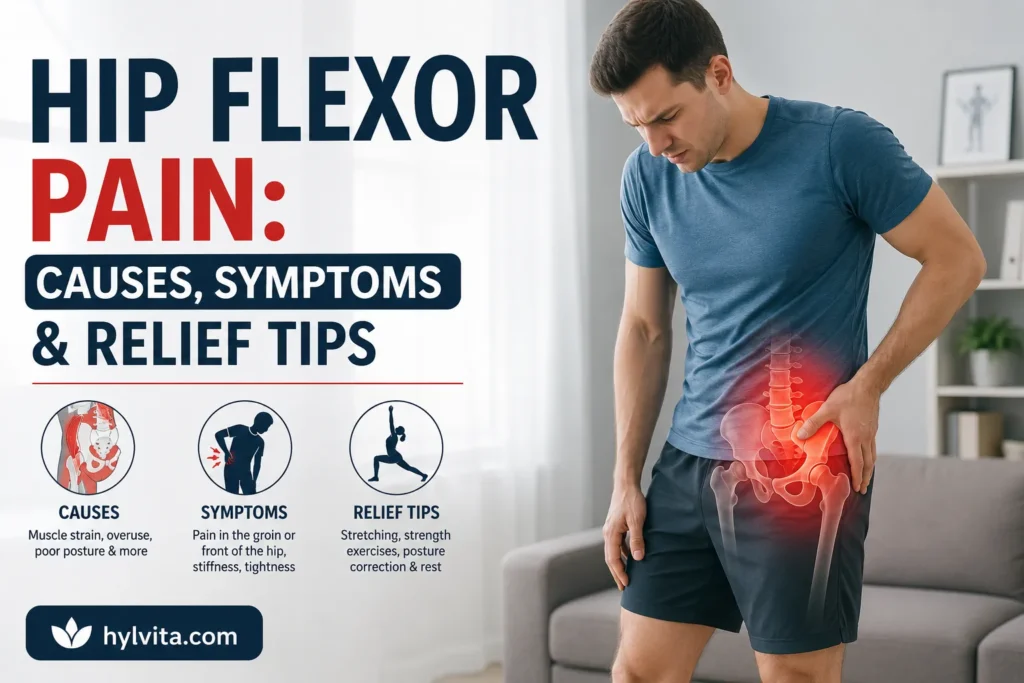
You bend down to tie your shoe, and there it is — a sharp pinch right at the front of your hip. Hip flexor pain has a way of showing up at the worst times, whether you’re an athlete, a desk worker, or just someone who sat too long on a road trip.
This pain sits in a group of muscles that connect your spine to your legs. They help you walk, run, kick, and even climb stairs. So when they hurt, almost every move feels harder.
In this guide, you’ll learn what causes hip flexor pain, how to spot the symptoms, and which treatments actually work. We’ll also cover simple stretches you can start today for real hip flexor pain relief. If you’re looking for more everyday fitness and recovery guides, you can also check out Hylavita for related wellness tips.
What Are the Hip Flexors?
The hip flexors are a group of muscles at the front of your hip. The main ones are the iliopsoas, rectus femoris, and sartorius.
These muscles lift your knee toward your chest. Think about kicking a soccer ball or climbing a tall step — your hip flexors do most of that work.
Because they’re used in almost every lower-body movement, they’re also easy to strain. Runners, dancers, and soccer players deal with this often. However, even people who sit at a desk all day can develop tight, painful hip flexors.
Common Causes of Hip Flexor Pain
Hip flexor pain doesn’t come from just one thing. Here are the most common reasons it happens.
1. Muscle Strain or Overuse
Sudden movements like sprinting, jumping, or kicking can strain the hip flexor muscles. This is one of the most common sports-related hip injuries, especially in soccer, football, and dance. According to the Cleveland Clinic, hip flexor strains are graded by severity, and most people recover well with rest and simple at-home care.
Overuse is another factor. Repeating the same motion daily — like cycling or running — can wear down these muscles over time.
2. Prolonged Sitting
Sitting for long hours keeps your hip flexors in a shortened position. Over time, this makes them tight and weak.
For example, office workers and long-distance drivers often report hip tightness by the end of the day. This is sometimes called “tight hip flexor syndrome,” though it’s not an official medical diagnosis.
3. Poor Posture and Weak Core Muscles
A weak core forces your hip flexors to work overtime to stabilize your body. Poor posture, especially an anterior pelvic tilt, adds extra strain to these muscles.
4. Injury or Trauma
A fall, direct hit, or sudden twist can injure the hip flexor muscles or tendons. Athletes who play contact sports face a higher risk here.
5. Underlying Joint Issues
Sometimes, hip flexor pain isn’t just muscular. Conditions like hip impingement or early arthritis can cause pain that feels similar to a muscle strain. If pain lingers for weeks, it’s worth getting checked by a doctor.
Hip Flexor Pain Symptoms
Knowing the symptoms helps you understand how serious the issue might be. Common hip flexor pain symptoms include:
- A sharp or dull ache at the front of the hip or groin
- Pain when lifting your knee or climbing stairs
- Stiffness after sitting for a while
- Muscle tightness that limits your range of motion
- Swelling or bruising in more severe strains
- A pulling or snapping sensation during movement
For a closer look at these warning signs, Healthline’s overview of hip flexor strain is a useful reference.
Mild vs. Severe Symptoms
Mild strains usually cause soreness and tightness. You can still walk, though it may feel uncomfortable.
Severe strains, on the other hand, may cause sudden sharp pain, visible swelling, or difficulty putting weight on that leg. If this happens, it’s best to avoid intense activity and see a healthcare provider.
How Is Hip Flexor Pain Diagnosed?
A doctor or physical therapist usually starts with a physical exam. They’ll check your range of motion and ask you to perform certain movements to locate the pain.
In some cases, they may recommend imaging tests like an X-ray or MRI. This helps rule out other issues, such as a labral tear or joint problem, especially if the pain doesn’t improve with rest.
Hip Flexor Pain Treatment Options
The right hip flexor pain treatment depends on how severe the injury is. Most mild to moderate cases improve with simple, at-home care, as outlined in this MedlinePlus aftercare guide from the U.S. National Library of Medicine.
1. Rest and Activity Modification
Give the muscle time to heal. This doesn’t mean staying completely still — light movement is fine. Just avoid activities that trigger sharp pain, like sprinting or deep lunges.
2. Ice and Heat Therapy
Ice works well in the first 48 hours to reduce swelling. After that, heat can help relax tight muscles and improve blood flow.
A simple routine: ice for 15-20 minutes a few times a day right after the injury, then switch to heat once swelling goes down.
3. Over-the-Counter Pain Relief
Anti-inflammatory medication can help manage pain and swelling in the short term. However, these should be used as directed and aren’t a long-term fix. Always check with a pharmacist or doctor if you’re unsure.
4. Physical Therapy
A physical therapist can guide you through targeted exercises. This is often the most effective hip flexor pain treatment for people who want a full, lasting recovery instead of just short-term relief.
5. Gradual Strengthening
Once the sharp pain fades, gentle strengthening exercises help prevent the injury from coming back. Weak hip flexors are more likely to get injured again.
6. When to See a Doctor
See a doctor if the pain doesn’t improve after a week or two, if you notice major swelling, or if you can’t put weight on your leg. These could be signs of a more serious tear or an underlying joint problem.
Hip Flexor Stretch Routine for Relief
Stretching is one of the simplest ways to ease tightness and support recovery. Mayo Clinic notes that hip flexor stretches work best when muscles are already warm, so a short walk or light cardio before stretching helps. Here are a few beginner-friendly options.
Kneeling Hip Flexor Stretch
Kneel on one knee with the other foot flat on the floor in front of you. Gently push your hips forward until you feel a stretch at the front of your back hip. Hold for 20-30 seconds and switch sides.
Standing Hip Flexor Stretch
Stand tall and step one foot back. Bend your front knee slightly and tuck your pelvis forward. This is a good option if kneeling is uncomfortable.
Pigeon Pose
This yoga-inspired stretch targets the hip flexors and glutes together. Sit with one leg bent in front and the other extended behind you, then lean forward slightly.
Tips for Safe Stretching
Warm up before stretching — cold muscles are more likely to get injured. Move slowly, and stop if you feel sharp pain. A gentle pulling sensation is normal; sharp pain is not.
Benefits and Risks of Hip Flexor Stretches
Stretching helps, but it’s worth knowing both sides before you start a routine.
Benefits
- Eases tightness from sitting or repetitive movement
- Improves range of motion in the hip and thigh
- Supports better posture over time
- May reduce the chance of re-injury when done regularly
- Helps blood flow to the area, which can support healing
Possible Risks
- Stretching too hard or too soon after an injury can make a strain worse
- Bouncing or forcing a stretch can cause small muscle tears
- Stretching alone won’t fix pain caused by a joint problem, like hip impingement
- Overstretching without also strengthening the muscle can leave the hip unstable
In short, stretching is a helpful tool, not a fix-all. If pain increases instead of easing, stop and check in with a professional.
How to Prevent Hip Flexor Pain in the Future
Prevention is easier than treatment. A few habits go a long way:
- Warm up properly before exercise or sports
- Stretch your hip flexors regularly, especially if you sit a lot
- Strengthen your core to reduce strain on your hips
- Avoid sudden increases in workout intensity
- Take short walking breaks if you sit for long hours
In short, small daily habits protect you from bigger problems later. You can find more simple fitness routines like this on Hylavita.
FAQs About Hip Flexor Pain
What does hip flexor pain feel like?
Most people describe it as a sharp or dull ache near the front of the hip or groin. It often gets worse when lifting the knee, climbing stairs, or sitting for long periods.
How long does hip flexor pain usually last?
Mild strains often improve within one to two weeks with rest and stretching. More severe strains can take four to six weeks or longer to fully heal.
Can tight hip flexors cause lower back pain?
Yes, tight hip flexors can pull on the pelvis and lower spine, leading to lower back discomfort. Stretching and strengthening the hips often helps reduce this back pain too.
Is it safe to exercise with hip flexor pain?
Light movement is usually fine, but avoid activities that cause sharp pain, like sprinting or deep squats. If pain persists, it’s best to consult a doctor or physical therapist before continuing intense workouts.
What is the fastest way to relieve hip flexor pain?
Rest, ice in the first two days, and gentle stretching tend to bring the fastest relief for mild strains. For ongoing pain, physical therapy usually gives longer-lasting results than quick fixes alone.
Conclusion
Hip flexor pain is common, but it doesn’t have to slow you down for long. Understanding the causes and symptoms helps you catch the problem early and choose the right treatment.
Whether it’s rest, ice, stretching, or physical therapy, most people see real hip flexor pain relief within a few weeks with the right care. If your pain doesn’t improve or keeps coming back, don’t wait it out — talk to a doctor or physical therapist to get a proper diagnosis and treatment plan.
Disclaimer:
This article is for general information only and is not medical advice. Please talk to a doctor or physical therapist for diagnosis and treatment specific to you.