Tight hamstrings can make simple things hard. Bending down to tie your shoes. Getting out of bed without a groan. Sitting through a long meeting without your legs feeling stiff.
The good news? A seated hamstring stretch can fix a lot of that. It’s simple, it takes just a few minutes, and you don’t need any equipment.
In this guide, you’ll learn what the seated hamstring stretch is, why it matters, how to do it correctly, its pros and cons, common mistakes, and answers to the questions people ask most.
What Is the Seated Hamstring Stretch?
The hamstrings are the muscles that run along the back of your thigh. They stretch from your hip down to just below your knee.
These muscles help you walk, run, bend, and climb stairs. However, they get tight easily, especially if you sit for long hours at a desk or in a car.
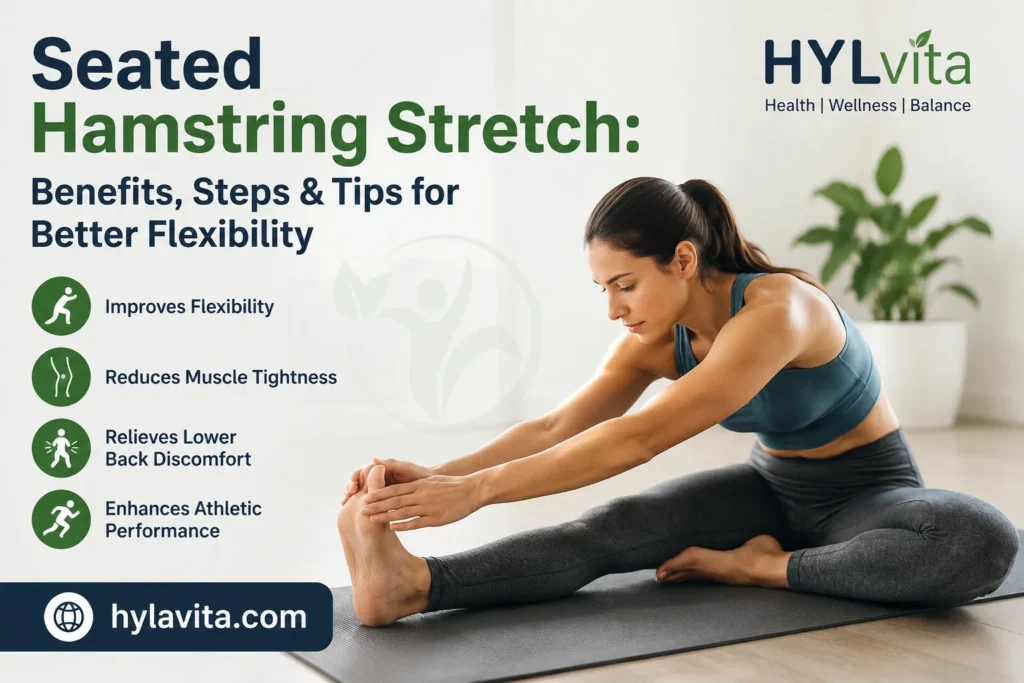
A seated hamstring stretch is exactly what it sounds like. You sit down and stretch these muscles by reaching toward your toes. It’s one of the most common forms of a seated leg stretch, and it works well for almost anyone.
Why Sitting Makes Hamstrings Tight
When you sit, your hamstrings stay in a shortened position for hours. Over time, they get used to that shorter length.
This is why so many office workers, students, and drivers deal with tight hamstrings. According to Harvard Health Publishing, prolonged sitting can shorten and tighten several of the muscles that support the back, including the hamstrings, hip flexors, and glutes — and when those muscles get short and stiff, they can pull unevenly on the pelvis and spine.1 Stretching regularly helps reverse this pattern.
Advantages and Disadvantages of the Seated Hamstring Stretch
No stretch is a cure-all, and it’s worth understanding both sides before you build it into your routine.
Advantages
- Improves flexibility. Regular stretching helps your muscles move through a fuller range of motion, which supports easier bending, walking, and reaching over time.
- No equipment or space needed. All you need is a floor or a mat, making it one of the most accessible stretches to fit into a workday or evening routine.
- Beginner-friendly. You can modify it with a towel or strap, and it’s easy to learn without instruction.
- May ease everyday stiffness. Even a short session after a long day at a desk can help you feel less stiff.
- Supports posture over time. More flexible hamstrings can make it easier for your hips and spine to align naturally.
Disadvantages and Limitations
- It’s not a guaranteed fix for back pain. Tight hamstrings are commonly linked to lower back discomfort, but some physical therapy sources note the evidence directly tying hamstring tightness to low back pain is limited, and that stretching alone doesn’t resolve back pain caused by other issues, such as nerve irritation.2 If pain persists, see a professional rather than relying on stretching alone.
- Static stretching isn’t ideal right before intense activity. Mayo Clinic notes that some research shows stretching immediately before an event like sprinting can actually decrease performance and temporarily reduce muscle strength.3 Save deep static holds for after activity or for standalone flexibility sessions.
- Can aggravate nerve-related pain. If your “tight” hamstring feeling comes with pain shooting down the leg, it may be nerve-related (e.g., sciatica) rather than a short muscle — stretching into that sensation can make it worse rather than better.
- Easy to do with poor form. Rounding the back instead of hinging at the hips shifts strain to the lower spine and reduces the stretch’s effectiveness.
- Not appropriate for everyone without medical clearance. People with a herniated disc, sciatica, a recent hamstring injury, or who are pregnant should check with a healthcare provider first.
- Results take time. Flexibility gains are gradual, so this isn’t a one-and-done fix — it requires consistency over weeks.
Benefits of the Seated Hamstring Stretch
Stretching your hamstrings does more than just make you feel loose. Here’s what it may do for your body.
Improves Flexibility
Regular stretching helps your muscles move through a fuller range of motion. This means easier bending, walking, and reaching over time.
May Reduce Lower Back Discomfort
Tight hamstrings can pull on the pelvis, which can put strain on the lower back. A hamstring stretch sitting position helps release that tension, which may ease back discomfort for some people — though as noted above, the research on hamstring tightness as a direct cause of back pain isn’t conclusive, so treat this as a possible benefit rather than a promise.
Supports Better Posture
When your hamstrings are flexible, your hips and spine can align more naturally. This can make it easier to sit and stand with good posture.
Helps Prevent Injury
Tight muscles are more likely to get strained during exercise or sudden movement. Stretching regularly can lower this risk, though it’s not a guarantee against injury.
Eases Everyday Stiffness
You don’t need to be an athlete to benefit. Even a short sitting hamstring stretch after a long day at your desk can help you feel less stiff.
How to Do the Seated Hamstring Stretch (Step-by-Step)
Here’s a simple, beginner-friendly way to do this stretch, based on general stretching guidance from Mayo Clinic.4 No gym equipment needed, just a floor or a mat.
Step 1: Sit Down and Extend Your Legs Sit on the floor with your back straight. Stretch both legs out in front of you, keeping your knees as straight as you comfortably can.
Step 2: Flex Your Feet Point your toes up toward the ceiling. This small step activates your hamstrings and calves right away.
Step 3: Hinge Forward From Your Hips Slowly lean forward from your hips, not your lower back. Reach your hands toward your toes, shins, or ankles, wherever feels comfortable.
Step 4: Hold the Stretch Hold the position for 20 to 30 seconds. Breathe normally. Don’t bounce or force the movement.
Step 5: Release and Repeat Sit back up slowly. Repeat the stretch two to three times for the best results.
A Simple Tip to Remember
Think of your body like a hinge on a door. The bend should happen at your hips, not by rounding your back. This keeps the stretch safe and effective.
Common Mistakes to Avoid
Even a simple stretch can go wrong if you’re not careful. Here are a few things to watch for.
Rounding Your Back Rounding your spine takes the focus off your hamstrings and puts strain on your lower back instead. Keep your chest lifted and hinge from the hips.
Bouncing While Stretching Bouncing, also called ballistic stretching, can actually cause small muscle tears. Move slowly and hold the stretch instead.
Forcing the Stretch Too Far Pain is not the goal. You should feel a gentle pull, not sharp discomfort. If it hurts, ease back a little.
Skipping the Warm-Up Stretching cold muscles increases the risk of strain. A short walk or light movement before stretching can help your muscles respond better.
Tips for Better Flexibility Over Time
Flexibility doesn’t happen overnight. However, small, steady habits make a real difference.
Stretch Consistently, Not Just Once Doing this stretch daily, even for just a few minutes, works better than doing it once a week for a long time. Mayo Clinic recommends stretching regularly, at least two to three times a week, to maintain and build on flexibility gains.3
Combine It With Other Stretches Pair your seated hamstring stretch with hip flexor and calf stretches. Muscles work together, so loosening nearby areas can help too — see our related guide on hip flexor pain and relief tips for more on that connection.
Use a Strap If You’re a Beginner If you can’t reach your toes, that’s completely normal. Loop a towel or resistance band around your foot and gently pull yourself forward instead.
Warm Up First A few minutes of light walking or marching in place gets blood flowing to your muscles. This makes the stretch more effective and safer.
Be Patient With Your Progress Flexibility improves gradually. Some people notice a difference in a few weeks, while others take longer. This depends on your age, activity level, and how often you stretch.
Who Should Be Careful With This Stretch
Most people can do the seated hamstring stretch safely. However, a few groups should be more cautious.
If you have a herniated disc, sciatica, or a recent hamstring injury, check with a doctor or physical therapist first. They can tell you if this stretch is right for you or suggest a safer alternative.
Pregnant individuals should also ask a healthcare provider before starting any new stretching routine, since balance and flexibility needs change during pregnancy.
FAQs About the Seated Hamstring Stretch
How long should I hold a seated hamstring stretch? Most experts, including Mayo Clinic, suggest holding a stretch for around 30 seconds without bouncing.3 Repeat it two to three times for the best results.
How often should I do this stretch? Daily stretching works well for most people, especially if you sit a lot during the day. Even five minutes a day can make a noticeable difference over time.
Can beginners do the seated hamstring stretch? Yes, this is one of the easiest stretches for beginners. If you can’t reach your toes, use a towel or strap and go only as far as feels comfortable.
Is it normal to feel tightness but not pain? Yes, a mild pulling feeling is normal. Sharp pain is not. If you feel pain, stop and ease back into a gentler position.
What’s the difference between a seated hamstring stretch and a standing one? A seated leg stretch puts less pressure on your lower back and balance, making it a safer choice for beginners. A standing hamstring stretch works the same muscles but requires more balance and core control.
Conclusion
The seated hamstring stretch is a simple, low-effort way to improve flexibility, ease everyday stiffness, and support better posture. It takes just a few minutes, needs no equipment, and works for almost every fitness level — but like any stretch, it has limits, and it isn’t a substitute for medical care if you’re dealing with persistent pain.
A seated leg stretch puts less pressure on your lower back and balance, making it a safer choice for beginners. A standing hamstring stretch works the same muscles but requires more balance and core control.
Conclusion
The seated hamstring stretch is a simple, low-effort way to improve flexibility, ease stiffness, and support better posture. It takes just a few minutes, needs no equipment, and works for almost every fitness level.
Whether you sit at a desk all day or you’re active and on your feet, adding this stretch to your routine can make daily movement feel easier. Start slow, stay consistent, and listen to your body as your flexibility improves.
Try adding the seated hamstring stretch to your daily routine this week, and notice how your body feels after just a few sessions.