Last updated: August 2026
Disclaimer: This article is for general informational and educational purposes only and is not a substitute for professional medical or fitness advice. Military calisthenics is physically demanding.
Soldiers don’t need fancy gym machines to get strong. They use their own body weight, a bar, and the ground beneath them. That’s the whole idea behind military calisthenics.
If you’ve ever wondered how recruits build serious strength and endurance before basic training even starts, this is how. Military calisthenics is a system of bodyweight exercises used by armed forces around the world to build strength, stamina, and mental toughness. In this guide, you’ll learn the best exercises, the real benefits and drawbacks, and a routine you can follow starting today.
What Is Military Calisthenics?
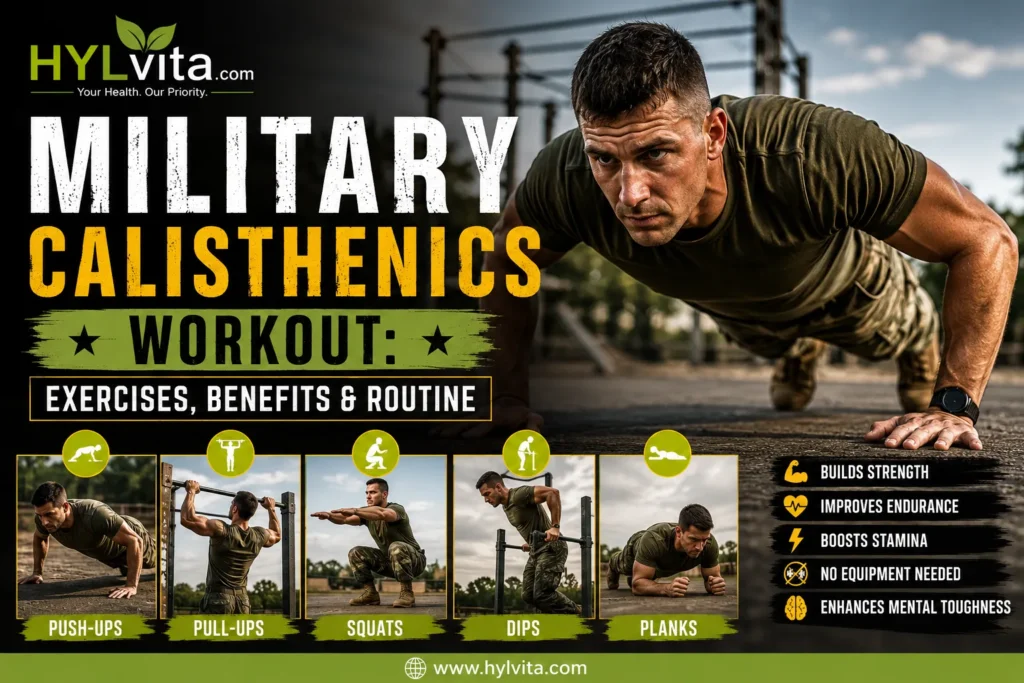
Military calisthenics is a style of bodyweight training built around functional movement. Push-ups, pull-ups, squats, and running form the core of it. There’s no barbell, no machine, and no membership fee.
Armed forces use this style of training because it’s practical for large groups training in the field: everyone just needs their own body and some open space. It builds strength that transfers directly to real tasks, like carrying gear, climbing obstacles, or moving quickly under stress.
Why the Military Relies on Bodyweight Training
Bodyweight training is practical for military settings. Soldiers train in fields, barracks, and combat zones, where gym equipment simply isn’t available.
For example, a push-up works the chest, shoulders, and core all at once. That kind of full-body efficiency matters when training time is limited and the goal is total-body readiness, not just bigger muscles.
Advantages and Disadvantages of Military Calisthenics
Military-style calisthenics has real strengths, but it isn’t the right fit for every goal or every body. Here’s a balanced look at both sides before you commit to it.
Advantages
- No equipment or gym membership needed. A pull-up bar and open floor space are often enough, which makes this style of training accessible almost anywhere.
- Builds functional, full-body strength. Compound bodyweight movements train multiple muscle groups together, which tends to carry over well into everyday tasks like lifting, climbing, and carrying.
- Improves cardiovascular endurance alongside strength. Circuits that mix strength moves with running or burpees build stamina, not just muscle.
- Scales to large groups easily. This is a big part of why armed forces use it — everyone can train at once with no equipment bottleneck.
- Low direct financial cost. Beyond basic shoes and maybe a pull-up bar, there’s little to buy.
Disadvantages
- Progressive overload gets harder over time. Once you can do high reps of push-ups, squats, or pull-ups, the next step up (e.g., archer push-ups, weighted pull-ups, one-arm variations) is a much bigger jump in difficulty than simply adding a few pounds to a barbell. This can make continued strength and muscle gains harder to plan and track than with free weights.
- Limited lower-body loading. Bodyweight squats and lunges often become more of a cardio or endurance exercise than a true strength builder once you can do 20+ reps, since you can’t easily add resistance the way you can with a barbell.
- Overuse and repetitive-strain risk. High-volume, repetitive military-style training — especially running and high-rep bodyweight circuits — is associated with meaningful rates of overuse injury in military training populations, including stress injuries to the shin, knee, and foot/ankle.
- Mental and physical fatigue. The repetitive, high-volume nature of these routines is demanding, and pushing through fatigue without adequate recovery can increase injury risk rather than just building “toughness.”
- Not ideal as a standalone plan for maximal strength or hypertrophy goals. If your primary goal is to build the largest amount of muscle or lift the heaviest weight possible, evidence on progressive overload suggests traditional resistance training with external load may progress more predictably.
Core Military Bodyweight Exercises
These are the foundational movements you’ll find in almost every military workout routine.
Push-Ups
Push-ups build chest, shoulder, tricep, and core strength. They’re a staple in every military fitness test around the world.
Keep your body in a straight line from head to heels. Lower your chest close to the ground, then push back up without letting your hips sag.
Pull-Ups
Pull-ups train your back, shoulders, and arms. They also test raw upper-body strength, which is why most military fitness tests include them.
If you can’t do a full pull-up yet, start with assisted versions using a resistance band, or try negative reps by jumping up and lowering slowly.
Squats
Squats build leg and core strength. They also mimic movements soldiers use daily, like crouching or lifting gear off the ground.
Keep your feet shoulder-width apart. Lower your hips back and down like you’re sitting into a chair, then drive back up through your heels.
Sit-Ups and Planks
Core strength is essential for stability and injury prevention. Sit-ups and planks are two of the most common core exercises in military training.
Planks, in particular, build endurance in the core muscles without putting stress on the lower back the way some sit-up variations can.
Burpees
Burpees combine a squat, push-up, and jump into one movement. They raise your heart rate fast, making them a great tool for building cardio endurance alongside strength.
Running and Sprints
Running builds cardiovascular endurance and is a core part of nearly every military fitness program. Many routines mix steady-pace running with short sprint intervals to build both stamina and speed. Running is also, per military injury research linked below, the single biggest driver of overuse injury in training populations, so building up mileage gradually matters.
Sample Military Calisthenics Workout Routine
Here’s a beginner-friendly military calisthenics workout you can try. Adjust the reps based on your current fitness level, and always warm up first.
Warm-Up (5–10 minutes)
- Light jogging in place
- Arm circles
- Bodyweight squats
- Dynamic stretching
Main Workout
- Push-ups: 3 sets of 10–15 reps
- Pull-ups (or assisted pull-ups): 3 sets of 5–10 reps
- Squats: 3 sets of 15–20 reps
- Plank: 3 sets, hold for 30–45 seconds
- Burpees: 3 sets of 10 reps
- Sit-ups: 3 sets of 15–20 reps
Cool-Down (5–10 minutes)
- Light walking
- Static stretching for legs, arms, and back
Rest for about a minute between sets. As you get stronger, you can increase reps, add more sets, or shorten your rest periods to keep challenging your body. This general structure lines up with the CDC’s adult muscle-strengthening guidelines, which recommend working all major muscle groups at least two days a week.
How to Build a Weekly Military Workout Routine
Consistency matters more than intensity, especially in the beginning. Here’s a simple way to structure your week.
Beginner Schedule
Train 3 days a week with rest days in between. This gives your muscles time to recover while you build the habit.
Intermediate to Advanced Schedule
Train 4–5 days a week, alternating between upper-body focus, lower-body focus, and full-body conditioning days. Add running or sprint intervals on separate days to build cardio without overloading your muscles.
In short, listen to your body. Soreness is normal, but sharp pain is a sign to rest and reassess — research on military training injuries consistently finds that most overuse injuries develop gradually rather than from a single event, which is why early complaints are worth taking seriously.
Tips for Getting the Most Out of Military Calisthenics
A few small habits can make a big difference in your results.
Focus on Form Before Reps
Bad form leads to injuries and slows your progress. Master the basic movement pattern before you chase higher rep counts.
Progress Gradually
Add reps, sets, or new exercise variations slowly over time. Jumping into an advanced military workout routine too fast is one of the most common causes of injury. If you’re recovering from a lower-body issue such as tight or strained hip flexors, it’s worth addressing that first — see Hylavita’s guide to hip flexor pain for background on causes and relief tips before loading up squats or sprints.
Fuel and Rest Properly
Muscles grow and repair during rest, not during the workout itself. Make sure you’re eating enough protein and getting quality sleep to support your training.
FAQs About Military Calisthenics
Is military calisthenics good for beginners?
Yes, it’s beginner-friendly because every exercise can be scaled down. For example, you can do modified push-ups on your knees or assisted pull-ups until you build enough strength for the full version.
How often should I do military calisthenics workouts?
Most beginners do well with 3 sessions a week, with rest days in between. As your fitness improves, you can increase to 4–5 sessions weekly.
Can I build muscle with military bodyweight exercises alone?
Yes, bodyweight training can build noticeable muscle, especially for beginners and intermediate trainees — WebMD notes that research on push-ups versus bench pressing for strength and size is mixed but generally favorable. However, very advanced trainees may eventually need added resistance, like weighted vests, to keep progressing, since bodyweight-only training makes progressive overload harder to fine-tune.
Do I need any equipment for military calisthenics?
Most exercises need no equipment at all. A pull-up bar is helpful but not required, since you can substitute rows using a sturdy table or resistance bands.
How long does it take to see results?
Most people notice improved strength and endurance within 4–6 weeks of consistent training. Visible physical changes usually take longer and depend on factors like diet, sleep, and training frequency.
Is military calisthenics safe, or does it carry injury risk?
Like any demanding training style, it carries some risk, particularly overuse injuries from high training volume. A systematic review and meta-analysis of military training injuries found musculoskeletal injuries are common among recruits during basic training, with the lower body most affected. Gradual progression, proper footwear, adequate rest, and good form all help reduce that risk.
Conclusion
Military calisthenics proves you don’t need a fancy gym to get seriously fit. With just push-ups, pull-ups, squats, and a bit of discipline, you can build the same functional strength and endurance that soldiers rely on every day — but it’s worth going in with realistic expectations about its limits, especially around long-term strength progression and injury risk.
Start with the beginner routine above, stay consistent, and adjust as you grow stronger. Your body weight is the only equipment you’ll ever really need. Try the routine this week and see how your strength and stamina improve.