Ever finish a workout feeling wiped out, even after drinking water the whole time? You’re not alone. Plain water doesn’t always fix that “empty tank” feeling.
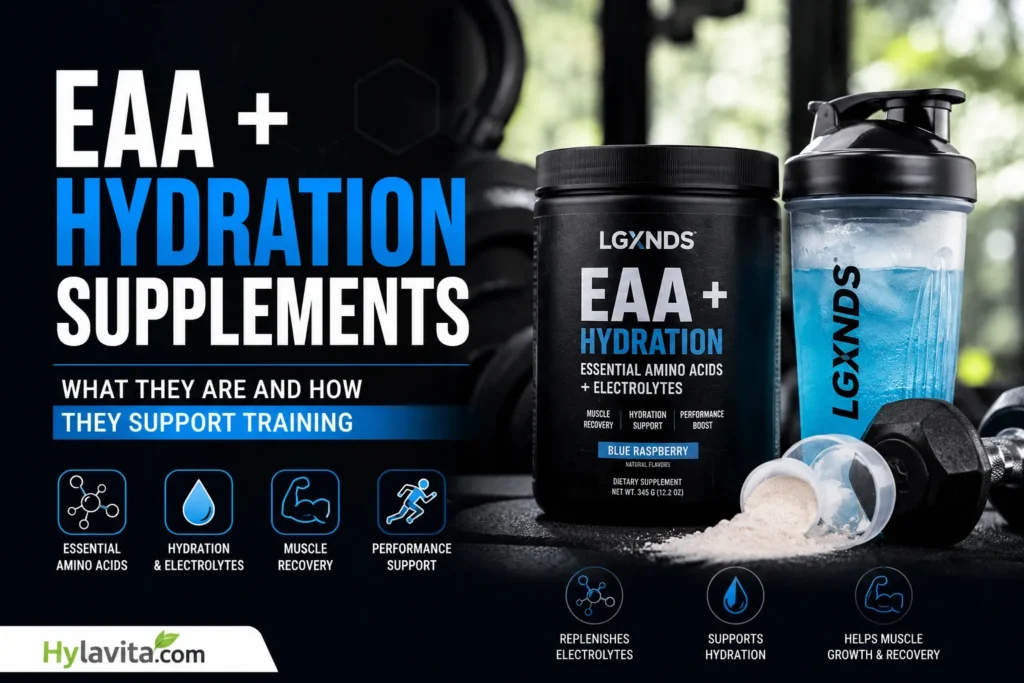
This is where a lgxnds EAA + hydration supplement comes in. It combines essential amino acids with electrolytes in one drink, so you get muscle support and hydration at the same time. In this article, we’ll break down what these supplements are, how they work, who they’re a good fit for (and who should be cautious), and how to use them the right way.
Whether you’re new to fitness or you train five days a week, this guide will help you understand if an EAA hydration supplement fits into your routine.
What Is an EAA + Hydration Supplement?
An EAA + hydration supplement is a powder or drink mix that combines two things in one product: essential amino acids (EAAs) and electrolytes. Instead of buying a separate protein powder and a separate sports drink, you get both benefits from a single scoop.
What Are Essential Amino Acids?
Amino acids are the building blocks of protein. Your body uses them to build and repair muscle tissue.
“Essential” means your body cannot make these amino acids on its own — you have to get them from food or supplements. According to MedlinePlus, a consumer health resource from the U.S. National Library of Medicine (NIH), there are nine essential amino acids, and getting a balance of all of them over the course of a day — not necessarily in a single meal — is what matters for supporting your body’s protein needs.
Why Combine EAAs with Hydration?
Sweat doesn’t just contain water. It also carries out electrolytes like sodium, potassium, and magnesium. If you only replace the water and skip the electrolytes, you can still feel sluggish or crampy.
An EAA electrolyte supplement tries to solve two problems at once: feeding your muscles with amino acids while also replacing the minerals you lose through sweat. That’s a simple, practical reason these products have grown popular among gym-goers and athletes. For workouts longer than about an hour, the American College of Sports Medicine’s position stand on exercise and fluid replacement notes that replacing both fluid and electrolytes — particularly sodium — is important for maintaining hydration and performance, more so than water alone.
For more general guidance on staying hydrated day to day (not just around workouts), see Hylavita’s hydration and wellness guides.
How EAA + Hydration Supplements Support Training
Training hard puts stress on your muscles and drains your fluid levels. A good EAA hydration supplement can help on both fronts.
Muscle Recovery and Repair
When you lift weights or do intense cardio, you create tiny tears in your muscle fibers. Your body needs amino acids to repair that damage. Having EAAs available during or after training may help support this repair process.
Reducing Muscle Fatigue
Some athletes use EAAs during long training sessions because they may help delay the feeling of tiredness. Think of it like giving your muscles a small snack while you work, instead of waiting until the meal after.
Better Hydration During Workouts
Electrolytes help your body hold onto water and keep your muscles firing correctly. Low electrolyte levels can lead to cramps, dizziness, or early fatigue. For example, a runner training in hot weather often needs more than plain water to stay steady through a long session.
Advantages and Disadvantages
No supplement is a fit for everyone. Here’s a balanced look before you decide.
Advantages
- Two-in-one convenience. You get amino acid and electrolyte support from a single product instead of mixing separate powders.
- Useful for longer or hotter sessions. For workouts over 45–60 minutes, or training in heat, combined support may matter more than for short, easy sessions.
- May support recovery between workouts. Amino acids provide raw material for muscle repair, which can be useful on heavy training weeks.
- Simple to add to a routine. One scoop, mixed with water, fits into most pre-, during-, or post-workout habits.
Disadvantages
- Not a substitute for real food. Whole-food protein and a balanced diet still form the foundation of muscle recovery; a supplement is an addition, not a replacement.
- Unnecessary for many casual exercisers. If your sessions are under 45 minutes and you already eat enough protein, plain water may be all you need.
- Ingredient quality varies by brand. Not every “EAA + hydration” product on the market contains a full nine-amino-acid profile or meaningful electrolyte doses — labels need to be checked.
- Cost adds up. Combined EAA and electrolyte products are often priced higher than either a basic protein powder or a basic electrolyte packet alone.
- Risk factors for some people. Those with kidney conditions, sodium-restricted diets, or certain other health conditions may need to avoid or limit extra electrolytes (more on this below).
- Evidence is mixed on some claims. Marketing around “reduced fatigue” or “faster recovery” is often based on limited or preliminary research rather than large, consistent clinical trials — treat bold performance claims with some skepticism.
Key Ingredients to Look For
Not all products labeled as an “EAA powder for hydration” contain the same mix. Here’s what to check on the label.
Essential Amino Acids
Look for all nine essential amino acids, including leucine, isoleucine, and valine (often called BCAAs). The NIH Office of Dietary Supplements’ fact sheet on supplements for exercise and athletic performance notes that these branched-chain amino acids make up roughly a quarter of the amino acids found in complete-protein foods, and leucine in particular plays a strong role in triggering muscle protein synthesis.
Electrolytes
Sodium and potassium are the two most important electrolytes for hydration. Some products also add magnesium or calcium. Sodium is especially useful because it helps your body absorb and retain fluids faster.
EAA Powder for Hydration vs Regular EAA Supplements
A regular EAA supplement focuses only on amino acids. It’s meant to support muscle recovery, but it won’t do much for your hydration needs.
An EAA powder for hydration goes a step further. It adds electrolytes so you’re covering two needs — muscle support and fluid balance — in one drink. This matters most if you train outdoors, in heat, or for longer than 45 to 60 minutes.
In short, if you already drink a separate electrolyte drink alongside your EAAs, a combined product can simplify your routine.
How to Use an EAA Electrolyte Supplement
Timing and dosage can vary by brand, so always check the label on the product you buy. That said, here are general habits many people follow.
Before, During, or After Training
Many people sip their EAA electrolyte supplement throughout a workout, similar to a sports drink. Others prefer it right after training to support recovery. Both approaches are common, so it often comes down to personal preference and how your body responds.
Mixing and Serving Size
Follow the scoop size and water amount listed on the product label. Adding too little water can make the drink too concentrated, which may upset your stomach.
Staying Consistent
Like most supplements, benefits build up with regular, consistent use over weeks of training rather than a single dose. Track how you feel over a few weeks rather than expecting instant results from one serving.
Who Should Consider This Supplement?
This type of product isn’t only for bodybuilders. Here’s a general breakdown of who might benefit.
- Beginners who train regularly and want a simple way to cover recovery and hydration.
- Endurance athletes like runners or cyclists who sweat heavily during long sessions.
- Busy professionals who don’t always have time for a full post-workout meal right away.
- People training in hot or humid climates, where sweat loss is higher.
If you eat enough protein daily and don’t train intensely, you may not need this type of product. Food-based protein and water can often cover your needs.
Possible Side Effects and Things to Watch For
Most people tolerate EAA and electrolyte supplements well. However, a few things are worth knowing.
- Some people may experience mild stomach discomfort if they drink it on an empty stomach.
- People with kidney conditions or those on a sodium-restricted diet should talk to a doctor before adding extra electrolytes.
- Always check the ingredient list if you have allergies, since flavoring and sweeteners vary by brand.
- Drinking excessive amounts of any electrolyte beverage without matching fluid losses can, in rare cases, disturb your body’s normal sodium balance — another reason to follow label serving sizes rather than overdoing it.
As with any supplement, it’s a good idea to check with a healthcare provider before starting, especially if you have an existing health condition or take medication.
FAQ
What does an EAA hydration supplement actually do? It supplies your body with essential amino acids for muscle repair and electrolytes for fluid balance. Together, they support recovery and help you stay hydrated during and after exercise.
Is EAA powder better than plain BCAA powder? EAA powder contains all nine essential amino acids, while BCAA powder only contains three. Many trainers prefer EAAs because they give your body the full set of building blocks it needs.
Can I drink an EAA electrolyte supplement on rest days? Yes, you can. On rest days, it can still help with hydration and give your body amino acids to support ongoing muscle repair, though your dose may not need to be as high as on training days.
Does an EAA + hydration supplement replace water? No, it should be mixed with water, not used to replace it. Always follow the label instructions for how much water to add per serving.
Who should avoid EAA hydration supplements? People with certain kidney conditions, those on sodium-restricted diets, or anyone with allergies to specific ingredients should check with a doctor first. It’s also wise to review the label if you’re pregnant or breastfeeding.
Conclusion
An EAA hydration supplement offers a simple way to support two things at once: muscle recovery and fluid balance. Instead of juggling separate products, a combined option like the lgxnds EAA + hydration supplement can fit easily into a busy training schedule — though, as with any supplement, it’s worth weighing the advantages against the cost and the cases where it isn’t necessary.
If you train regularly, sweat heavily, or want a more convenient recovery routine, it may be worth trying. As always, check the label, start with the recommended serving, and pay attention to how your body responds over time. For more evidence-based fitness and nutrition guidance, browse the rest of Hylavita’s health library.
Disclaimer:The information in this article is for educational and informational purposes only and is not intended as medical advice.