
Last updated: August 26, 2026
Medical Disclaimer: This article is for informational purposes only and does not offer medical advice, diagnosis, or treatment. It cannot replace guidance from a licensed healthcare provider or physical therapist.
Do you ever feel a tight knot at the back of your neck after a long day at your desk? Rolling the neck is one of the simplest ways to ease that tension. However, if you do it the wrong way, you could end up hurting yourself instead of helping.
This article breaks down everything you need to know about rolling the neck: the real benefits, the hidden risks, and step-by-step instructions for doing it safely. We’ve also pulled in current guidance from physical therapists and hospital health libraries, since this is an area where medical opinion has shifted in recent years. Whether you’re a student hunched over books or a professional stuck at a laptop, this guide is for you.
What Does Rolling the Neck Mean?
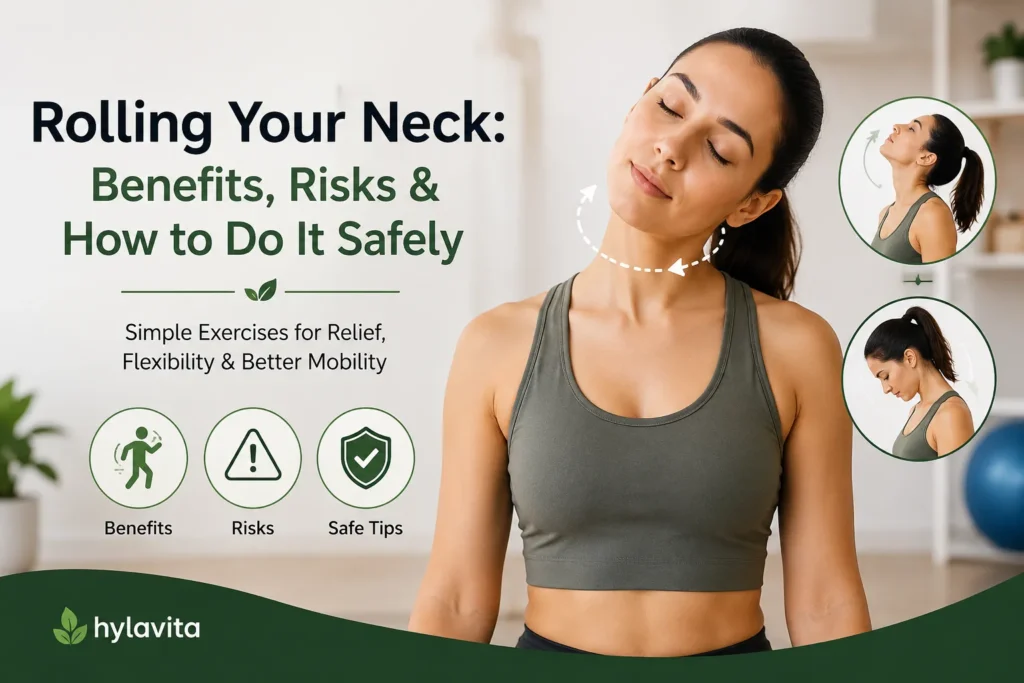
Rolling the neck means moving your head in a slow, circular motion. You start with your chin near your chest, then guide your head sideways, back, and around.
This movement is different from a simple neck rotation exercise, where you just turn your head left and right. Neck rolling uses a fuller range of motion — think of it like slowly stirring a pot instead of just tapping the spoon side to side.
Why People Do It
Most people roll their necks without even thinking. It’s often an instinctive reaction to stiffness after sitting through a long meeting or a movie. Over time, many fitness trainers and physical therapists added it to warm-up routines, treating it as a quick fix for tension before workouts or after screen time. As you’ll see below, that habit is now being reconsidered.
Advantages and Disadvantages of Rolling the Neck
Neck rolls aren’t simply “good” or “bad” — the outcome depends heavily on how far, how fast, and how forcefully you move. Here’s a side-by-side look before we get into detail.
| Advantages | Disadvantages |
|---|---|
| Can loosen tight neck and shoulder muscles after long periods of sitting | Full backward tilts compress the discs and facet joints of the cervical spine |
| May improve local blood flow and circulation to tense muscles | Can pinch or irritate nerves, causing tingling or pain radiating into the arms |
| Supports flexibility and range of motion over time | Backward extension can briefly reduce blood flow through neck arteries, causing dizziness |
| Offers a quick, calming pause that can ease stress | Riskier for people with arthritis, disc problems, or hypermobility |
| Requires no equipment — doable at a desk, in a car, or on the couch | Some physical therapists now advise against full circles entirely, especially for older adults |
The takeaway: the concept of moving your neck through its range of motion is healthy — staying still all day is arguably worse for your neck than gentle movement. The specific technique of a fast, full backward-tilting circle is where most of the risk lives. That distinction shapes the safety advice in the rest of this article.
Neck Rolls Benefits: Why This Simple Move Helps
Relieves Muscle Tension
Sitting still for hours causes the muscles around your neck and shoulders to tighten. Gently moving the neck stretches these muscles, which can reduce that tight, achy feeling.
Improves Blood Flow
Movement helps blood move through the small muscles in your neck, which may help bring oxygen to the area and support recovery after stress or strain.
Boosts Flexibility
Just like stretching your legs before a run, moving the neck through a comfortable range keeps the joints and surrounding muscles flexible, which can make everyday movements — like checking over your shoulder while driving — feel smoother over time.
Reduces Stress
Slow, controlled movements can trigger a sense of calm. Many people find a gentle neck stretch feels like a mini relaxation break. It won’t replace meditation, but it can help you pause and breathe.
Quick and Easy Relief
You don’t need equipment or a gym membership. You can do it at your desk, in your car (while parked), or on the couch, in under a minute.
The Risks of Rolling Your Neck
While neck rolls have clear upsides, they aren’t risk-free, and clinical opinion on the full circular version has become notably more cautious in recent years.
Strain on the Spine
Your neck, or cervical spine, is delicate. It holds up the weight of your head — about 10 to 12 pounds, roughly the size of a bowling ball. Full, forceful circles, especially ones that tip the head all the way back, put extra pressure on the discs and joints in this area.
Pinched Nerves
If you roll your neck too fast or too far back, you risk irritating nerves. This can lead to sharp pain, tingling, or numbness that travels down your arm.
Dizziness
Tilting your head far backward can briefly affect blood flow through the arteries that run through your neck. This is more likely in older adults or people with existing vascular or neck conditions. If you feel dizzy during a roll, stop right away.
Worsening Existing Injuries
If you already have a neck injury, arthritis, or a herniated disc, aggressive neck rolling can make things worse. In this case, it’s best to talk to a doctor or physical therapist before trying it.
According to Cleveland Clinic, neck pain (cervicalgia) is common, affects up to 1 in 5 adults, and can stem from strain, poor posture, aging-related changes like osteoarthritis, or injury — which is part of why generic “one-size-fits-all” neck exercises deserve a bit of caution. Physical therapy clinics that specialize in neck issues, such as Forefront Physical Therapy, have gone further, specifically flagging full neck circles as a move they no longer recommend for anyone, and especially not for people with disc problems, vertigo, joint hypermobility, or a history of neck injury.
How to Roll Your Neck Safely
Given the concerns above, the safest approach is to keep the movement gentle, avoid tipping the head all the way back, and stay well within a pain-free range. The key is slow, controlled movement — never speed or force.
Step-by-Step Instructions
- Sit or stand up straight with your shoulders relaxed.
- Slowly drop your chin toward your chest.
- Gently roll your head to one side, bringing your ear toward your shoulder.
- Continue the motion partway to the back, but don’t force your head to tilt far backward.
- Roll to the other side, then return your chin to your chest.
- Repeat 3 to 5 times, then switch direction.
Tips for Beginners
- Go slowly. Control matters more than speed. If any point causes pain, stop immediately.
- Breathe steadily throughout the movement. Holding your breath can make your muscles tense up more.
- Warm up first. A short walk or a warm shower before rolling your neck can loosen the muscles and reduce strain.
Modified Version: Neck Rotation Exercise
If full rolls feel uncomfortable — or you’d rather avoid the backward-tilt risk altogether — try a neck rotation exercise instead. Simply turn your head to look over one shoulder, hold for a few seconds, then turn to the other side. This avoids the backward tilt that causes most of the risk while still improving mobility.
When to Avoid Rolling the Neck
Some people should skip full neck rolls altogether, including:
- Anyone with a diagnosed neck injury or disc problem
- People who feel dizzy or lightheaded easily
- Those recovering from neck surgery
- Anyone experiencing sharp, shooting pain in the neck or arms
- Older adults, per some physical therapists, given natural declines in bone density and neck strength with age
If you fall into one of these groups, safer alternatives like gentle side-to-side turns, chin tucks, or shoulder shrugs may work better. A physical therapist can guide you to the right exercises for your situation.
Neck Rolling Exercises to Try at Your Desk
You don’t need a gym to loosen up your neck. Try these during work breaks.
The Slow Half-Circle — Instead of a full circle, move your head in a half-circle from shoulder to shoulder, keeping your chin low. This reduces strain on the back of the neck.
Shoulder Roll Combo — Roll your shoulders backward five times, then add a light neck stretch. This combination targets the whole upper back area.
Seated Ear-to-Shoulder Stretch — Sit tall and gently tilt your ear toward your shoulder without lifting your shoulder up. Hold for 10 seconds, then switch sides. This is a safer alternative if full rolls feel too intense.
FAQ: Common Questions About Rolling the Neck
Is it bad to crack your neck when rolling it? Occasional cracking sounds are usually harmless and come from gas bubbles in the joints. However, frequent forceful cracking may irritate the joints over time, so it’s best not to force it on purpose.
How often should I roll my neck? Doing gentle neck movements once or twice a day is generally considered reasonable for most healthy people. If you notice pain or stiffness increasing, cut back and consult a doctor.
Can rolling the neck help with headaches? Many people find that gentle neck movement eases tension headaches caused by tight neck muscles. It’s not a guaranteed cure, though, and won’t help headaches caused by other issues, like migraines.
What’s the difference between neck rolls and neck rotation exercises? Neck rolls involve a fuller circular motion, moving the head down, sideways, and back. Neck rotation exercises usually only involve turning the head side to side, which is generally considered the gentler option.
Can rolling your neck cause long-term damage? If done gently and occasionally, moving the neck rarely causes long-term harm for healthy individuals. But repeated forceful or extreme rolling — especially tilting far backward — may contribute to joint wear over time, which is why several physical therapy clinics now recommend segmental, controlled movements over full circles.
Conclusion
Rolling the neck can be a quick, easy way to ease tension and improve flexibility, especially if you spend hours sitting at a desk. But it’s important to move slowly, stay within a comfortable range, and avoid forcing your head into extreme backward positions.
By following safer techniques — like the half-circle method, chin tucks, or gentle rotation exercises — you can get many of the benefits without the risks that clinicians increasingly associate with full, forceful neck circles. If you have an existing neck condition or feel pain during movement, check with a healthcare professional before continuing.
Try adding a few gentle neck movements to your daily routine and see how your body responds. Small, controlled movements, done consistently, often make the biggest difference.
For more evidence-based wellness guides on stretching, posture, and everyday pain relief, visit Hylavita’s health library.