
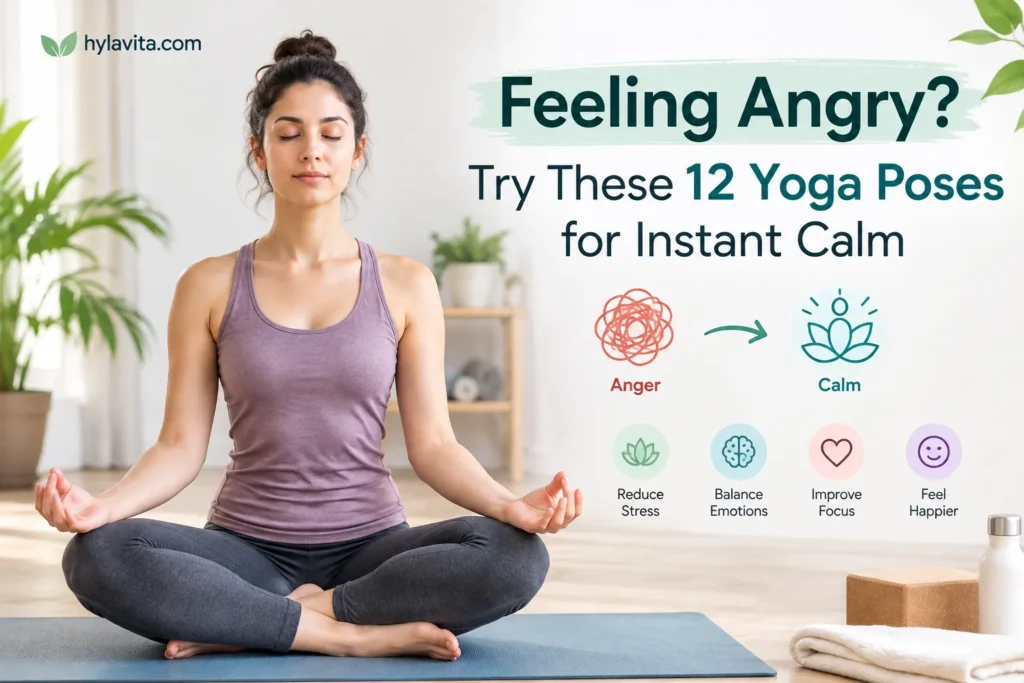
Your jaw is tight. Your heart is racing. Someone said something, and now your whole body feels like a clenched fist.
We’ve all been there. Anger shows up fast, and it doesn’t ask permission. The good news is that yoga and anger management go together better than you might think.
Yoga doesn’t just stretch your muscles. It also calms your nervous system, slows your breathing, and gives your mind a break from the storm. In this article, you’ll find 12 simple yoga poses for anger relief, an honest look at where yoga helps and where it falls short, plus tips on how to use it the next time you feel your temper rising.
You don’t need to be flexible or experienced. You just need a few minutes and a willingness to breathe.
How Anger Affects Your Body and Mind
Anger isn’t just an emotion. It’s a full-body reaction.
When you get angry, your brain triggers a stress response. Your heart rate goes up. Your muscles tense. Your breathing gets short and shallow. This is often called the “fight or flight” response, and it’s the same system that kicks in during fear or panic.
The problem is, this response doesn’t turn off right away. Even after the moment has passed, your body can stay tense for hours. Over time, this can affect your sleep, your relationships, and even your physical health.
This is where yoga for anger management becomes useful. Yoga works on the nervous system by slowing the breath and releasing muscle tension, which can help shift the body out of a stress state. According to the National Center for Complementary and Integrative Health (NCCIH), part of the U.S. National Institutes of Health, research suggests yoga may help improve general wellness by relieving stress and supporting mental and emotional health, and it has shown a substantial beneficial effect on anxiety symptoms across a range of study populations.
Why Yoga Works Better Than Just “Calming Down”
Telling yourself to calm down rarely works in the heat of the moment. Your thinking brain is not fully in charge during anger — your emotional brain is.
Yoga approaches this differently. Instead of trying to think your way out of anger, you move your way out of it. Stretching, deep breathing, and holding poses give your nervous system something physical to do. This can help shift the body out of stress mode.
It’s worth noting that this doesn’t mean any physical activity will do. Research reviewed by NCCIH and others distinguishes between calming, arousal-lowering practices (like yoga, meditation, and slow breathing) and high-arousal activities (like hitting a punching bag or an intense run). The calming category is the one with more consistent evidence behind it for anger and stress reduction — so how you move matters as much as whether you move.
The Benefits and Limits of Yoga for Anger: An Honest Look
Yoga can be a genuinely useful tool for anger, but it isn’t a cure-all. Here’s a balanced picture before you roll out the mat.
Advantages
- No equipment or experience needed. A mat (or even just a floor) and a few minutes are enough to start.
- Works on the body, not just the mind. Because anger is partly a physical reaction, yoga’s direct effect on breathing, heart rate, and muscle tension can interrupt the anger response faster than reasoning alone.
- Low cost and widely accessible. Free videos, apps, and community classes make it one of the more affordable anger-management tools available.
- Builds a long-term habit, not just a quick fix. Regular practice may lower baseline stress levels over time, which can mean fewer and less intense flare-ups.
- Generally low risk. For most healthy adults, yoga is considered a safe form of physical activity when practiced with reasonable care.
Disadvantages
- Not a substitute for treatment. Yoga has little to no evidence of directly treating clinically diagnosed anger disorders or intermittent explosive disorder; it’s a complementary tool, not therapy.
- Slower than some situations require. If anger is already boiling over into conflict, stepping into a yoga pose isn’t always practical or safe in the moment.
- Effects vary by person. Some people find certain poses (like Camel or Warrior II) intensifying rather than calming, especially if balance or a physically demanding pose adds frustration rather than relief.
- Injury risk with poor form. NCCIH notes that yoga-related injuries — mostly sprains and strains — do happen, and older adults and beginners attempting advanced poses without guidance face higher risk.
- Requires consistency to see lasting change. A single session can offer short-term relief, but research on emotional regulation benefits generally involves weeks or months of regular practice, not one-off use.
- Doesn’t address root causes. Yoga can help you manage the physical experience of anger, but it won’t resolve the underlying conflict, trigger, or relationship issue that caused it.
Yoga Poses for Anger: 12 Poses to Try Right Now
Here are 12 yoga poses for anger relief you can practice anywhere — at home, at work, or even in a quiet corner during a stressful day.
1. Child’s Pose (Balasana)
Kneel down, sit back on your heels, and fold forward with your arms stretched out or resting by your sides. Rest your forehead on the mat.
This pose is one of the simplest ways to calm an angry mind. It lowers your head below your heart, which naturally slows your breathing and heart rate.
2. Cat-Cow Stretch (Marjaryasana-Bitilasana)
Get on your hands and knees. Arch your back and look up (cow), then round your spine and tuck your chin (cat). Move slowly between the two.
This gentle flow releases tension stored in your back and shoulders. Many people carry anger physically in these areas without even realizing it.
3. Standing Forward Bend (Uttanasana)
Stand tall, then fold forward from your hips, letting your head and arms hang loose. Bend your knees if your hamstrings feel tight.
Forward folds are known to have a calming effect on the mind. They also give you a moment of physical release, like letting out a long sigh.
4. Legs-Up-The-Wall Pose (Viparita Karani)
Lie on your back and rest your legs up against a wall, forming an L-shape with your body.
This is one of the best yoga poses for anger because it requires almost no effort. It’s deeply restful and helps reset your nervous system after a stressful moment.
5. Seated Forward Bend (Paschimottanasana)
Sit with your legs extended in front of you and fold forward, reaching for your feet or shins.
This pose encourages introspection and slows down racing thoughts. It’s a good one to try when anger comes with a flood of angry thoughts running on repeat.
6. Bridge Pose (Setu Bandhasana)
Lie on your back, bend your knees, and lift your hips off the floor while keeping your feet flat.
Bridge Pose opens the chest, which can feel tight when you’re angry or holding your breath. It also gently energizes the body without overstimulating it.
7. Camel Pose (Ustrasana)
Kneel and gently lean back, reaching for your heels while opening your chest toward the ceiling.
This is a heart-opening pose. Many yoga teachers say we hold emotions in the chest area, and this stretch can help release built-up tension. Note: this is a more intense backbend — skip it if you have back or neck issues, or if it doesn’t feel calming for you.
8. Extended Puppy Pose (Uttana Shishosana)
Start on your hands and knees, then walk your hands forward while keeping your hips above your knees, lowering your chest toward the floor.
This pose combines the stretch of a forward fold with the grounding of Child’s Pose. It’s especially good for releasing tension in the shoulders and upper back.
9. Reclining Bound Angle Pose (Supta Baddha Konasana)
Lie on your back, bring the soles of your feet together, and let your knees fall open to the sides.
This restorative pose is often used to relax the entire body. It’s a good pose for emotional balance because it invites stillness without demanding physical effort.
10. Warrior II (Virabhadrasana II)
Step your feet wide apart, bend one knee, and stretch your arms out to the sides, gazing over your front hand.
Unlike the calming poses above, Warrior II channels anger into strength. It gives you a sense of control and power, which can help you feel less helpless when emotions run high.
11. Eagle Pose (Garudasana)
Wrap one leg around the other and cross your arms in front of you, balancing on one foot.
This pose demands focus. Because it’s tricky to balance, your mind naturally shifts away from angry thoughts and onto the present moment. If balance issues frustrate you rather than calm you, feel free to skip this one.
12. Corpse Pose (Savasana)
Lie flat on your back with your arms and legs relaxed, palms facing up.
Savasana is usually done at the end of a yoga session, but it works well on its own too. It gives your body full permission to rest and lets your nervous system settle completely.
Breathing Techniques That Boost Yoga for Anger Management
Poses alone are helpful, but breathing is where a lot of the calming effect comes from.
Deep Belly Breathing
Place one hand on your belly. Breathe in slowly through your nose, letting your belly rise. Exhale slowly through your mouth.
This simple technique can help slow your heart rate. Try it during any of the poses above for a stronger calming effect.
Extended Exhale Breathing
Breathe in for a count of four, then breathe out for a count of six or eight. A longer exhale is thought to help signal the nervous system to relax.
This works well when anger flares up suddenly, like during an argument or a stressful email.
How Often Should You Practice Yoga for Anger Relief
You don’t need an hour-long yoga class to see benefits. Even five to ten minutes a day can help.
For best results, try to build a short, regular practice — maybe in the morning or before bed. This way, your body may learn to relax more easily over time, not just during moments of anger.
However, when anger strikes suddenly, you can also use just one or two poses as a quick reset. Legs-Up-The-Wall or Child’s Pose work especially well for this because they need no setup.
Other Ways to Support Yoga for Emotional Balance
Yoga works best as part of a bigger picture. Here are a few habits that go hand in hand with your practice — and if you want to go deeper on any of them, we cover them in more detail elsewhere on Hylavita, including our guides on stress management, mindfulness, and self-care.
- Journaling: Writing down what triggered your anger can help you spot patterns over time.
- Regular sleep: Poor sleep makes it harder to manage emotions, including anger.
- Mindful pauses: Simply pausing for three breaths before reacting can prevent a lot of regret later.
If anger feels intense, frequent, or hard to control on your own, it’s worth talking to a therapist or counselor. Yoga can help manage everyday frustration, but as the research overview above makes clear, it isn’t a replacement for professional support when anger becomes overwhelming or starts to affect your relationships, work, or safety.
FAQs About Yoga and Anger Management
Can yoga really help with anger issues?
Yoga may help manage everyday anger by calming the nervous system and slowing the stress response. For ongoing or intense anger issues, it works best alongside professional support like therapy, and current research doesn’t support it as a standalone treatment for diagnosed anger or aggression disorders.
Which yoga pose is best for sudden anger?
Child’s Pose and Legs-Up-The-Wall Pose are two of the easiest options for sudden anger. Both are simple, require no experience, and are designed to calm the body within a few minutes.
How long does it take for yoga to reduce anger?
Some people feel calmer within five to ten minutes of practicing yoga poses for anger relief. However, building lasting emotional balance usually takes regular practice over weeks or months, according to the research reviewed by NCCIH.
Is breathing more important than the poses themselves?
Breathing plays a major role in calming anger, and for some people it matters more than the poses themselves. Combining slow, deep breathing with gentle poses tends to give the best results.
Can beginners practice these anger-relief yoga poses?
Yes, all 12 poses listed here are beginner-friendly. That said, if you’re new to yoga, it’s worth learning proper form (in person or through a reputable video) before attempting deeper poses like Camel, since poor form is a common cause of yoga-related strain.
Are there any risks to using yoga for anger management?
Yoga is generally considered safe for healthy adults, but injuries — usually sprains or strains — can happen, particularly with advanced poses or unsupervised practice. If you’re pregnant, older, or managing a health condition such as a back, neck, or balance issue, it’s a good idea to check with a healthcare provider before starting a new yoga routine.
Conclusion
Anger is a normal emotion, but it doesn’t have to control your day. Yoga and anger management work well together because yoga calms your body first, which helps your mind follow — but it works best as one tool among several, not a replacement for addressing the deeper cause of your anger or for professional help when anger feels out of control.
The next time frustration builds up, try one of these poses. Start with something simple, like Child’s Pose or deep belly breathing, and notice how your body responds.
Give it a try today. Roll out your mat, take a few slow breaths, and let your body lead you back to calm.
Medical Disclaimer: This article is for general informational and educational purposes only and is not a substitute for professional medical or mental health advice, diagnosis, or treatment.