
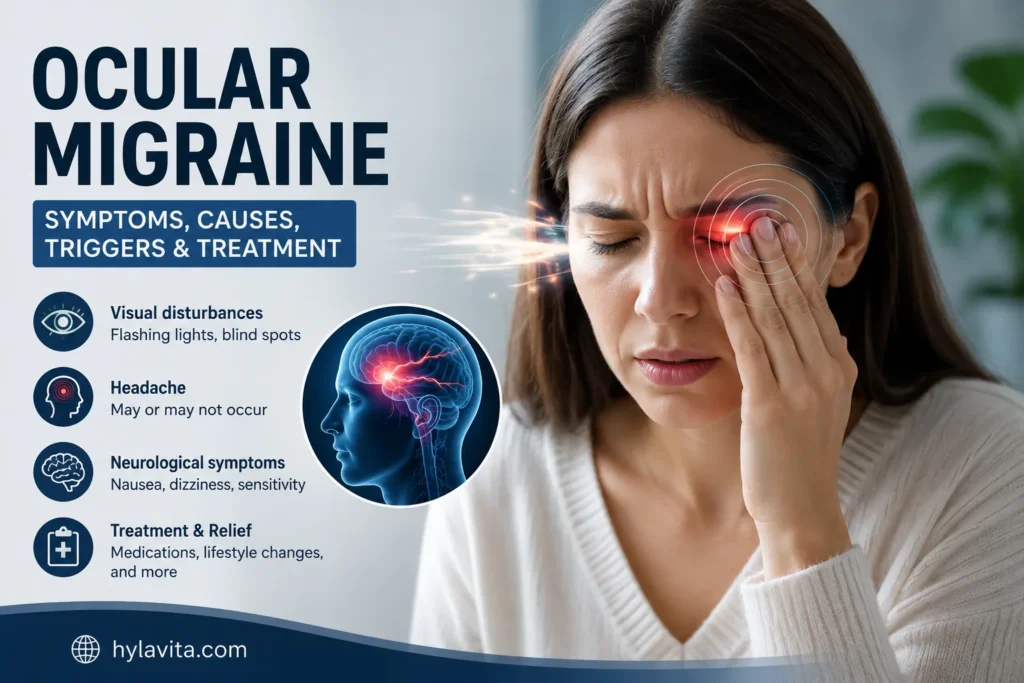
Have you ever seen flashing lights or a blind spot in one eye, out of nowhere? It can be scary, especially the first time it happens. This is often called an ocular migraine, and it affects your vision before or during a headache.
An ocular migraine is not the same as a regular headache. It involves temporary changes in your eyesight, and it can happen with or without pain. Understanding the symptoms, causes, and triggers can help you manage it better and know when to see a doctor.
In this article, we break down everything you need to know about ocular migraine in simple, plain-language terms — grounded in guidance from headache specialists and major medical institutions, not just general wellness advice.
What Is an Ocular Migraine?
An ocular migraine refers to visual disturbances linked to migraine activity. The term is used loosely — headache specialists no longer use “ocular migraine” as a formal clinical term, but it’s still commonly used to describe two different conditions.
Migraine With Aura
This is the most common type. It causes visual symptoms like flashing lights, zigzag lines, or blind spots, and these typically affect both eyes at once (even though it can feel like it’s happening in just one eye). These symptoms usually happen before a headache starts.
Retinal Migraine
This type is rarer and more serious. It affects only one eye and can cause temporary vision loss or blindness in that eye. According to Mayo Clinic, when visual changes are limited to one eye, they could signal something more serious and may need treatment right away. If you notice vision changes in just one eye, get it checked by a doctor promptly, since this can sometimes signal other eye or blood flow problems.
Both types fall under the ocular migraine umbrella, but they are not identical. Knowing the difference matters, because retinal migraine needs closer medical attention.
Ocular Migraine Symptoms
Ocular migraine symptoms can vary from person to person. However, some patterns are common across most cases.
Visual Symptoms
Most people notice one or more of these signs:
- Flashing or flickering lights
- Zigzag or wavy lines in your vision
- A blind spot that slowly spreads
- Shimmering or sparkling spots
- Temporary blurred vision
These visual symptoms typically last between 5 and 60 minutes. In short, they come on gradually, build up, and then fade away on their own.
Symptoms Beyond Vision
An ocular migraine can also bring other symptoms, such as:
- A headache that follows the visual disturbance
- Sensitivity to light or sound
- Mild nausea
- A feeling of pressure behind the eyes
Not everyone gets a headache, though. Some people only experience the visual aura and nothing else. The American Migraine Foundation calls this “migraine aura without headache,” sometimes referred to as a “silent migraine.”
Ocular Migraine Aura Explained
The word “aura” simply means a warning sign that appears before the main event. In migraine, the aura is the sensory disturbance that shows up first.
What Does an Aura Feel Like?
Think of it like static on an old TV screen. You might see shimmering edges around objects, or a small gap in your vision that grows bigger over a few minutes. It can feel strange, but it’s usually not painful by itself.
How Long Does It Last?
An ocular migraine aura generally lasts less than an hour. For most people, it fades gradually rather than stopping suddenly. After the aura passes, a headache may or may not follow.
Aura Without Headache
Some people, especially as they get older, experience aura without any head pain at all. This is more common in people who have had migraines for many years. It can still feel unsettling, even without pain.
Ocular Migraine Causes
Doctors don’t fully understand what causes migraines, including the ocular type. However, research points to a few likely explanations.
Brain Activity Changes
Migraine with aura is thought to involve a wave of unusual electrical activity that moves across the brain’s visual processing area. This wave temporarily disrupts how your brain processes what your eyes see. That’s why you notice flashing lights or blind spots, even though nothing is actually wrong with your eyes themselves.
Blood Vessel Changes
Retinal migraine, on the other hand, is linked to temporary changes in blood flow to the retina, the light-sensitive layer at the back of your eye. This is why only one eye is affected in these cases.
Genetics
Migraines often run in families. If a parent or sibling has migraines, you have a higher chance of getting them too. This suggests a genetic link, though scientists are still studying the exact genes involved.
Common Ocular Migraine Triggers
Triggers don’t cause migraines directly, but they can set one off in people who are already prone to them. Identifying your personal triggers is one of the most useful things you can do.
Lifestyle triggers: Lack of sleep or oversleeping, skipping meals or dehydration, high stress or sudden relaxation after stress, too much screen time.
Environmental triggers: Bright or flickering lights, strong smells like perfume or smoke, loud noises, weather changes such as high humidity or storms.
Dietary triggers: Caffeine, either too much or withdrawal from it; alcohol, especially red wine; aged cheese and processed meats; artificial sweeteners.
Hormonal triggers: Many women notice migraines around their menstrual cycle. This happens because of shifting estrogen levels. Hormonal birth control and menopause can also play a role.
Keeping a simple diary of your symptoms and daily habits can help you spot patterns over time. For example, you might notice migraines tend to follow poor sleep or skipped meals — see our guide on building better sleep habits for practical steps.
Ocular Migraine Treatment: Advantages & Disadvantages of Your Options
There is no single cure for ocular migraine, but several approaches can reduce how often it happens and how severe it feels. Every option comes with trade-offs, so it helps to weigh them before deciding what to try — ideally with a doctor’s input.
During an Episode: Rest and Self-Care Measures
What it involves: Resting in a quiet, dark room, avoiding driving until vision clears, slow breathing, and a cool cloth on the forehead.
- Advantages: No cost, no side effects, can be done anywhere, and directly addresses the sensory overload that can make an episode feel worse.
- Disadvantages: Doesn’t shorten the episode itself (it typically resolves on its own regardless), and isn’t practical if you’re at work, driving, or unable to step away.
Over-the-Counter Pain Relievers
What it involves: Medications like ibuprofen or acetaminophen for any headache that follows the visual symptoms.
- Advantages: Widely available, inexpensive, and effective for occasional, mild-to-moderate headache pain.
- Disadvantages: Doesn’t treat the visual aura itself; frequent use (more than a couple of times a week) can lead to medication-overuse headaches; not a long-term solution for recurring episodes.
Triptans
What it involves: Prescription medications that can stop a migraine once it starts.
- Advantages: Often fast-acting and effective for moderate-to-severe migraine attacks; well studied.
- Disadvantages: Requires a prescription; not recommended for people with certain cardiovascular conditions; can cause side effects like tingling, flushing, or chest tightness; generally not used for retinal migraine without a doctor’s guidance, since triptans constrict blood vessels.
Daily Preventive Medications
What it involves: Medications (including some blood pressure drugs used off-label) taken daily to reduce how often migraines occur.
- Advantages: Can meaningfully cut down on frequency and severity for people with frequent episodes; may reduce reliance on acute medications.
- Disadvantages: Takes weeks to show effect, requires consistent daily use, and can carry side effects (fatigue, weight changes, mood effects) depending on the drug class; needs ongoing medical supervision.
Long-Term Lifestyle Management
What it involves: Regular sleep schedules, hydration, stress management, and avoiding known personal triggers.
- Advantages: No side effects, supports overall health beyond migraine, and often reduces frequency over time; low cost.
- Disadvantages: Requires sustained effort and consistency; results build gradually rather than offering quick relief; triggers vary by person, so it can take time (and a symptom diary) to identify what actually helps.
Think of ocular migraine treatment like managing allergies: you likely won’t eliminate it completely, but the right combination of habits and, where appropriate, medication can meaningfully reduce how often flare-ups happen. Always talk to a doctor before starting any new medication, especially since retinal migraine sometimes requires different treatment than migraine with aura, as noted by Cleveland Clinic.
When to See a Doctor
Most ocular migraines are harmless and pass on their own. However, you should see a doctor if:
- The vision loss affects only one eye
- Symptoms last longer than an hour
- You experience a sudden, severe headache unlike any before
- You have slurred speech, weakness, or confusion along with vision changes
- Visual changes begin after age 50, or start without any accompanying headache for the first time
These signs could point to something more serious, such as a stroke or retinal detachment. It’s always better to get checked than to assume it’s “just a migraine.” If it’s been a while since your last exam, a comprehensive eye exam can also help rule out unrelated eye conditions.
FAQs About Ocular Migraine
Is an ocular migraine dangerous? Most ocular migraines are not dangerous and go away without lasting harm. However, retinal migraine, which affects one eye, needs medical evaluation since it can sometimes signal a more serious problem.
Can ocular migraine happen without a headache? Yes, this is quite common. Many people experience the visual aura without any pain at all, especially as they get older.
How long does an ocular migraine last? Most visual symptoms last between 5 and 60 minutes. If a headache follows, it can last anywhere from a few hours to a full day.
What triggers an ocular migraine the most? Triggers vary by person, but common ones include lack of sleep, stress, bright lights, dehydration, and hormonal changes. Keeping a symptom diary can help you find your specific triggers.
Can I prevent ocular migraines completely? You may not be able to prevent them entirely, but avoiding known triggers, staying hydrated, sleeping well, and managing stress can lower how often they occur.
Conclusion
An ocular migraine can feel alarming, especially the first time it happens. However, in most cases, it is a temporary and manageable condition. Knowing the symptoms, causes, common triggers, and the real trade-offs of each treatment option puts you in a better position to handle it calmly when it strikes.
If your symptoms are frequent, severe, or affect only one eye, don’t wait it out. Talk to a doctor to rule out other causes and find a treatment plan that works for you.
Medical Disclaimer: This article is for informational and educational purposes only. It does not constitute medical advice, diagnosis, or treatment, and it is not a substitute for professional medical care.