
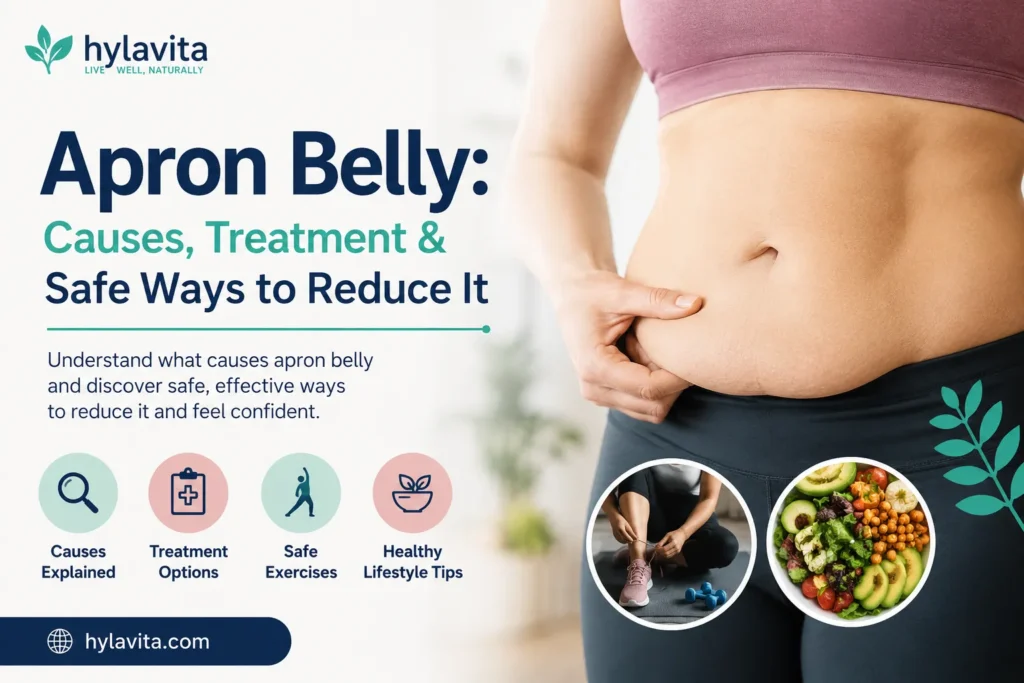
Look down and see extra skin and fat hanging over your waistline? You’re not the only one dealing with this, and there’s nothing wrong with you.
An apron belly is more common than most people realize. It can show up after pregnancy, major weight loss, or simply with age. Understanding what causes an apron belly is the first step toward dealing with it in a healthy way.
In this article, we’ll break down what an apron belly actually is, why it happens, what symptoms to watch for, the pros and cons of each treatment path, and safe, realistic ways to reduce it. No fad diets. No miracle pills. Just clear, honest information — and for more everyday wellness guides like this one, you can browse the full library at Hylavita.
What Is an Apron Belly?
An apron belly, also called a panniculus or pannus, is a fold of excess skin and fat that hangs down from the lower abdomen. It can drape over the pubic area like, well, an apron.
This isn’t the same as regular belly fat. Regular belly fat sits under the skin fairly evenly. An apron belly is a distinct flap of tissue that hangs and moves separately from the rest of the abdomen. According to Healthline, the “apron” of tissue is medically distinct from a tummy tuck target area because it isn’t just about muscle tightening — it’s specifically the excess overhanging skin and fat.
How It’s Different from Normal Belly Fat
Normal belly fat tends to feel firm and stays close to the body. An apron belly, on the other hand, often feels softer and hangs lower, especially when you stand up.
Many people with an apron belly also have a normal amount of fat elsewhere on their body. In short, it’s not always about total weight. It’s about how skin and fat have stretched and settled in one specific area.
Apron Belly Causes
There isn’t just one reason an apron belly develops. Several factors can work together over time.
Pregnancy and Childbirth
During pregnancy, the skin and abdominal muscles stretch to make room for a growing baby. After birth, the skin doesn’t always snap back into place.
This is especially common after multiple pregnancies or carrying twins. The stretched skin can hang as a soft fold even after the uterus returns to its normal size. Hormonal shifts around pregnancy can also affect the skin more broadly in the postpartum period, not just at the belly.
Significant Weight Loss
Losing a large amount of weight, whether through diet changes or weight loss surgery, is a common cause. When fat cells shrink quickly, the skin around them often doesn’t shrink at the same pace.
This leaves behind loose, hanging skin, particularly around the stomach. This is one reason people who have lost significant weight sometimes still feel self-conscious about their midsection.
Aging and Skin Elasticity
As we age, skin naturally loses collagen and elastin — the proteins that keep skin firm and springy. Research on dermal collagen shows that the structure of collagen fibers becomes rougher and more fragmented with age, which reduces the skin’s ability to spring back into place after stretching.
With less collagen, skin sags more easily. This is why an apron belly becomes more common in older adults, even without major weight changes.
Genetics and Body Type
Some people are simply more prone to storing fat in the lower abdomen due to genetics. Family history can play a role in how your body distributes fat and how your skin responds to changes in weight.
Other Contributing Factors
A sedentary lifestyle, hormonal changes, and certain medical conditions can also contribute. For example, conditions that cause fluid retention or hormonal imbalance may worsen the appearance of an apron belly.
Apron Belly Symptoms
An apron belly isn’t just a cosmetic issue.It may also cause noticeable physical discomfort or other symptoms.
Physical Discomfort
The extra skin fold can rub against itself, especially in warm weather or during physical activity. This friction can lead to chafing, irritation, or even skin infections in the fold if it isn’t kept clean and dry.
Back and Posture Issues
Carrying extra weight in front of the body can shift your center of gravity. Over time, this may lead to lower back pain or poor posture as the body compensates.
Difficulty with Movement
Some people find that an apron belly makes certain movements harder, like bending, tying shoes, or exercising comfortably. This isn’t a personal failing. It’s simply a physical reality of extra tissue in that area.
Emotional Impact
It’s worth saying clearly: many people feel self-conscious about an apron belly. This is a normal reaction, and it doesn’t reflect your worth or discipline. Addressing it, if you choose to, is about comfort and health, not appearance alone.
Advantages and Disadvantages of Apron Belly Treatment Options
There’s no single “best” way to address an apron belly — the right approach depends on your goals, your health, and how much loose skin versus fat is involved. Here’s a balanced look at the main options.
Non-Surgical Approaches (Diet, Exercise, Skin Care)
Advantages
- It’s generally more affordable and involves fewer risks than surgical procedures.
- Can be started immediately, with no recovery time
- Improves overall health markers (cardiovascular fitness, blood sugar, core strength), not just appearance
- Builds sustainable habits that support long-term weight and posture management
Disadvantages
- Cannot remove loose, stretched skin — only surgery can do that
- Visible improvements usually develop slowly and may take several months to appear.
- Requires ongoing consistency; results can partially reverse if habits lapse
- May not meaningfully change the apron in cases where it’s mostly skin rather than fat
Panniculectomy
A panniculectomy removes the excess hanging skin and fat (the pannus) but does not tighten the underlying abdominal muscles, since it isn’t classified as a cosmetic procedure.
Advantages
- Directly removes the overhanging skin fold that diet and exercise cannot touch
- Can reduce chronic rashes, skin infections, and irritation under the fold
- May be considered medically necessary (and sometimes partially covered by insurance) when it’s causing recurring infections or mobility problems, unlike a purely cosmetic procedure
- Can improve mobility and comfort with everyday movement
Disadvantages
- It’s major surgery, with real risks: infection, bleeding, scarring, and anesthesia risks
- Recovery typically takes several weeks, with activity restrictions
- Does not tighten muscles or dramatically reshape the abdomen the way a tummy tuck does
- Cost can be significant if not deemed medically necessary by insurance, per WebMD
- Candidacy requirements are strict (stable weight for 6+ months, non-smoker, generally healthy)
Abdominoplasty (Tummy Tuck)
Advantages
- Removes excess skin and also tightens loose abdominal muscles for a flatter, firmer result
- Often combined with a panniculectomy for people who want both functional and cosmetic improvement
Disadvantages
- Considered a cosmetic procedure, so it’s rarely covered by insurance
- Longer, more involved recovery than a panniculectomy alone
- Same surgical risks (infection, scarring, anesthesia complications) apply
- Not recommended until weight has been stable and, if applicable, well after any weight-loss surgery
How to Reduce Apron Belly Safely
There’s no overnight fix for an apron belly. However, there are safe, realistic methods that can help reduce its size or improve how it feels.
Focus on Overall Weight Management
If excess fat is contributing to the apron belly, gradual, sustainable weight loss can help. This means eating a balanced diet with plenty of vegetables, lean protein, and whole grains, rather than following extreme or restrictive diets.
Losing weight slowly, around 0.5 to 1 kg per week, also gives your skin more time to adjust. This can reduce the amount of loose skin left behind compared to rapid weight loss.
Strengthen Your Core Muscles
Exercise won’t remove loose skin, but it can strengthen the muscles underneath it. A firmer core can improve posture and make the belly area feel more supported.
Simple exercises like planks, walking, and gentle abdominal work are good starting points. For example, a daily 20-minute walk combined with basic core exercises can make a noticeable difference over a few months.
Support Skin Health
Staying hydrated and eating foods rich in vitamin C and protein can support your skin’s natural collagen production. While this won’t dramatically shrink an apron belly, it may help skin look and feel a bit firmer over time.
Manage Hygiene and Comfort
If the apron belly causes chafing or irritation, keeping the skin fold clean and dry is important. Some people use breathable fabric or moisture-wicking clothing to reduce friction, especially during exercise or in hot weather.
Consider Medical or Surgical Options
For some people, diet and exercise alone won’t remove a significant apron belly, especially after major weight loss. In these cases, a panniculectomy (removal of the excess skin apron) or an abdominoplasty (tummy tuck) may be an option — see the pros and cons of each above.
These are surgical procedures and come with real risks, recovery time, and costs. Anyone considering this route should talk to a board-certified surgeon to understand what’s realistic for their situation. This is a decision that deserves proper medical guidance, not a quick online answer.
Be Patient and Realistic
It’s important to set honest expectations. Diet and exercise can reduce fat and strengthen muscle, but they generally cannot remove excess, loose skin on their own. Knowing this upfront can help you choose the right approach without frustration.
When to See a Doctor
If your apron belly comes with severe pain, recurring skin infections, or sudden changes in size, it’s a good idea to check in with a doctor. These could be signs of an underlying issue that needs attention.
A doctor can also help you figure out whether your apron belly is related to weight, muscle separation (a condition called diastasis recti), or another cause. This makes it easier to choose the right next step.
FAQ: Common Questions About Apron Belly
Can you get rid of an apron belly without surgery? Yes, to some degree. Weight loss and core-strengthening exercises can reduce fat and tighten muscles underneath. However, if the apron belly is mostly loose skin, non-surgical methods usually can’t remove it completely.
Is apron belly the same as belly fat? Not exactly. Belly fat is fat stored under the skin across the abdomen, while an apron belly is a distinct fold of skin and fat that hangs down. Someone can have an apron belly even with a relatively low amount of overall body fat.
Does an apron belly go away after weight loss? It can shrink, but it may not disappear completely, especially if there’s a lot of loose skin involved. This is more likely after major or rapid weight loss.
Is apron belly dangerous? An apron belly itself isn’t usually dangerous, but it can lead to skin irritation, infections, or back pain if left unmanaged. If you notice unusual symptoms, it’s worth speaking to a healthcare provider.
How long does it take to reduce an apron belly? There’s no fixed timeline, since it depends on your starting point, weight loss speed, and skin elasticity. Gradual, consistent changes over several months tend to bring better and more lasting results than quick fixes.
Conclusion
An apron belly can feel frustrating, but it’s a common and very manageable part of many people’s health journeys. Whether it’s from pregnancy, weight loss, or aging, understanding the real apron belly causes — and weighing the genuine pros and cons of each treatment path — helps you make informed choices instead of chasing quick fixes.
Safe weight management, core exercises, good skin care, and patience are the best starting points. For more significant cases, a conversation with a doctor about medical or surgical options can help you decide what’s right for you.
If you’re dealing with an apron belly, be kind to yourself. Small, steady steps often lead to the best long-term results. For more evidence-based guides on weight management, core strength, and everyday health, visit Hylavita.
Medical Disclaimer:This article is for informational and educational purposes only and does not constitute medical advice, diagnosis, or treatment.