
Introduction
Got a chipped tooth or an awkward gap you keep hiding in photos? You’re not alone, and the fix might be simpler than you think.
Cosmetic dental bonding is one of the fastest, most affordable ways to fix small tooth problems. It doesn’t need surgery, drilling in most cases, or weeks of waiting. A dentist simply reshapes your tooth with a tooth-colored material, and you walk out with a better smile the same day.
In this guide, we’ll cover what cosmetic dental bonding actually involves, what it costs, how the procedure works, its pros and cons, and how long you can expect it to last. This piece draws on patient-education resources published by the Cleveland Clinic and WebMD, and it should be used as general information rather than a substitute for advice from your own dentist. By the end, you’ll know whether it’s the right choice for your smile — and what to ask your dentist before booking.
What Is Cosmetic Dental Bonding?
Cosmetic dental bonding is a treatment where a dentist applies a tooth-colored resin to your tooth to fix chips, cracks, gaps, discoloration, or minor shape issues. The resin is shaped by hand and then hardened with a special light.
Think of it like sculpting with clay, except the “clay” matches your natural tooth color and becomes rock-hard once set. This is why it’s often called composite dental bonding — the material used is a composite resin, the same type used in tooth-colored fillings. According to the American Dental Association’s MouthHealthy resource, composite resin is popular precisely because it blends in with the natural color of surrounding teeth, though it isn’t quite as durable as some alternative materials.
How It’s Different From Veneers or Crowns
Veneers and crowns often need your natural tooth to be filed down first. Bonding usually doesn’t. The dentist adds material to your tooth instead of removing large parts of it, and unlike porcelain veneers, dental bonding is generally considered reversible.
This makes bonding a more conservative option. However, it’s also less durable than porcelain veneers or crowns, which we’ll explain later in this article.
Pros and Cons of Cosmetic Dental Bonding
Every cosmetic treatment involves trade-offs, and bonding is no exception. Here’s a balanced look at both sides before you decide.
Pros
- Quick and painless. Most bonding treatments take about 30 to 60 minutes per tooth. Anesthesia usually isn’t needed, unless the bonding is being used to fill a cavity near a nerve.
- Affordable compared to other options. Bonding is generally one of the cheaper cosmetic dental treatments, costing less than veneers or crowns in most cases.
- Minimal enamel removal. Since your dentist doesn’t need to shave down your tooth, the procedure keeps more of your natural tooth intact.
- Reversible. Because so little (if any) enamel is removed, bonding can typically be undone or redone later, unlike veneers or crowns.
- Fixes multiple issues at once. It can address chips, cracks, small gaps, staining, worn edges, and minor shape irregularities in a single visit.
Cons
- Less durable than veneers or crowns. Bonding material typically lasts a few years to about a decade, depending on the tooth and your habits, while crowns and veneers can last considerably longer.
- Prone to staining. Composite resin doesn’t resist stains from coffee, tea, red wine, or smoking as well as porcelain or natural enamel does.
- Can chip or break off. Because it’s a surface-applied material rather than a solid restoration, bonding is more vulnerable to chipping from nail-biting, ice-chewing, or grinding.
- Not ideal for major repairs. Bonding works best for small cosmetic touch-ups. Larger structural damage, severe misalignment, or extensive decay usually call for veneers, crowns, or orthodontic treatment instead.
- Usually not covered by insurance when it’s done purely for cosmetic reasons.
Both the Cleveland Clinic and WebMD note that bonding is best suited to minor, low-bite-pressure repairs (like front teeth) rather than as a long-term fix for significant damage — so it’s worth discussing your specific goals with a dentist before choosing it over other cosmetic options.
Cosmetic Dental Bonding Procedure: Step by Step
Wondering what actually happens in the dentist’s chair? Here’s the dental bonding procedure broken down into simple steps.
Step 1: Consultation and Shade Matching
Your dentist checks your teeth and picks a resin shade that matches your natural tooth color. This step matters a lot — a mismatched shade will look obvious.
Step 2: Preparing the Tooth Surface
The dentist lightly roughens the tooth surface and applies a conditioning liquid. This helps the bonding material stick properly.
Step 3: Applying the Resin
The putty-like resin is applied and molded into the right shape. The dentist smooths and shapes it to blend with your other teeth.
Step 4: Curing With Light
A special light hardens the resin in seconds. This is what makes the material strong and durable.
Step 5: Final Shaping and Polishing
Once hardened, the dentist trims any extra material and polishes the tooth. The polishing step gives it a natural, glossy look that matches real enamel.
Most patients don’t need any recovery time. You can eat and talk normally right after leaving the office, though it’s smart to avoid staining foods for the first 24 to 48 hours.
Cosmetic Dental Bonding Cost
Let’s talk numbers, since this is usually the deciding factor for most people.
What Affects the Price
Cosmetic dental bonding cost depends on a few things:
- Number of teeth being treated
- Location of the dental practice (city clinics often charge more than smaller towns)
- Dentist’s experience and reputation
- Complexity of the repair needed
General Price Range
Bonding is typically priced per tooth rather than as a flat fee. In general, it tends to be more affordable than veneers, crowns, or orthodontic work, since it uses less material and takes less chair time.
Because prices vary a lot between clinics and countries, it’s best to ask for a written quote during your consultation. Many dentists offer a free or low-cost first visit to assess your teeth and give you an accurate estimate.
Does Insurance Cover It?
If bonding is done purely for cosmetic reasons, insurance usually won’t cover it. However, if it’s used to repair a decayed or damaged tooth, some dental insurance plans may cover part of the cost. It’s worth checking with your provider before booking.
How Long Does Dental Bonding Last?
This is one of the most common questions dentists hear, and the honest answer is: it depends on how you treat it.
Average Lifespan
Cosmetic dental bonding generally lasts several years with proper care, though it doesn’t last as long as porcelain veneers or crowns. The exact lifespan varies based on the location of the bonded tooth and your daily habits.
What Shortens Its Lifespan
A few habits can wear down bonding faster:
- Biting nails, pens, or ice
- Chewing on hard candy
- Grinding your teeth at night
- Smoking or drinking a lot of coffee, tea, or red wine (this can stain the resin over time)
Tips to Make It Last Longer
- Avoid using your front teeth to open packages
- Wear a night guard if you grind your teeth
- Brush and floss daily, just like with natural teeth
- Visit your dentist regularly for check-ups and polishing
If a bonded tooth chips or wears down, the good news is that it can usually be repaired or touched up without redoing the entire treatment.
Dental Bonding Before and After: What to Expect
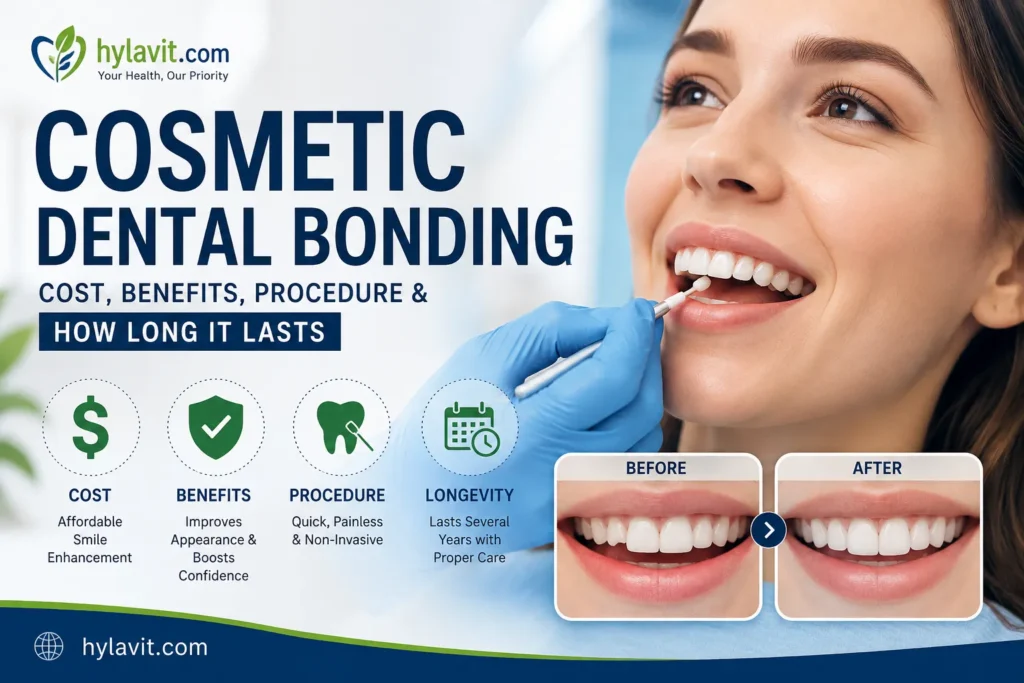
Looking at dental bonding before and after results can help set realistic expectations. In most cases, the change is subtle but noticeable — a chipped edge becomes smooth, a gap closes, or a stained tooth blends in with the rest of your smile.
Bonding won’t make your teeth look artificially perfect like veneers sometimes can. Instead, it aims for a natural result that fits your existing smile. Many dentists share before-and-after photos on their websites or social media, so ask to see examples of their previous work before committing.
Is Cosmetic Dental Bonding Right for You?
Bonding works best for minor cosmetic issues. If you have a small chip, slight discoloration, or a narrow gap, it’s often a great fit.
However, if you have major structural damage, severe misalignment, or need a full smile makeover, your dentist might suggest veneers, crowns, or orthodontics instead. A consultation is the best way to know which option suits your specific teeth.
If you’re also exploring other ways to care for your smile day-to-day, you can browse more everyday wellness guides on Hylavita.
FAQs About Cosmetic Dental Bonding
Is cosmetic dental bonding painful? No, bonding is usually painless since it doesn’t involve removing much tooth structure. Anesthesia is rarely needed unless the dentist is also treating a cavity near a nerve.
How is composite dental bonding different from a filling? They use the same type of material, but bonding is applied for cosmetic reasons like shape or color, while fillings are used to repair cavities. Sometimes bonding does both jobs at once.
Can dental bonding be whitened later? No, bonding material doesn’t respond to teeth whitening the way natural enamel does. It’s best to whiten your teeth first, then get bonding done to match the new shade.
Does dental bonding stain easily? Yes, bonding can stain more easily than natural enamel, especially from coffee, tea, wine, or smoking. Regular brushing and avoiding these habits right after treatment help keep it looking clean.
How many teeth can be bonded at once? There’s no strict limit — some patients get one tooth bonded, while others treat several at the same time. Your dentist will advise based on your goals, budget, and the condition of your teeth.
Conclusion
Cosmetic dental bonding is a simple, budget-friendly way to fix small chips, gaps, and stains without major dental work. It’s quick, generally painless, and can be done in a single visit, which makes it a popular first step for people wanting a better smile. It also comes with real trade-offs — it stains and chips more easily than crowns or veneers, and it isn’t meant for major repairs — so weighing the pros and cons against your specific situation matters.
That said, the cosmetic dental bonding cost and results can vary depending on your dentist and the condition of your teeth. The best next step is to book a consultation with a licensed dentist near you, who can look at your teeth and tell you honestly whether bonding is the right fit.