
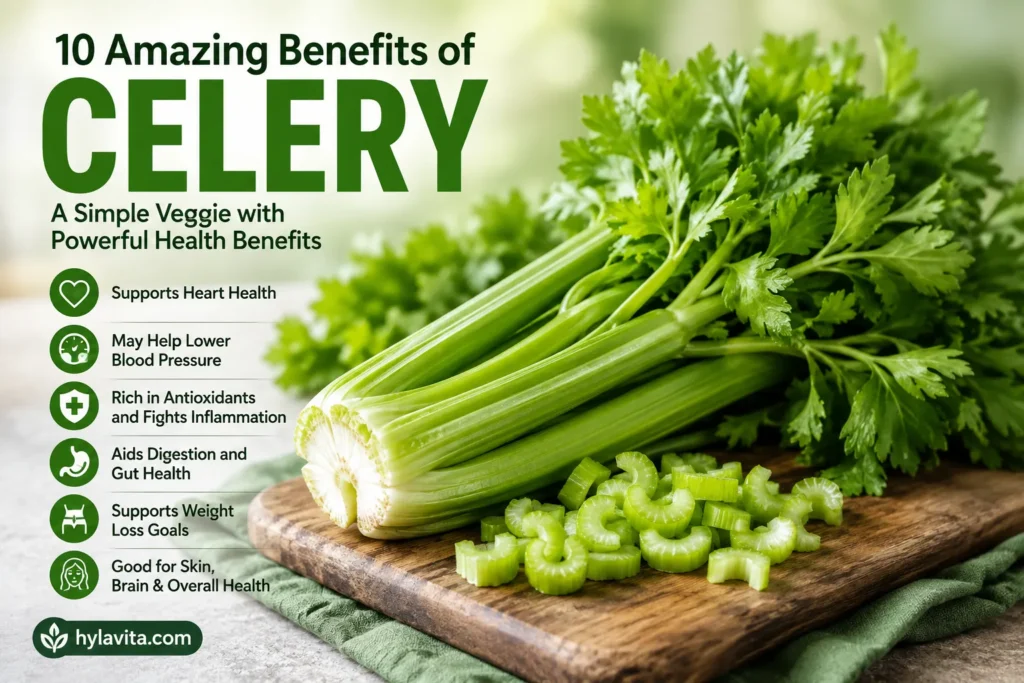
Celery has a reputation problem. For decades, it’s been treated as little more than a “diet food” the crunchy, watery stick you eat when you’re trying to cut calories, or the sad garnish sitting next to a plate of buffalo wings. But this humble green vegetable deserves a lot more credit than it gets.
Celery has been cultivated for thousands of years, originally valued by ancient civilizations for its medicinal properties long before it became a salad staple. The Greeks and Romans used it in remedies, and it eventually made its way into kitchens across the world as both a flavor base and a nutritious snack.
In this article, we’ll go beyond the “low-calorie” label and explore ten science-backed reasons celery deserves a permanent spot in your diet from heart health to skin health and even brain function. We’ll also cover the best ways to eat it and a few precautions worth knowing.
What Is Celery? A Quick Overview
Origin and Types of Celery
Celery (Apium graveolens) belongs to the same family as carrots, parsley, and fennel. It’s believed to have originated in the Mediterranean region and parts of the Middle East, where wild varieties were originally used more for their aromatic leaves and seeds than their stalks. Over centuries of cultivation, the plant was bred to develop the thick, crisp stalks we recognize today.
There are a few common types of celery:
- Pascal celery – the standard green-stalked variety found in most grocery stores.
- Celeriac (celery root) – grown for its knobby root rather than its stalks, often used in soups and purees.
- Chinese celery – a thinner, more intensely flavored variety common in Asian cooking.
- Celery seed – used as a spice and also available as a supplement.
Nutritional Profile
Celery is often mocked for being “mostly water,” and it’s true — about 95% of celery is water. But that doesn’t mean it’s nutritionally empty. A single cup of chopped celery contains:
- Roughly 14–16 calories
- About 1.6 grams of fiber
- A good source of vitamin K (supporting bone health and blood clotting)
- Vitamin A, vitamin C, folate, and potassium
- Small amounts of calcium and magnesium
It also contains unique plant compounds called phthalides, along with flavonoid antioxidants — both of which play a role in several of the benefits below.
1. Supports Healthy Digestion
How Celery’s Fiber Content Aids Gut Health
Celery contains both soluble and insoluble fiber. Insoluble fiber adds bulk to stool and helps food move more efficiently through the digestive tract, which can help prevent constipation. Soluble fiber, meanwhile, feeds beneficial gut bacteria, supporting a healthier microbiome.
Celery and Water Content for Smoother Digestion
Because celery is so water-rich, it helps keep digestive contents moving smoothly and may reduce the risk of bloating or sluggish digestion. The combination of water and fiber is part of why celery is often recommended as a gentle, gut-friendly snack.
2. May Help Lower Blood Pressure
The Role of Phthalides in Celery
Phthalides are natural compounds found in celery that are thought to help relax the muscles in and around artery walls, which can improve blood flow and reduce pressure on the cardiovascular system.
What Studies Say About Celery and Hypertension
Several small studies and animal models have explored celery extract’s effect on blood pressure, with some showing modest reductions. While more large-scale human research is needed before celery can be called a treatment for hypertension, the existing evidence is promising enough that many nutritionists recommend it as part of a heart-healthy diet — not as a replacement for prescribed medication.
3. Packed with Powerful Antioxidants
Key Antioxidants Found in Celery
Celery contains a range of antioxidants, including flavonoids like luteolin and kaempferol, vitamin C, and beta-carotene. These compounds are concentrated in both the stalks and, even more so, the leaves which are often discarded but shouldn’t be.
How Antioxidants Protect Your Cells
Antioxidants work by neutralizing free radicals, unstable molecules that can damage cells over time and contribute to aging and chronic disease. Regularly eating antioxidant-rich foods like celery may help reduce this cellular stress.
4. Helps Reduce Inflammation
Chronic Inflammation and Its Health Risks
Short-term inflammation is a normal part of healing, but chronic, low-grade inflammation is linked to conditions like heart disease, arthritis, and even certain cancers.
Compounds in Celery That Fight Inflammation
Celery contains apigenin and luteolin, two flavonoids with documented anti-inflammatory properties in laboratory studies. While human clinical trials are still limited, these compounds are part of why celery is sometimes included in anti-inflammatory diet plans alongside foods like turmeric and fatty fish.
5. Supports Weight Loss and Management
Why Celery Is a Low-Calorie, High-Fiber Food
Celery’s combination of very low calories and decent fiber content makes it a satisfying option when you’re trying to manage weight. The fiber and water content contribute to a feeling of fullness without adding significant calories to your day.
Celery as a Smart Snack Alternative
Swapping high-calorie snacks chips, crackers, or sugary treats for celery sticks (perhaps with a small amount of hummus or nut butter) can meaningfully reduce daily calorie intake while still giving you something to crunch on.
6. Promotes Heart Health
Celery’s Effect on Cholesterol Levels
Some animal studies suggest celery extract may help lower LDL (“bad”) cholesterol while supporting healthier triglyceride levels. This is thought to be linked to celery’s phthalide and fiber content.
How It Supports Overall Cardiovascular Function
Beyond cholesterol, celery’s potassium content helps balance sodium levels in the body, which supports healthy blood pressure one of the key pillars of long-term cardiovascular health.
7. May Help Regulate Blood Sugar Levels
Celery’s Role in Insulin Sensitivity
Some preliminary research suggests compounds in celery may support insulin sensitivity, helping the body use blood sugar more efficiently. Its low glycemic impact also means it won’t cause the blood sugar spikes associated with refined carbohydrates.
Is Celery Good for Diabetics?
Because it’s low in carbohydrates and high in fiber, celery is generally considered a diabetes-friendly food. That said, people managing diabetes should always discuss specific dietary changes with their doctor or a registered dietitian rather than relying on any single food.
8. Supports Hydration
Water Content in Celery Explained
At roughly 95% water, celery is one of the most hydrating vegetables you can eat. It’s a simple way to boost fluid intake, especially for people who struggle to drink enough water throughout the day.
Benefits of Hydration for Overall Health
Proper hydration supports everything from kidney function and joint lubrication to energy levels and skin appearance. Eating water-rich foods like celery is a small but effective way to support these functions alongside regular water intake.
9. May Improve Skin Health
Vitamins That Support Skin Repair and Glow
Celery’s vitamin A and vitamin C content both play roles in skin repair and collagen production, which can contribute to a healthier, more even complexion over time.
Celery Juice and Skin Benefits
Many people who drink celery juice regularly report clearer, more hydrated-looking skin. While rigorous clinical evidence specifically on celery juice and skin is limited, the vitamins, antioxidants, and hydration it provides are all plausible contributors to this effect.
10. Could Support Brain Health and Reduce Anxiety
Luteolin and Its Effect on Brain Inflammation
Luteolin, one of the key flavonoids in celery, has been studied for its potential to reduce inflammation in brain tissue. Chronic neuroinflammation has been linked to cognitive decline, making anti-inflammatory foods a topic of ongoing research interest.
Celery’s Potential Calming Properties
Some early research suggests celery extract may have mild calming effects on the nervous system, though this area of study is still developing. It shouldn’t be relied upon as a treatment for anxiety, but it’s an interesting area where food and mental wellness may intersect.
How to Add More Celery to Your Diet
Easy Ways to Eat Raw Celery
- Pair celery sticks with hummus, guacamole, or nut butter
- Add diced celery to tuna, chicken, or egg salad for crunch
- Toss chopped celery into soups, stir-fries, or stews
- Use celery as a base (alongside onion and carrot) for stocks and sauces
Celery Juice vs. Whole Celery Which Is Better?
Celery juice has become popular as a wellness trend, often consumed first thing in the morning. It delivers a concentrated dose of vitamins and antioxidants but strips out most of the fiber found in whole celery. Whole celery, on the other hand, offers the fiber benefits for digestion and fullness that juice lacks. Neither is strictly “better” they simply offer different benefits, and many people choose to enjoy both.
Simple Recipes and Meal Ideas
- Classic celery and apple salad with a light yogurt dressing
- Homemade vegetable soup with celery, carrots, and onion
- Celery, cucumber, and green apple juice blend
- Stir-fried celery with garlic and sesame oil as a quick side dish
Are There Any Side Effects or Risks of Eating Celery?
Allergies and Sensitivities
Celery allergy is relatively uncommon but can be serious, particularly in parts of Europe where it’s a recognized allergen. Symptoms can range from mild itching or swelling in the mouth to more severe reactions in sensitive individuals.
Pesticide Concerns (Why “Dirty Dozen” Matters)
Celery has historically appeared on the Environmental Working Group’s “Dirty Dozen” list, which highlights produce with higher pesticide residue levels when conventionally grown. Choosing organic celery, or washing conventional celery thoroughly, can help reduce exposure.
Who Should Be Cautious
People with known celery or birch pollen allergies, those on certain blood pressure medications (due to celery’s mild blood-pressure-lowering effect), and pregnant women (celery seed in concentrated supplement form is sometimes advised against) should speak with a healthcare provider before making major dietary changes involving celery.
Conclusion
Celery may not have the flashy reputation of superfoods like blueberries or kale, but its benefits are genuinely impressive once you look past the “diet food” stereotype. From supporting digestion and heart health to potentially easing inflammation and even supporting brain health, this crunchy vegetable earns its place in a well-rounded diet.
The best part is how easy it is to add more celery to your routine whether that’s a handful of sticks with your favorite dip, a soup base, or a morning glass of celery juice. Small, consistent changes like this can add up to meaningful benefits over time.
FAQs
Is it okay to eat celery every day? Yes, for most people, eating celery daily is safe and can be a healthy part of a balanced diet, thanks to its low calorie count and high nutrient density.
Does celery juice have more benefits than raw celery? Not necessarily “more” just different. Juice offers a concentrated dose of vitamins and antioxidants but loses most of the fiber, while whole celery retains the fiber that supports digestion and fullness.
Can celery help with weight loss? Celery can support weight loss goals as a low-calorie, high-fiber snack that helps you feel full, but it isn’t a magic weight-loss food on its own overall diet and lifestyle matter most.
How much celery should you eat per day? There’s no strict recommended amount, but 1–2 cups of chopped celery a day is a reasonable way to enjoy its benefits as part of a varied diet.
Does cooking celery reduce its nutritional value? Cooking can reduce some heat-sensitive nutrients like vitamin C, but it also makes certain antioxidants more accessible. Eating a mix of raw and cooked celery is a good way to get a range of benefits.
Conclusion:
Celery may not have the flashy reputation of superfoods like blueberries or kale, but its benefits are genuinely impressive once you look past the “diet food” stereotype. From supporting digestion and heart health to potentially easing inflammation and even supporting brain health, this crunchy, water-rich vegetable earns its place in a well-rounded diet.
Hylavita’s sugestion to read
- Mediterranean Diet vs. Intermittent Fasting: Which Is Right for You?
- What Is Organic Rice? Benefits, Nutrition, Types, and Side Effects
- Starch of Maize: Uses, Nutritional Value, Benefits, and Side Effects
Other readings
- Health Benefits of Celery
- It did what? 10 secrets you didn’t know about celery
- Celery’s Surprising Health Benefits Prove This Crunchy Vegetable Deserves More Credit
Disclaimer:This article is for informational and educational purposes only and is not intended as medical advice. The health benefits discussed are based on general nutritional research and should not be used to diagnose, treat, cure, or prevent any disease.