
Introduction
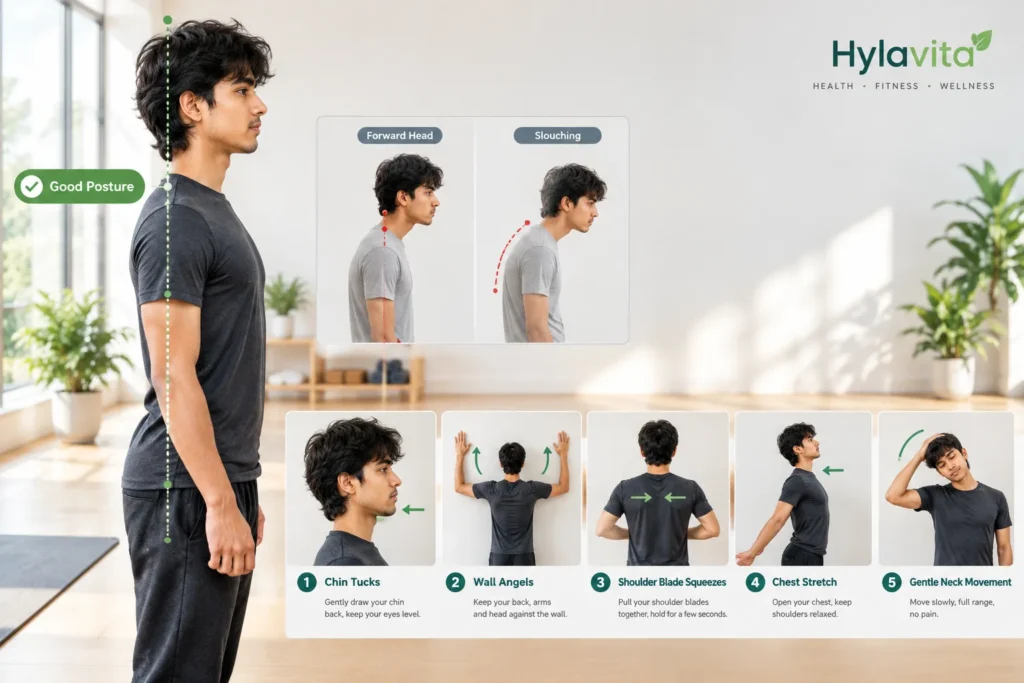
Forward head posture happens when your head sits too far in front of your shoulders. It often develops from long periods of sitting, screen use, or poor posture habits. Slouching can also place extra strain on your neck, shoulders, and upper back. The good news is that regular movement can help improve your posture habits. Simple exercises can strengthen supporting muscles and stretch areas that feel tight. You can perform many posture exercises at home without special equipment. Consistency matters more than doing difficult exercises for a short time. This guide covers five exercises to fix forward head posture. It also shares simple habits that support better posture each day.
What Is Forward Head Posture?
Forward head posture happens when your head rests farther forward than your shoulders. Your head normally stays balanced above your neck and shoulders. When it moves forward, your neck muscles work harder to support it. This position can happen while sitting, standing, or using electronic devices. Long periods in one position may also contribute to stiffness and discomfort. However, posture varies naturally between people, so there is no single perfect position.
How Forward Head Posture Changes Your Alignment
Forward head posture moves your head away from its usual position. Your shoulders may also round forward as you slouch. This can increase stress on muscles around your neck and upper back. Over time, staying in one position may contribute to stiffness, discomfort, or reduced movement.
Common Signs of Forward Head Posture
Common signs include your head sitting noticeably ahead of your shoulders. You may also notice rounded shoulders or upper-back slouching. Some people experience neck stiffness, shoulder discomfort, or headaches after staying still. These symptoms can have many causes, so posture alone does not always explain them.
What Causes Forward Head and Slouching?
Forward head posture and slouching usually develop from repeated daily habits. Staying in one position for too long can increase muscle strain. Looking down at screens can also place extra stress on neck muscles. Weak or poorly conditioned muscles may make good posture harder to maintain. Sleeping positions can sometimes contribute to temporary neck stiffness and discomfort. Standing habits may also affect how comfortably you hold your body. Improving posture usually involves changing habits and moving more regularly.
Poor Sitting Posture
Slouching at a desk can move your head forward. Your shoulders may also round as you lean toward your screen. Staying in this position for long periods can increase neck and upper-back strain.
Long Hours on Phones and Computers
Looking down at phones or laptops can keep your neck bent forward. Spending hours in this position may strain your neck and shoulder muscles. Regular movement and better screen positioning can help reduce this strain.
Weak Neck and Upper Back Muscles
Neck and upper-back muscles help support your head and shoulders. When these muscles lack strength or endurance, maintaining comfortable alignment can become harder. Regular strengthening exercises can support better posture and improve muscle control during daily activities.
Poor Sleeping and Standing Habits
Your sleeping position can sometimes leave your neck stiff or uncomfortable. Standing in one position with your head pushed forward can also increase muscle strain. Try changing positions regularly and keep your head comfortably aligned above your shoulders.
Why Is Good Posture Important?
Good posture helps your body stay balanced during sitting, standing, and movement. It can reduce unnecessary strain on your neck, shoulders, and back. Good alignment also helps your muscles work more comfortably during daily activities. Staying active and changing positions can support healthy movement throughout the day.
However, there is no single perfect posture for everyone. Your body naturally changes position during different activities. Avoid forcing yourself into one position for long periods. Instead, focus on comfortable alignment and regular movement. If you experience ongoing neck or back pain, consider speaking with a healthcare professional.
5 Exercises to Fix Forward Head Posture
These exercises can help improve posture by strengthening and stretching supporting muscles. Practice them slowly and focus on comfortable movement. Stop any exercise that causes pain or unusual symptoms.
1. Chin Tucks
Chin tucks are simple and target muscles that support your neck. Sit or stand comfortably with your back straight. Keep your eyes looking forward throughout the movement. Slowly draw your head backward without tilting your chin downward. Imagine making a gentle double chin. Hold the position for several seconds. Then slowly return to your starting position. Repeat several times with controlled movements. Do not push your head backward forcefully. Keep your shoulders relaxed throughout the exercise. You can also practice this exercise against a wall. Regular practice can help you become more aware of head position.
2. Wall Angels
Wall angels work the upper body while encouraging better shoulder positioning. Stand with your back comfortably against a wall. Keep your head and shoulders in a relaxed position. Place your arms beside your body. Bend your elbows and raise your arms slowly. Move them upward while keeping contact with the wall. Only move through a comfortable range of motion. Avoid forcing your arms higher than feels comfortable. Slowly lower your arms back to the starting position. Keep your movements smooth and controlled throughout each repetition. This exercise can also help stretch your chest muscles. Practice several slow repetitions during your daily routine.
3. Doorway Chest Stretch
A doorway chest stretch can help loosen tight chest muscles. Stand in an open doorway with your arms raised. Bend your elbows to about a right angle. Place your forearms or hands against the doorframe. Step forward gently until you feel a comfortable chest stretch. Keep your shoulders relaxed and avoid pushing too far. Hold the stretch for several seconds while breathing normally. Then step back and relax your arms. Repeat the stretch two or three times if comfortable. Avoid bouncing or making sudden movements during the stretch. This exercise can support more comfortable shoulder positioning during daily activities.
4. Shoulder Blade Squeezes
Shoulder blade squeezes strengthen muscles around your upper back. Sit or stand comfortably with your shoulders relaxed. Keep your arms resting naturally beside your body. Slowly draw your shoulder blades toward each other. Imagine gently holding a small object between them. Do not shrug your shoulders toward your ears. Hold the squeeze for several seconds without forcing it. Then slowly release your shoulder blades and relax. Repeat the movement several times at a comfortable pace. Keep your neck relaxed throughout every repetition. Stronger upper-back muscles can help support better shoulder positioning. Add this exercise to short movement breaks during your day.
5. Neck and Upper Back Stretch
Gentle stretching can help reduce stiffness around your neck and upper back. Sit comfortably with your feet supported on the floor. Keep your shoulders relaxed and your back comfortably upright. Slowly tilt your head toward one shoulder. Stop when you feel a gentle stretch. Do not pull your head down with your hand. Hold the position briefly while breathing normally. Return your head to the center slowly. Repeat on the opposite side. You can also gently move your chin toward your chest. Keep every movement slow and comfortable. Never force your neck into a painful position. Regular gentle movement can help maintain comfortable neck mobility.
A Simple 5-Minute Daily Posture Routine
A short routine can help you practice comfortable posture throughout your day. Regular movement also helps prevent staying still too long.
Morning Routine
Start your morning with gentle chin tucks for about one minute. Keep your eyes level and shoulders relaxed. Then perform slow shoulder blade squeezes. Finish with gentle neck movements through a comfortable range. Never force your neck or stretch into pain.
Desk Break Routine
Take a short movement break during long periods of sitting. Stand up and walk around briefly. Then perform several chin tucks and shoulder blade squeezes. Check that your screen sits near eye level. Keep your shoulders relaxed while working.
Evening Routine
End your day with gentle wall angels and chest stretches. Move slowly and keep each movement comfortable. Follow with a few relaxed neck movements. Avoid holding one posture for too long. Regular movement and posture checks can support comfortable daily movement.
Other Ways to Improve Forward Head Posture
Exercises work best when you also improve your daily movement habits. Small changes can reduce time spent in uncomfortable positions. Regular movement, comfortable alignment, and good screen setup can support healthier posture habits.
Set Up Your Desk Correctly
Keep your monitor directly in front of you. Position the screen near eye level. Keep your shoulders relaxed and elbows comfortably bent. And make both feet supported on the floor.
Keep Your Phone at a Better Height
Hold your phone closer to eye level when possible. Avoid looking down for long periods. Change positions regularly and take breaks from extended phone use.
Take Regular Movement Breaks
Avoid staying in one position for long periods. Stand, walk, or stretch during regular breaks. Even brief movement can help reduce stiffness from prolonged sitting.
Improve Your Sitting and Standing Habits
Keep your head comfortably above your shoulders. Let your shoulders relax instead of rounding forward. Change positions regularly instead of trying to maintain one rigid posture.
Choose a Comfortable Sleeping Position
Choose a sleeping position that keeps your head and neck comfortably aligned. Side or back sleeping can support neutral alignment. Use a pillow that comfortably supports your neck.
Common Mistakes When Correcting Poor Posture
Correcting posture takes practice and should feel comfortable. Avoid forcing your body into rigid positions. Focus on gentle movements and consistent daily habits.
Forcing Your Head Too Far Back
Do not pull your head backward with excessive force. Keep your eyes level and move gently. Stop if you feel pain or discomfort.
Exercising With Pain
Exercise should not cause sharp or worsening pain. Stop the movement if pain appears. Seek professional advice if symptoms continue or become worse.
Doing Exercises Too Quickly
Fast movements can make proper form harder to maintain. Perform each exercise slowly and smoothly. Controlled movements help you focus on comfortable positioning and technique.
Ignoring Daily Posture Habits
Exercises alone may not change your daily habits. Check your sitting position regularly. Take movement breaks and adjust your screen setup when needed.
When Should You See a Doctor or Physical Therapist?
Most posture concerns do not require medical treatment. However, ongoing or worsening neck pain deserves professional attention. See a healthcare provider if pain affects your daily activities. You should also seek help if symptoms continue despite home care.
Get urgent medical care after a neck injury or accident. Seek prompt help for numbness, tingling, weakness, or coordination problems. Severe pain with dizziness, fever, or other concerning symptoms also needs medical attention.
A physical therapist can assess your movement and create suitable exercises. They can also adjust exercises based on your symptoms and progress.
Frequently Asked Questions
Can exercises fix forward head posture?
Exercises can help improve posture, strength, flexibility, and body awareness. They work best alongside healthier daily movement habits. Results vary between people. A physical therapist can recommend exercises based on your posture, symptoms, and movement needs.
How long does it take to improve forward head posture?
There is no fixed timeline for improving posture. Progress depends on your habits, muscle strength, flexibility, and consistency. Some people notice changes within several weeks. Others may need longer practice. Focus on gradual improvement rather than quick results.
Can chin tucks help forward head posture?
Chin tucks can help strengthen neck muscles and improve head positioning. Keep your eyes level while gently moving your head backward. Avoid forcing your neck or tilting your head. Regular practice may help support better posture habits.
How often should I do posture exercises?
You can practice posture exercises regularly if they feel comfortable. Some exercises can be performed daily, depending on your needs. Start gently and increase gradually. Stop exercises that cause pain. A physical therapist can provide personalized guidance when needed.
Can sitting at a desk cause forward head posture?
Long periods at a desk can encourage forward head and slouched positions. Screen height and sitting habits can affect how you hold your head. Regular movement breaks and comfortable screen positioning can support healthier posture habits.
Conclusion
Forward head posture can develop from repeated sitting and screen habits. Simple exercises can help improve strength, flexibility, and posture awareness. Chin tucks, wall angels, and shoulder blade squeezes support better movement. Gentle chest and neck stretches can also reduce stiffness. Daily habits matter just as much as exercise practice. Keep screens at a comfortable height and change positions regularly. Take short movement breaks during long sitting periods. Avoid forcing your head or neck into one rigid position. If pain continues or worsens, speak with a healthcare professional. With regular practice, you can build healthier posture habits and support comfortable daily movement.
Hylavita’s suggestion to read
Health Disclaimer:This article is for general information and does not replace professional medical advice.
Exercises may not suit everyone, especially people with existing injuries or medical conditions.
Stop any exercise that causes pain, and consult a healthcare professional when needed.
Always follow personalized advice from your doctor or physical therapist.