
Introduction
Cobra Pose is a common yoga pose that gently bends the spine backward. It is also called Bhujangasana in Sanskrit. You perform it while lying on your stomach and lifting your chest from the floor. The pose can stretch the chest and abdominal area while working the back muscles. It often appears in yoga flows and Sun Salutation sequences. This guide explains Cobra Pose, its benefits, proper steps, common mistakes, variations, and safety tips.
What Is Cobra Pose?
What Does Cobra Pose Mean?
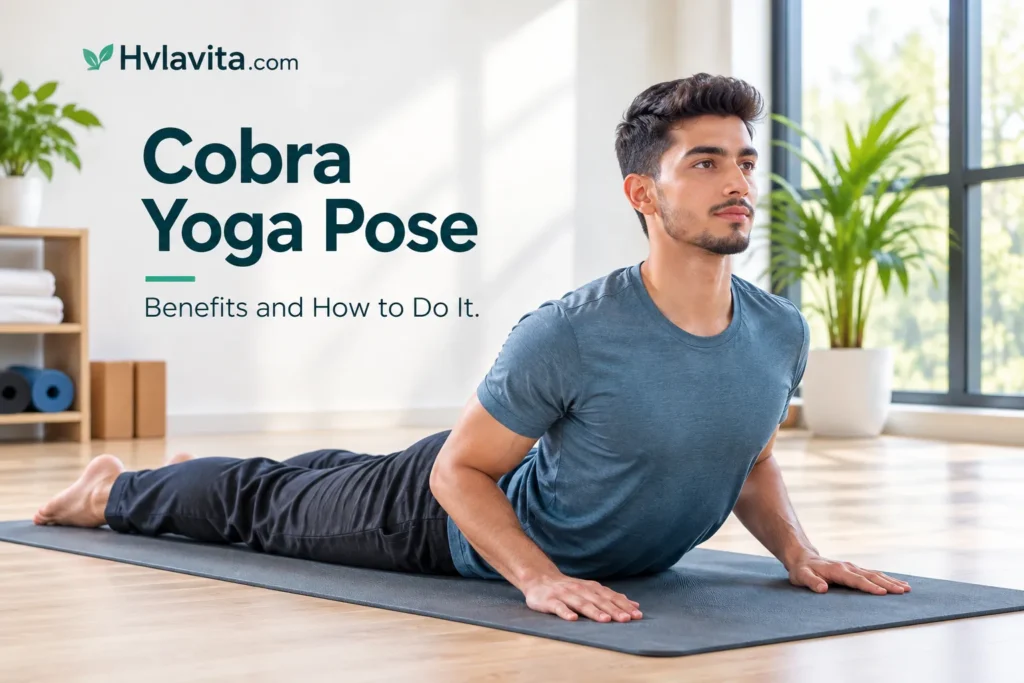
Cobra Pose is a gentle backbend used in many yoga practices. It is called Bhujangasana in Sanskrit. The name refers to a cobra, as the raised chest resembles a cobra’s posture. You perform the pose while lying face down. Then, you gently lift your chest while keeping your legs grounded.
Where Does Cobra Pose Fit in Yoga?
Cobra Pose works as a basic backbend for many yoga practices. It commonly appears in beginner yoga sequences and Sun Salutation variations. It can also prepare the body for deeper backbends.
Cobra Pose vs. Upward-Facing Dog: What’s the Difference?
Both poses look similar, but their body positions are different. Here is a simple comparison:
| Feature | Cobra Pose | Upward-Facing Dog |
|---|---|---|
| Body position | Hips and thighs stay on the mat. | Hips and thighs lift off the mat. |
| Legs | Legs stay relaxed and grounded. | Legs stay active and lifted. |
| Arms | Elbows can remain slightly bent. | Arms usually stay straight. |
| Main support | Back muscles help lift the chest. | Hands and feet support the body. |
| Difficulty | Usually easier for beginners. | Usually requires more strength and control. |
| Backbend | Creates a gentler backbend. | Creates a stronger backbend. |
| Best use | Good for learning basic backbend movement. | Often used in stronger yoga flows. |
Both poses stretch the front of the body and involve spinal extension. Proper form helps you practice either pose safely.
Benefits of Cobra Pose
Strengthens the Back Muscles
Cobra Pose engages muscles along your back during the lifting movement. Regular practice may help build better back strength.
Improves Spinal Flexibility
The pose moves your spine gently into extension. Regular yoga practice can improve spinal mobility and flexibility.
Stretches the Chest, Shoulders, and Abdomen
Cobra Pose opens the front of your body gently. It stretches your chest, shoulders, and abdominal muscles.
Supports Better Posture
Cobra Pose strengthens back muscles and opens the chest. These actions may support healthier posture during daily activities.
May Help Relieve Mild Back Discomfort
Some research links yoga with improvements in mild lower-back discomfort. Cobra Pose may support back mobility and strength.
Supports Relaxation and Deeper Breathing
Cobra Pose opens the chest and encourages controlled breathing. Slow breathing during yoga can also promote relaxation and calmness.
How to Do Cobra Pose: Step-by-Step
Starting Position
Lie on your stomach with your legs extended straight behind you.
Place your palms beside your ribs and keep your elbows close.
Keep the tops of your feet resting against the mat.
Look down and keep your neck in a neutral position.
Step-by-Step Instructions
- Press the tops of your feet gently into the mat.
- Keep your legs active and your hips grounded on the floor.
- Inhale slowly as you begin lifting your chest.
- Use your back muscles to help raise your upper body.
- Press your hands gently without forcing your body upward.
- Keep your shoulders relaxed and away from your ears.
- Keep your elbows slightly bent if that feels comfortable.
- Keep your neck long and avoid looking sharply upward.
- Hold the pose while breathing slowly and comfortably.
How to Release the Pose
Exhale slowly as you lower your chest toward the mat.
Keep your movements controlled and avoid dropping your body suddenly.
Rest your forehead or cheek gently on the mat.
Take a few comfortable breaths before repeating or moving on.
Common Cobra Pose Mistakes to Avoid
Overarching the Neck
Avoid lifting your chin too high during Cobra Pose. Keep your neck long and aligned with your spine. Look slightly forward instead of forcing your head backward.
Shrugging the Shoulders
Keep your shoulders relaxed and away from your ears. Shrugging can create unnecessary tension around your neck and shoulders. Focus on opening your chest without forcing the movement.
Relying Too Much on the Hands
Do not push strongly with your hands to lift higher. Let your back muscles help lift your chest. Focus on lengthening your spine instead of reaching higher.
Lifting the Hips Off the Mat
Keep your hips and thighs grounded during Cobra Pose. Lifting them changes the pose and increases the backbend. Keep your legs active while maintaining comfortable contact with the mat.
Cobra Pose Variations
Baby Cobra
Baby Cobra is a gentle version of the full pose. Keep your elbows bent and lift your chest slightly. Your hips, legs, and lower body remain grounded on the mat. This version can help beginners learn the basic movement safely.
Full Cobra
Full Cobra creates a deeper backbend than Baby Cobra. You lift your chest higher while keeping your hips and legs grounded. You may straighten your arms if your body allows it comfortably. Avoid forcing your lower back or trying to reach maximum height.
Beginner Modifications
Beginners can start with a low Cobra and smaller chest lift. Keep your elbows bent and focus on lengthening your spine. You can also practice Sphinx Pose for a gentler backbend. Move slowly and stop if the pose causes pain or discomfort.
Who Should Avoid Cobra Pose? Precautions and Safety
Pregnancy
Pregnancy can change how your body handles yoga poses. Avoid Cobra Pose if it causes pressure or discomfort. Ask your healthcare provider about safe modifications during pregnancy.
Recent Abdominal Surgery
Avoid Cobra Pose while your abdomen is healing after surgery. Backbends can place movement and pressure around the abdominal area. Follow your healthcare provider’s advice before returning to exercise.
Back Injuries
People with back injuries should use extra caution with Cobra Pose. Different injuries may need different exercises and modifications. Talk with a healthcare professional before practicing after an injury.
Wrist or Hand Problems
Cobra Pose places some weight through your hands and wrists. Existing wrist or hand problems may make the pose uncomfortable. Stop if you feel pain and consider a supported modification.
Headaches
Avoid forcing your head backward during Cobra Pose. Keep your neck relaxed and move within a comfortable range. Stop the pose if it causes or worsens a headache.
Tips for Practicing Cobra Pose Safely
Focus on Your Breathing
Breathe slowly and steadily while moving into Cobra Pose. Inhale as you gently lift your chest. Avoid holding your breath or forcing the movement. Your breathing should remain comfortable throughout the pose.
Warm Up Before Practicing
A short warm-up can prepare your body for yoga movements. Start with gentle movements before practicing deeper backbends. Move slowly and stay within your comfortable range. Stop if you feel sharp pain or unusual discomfort.
How Often Should You Practice Cobra Pose?
There is no fixed number of days for practicing Cobra Pose. Beginners can practice it regularly as part of a gentle yoga routine. Start with a few comfortable breaths and build gradually. Consistency matters more than forcing deeper or longer holds.
Conclusion
Cobra Pose is a simple backbend that can strengthen your back muscles. It also stretches your chest, abdomen, and shoulders. Regular practice may improve spinal movement and body awareness.
Focus on gentle movement, steady breathing, and comfortable alignment. Avoid forcing the pose or pushing through pain. With proper form, Cobra Pose can fit into a balanced yoga routine.
Hylavita’s suggestion to read
- Psoas Stretches: 10 Best Exercises for Tight Hips & Better Mobility
- What Is a Mantra? Definition, Meaning & Benefits
- 90/90 Hip Rotations: Benefits, How-To Steps & Mobility Tips
Disclaimer: This article is for general educational purposes only. It does not replace professional medical advice, diagnosis, or treatment. If you have an injury, medical condition, or concerns about Cobra Pose, consult a qualified healthcare professional before practicing.