
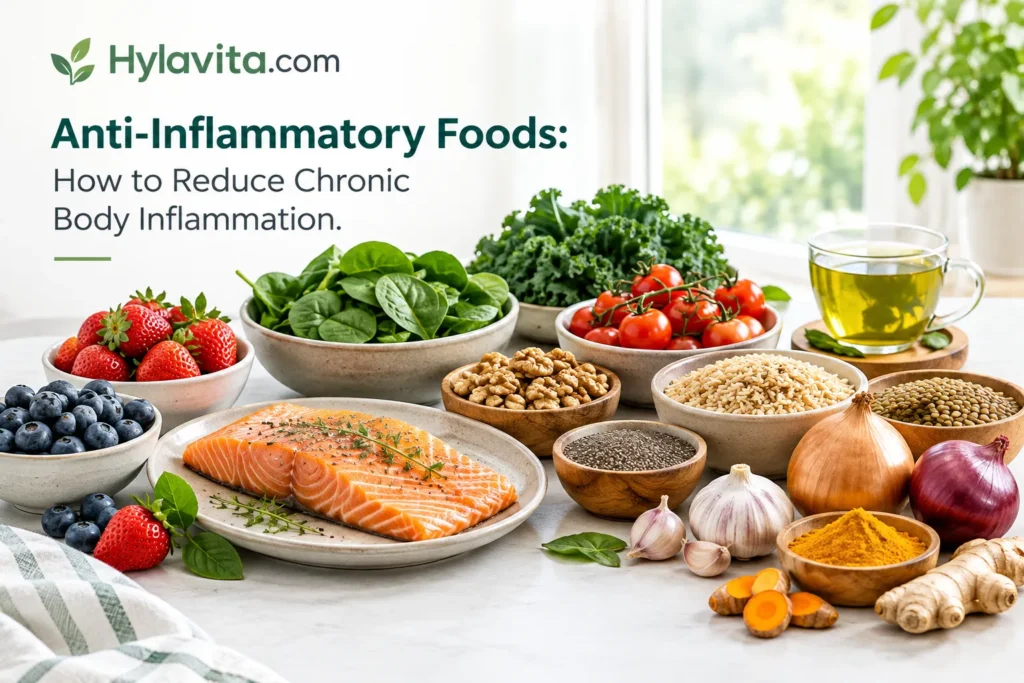
What Is Chronic Inflammation?
Inflammation is your body’s natural response to injury or infection. It helps protect tissues and supports healing. This short-term response is called acute inflammation. It usually settles after the body handles the problem. Chronic inflammation is different because it lasts much longer. It can continue for months or even years. Several factors can contribute to chronic inflammation over time. These include smoking, inactivity, excess body fat, stress, and poor diet. Certain infections and autoimmune conditions can also cause persistent inflammation. Diet can influence the body’s inflammatory response. A balanced diet provides nutrients that support normal body functions. Fruits, vegetables, whole grains, fish, nuts, and seeds provide beneficial nutrients. These foods provide fiber, healthy fats, vitamins, minerals, and plant compounds. Eating these foods regularly may support a healthier inflammatory balance.
What Are Anti-Inflammatory Foods?
Anti-inflammatory foods are nutrient-rich foods that may support a healthy inflammatory response. They include fruits, vegetables, whole grains, beans, nuts, seeds, and fish. These foods provide vitamins, minerals, fiber, healthy fats, and plant compounds. Antioxidants help protect cells from oxidative stress caused by free radicals. Fiber supports healthy digestion and helps nourish beneficial gut bacteria. Healthy fats, especially omega-3 fats, may help regulate inflammatory processes. Plant compounds called polyphenols also have antioxidant and anti-inflammatory properties.
Eating different whole foods provides a wide range of helpful nutrients. Research often links these eating patterns with better overall health. However, no single food can prevent or treat chronic inflammation. Your overall eating pattern matters more than individual foods. Choosing more minimally processed foods can support a balanced, nutritious diet.
Best Anti-Inflammatory Foods List
1. Fatty Fish
Fatty fish provides omega-3 fatty acids that support normal body functions. Salmon, sardines, mackerel, and tuna are good choices. You can add grilled fish to salads or whole-grain meals. Fish also provides high-quality protein and several important nutrients.
2. Berries
Blueberries, strawberries, raspberries, and blackberries contain antioxidants and plant compounds. These compounds help protect cells from oxidative stress. Add berries to oatmeal, yogurt, or smoothies. You can also enjoy them as a simple snack.
3. Leafy Green Vegetables
Spinach, kale, and collard greens provide vitamins, minerals, fiber, and plant compounds. These vegetables can support a healthy, balanced diet. Add spinach to eggs, soups, salads, or sandwiches. You can also cook kale with beans or other vegetables.
4. Extra-Virgin Olive Oil
Extra-virgin olive oil contains mostly monounsaturated fat and plant compounds. It works well in salad dressings and many cooked dishes. Use it instead of butter when it suits the recipe. Remember that olive oil still contains calories, so portions matter.
5. Nuts and Seeds
Walnuts, almonds, chia seeds, and flaxseeds provide healthy fats and fiber. They also contain protein, minerals, and other useful nutrients. Add chopped nuts to oatmeal or yogurt. Sprinkle chia or ground flaxseed over smoothies and cereals.
6. Tomatoes
Tomatoes provide lycopene, vitamin C, and other beneficial plant compounds. Cooking tomatoes can increase the amount of available lycopene. Add fresh tomatoes to salads, sandwiches, and wraps. Cooked tomatoes also work well in soups, sauces, and stews.
7. Whole Grains
Oats, brown rice, barley, and other whole grains provide dietary fiber. Fiber supports digestion and helps maintain a healthy gut environment. Choose whole grains more often than refined grain products. Try oatmeal for breakfast or brown rice with vegetables.
8. Beans and Legumes
Lentils, chickpeas, black beans, and kidney beans provide fiber and plant protein. They also contain vitamins, minerals, and other beneficial nutrients. Add beans to soups, salads, curries, or grain bowls. Lentils can also make a filling addition to family meals.
9. Garlic and Onions
Garlic and onions contain sulfur compounds and other plant compounds. These foods can add flavor without relying on heavy sauces. Add chopped garlic and onions to vegetables, soups, beans, or rice. They work well in many everyday recipes.
10. Green Tea
Green tea contains polyphenols called catechins, including EGCG. These compounds have antioxidant activity in the body. Enjoy unsweetened green tea as part of a balanced diet. Avoid adding large amounts of sugar to keep the drink healthier.
11. Turmeric and Ginger
Turmeric contains curcumin, a plant compound studied for its biological effects. Ginger contains compounds called gingerols and other related substances. Both spices can add flavor to everyday meals. Use them in soups, curries, stir-fries, or homemade drinks.
How Do Anti-Inflammatory Foods Work in the Body?
Anti-inflammatory foods provide nutrients that support normal body processes. Many fruits and vegetables contain antioxidants and other plant compounds. Antioxidants help protect cells from damage caused by oxidative stress. Oxidative stress can happen when free radicals build up in cells. Omega-3 fats support normal cell function and immune system activity. Fatty fish provides omega-3 fats called EPA and DHA. These fats can influence processes involved in the body’s inflammatory response. Fiber also supports digestive and gut health. Gut bacteria use certain fibers to produce useful compounds. These compounds can influence immune activity and support a healthy gut environment. Eating different whole foods provides a wider range of nutrients. No single food can control inflammation throughout your body. A balanced eating pattern matters more than focusing on one food.
Foods That May Promote Inflammation
Some foods may contribute to inflammation when eaten frequently or excessively. Highly processed foods often contain refined carbohydrates, added sugars, and unhealthy fats. Sugary drinks can add large amounts of added sugar to your diet. Eating too much added sugar may contribute to poorer overall diet quality. Processed meats include foods like sausages, hot dogs, and cured meats. Regularly eating processed meat is linked with several health concerns. Foods high in trans fats can also negatively affect health and inflammation. Some highly processed foods contain these fats, although many countries restrict them.
However, one food does not automatically cause chronic inflammation. Your overall eating pattern matters much more than individual foods. Diets rich in vegetables, fruits, whole grains, legumes, fish, and healthy fats support better nutrition. Limiting highly processed foods can help create a more balanced eating pattern.
How to Build an Anti-Inflammatory Meal Plan
Start each meal with plenty of vegetables and some whole fruits. Different colors provide different vitamins, minerals, and plant compounds. Next, add a protein source to make meals more filling. Choose fish, beans, lentils, eggs, poultry, nuts, or seeds. Then choose whole grains or other high-fiber carbohydrate sources. Oats, brown rice, barley, and beans are useful choices. Include healthy fats from foods like olive oil, nuts, and seeds. Fatty fish can also provide beneficial unsaturated omega-3 fats. Try to limit highly processed foods in your regular meals. These foods can contain excess added sugars, sodium, and saturated fat. You do not need to avoid every processed food completely. Focus instead on building a balanced eating pattern over time. Planning simple meals can make healthy choices easier each day. A varied diet also helps provide a wider range of nutrients.
Simple One-Day Anti-Inflammatory Meal Example
A balanced day can include fruits, vegetables, whole grains, and protein foods.
Breakfast
Start with oatmeal topped with berries, walnuts, and chia seeds. This meal provides fiber, healthy fats, and plant nutrients.
Lunch
Enjoy grilled fish with leafy greens and a whole grain. Brown rice or barley can work well here.
Snack
Choose a whole fruit with a small serving of unsalted nuts. This gives you fiber, healthy fats, and useful nutrients.
Dinner
Have beans or fish with cooked vegetables and brown rice. This combination provides protein, fiber, and several important nutrients.
These meals are examples, not a required daily eating plan. Your needs can vary based on age, activity, and health.
Can Anti-Inflammatory Foods Reduce Chronic Inflammation?
Research suggests that healthy eating patterns may help lower inflammation markers. Mediterranean-style diets receive particular attention in current research. However, food cannot treat every cause of chronic inflammation. Some conditions need medical treatment and ongoing professional care. Regular physical activity may also support healthier inflammation levels. Good sleep and stress management can support overall health too. Eating more whole foods works best as part of healthy habits. Include vegetables, fruits, whole grains, beans, fish, nuts, and healthy fats. If inflammation symptoms persist, discuss them with a healthcare professional. Seek medical advice sooner when symptoms are severe or unexplained.
Common Mistakes When Following an Anti-Inflammatory Diet
Focusing on one “superfood” can distract you from your overall diet quality. Research supports healthy eating patterns rather than individual miracle foods. Avoiding too many foods can also make meals less varied. You should not remove foods without a clear reason. Portion sizes still matter, even when foods are nutritious. Some packaged foods may appear healthy but contain added sugars or excess sodium. Always check the nutrition label when choosing processed products. Finally, do not expect immediate changes after changing your diet. Healthy eating works best when you follow it consistently over time.
FAQs About the Best Anti-Inflammatory Foods List
What are the best anti-inflammatory foods to eat daily?
Choose vegetables, fruits, whole grains, beans, nuts, seeds, and fish regularly. These foods provide fiber, healthy fats, vitamins, minerals, and plant compounds that support overall health.
What foods should I avoid for inflammation?
Limit highly processed foods, sugary drinks, processed meats, and foods high in unhealthy fats. Focus more often on whole or minimally processed foods instead.
Are eggs inflammatory?
Eggs are not generally considered an inflammatory food. They provide protein, vitamins, minerals, and other nutrients. Their overall role depends on your complete eating pattern.
Is oatmeal good for inflammation?
Oatmeal can fit well into a healthy eating pattern. It provides soluble fiber and several nutrients. Choose plain oats and add fruit, nuts, or seeds.
How long does it take for diet changes to affect inflammation?
There is no exact timeline for everyone. Research shows dietary patterns can influence inflammation markers, but changes depend on individual health and eating habits.
Conclusion
An anti-inflammatory diet focuses on variety, balance, and nutritious whole foods. Include vegetables, fruits, whole grains, beans, fish, nuts, and healthy fats. Limit highly processed foods when possible. Remember that no single food can prevent or treat every cause of inflammation. Research supports healthy dietary patterns as part of overall health. Consistent eating habits matter more than occasional food choices. Combine healthy eating with regular activity, enough sleep, and other healthy habits.
Hylavita’s suggestion to read
- What Should a Diabetic Eat? A Complete Food Plan
- Electrolyte Imbalance: Symptoms, Causes, and Natural Remedies
- 7-Day Paleo Meal Plan: Simple Meals for Beginners
Health Disclaimer:This article provides general health and nutrition information for educational purposes only.It does not replace advice, diagnosis, or treatment from a qualified healthcare professional.Talk with your doctor before making major dietary changes, especially with health conditions.Individual nutrition needs can vary based on age, health, and lifestyle.