
What Is a Low Oxalate Diet?
Oxalates are natural compounds found in many plant-based foods. They can occur in vegetables, fruits, nuts, grains, and legumes. Your body also produces some oxalate naturally.A low oxalate diet limits foods that contain higher amounts of oxalates. This approach may help some people who form calcium oxalate kidney stones. However, dietary needs can differ from person to person.
Oxalates are not automatically harmful for everyone. Many foods containing oxalates are nutritious and can fit into a healthy diet. For most people, there is no need to avoid them without a medical reason.
If you have kidney stones, your healthcare professional may suggest dietary changes. These changes can include adjusting oxalate, sodium, calcium, and fluid intake.
Why Do People Follow a Low Oxalate Diet?
Some people follow a low oxalate diet to reduce their kidney stone risk. Oxalate can combine with calcium in urine and form calcium oxalate stones. Doctors may recommend reducing oxalate after certain kidney stones develop. This advice depends on the stone type and individual health needs. However, reducing oxalate is only one part of prevention. Drinking enough water helps keep urine diluted and reduces stone formation. Your overall diet also matters when preventing kidney stones. Sodium, animal protein, calcium, and oxalate intake can affect risk. Getting enough calcium from food can also reduce oxalate absorption. Avoiding all calcium-rich foods is generally not recommended. Not everyone needs to follow a low oxalate diet. A healthcare professional can help identify the right dietary approach.
Low Oxalate Foods to Eat
A low oxalate diet can still include many nutritious and enjoyable foods. Fresh fruits, vegetables, and other low-oxalate choices can add variety to meals. The exact oxalate content can vary between foods and preparation methods. Your healthcare professional can help you choose suitable portions.
Low Oxalate Fruits
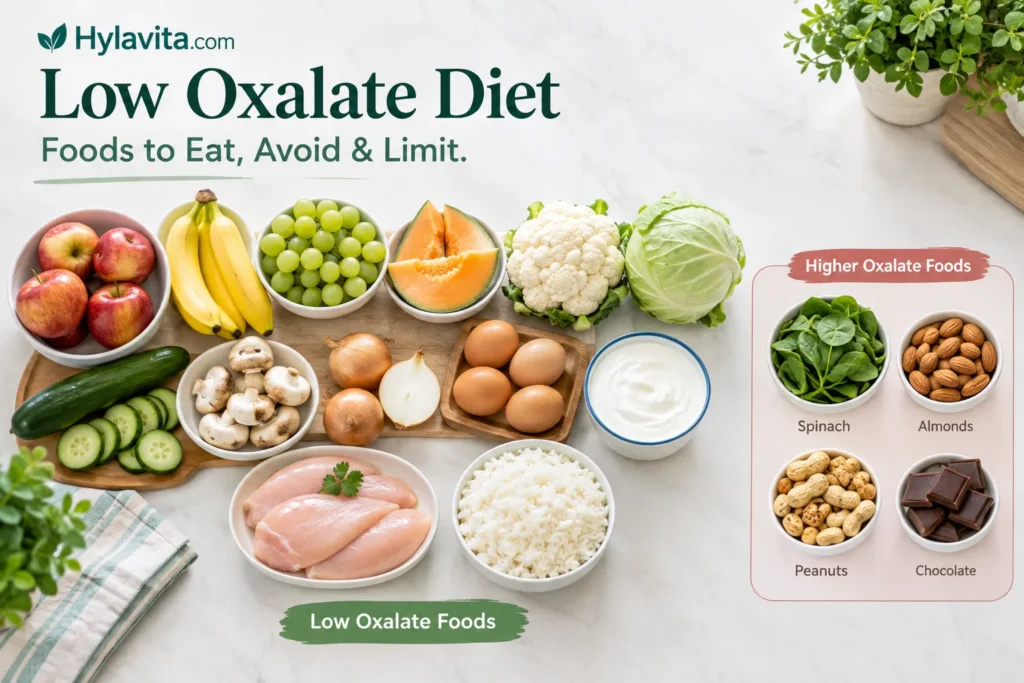
Many common fruits contain relatively little oxalate. Apples, bananas, grapes, melons, and peaches can fit into a low oxalate eating pattern. These fruits also provide vitamins, minerals, and other helpful nutrients. You can enjoy them fresh or add them to simple meals. However, individual serving sizes still matter when following a medically advised diet.
Low Oxalate Vegetables
Several vegetables provide good choices for people limiting dietary oxalate. Cauliflower, cabbage, cucumbers, mushrooms, and onions are generally lower-oxalate options. You can use them in salads, soups, stir-fries, or cooked meals. Eating different vegetables helps provide a wider range of nutrients. Some vegetables, such as spinach, contain much higher oxalate levels.
Other Low Oxalate Food Choices
Eggs and many dairy foods contain very little oxalate. Milk, yogurt, and cheese can also provide dietary calcium. Calcium can bind oxalate in the digestive tract and reduce its absorption. White rice is another commonly used lower-oxalate grain choice. Some other grains may also fit, depending on their type and serving size.
Remember that low oxalate does not always mean unlimited amounts. People with kidney stones may need other dietary changes too. Sodium, animal protein, calcium, and fluid intake can also affect stone prevention. A healthcare professional can help create a diet that matches your specific needs.
High Oxalate Foods to Avoid or Limit
Some foods contain much higher oxalate levels than others. People with calcium oxalate stones may need to limit these foods. However, not everyone needs to avoid high-oxalate foods. Your needs depend on your kidney stone type and health history.
Vegetables High in Oxalates
Spinach contains a particularly high amount of oxalate. Swiss chard and beet greens also contain high amounts. Okra can contain more oxalate than many other vegetables. If your doctor recommends limiting oxalate, these foods may need smaller portions. You can choose lower-oxalate vegetables more often instead.
Other Foods High in Oxalates
Nuts and nut products can contain significant amounts of oxalate. Peanuts are legumes and can also contain high oxalate levels. Wheat bran is another food commonly limited on low-oxalate diets. Some beans may also contain meaningful amounts of oxalate. Chocolate and certain teas can contribute additional oxalate to your diet.
Foods That May Be Better in Smaller Portions
Some foods contain moderate amounts of oxalate and may fit smaller portions. These can include sweet potatoes, potatoes, berries, whole grains, and certain legumes. Their oxalate content can vary by food type and preparation. You do not always need to remove these foods completely.
A low oxalate diet should still provide enough nutrients and variety. Avoiding too many foods can make healthy eating harder. If you have calcium oxalate stones, ask a healthcare professional about suitable portions. Drinking enough water also remains an important part of kidney stone prevention.
Low Oxalate Diet Food List for Easy Meal Planning
Planning simple meals can make a low oxalate diet easier to follow. For breakfast, try eggs with white toast and fresh fruit. Yogurt with a banana can also make a simple breakfast. For lunch, choose grilled chicken with cabbage and cucumber. You can also enjoy rice with suitable low-oxalate vegetables. For dinner, try baked chicken with cauliflower and white rice. Simple soups can also include lower-oxalate vegetables and suitable protein sources. For snacks, choose fruits like grapes, apples, or melon. Plain yogurt can also provide a simple snack with calcium. Try pairing foods from different groups for balanced meals. Include suitable protein, carbohydrates, vegetables, and calcium-rich foods. Drinking enough water also remains important for kidney stone prevention.
How to Reduce Oxalate Intake Without Losing Nutrition
A low oxalate diet does not mean removing every high-oxalate food. Focus on variety and choose lower-oxalate options more often. Include suitable calcium-rich foods with meals when appropriate. Calcium can reduce oxalate absorption in your digestive tract.
Drink enough fluids throughout the day, mainly water. Good hydration helps dilute urine and lower kidney stone risk. Your fluid needs can vary with health and activity levels.
Pay attention to serving sizes when eating higher-oxalate foods. Smaller portions may allow greater variety in your overall diet. Avoid making your diet unnecessarily restrictive without medical advice. Different kidney stones can require different dietary changes. A healthcare professional can help match your diet to your needs.
Common Mistakes When Following a Low Oxalate Diet
One common mistake is removing too many healthy foods from your diet. Not every person needs to avoid high-oxalate foods completely. Portion sizes also matter when managing oxalate intake. Another mistake is not drinking enough fluids throughout the day. Water helps keep urine diluted and may reduce kidney stone risk. Focusing only on oxalates can also overlook sodium, calcium, and animal protein. Finally, avoid following highly restrictive plans without professional guidance. Your ideal diet depends on your kidney stone type and health needs.
Who Should Consider a Low Oxalate Diet?
A low oxalate diet may help some people with calcium oxalate kidney stones. People with repeated stones may benefit from discussing diet changes with a healthcare professional. Your stone type can affect which foods you should limit. Other factors can also affect your dietary needs. These include sodium, calcium, fluids, and animal protein intake.
Not everyone needs to follow a low oxalate diet. Some people can eat oxalate-containing foods without dietary problems. A healthcare professional can review your stone history and dietary needs. A dietitian can also help create a balanced eating plan. This approach can help avoid unnecessary food restrictions.
FAQs About the Low Oxalate Diet
What foods are lowest in oxalates?
Foods such as dairy products, eggs, apples, grapes, and melons generally contain little oxalate. Food choices and portions still depend on individual needs.
What foods are highest in oxalates?
Spinach, nuts, peanuts, rhubarb, and wheat bran contain high amounts of oxalate. People with calcium oxalate stones may need to limit these foods.
Can I eat potatoes on a low oxalate diet?
Potatoes can contain oxalate, but amounts vary by type and preparation. Your healthcare professional can suggest suitable portions for your diet.
Is dairy low in oxalates?
Many dairy foods contain little or no oxalate. Dairy also provides calcium, which can help bind oxalate during digestion.
Should everyone avoid high-oxalate foods?
No, most people do not need to avoid them automatically. Dietary changes should depend on kidney stone type and individual health needs.
Conclusion
A low oxalate diet focuses on choosing foods with less oxalate. Lower-oxalate fruits, vegetables, grains, and dairy can support varied meals. Foods high in oxalate may need smaller portions or less frequent use. However, you do not need to remove every high-oxalate food. Drinking enough water also helps reduce the risk of kidney stones. Adequate calcium intake can also help reduce oxalate absorption. Your ideal diet depends on your kidney stone type and health needs. A healthcare professional can recommend suitable changes when medically necessary. A balanced approach can help you avoid unnecessary food restrictions.
Hylavita’s suggestion to read:
- Natural Ways to Lower Blood Pressure(BP) Through Diet and Lifestyle
- Anti-Inflammatory Foods: How to Reduce Chronic Body Inflammation
- What Happens to Your Body When You Cut Sugar for 30 Days?
Health Disclaimer:This article is for general information and does not replace professional medical advice. A low oxalate diet may not suit everyone or every type of kidney stone. Speak with a qualified healthcare professional before making major dietary changes. Seek medical guidance for persistent symptoms or recurring kidney stones.