Introduction
A lower ab workout can help strengthen your core and improve body stability. Your abdominal muscles support your trunk during many everyday movements.
Core exercises can also improve control during other physical activities. A good workout focuses on controlled movements and proper exercise technique.
You do not need complicated equipment to train your core effectively. Simple exercises can challenge your abdominal muscles when performed correctly.
This guide covers ten effective exercises for building core strength. It also explains proper form, common mistakes, and simple workout tips.
What Is a Lower Ab Workout?
A lower ab workout uses exercises that challenge your abdominal muscles. The term “lower abs” does not describe a separate muscle. It usually refers to exercises that emphasize the lower part of the rectus abdominis. Your abdominal muscles work together during many movements.
What Are the Lower Abdominal Muscles?
The rectus abdominis runs along the front of your abdomen. It extends between your ribs and pelvis. Other abdominal muscles also support your trunk and movement.
How Do Lower Ab Exercises Work?
These exercises make your abdominal muscles contract and control movement. Common examples include leg raises and reverse crunches. Proper form helps keep movements controlled and effective.
Why Is Core Strength Important?
Strong core muscles help support your body during daily activities. They also contribute to balance, stability, and controlled movement. Your core includes muscles around your abdomen, pelvis, hips, and back.
Benefits of a Lower Ab Workout
Lower ab exercises can strengthen muscles that help support your trunk. They can also improve how you control your body during movement.
Supports Core Strength
Core exercises strengthen the muscles around your abdomen, back, and pelvis. A stronger core can make many physical activities easier.
Improves Stability and Balance
Your core helps keep your body steady during different movements. Good core stability can support better balance and controlled movement.
Helps With Everyday Movement
Strong core muscles help your upper and lower body work together. This support can make everyday movements easier and more controlled.
Supports Better Exercise Technique
A stable core helps you control your body during many exercises. Better control can help you maintain proper movement and technique.
10 Effective Lower Ab Exercises
These exercises can strengthen your core when performed with controlled movements. They also train muscles that support trunk stability.
1. Reverse Crunches
Lie on your back with your knees bent and feet raised. Keep your arms beside your body. Tighten your core and gently lift your hips upward. Bring your knees toward your chest without swinging. Slowly lower your hips back down. Keep the movement controlled throughout each repetition.
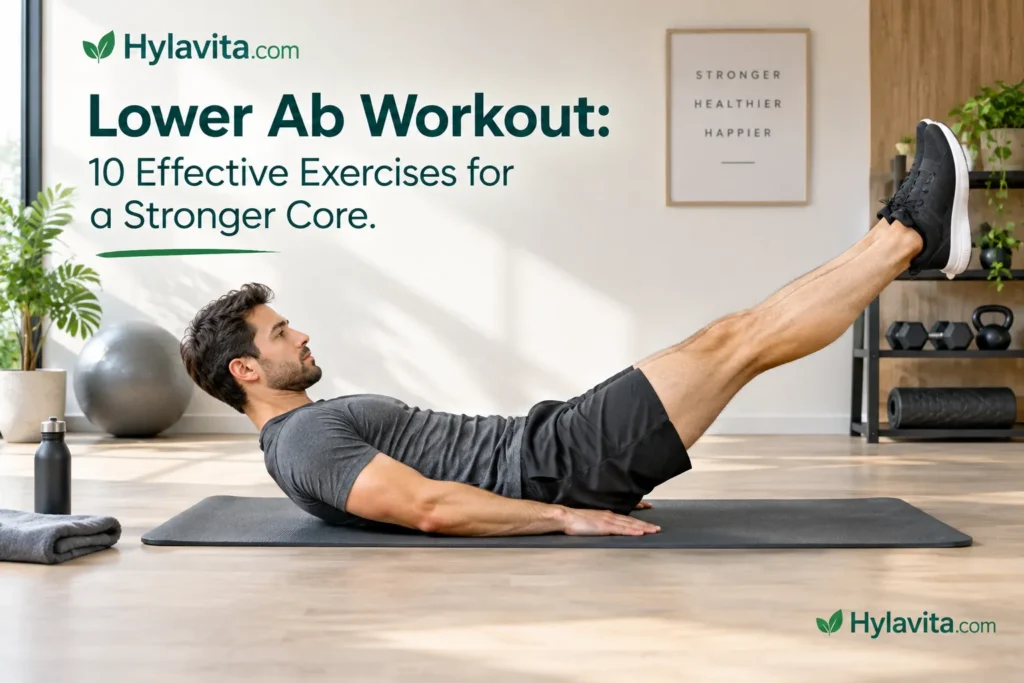
2. Lying Leg Raises
Lie flat on your back with your legs together. Slowly raise both legs toward the ceiling. Keep your lower back controlled against the floor. Lower your legs slowly without letting them drop. Bend your knees slightly if straight legs feel difficult. Avoid arching your back during the movement.
3. Dead Bug
Lie on your back with your knees bent. Raise your arms toward the ceiling. Lift your legs until your knees form right angles. Slowly extend one arm and the opposite leg. Keep your back stable against the floor. Return to the starting position and switch sides.
4. Mountain Climbers
Start in a high plank with your hands under your shoulders. Keep your body steady and your core engaged. Bring one knee toward your chest. Return that foot while bringing forward the other knee. Move at a controlled pace that maintains good form. Stop if you cannot keep your position stable.
5. Flutter Kicks
Lie on your back with your legs extended. Place your hands beside your body for support. Lift your legs slightly from the floor. Alternate small, controlled movements with each leg. Keep your lower back stable throughout the exercise. Reduce the leg height if maintaining control becomes difficult.
6. Heel Taps
Lie on your back with your knees bent. Keep your feet flat on the floor. Lift your shoulders slightly while keeping your neck relaxed. Reach toward one heel with your hand. Return to the center and reach toward the other heel. Keep each movement slow and controlled throughout the exercise.
7. Bent-Knee Leg Raises
Lie on your back with your knees bent. Keep your arms beside your body. Tighten your abdominal muscles before lifting your legs. Raise your bent knees toward your chest slowly. Lower them carefully without allowing your back to arch. Bent knees make this movement easier than straight-leg raises.
8. Bird Dog
Start on your hands and knees with your back neutral. Keep your hands beneath your shoulders. Slowly extend one arm and the opposite leg. Keep your hips level while holding the position briefly. Return both limbs to the starting position. Then repeat on the opposite side.
9. Toe Taps
Lie on your back with your knees bent at ninety degrees. Keep your core gently engaged throughout the movement. Slowly lower one foot toward the floor. Lightly tap the floor with your toes. Return your leg to the starting position. Alternate sides while keeping your spine stable.
10. Hollow Body Hold
Lie on your back with your arms extended overhead. Lift your shoulders and legs slightly from the floor. Keep your abdominal muscles engaged during the hold. Maintain a controlled position without forcing your lower back. Bend your knees to make the exercise easier. Stop when you cannot maintain proper form.
How to Create a Lower Ab Workout Routine
A simple routine can make core training easier to follow consistently. Start with exercises you can perform comfortably and correctly.
Beginner Lower Ab Routine
Choose three or four exercises from this guide. Perform each exercise with controlled movements. Start with one or two sets per exercise. Focus on good technique instead of doing many repetitions.
How Many Sets and Repetitions Should You Do?
Beginners can start with one or two sets per exercise. Aim for around 8 to 15 controlled repetitions. Hold exercises briefly when they use static positions. Adjust repetitions based on your ability and exercise difficulty.
How Much Rest Do You Need?
Rest between exercises when your muscles need recovery. About one minute can work well for easier bodyweight exercises. Take longer rests when you feel tired or lose proper form.
How Often Should You Train Your Core?
You do not need to train your core every day. Beginners can train major muscle groups at least twice weekly. Leave enough recovery time between harder sessions.
Common Lower Ab Workout Mistakes
Good form helps you perform core exercises safely and effectively. Small mistakes can make movements harder to control.
Using Momentum Instead of Control
Avoid swinging your legs or rushing through each repetition. Use slow movements and keep your core engaged throughout.
Arching the Lower Back
Keep your lower back controlled during floor-based abdominal exercises. Excessive arching can make the movement harder to perform properly.
Holding Your Breath
Keep breathing naturally throughout your workout. Avoid holding your breath while performing challenging repetitions.
Doing Too Many Repetitions
More repetitions do not always mean a better workout. Stop when you cannot maintain controlled and proper movement.
Ignoring Proper Form
Focus on technique before increasing repetitions or exercise difficulty. Proper form helps you control each movement more effectively.
Tips for a Safe and Effective Lower Ab Workout
A safe workout starts with movements you can control comfortably. Good technique matters more than doing many repetitions.
Start With Easier Variations
Begin with easier versions when an exercise feels challenging. Build your strength before trying harder variations.
Keep Every Movement Controlled
Move slowly and avoid swinging your legs or using momentum. Controlled movements help you maintain proper exercise technique.
Use a Comfortable Range of Motion
Move only through a range that feels comfortable and controlled. Do not force a movement beyond your current ability.
Increase Difficulty Gradually
Make exercises harder only after your technique becomes consistent. Increase difficulty slowly as your strength and control improve.
Can Lower Ab Workouts Reduce Belly Fat?
Lower ab exercises strengthen your abdominal muscles and improve core control. They do not specifically target belly fat for removal. Fat loss happens across the body rather than from one exercise area.
The Difference Between Core Training and Fat Loss
Core exercises can strengthen your muscles without directly removing belly fat. Research on targeted fat loss remains limited and mixed. One small study found local effects in adult men. However, the findings cannot apply to everyone.
Why Overall Activity Matters
Regular physical activity uses energy and supports overall health. Walking, sports, strength training, and other activities can increase daily movement. A balanced eating pattern also supports healthy weight management.
FAQs About Lower Ab Workouts
What Is the Best Lower Ab Workout for Beginners?
Beginners can start with dead bugs, toe taps, and bent-knee raises. Choose exercises that feel comfortable and allow controlled movements throughout.
How Often Should I Do a Lower Ab Workout?
Core exercises can fit into a balanced exercise routine. Avoid training the same muscles hard every day. Recovery helps muscles adapt and become stronger.
Can I Do Lower Ab Exercises at Home?
Yes, many core exercises need no special equipment. You can perform movements like dead bugs and toe taps at home safely.
How Long Should a Lower Ab Workout Take?
A lower ab workout does not need to take long. A short session can work well when you use proper form.
Are Lower Ab Workouts Good for Core Strength?
Yes, abdominal exercises can strengthen your core muscles. Core training also supports stability and controlled movement during physical activities.
Should I Train My Abs Every Day?
You do not need to train your abs every day. Include recovery between harder sessions and maintain a varied exercise routine.
Conclusion
A lower ab workout can strengthen your abdominal muscles and improve core control. Choose exercises that match your current ability. Focus on slow, controlled movements during every repetition. Good technique matters more than completing many repetitions. Include different types of physical activity in your routine. This helps support overall fitness and healthy movement.
If you are a teenager, regular activity should include variety. The CDC recommends daily physical activity for children and adolescents. Muscle-strengthening activities should be included at least three days weekly.
Hylavita’s suggestion to read
- How Does an Ab Machine Work? Benefits and Common Mistakes
- 30-Day Running Plan for Beginners: Build Fitness Step by Step
- How to Build an Effective Back and Bicep Workout Routine
Health Disclaimer:This article is for general educational purposes and does not replace professional medical advice. Exercise needs can vary based on age, fitness level, and health conditions. Stop any exercise that causes pain or discomfort. Consult a qualified healthcare professional before starting a new exercise program if needed.