Introduction
A back and bicep workout trains two important upper-body muscle groups together. Your back handles most pulling movements, while your biceps assist with them. This makes them a natural pair to train in one session.
A good routine does not need many exercises. Focus on a few effective movements and use proper form. This guide explains the best exercises, sets, reps, rest times, and workout frequency. You will also learn how to avoid common training mistakes and build a simple routine that fits your goals.
Why Train Back and Biceps Together?
Your back and biceps work together during most pulling exercises. Rows, pulldowns, and pull-ups all use your biceps. Training them together keeps your workout simple and organized.
You can start with back exercises because they use larger muscles. Then, finish your workout with focused bicep exercises. This order helps you give more effort to your back.
Many people follow a push, pull, and legs workout split. A pull day usually includes back and biceps together. This makes it easier to organize your weekly training.
Training both muscles together can also make your workouts more efficient. You can train them during one session and allow recovery afterward. A simple routine with proper rest can support steady progress.
Muscles Worked in a Back and Bicep Workout
A back and bicep workout trains several muscles during pulling exercises. Each muscle helps with different movements and functions.
Back Muscles
Lats: These large muscles help pull your arms toward your body. They add width to your back.
Traps: These muscles support your shoulders and upper back. They help with shoulder movement and stability.
Rhomboids: These muscles sit between your shoulder blades. They help pull your shoulder blades together.
Rear Delts: These muscles sit at the back of your shoulders. They help move your arms backward.
Erector Spinae: These muscles run along your spine. They help support your spine and maintain an upright posture.
Bicep Muscles
Biceps Brachii: This is the main muscle at the front of your upper arm. It helps bend your elbow.
Brachialis: This muscle sits underneath the biceps. It helps strongly with elbow bending.
Best Back Exercises to Include
A good back workout should include different pulling exercises. Each exercise trains your back in a slightly different way. You do not need to perform every exercise in one workout. Choose a few movements that match your fitness level and goals.
Pull-Ups and Lat Pulldowns
Pull-ups are a great bodyweight exercise for your back. They mainly work your lats and also involve your biceps. Lat pulldowns use a similar pulling movement with adjustable resistance. They are helpful for beginners who cannot perform full pull-ups yet.
Barbell or Dumbbell Rows
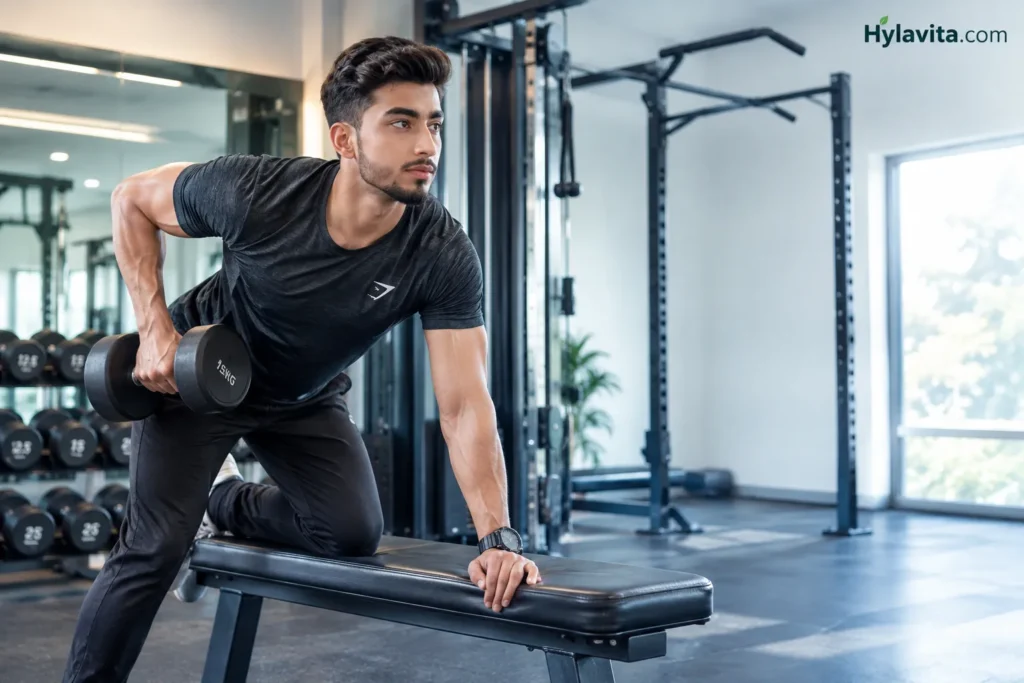
Rows are excellent for building overall back strength. They work your lats, traps, rhomboids, and other back muscles. Barbell rows train both sides together during each repetition. Dumbbell rows let you train each side separately. Keep your back stable and use controlled movements.
Seated Cable Rows
Seated cable rows work your middle back and lats. They provide a controlled horizontal pulling movement. Keep your chest steady throughout the exercise. Pull the handle toward your body without using excessive momentum. Return the handle slowly after each repetition.
Deadlifts and Romanian Deadlifts
Deadlifts train your back, hips, and legs together. Romanian deadlifts mainly work your hamstrings and glutes. Your back muscles also help stabilize your body during both exercises. Use manageable weight and focus on proper technique. Avoid rushing through each repetition.
Face Pulls
Face pulls target your rear shoulders and upper-back muscles. They also train muscles that help control your shoulder blades. Use a cable machine with a rope attachment. Pull the rope toward your face using controlled movements. Avoid using heavy weight that affects your form.
Best Bicep Exercises to Include
A good bicep workout can use several curl variations. Each exercise changes the arm position or grip slightly. Focus on controlled movements instead of lifting very heavy weights.
Barbell Curls
Barbell curls are a simple way to train your biceps. They allow both arms to work together during each repetition. Keep your elbows close to your sides. Curl the bar without swinging your body.
Incline Dumbbell Curls
Incline dumbbell curls place your arms behind your body. This creates more stretch in the biceps during the lowering phase. Keep your shoulders relaxed and control the dumbbells. Avoid using weights that make you lose proper form.
Hammer Curls
Hammer curls use a neutral grip with your palms facing inward. They train your biceps while also working the brachialis and forearm muscles. Keep your elbows steady as you curl. Lower the dumbbells slowly after each repetition.
Preacher or Concentration Curls
Preacher curls support your upper arms and reduce body movement. This helps you perform each repetition with better control. Concentration curls also limit unnecessary movement during the exercise. Both options can add variety to your bicep training.
Sample Back and Bicep Workout Routine
A simple routine can train your back and biceps without unnecessary exercises. Start with bigger back movements before smaller bicep exercises. Choose weights that allow controlled reps with good form. Rest longer when an exercise feels especially demanding.
Beginner Routine
Beginners can start with fewer exercises and moderate training volume. Focus on learning each movement before adding more weight. Perform this workout once or twice weekly, depending on recovery.
| Exercise | Sets | Reps | Rest |
|---|---|---|---|
| Lat Pulldown | 3 | 8–12 | 1–2 min |
| Seated Cable Row | 3 | 8–12 | 1–2 min |
| Dumbbell Row | 2 | 10–12 | 1–2 min |
| Barbell Curl | 2 | 8–12 | 1–2 min |
| Hammer Curl | 2 | 10–12 | 1–2 min |
Intermediate/Advanced Routine
More experienced lifters can handle additional exercises and training volume. However, more exercises do not always mean better results. Keep your technique strong and increase training gradually.
| Exercise | Sets | Reps | Rest |
|---|---|---|---|
| Pull-Ups or Lat Pulldown | 3 | 6–10 | 2–3 min |
| Barbell Row | 3 | 6–10 | 2–3 min |
| Seated Cable Row | 3 | 8–12 | 1–2 min |
| Face Pull | 2–3 | 12–15 | 1–2 min |
| Barbell Curl | 3 | 8–12 | 1–2 min |
| Incline Dumbbell Curl | 2–3 | 10–12 | 1–2 min |
| Hammer Curl | 2 | 10–15 | 1–2 min |
Rest times can vary based on exercise difficulty and training goals. For heavier compound exercises, longer rests may help maintain performance.
How to Structure Your Workout: Sets, Reps, and Order
Start with compound exercises that train several muscles together. Rows, pull-ups, and pulldowns are good examples. Perform smaller isolation exercises after your main back movements. Bicep curls work well near the end of your workout.
Your rep range can depend on your training goal. Heavier loads with fewer reps can improve strength. Moderate loads with more reps can support muscle growth. You do not need extremely heavy weights to build muscle.
Train your major muscle groups consistently throughout the week. Give your muscles enough time to recover between workouts. For general resistance training, regular sessions are more important than complex routines.
Progressive overload means gradually making your workouts more challenging. You can add a few reps when exercises become easier. You can also increase the weight slightly when your form stays strong. Focus on controlled movement instead of lifting more weight quickly.
Common Back and Bicep Workout Mistakes to Avoid
Using too much weight can make you swing during curls and rows. Momentum reduces control and can change your exercise technique. Choose a weight that allows smooth, controlled repetitions.
Try to feel the muscles working during each exercise. This can help you focus on proper movement and technique. However, you do not need to force a strong muscle sensation.
A short warm-up can prepare your body for the workout. Start with easy movements before using heavier resistance. Gradually increase the load as your body feels ready.
Remember that back exercises already work your biceps. Doing too many curls afterward can add unnecessary fatigue. Keep your bicep exercises controlled and match the volume to your recovery.
Deadlifts and rows require careful technique and body control. Keep your spine stable and avoid rushing each repetition. If your form breaks down, reduce the weight and regain control.
Tips for Better Results
Good nutrition gives your body energy for training and recovery. Include protein-rich foods like eggs, milk, yogurt, beans, fish, and chicken. Also eat fruits, vegetables, whole grains, and other balanced foods. You do not need special supplements for basic progress.
Recovery is also important after a workout. Give your muscles enough time between hard training sessions. If you are a teenager, aim for 8 to 10 hours of sleep each night. Good sleep supports overall health and daily performance.
Tracking your workouts can help you notice gradual progress. Write down your exercises, sets, reps, and weights. Try to improve slowly while keeping good exercise form. Consistency matters more than making your workouts overly complicated.
Frequently Asked Questions
How often should I do a back and bicep workout?
For beginners, start with one or two sessions each week. Give your muscles enough recovery between hard sessions. Your total weekly activity should include different types of exercise.
Should I train biceps before or after back?
Train your back before your biceps in most workouts. Back exercises already use your biceps during pulling movements. Training back first lets you focus on larger exercises. Then, finish with a few controlled bicep exercises.
Can I do this workout at home with dumbbells?
Yes, you can train your back and biceps at home. Dumbbell rows and curls are simple options. You can also use resistance bands for pulling exercises. Focus on proper technique and controlled movements.
Conclusion
A good back and bicep workout does not need to be complicated. Focus on compound exercises before smaller isolation movements. Choose a few effective exercises and use proper form throughout. Train consistently and give your muscles enough time to recover. Eat balanced meals and get enough sleep to support your training. Track your workouts and increase the challenge slowly over time. Start with a simple routine that matches your current fitness level. Stay consistent, focus on good technique, and build your workout gradually.
Hylavita’s suggestion to read
- Training for Abs: Best Exercises, Benefits & Tips
- Morning vs. Evening Workouts: Which Best Suits Your Body Clock?
- What Is a Push Day Workout? Best Exercises, Benefits & Tips
Disclaimar: This article is for general educational and informational purposes only.
It does not replace advice from a doctor, trainer, or qualified health professional.
Use proper exercise form and choose workouts suitable for your fitness level.
Stop exercising if you experience pain or unusual discomfort and seek professional advice.