The tricep press is a popular exercise for building stronger upper arms. It targets the triceps, which are muscles located at the back of your upper arms. Strong triceps help you straighten your elbows and perform pushing movements. You can do this exercise using dumbbells, barbells, cables, or gym machines. Each variation offers different benefits and suits different fitness levels. Learning proper form helps you train your muscles more effectively. It also helps reduce the risk of unnecessary strain. In this guide, you’ll learn about tricep press benefits, types, techniques, and safety tips.
What Is a Tricep Press?
A tricep press is a strength exercise that targets the triceps muscles. These muscles sit at the back of your upper arms. The exercise involves extending your elbows against resistance, such as weights or cables. Its main purpose is to build triceps strength and support upper-body training. You can perform different variations using dumbbells, barbells, cables, or machines. Each variation offers a slightly different movement pattern. During the exercise, your triceps work to st
What Muscles Does the Tricep Press Work?
The tricep press mainly targets the muscles at the back of your upper arms. However, other muscles may help depending on the exercise variation. Understanding these muscles helps you perform the movement with better control.
Triceps Brachii
The triceps brachii is the main muscle worked during a tricep press. It has three heads: the long, lateral, and medial heads. These parts work together to straighten your elbow during each repetition. The long head also helps extend and stabilize your shoulder. Strong triceps support pushing movements and many everyday activities.
Supporting Muscles Involved
Other muscles may assist during certain tricep press variations. Your shoulders help stabilize your arms during overhead and lying movements. Chest may contribute when performing close-grip pressing exercises. Your forearms help maintain a firm grip on weights or equipment. Your core muscles also help stabilize your body during standing exercises. The supporting muscles involved depend on your technique and exercise variation.
Benefits of the Tricep Press
The tricep press offers several benefits for your upper-body strength and fitness. It targets the triceps and supports many common pushing movements. Regular practice can help you build stronger, more capable arms.
Builds Triceps Strength
The tricep press strengthens the muscles at the back of your upper arms. These muscles help straighten your elbows during everyday and exercise movements. Gradually increasing resistance can improve strength over time.
Helps Develop Stronger Arms
Well-trained triceps contribute to overall upper-arm size and muscle development. Combining this exercise with a balanced workout supports steady muscle growth. Proper technique and consistent training help you make progress.
Supports Pushing Movements
Your triceps help you push objects and straighten your arms. They also assist during push-ups, bench presses, and overhead presses. Stronger triceps can help improve performance in these exercises.
Allows Different Training Options
You can perform the tricep press with dumbbells, barbells, cables, or machines. This variety helps you choose equipment that suits your comfort and experience. You can also adjust resistance to match your fitness level. Start with manageable weights and focus on controlled movements.
How to Do a Tricep Press Correctly
The tricep press comes in several variations, but proper technique always matters. The following steps explain a lying dumbbell tricep press.
Starting Position
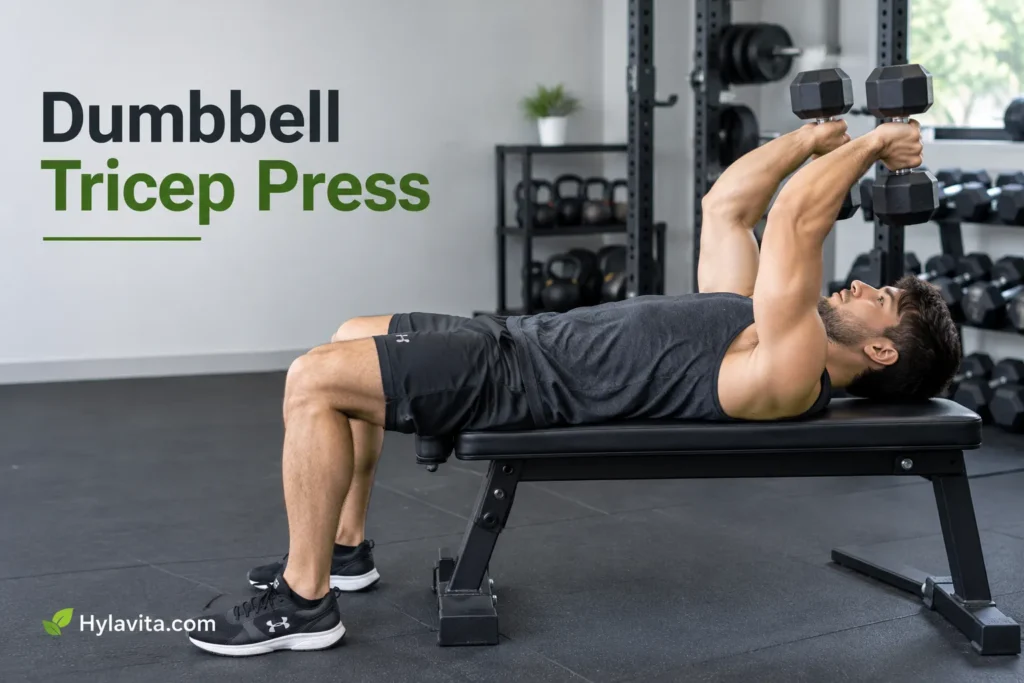
Lie flat on a bench with your feet firmly planted. Hold one dumbbell in each hand above your chest. Keep your palms facing each other and your wrists straight. Bend your elbows while keeping your upper arms fairly still.
Step-by-Step Instructions
- Start with the dumbbells held securely above your chest.
- Slowly bend your elbows and lower the weights toward your head.
- Keep your upper arms steady throughout the lowering movement.
- Stop when you feel a comfortable stretch in your triceps.
- Straighten your elbows to raise the dumbbells back up.
- Repeat the movement with control for your chosen repetitions.
Breathing and Proper Form
Breathe in as you lower the dumbbells toward your head. Breathe out as you straighten your elbows and raise the weights. Avoid swinging your arms or moving the weights too quickly. Keep your wrists straight and elbows controlled throughout each repetition. Choose a weight that allows you to maintain proper form. Stop if you feel sharp pain or unusual discomfort.
Common Tricep Press Mistakes to Avoid
Avoiding common mistakes helps you perform the tricep press with better control. It also helps reduce unnecessary strain during your workout.
Using excessive weight: Heavy weights can make it harder to maintain proper form. Choose a resistance that allows controlled, comfortable movements.
Moving the elbows incorrectly: Letting your elbows flare too much can affect your technique. Keep them in a comfortable position that suits your exercise variation.
Rushing through repetitions: Moving too quickly reduces control over the weights. Perform each repetition slowly and steadily.
Using a limited range of motion: Lowering the weights too little may limit muscle movement. Use a comfortable range without forcing your joints.
Ignoring pain or discomfort: Stop if you feel sharp pain during exercise. Adjust your technique or seek professional guidance if discomfort continues.
How Many Sets and Reps Should You Do?
The right number of sets and reps depends on your fitness level and goals. Start with manageable weights and focus on proper technique.
For Beginners
Beginners can start with 2–3 sets of 10–15 repetitions. Rest between sets and keep every movement controlled. Choose a weight that feels manageable.
For Muscle Growth
For muscle growth, try 3–4 sets of 8–12 repetitions. Use a challenging weight while maintaining good form. Gradually increase resistance as your strength improves.
For Strength
For strength, try 3–5 sets of 4–6 repetitions with heavier weights. Rest longer between sets and avoid sacrificing proper technique. These are general guidelines, so adjust them to your experience and recovery.
Tricep Press Safety Tips
Following simple safety tips helps you exercise with better control and confidence. Always focus on proper technique rather than lifting heavier weights.
Choose a manageable weight that allows you to complete each repetition comfortably. Warm up for five to ten minutes before starting your workout. Include light movements to prepare your arms and shoulders. Move slowly and avoid swinging weights during each repetition. Keep your wrists straight and maintain a comfortable elbow position. Use a stable bench or secure equipment when performing the exercise. Stop immediately if you experience sharp pain or unusual discomfort. If pain continues, seek advice from a qualified healthcare professional before training again.
Frequently Asked Questions About Tricep Press
Is the Tricep Press Good for Beginners?
Yes, beginners can perform tricep presses using light weights or suitable machines. Focus on proper form before increasing resistance.
Can the Tricep Press Build Bigger Arms?
Yes, regular tricep presses can support triceps growth when combined with consistent training. Eating enough protein and calories also supports muscle development.
How Often Should You Do Tricep Presses?
Most people can train their triceps two times per week. Allow enough recovery time between challenging workouts. Adjust your schedule based on soreness and training experience.
Which Type of Tricep Press Is Best?
The best variation depends on your goals, experience, and available equipment. Dumbbells offer flexibility, while cables provide steady resistance throughout movement. Machines can also help beginners practice controlled repetitions. Choose a variation that feels comfortable and allows proper technique. Consistency matters more than choosing one exercise variation.
Conclusion
The tricep press is a useful exercise for building stronger upper arms. It targets your triceps and supports many everyday pushing movements. You can perform it using dumbbells, barbells, cables, or gym machines. Choose a variation that matches your fitness level and available equipment. Always focus on proper form and controlled movements. Start with manageable weights and increase resistance gradually. Stay consistent with your workouts and allow enough time for recovery. These habits can help you make steady progress toward your fitness goals.
Hylavita’s suggestion to read
- How to Do Reverse Curls: A Beginner’s Step-by-Step Guide
- How to Do a Cable Pullover: A Beginner’s Step-by-Step Guide
- Best Gym Equipment for Abs: 10 Tools for Stronger Core Muscles
Disclaimer: This article is for informational and educational purposes only. The tricep press may not be suitable for everyone, depending on their fitness level and physical condition. Always use proper form and consult a qualified fitness professional if you need guidance. Stop exercising if you experience pain or discomfort, and seek medical advice when necessary.