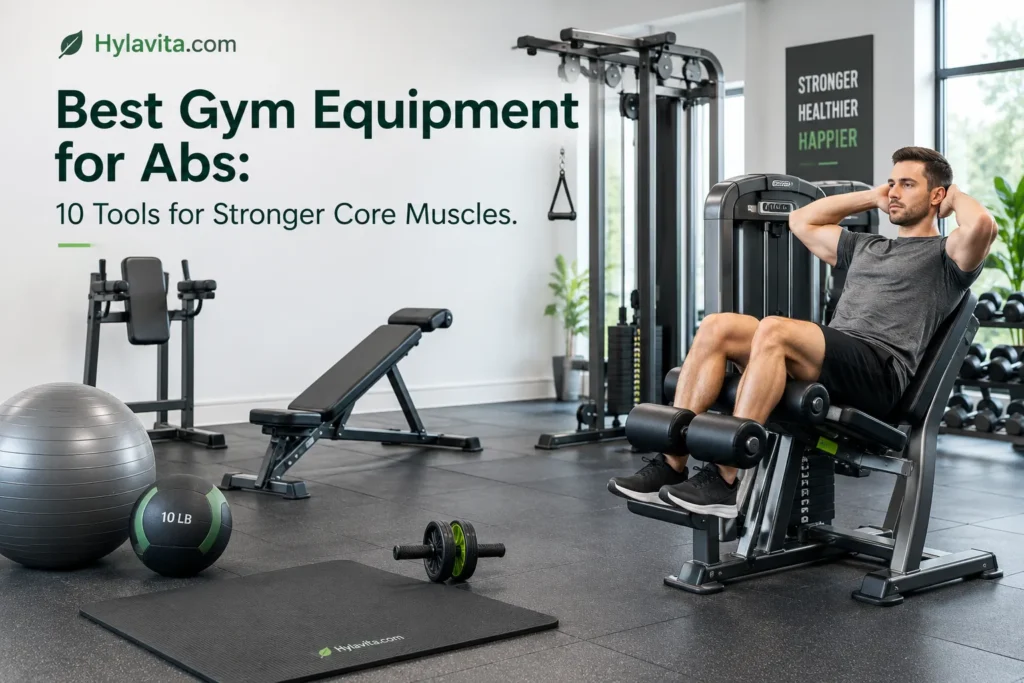
Ab workouts can help strengthen your abdominal muscles and improve core stability. The right equipment can make these exercises easier to perform or more challenging. Many gym instruments for abs suit different fitness levels and training goals. Some machines provide resistance, while others support bodyweight exercises. Popular options include the ab crunch machine, cable machine, captain’s chair, and ab roller. You can also use a decline bench, Roman chair, exercise mat, stability ball, medicine ball, or hanging leg raise station. Choose equipment that matches your experience and comfort. Always focus on proper form and controlled movements.
What Are Gym Instruments for Abs?
Gym instruments for abs are tools that help train your abdominal muscles. They include machines, benches, rollers, and simple workout accessories. Some provide extra resistance, while others support bodyweight exercises. These tools can help improve core strength, stability, and muscle control. Your core also includes muscles in your back and pelvis. You don’t need expensive equipment to build a stronger core. Choose tools that match your fitness level and exercise goals. Always use proper form to train safely and effectively.
10 Best Gym Equipment for Abs
1. Ab Crunch Machine
The ab crunch machine helps you train your abdominal muscles with resistance. It mainly targets the rectus abdominis, which runs along your stomach. Sit comfortably and adjust the machine according to its instructions. Hold the handles and slowly curl your torso forward. Keep the movement controlled and avoid pulling with your arms. Start with light resistance and increase it as your strength improves.
2. Cable Machine
A cable machine lets you train your abs with adjustable resistance. Cable crunches mainly target the rectus abdominis. Kneel facing the machine and hold the rope attachment near your head. Curl your torso downward while keeping your hips mostly still. Return slowly without letting the weight pull you upward. Choose a manageable weight and avoid pulling with your arms.
3. Captain’s Chair
The captain’s chair supports your body during knee raises. This exercise works your abdominal muscles, especially when you curl your pelvis upward. Place your forearms on the pads and grip the handles. Keep your back against the support and lift your knees slowly. Lower your legs with control instead of swinging them. Start with bent knees before trying harder variations.
4. Ab Roller
An ab roller challenges your abdominal muscles and core stability. Kneel on the floor and grip both handles firmly. Slowly roll the wheel forward while keeping your core tight. Move only as far as you can control comfortably. Then roll back to your starting position. Beginners should use a short range of motion. Avoid letting your lower back sag during the exercise.
5. Decline Bench
A decline bench makes abdominal exercises more challenging by positioning your body downward. You can use it for decline crunches or sit-ups. Secure your feet under the provided supports before starting. Lift your upper body without pulling your neck forward. Lower yourself slowly and avoid bouncing between repetitions. Start with a gentle incline and use a range of motion you can control.
6. Roman Chair
A Roman chair often supports back extensions and certain abdominal exercises. During back extensions, it mainly trains your lower back muscles. Some models also allow supported knee raises for abdominal training. Adjust the pads to fit your body before exercising. Keep your movements slow and avoid arching your back excessively. Check your equipment’s design to ensure you perform the correct exercise.
7. Exercise Mat
An exercise mat provides cushioning during floor-based abdominal workouts. You can use it for crunches, planks, and dead bugs. It makes these exercises more comfortable on hard floors. Choose a mat that stays firmly in place. Focus on controlled movements rather than rushing through repetitions. You can train your abs effectively without using machines.
8. Stability Ball
A stability ball adds balance challenges to abdominal exercises. You can perform crunches while resting your back on the ball. Keep your feet firmly planted on the floor. Slowly lift your upper body without pulling your neck. The ball moves slightly, so maintain control throughout each repetition. Beginners should start with simple movements and a stable position.
9. Medicine Ball
A medicine ball adds resistance to several core exercises. You can use it for weighted crunches and controlled Russian twists. Choose a ball light enough to handle safely. Keep your movements smooth and avoid twisting your lower back forcefully. Increase the weight only when you can maintain proper form. A medicine ball can also support full-body exercises.
10. Hanging Leg Raise Station
A hanging leg raise station lets you train your abs using your body weight. Hang from the bar with a secure grip and steady shoulders. Raise your knees toward your chest without swinging your body. Lower your legs slowly to maintain control. Your hip flexors also work during this movement. Beginners can start with bent-knee raises before attempting straight-leg raises.
How to Choose the Right Ab Equipment
Choose ab equipment that matches your fitness level and workout goals. Beginners can start with an exercise mat or basic ab machine. More experienced users may prefer cable machines or ab rollers. Always choose equipment that feels comfortable and allows controlled movements. Consider your available space before buying larger machines. Check the price and compare options within your budget. You don’t need expensive tools to strengthen your core. Think about your main goal, whether it’s better stability or stronger abdominal muscles. Choose equipment you can use safely and consistently.
Tips for Using Ab Equipment Safely
Always learn the correct technique before using any ab workout equipment. Start with light resistance and increase it gradually as your strength improves. Keep your movements slow and controlled throughout each exercise. Avoid swinging your body or straining your neck and back. Breathe normally and avoid holding your breath during repetitions. Check machines and attachments before starting your workout. Give your abdominal muscles enough time to recover between challenging sessions. Stop exercising if you feel sharp pain or unusual discomfort. If you’re unsure about proper form, ask a qualified fitness trainer for guidance.
Frequently Asked Questions
What Gym Equipment Is Best for Core Strength?
Cable machines, ab rollers, and stability balls can help build core strength. Choose equipment that matches your fitness level and training goals. Focus on proper form and controlled movements.
Which Gym Equipment Is Best for Abs?
The ab crunch machine and cable machine are useful options for training abs. An ab roller also challenges your abdominal muscles. The best choice depends on your experience and comfort.
What Is the Best Workout Equipment for Building Strong Abs?
No single piece of equipment works best for everyone. Ab machines, medicine balls, and exercise mats support different exercises. Combine regular training with balanced nutrition and adequate recovery.
Conclusion
Choosing the right gym equipment can make ab workouts more effective and comfortable. Options like ab machines, rollers, and exercise mats support different fitness goals. You don’t need expensive equipment to build a stronger core. Focus on proper form, controlled movements, and regular training. Start with exercises that match your fitness level. Give your muscles enough time to recover between challenging workouts. Consistency helps you build strength over time.
Hylavita’s suggestion to read
- Best Gym Equipment to Use for Abs: A Beginner’s Guide
- Lower Ab Workout: 10 Effective Exercises for a Stronger Core.
- How Does an Ab Machine Work? Benefits and Common Mistakes
Disclaimer: This article is for informational and educational purposes only. Always use gym equipment correctly and follow proper safety guidelines. Consult a qualified fitness professional if you are unsure about an exercise. Stop exercising if you experience pain or discomfort.