
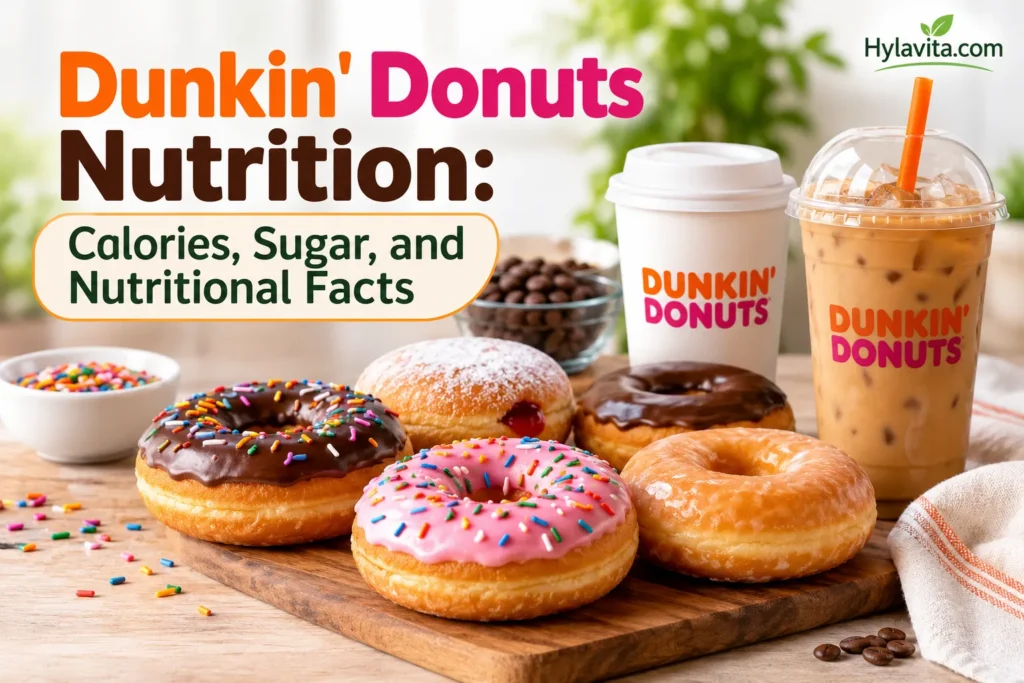
Dunkin’ is popular for its donuts, coffee, and breakfast foods. Many people enjoy these items as quick snacks or meals. However, their nutritional values can vary widely. Some choices contain more calories, sugar, and fat than others. Understanding Dunkin Donuts nutrition can help you make informed food choices. It also helps you compare different menu items before ordering. In this guide, we explore calories, sugar, carbohydrates, fat, and protein. We also cover healthier options and simple ways to make better choices.
Dunkin’ Donuts Nutrition Facts: An Overview
Dunkin’ offers donuts, coffee, sandwiches, muffins, and other breakfast items. Each menu item provides different amounts of nutrients. These include calories, carbohydrates, protein, fat, sugar, and sodium. Donuts often contain carbohydrates, added sugar, and fat. Breakfast sandwiches may provide more protein and fat. Coffee nutrition depends on its size, milk, cream, and added sweeteners. Portion sizes also affect the total nutritional value. Larger drinks and food portions usually contain more calories. Therefore, check the nutrition facts before placing your order. This helps you understand what each menu item contains.
Calories in Popular Dunkin’ Donuts Menu Items
Dunkin’ offers many foods and drinks with different calorie amounts. Calories depend on ingredients, serving sizes, and preparation methods.
Calories in Dunkin’ Donuts
A single Dunkin’ donut usually contains around 210–400 calories. A plain Glazed Donut contains about 240 calories. Chocolate Frosted with Sprinkles contains 270 calories. Filled donuts may contain more calories, depending on their fillings. Toppings and coatings can also increase the calorie content.
Calories in Dunkin’ Coffee and Drinks
Plain black coffee contains very few calories without added ingredients. However, flavored coffee drinks can contain much more. Milk, cream, sugar, and flavored syrups increase calorie content. For example, a medium Vanilla Creme Cold Brew contains 190 calories. Larger drinks usually contain more calories than smaller servings.
Calories in Dunkin’ Breakfast Items
Dunkin’ breakfast items also vary in calorie content. An Egg and Cheese Wake-Up Wrap contains 180 calories. A Bacon, Egg, and Cheese Croissant contains 520 calories. Plain bagels contain around 300 calories. Muffins and larger sandwiches may contain more. Always compare serving sizes before choosing your breakfast.
How Much Sugar Is in Dunkin’ Donuts?
Dunkin’ donuts contain different amounts of sugar, depending on their flavors. A Glazed Donut contains about 13 grams of sugar. A Chocolate Frosted with Sprinkles Donut contains 15 grams. Filled donuts may contain more sugar because of their sweet fillings. Flavored coffee drinks can also add significant amounts of sugar. Sweetened syrups, cream toppings, and flavorings increase sugar content. Adding extra flavor shots or sweeteners can change drink nutrition. Some drinks contain added sugar even without extra sweeteners. Therefore, check the nutrition information before ordering. Choosing plain coffee and fewer sweet toppings can help reduce sugar intake.
Carbohydrates, Fat, and Protein in Dunkin’ Donuts
Dunkin’ menu items contain different amounts of carbohydrates, fat, and protein. Donuts and muffins get most carbohydrates from flour and sugar. Fried and filled donuts also contain fat from their ingredients and preparation. Some varieties provide more saturated fat than others. Breakfast sandwiches offer protein from eggs, cheese, and meat. For example, a Bacon, Egg, and Cheese sandwich provides 19 grams of protein. Its bread also adds carbohydrates to the meal. Fat content varies with cheese, meat, and bread choices. A balanced meal includes suitable amounts of protein, carbohydrates, and fats. Comparing these nutrients can help you make informed food choices.
Healthier Choices at Dunkin’ Donuts
You can make more balanced choices when ordering from Dunkin’. Start by choosing smaller portions instead of larger servings. Smaller drinks and food items may contain fewer calories. Plain black coffee is another good option. It contains very few calories without added ingredients. You can also compare breakfast sandwiches before placing your order. Look for options with protein and less saturated fat. Limit sugary toppings, flavored syrups, and extra sweeteners in drinks. These additions can increase calories and added sugar. Check Dunkin’s nutrition information before choosing your favorite items. Pay attention to calories, sugar, sodium, and saturated fat. Small changes can help you enjoy your favorite foods more mindfully.
Factors That Affect Dunkin’ Donuts Nutrition
Several factors can change the nutritional value of Dunkin’ menu items. Serving size is one of the most important factors. Larger portions usually contain more calories and nutrients. Ingredients also affect calories, sugar, fat, and protein levels. For example, chocolate toppings and sweet fillings add extra sugar. Milk, cream, and sweeteners can increase drink calories. Different recipes may also produce different nutritional values. Dunkin’ menu items can vary between countries and locations. Some regions offer different ingredients, sizes, and food choices. Always check the local nutrition information before ordering your favorite items.
Tips for Making Informed Choices at Dunkin’ Donuts
Making informed choices at Dunkin’ starts with checking nutrition information. Visit the official Dunkin’ website for current nutritional details. Always pay attention to serving sizes before comparing menu items. A larger portion may contain more calories and sugar. Compare different options to find foods that suit your needs. Check added sugar, saturated fat, sodium, and protein levels. Also, consider how each item fits your daily eating habits. You do not need to avoid your favorite treats completely. Instead, enjoy them in reasonable portions as part of balanced eating. These simple steps can help you make more thoughtful food choices.
Frequently Asked Questions
How many calories are in a Dunkin’ Donut?
One Dunkin’ donut typically contains around 210–470 calories. The exact amount depends on its size, toppings, and filling. For example, a Sugared Donut contains 210 calories. Larger or richer varieties can contain considerably more.
Which Dunkin’ Donut has the most sugar?
Sugar levels vary across different donut varieties. Some regional varieties contain higher amounts of sugar. For example, a Chocolate Crème Stick contains 33 grams. Check the current nutrition guide for available varieties.
Is Dunkin’ coffee high in calories?
Plain black coffee contains very few calories. However, flavored drinks can contain more calories and added sugar. Milk, cream, and sweetened syrups increase their nutritional value.
Does Dunkin’ offer low-calorie options?
Yes, Dunkin’ offers several lower-calorie choices. Plain black coffee and unsweetened tea are simple options. You can also choose smaller portions and lighter breakfast items.
Are Dunkin’ breakfast sandwiches healthy?
Dunkin’ breakfast sandwiches can provide protein from eggs and cheese. However, some also contain significant sodium and saturated fat. Compare their nutrition facts before choosing your breakfast. Consider your overall diet and portion sizes.
Conclusion
Understanding Dunkin’ Donuts nutrition helps you make better food choices. Calories, sugar, fat, and portion sizes vary across menu items. Checking nutrition facts can help you compare different foods and drinks. You can still enjoy your favorite treats in moderation. Choose balanced options that fit your daily eating habits. Small, thoughtful choices can support a healthier eating routine.
Hylavita’s suggestion to read
Disclaimer: This article provides general information about Dunkin’ Donuts nutrition and menu items. Nutritional values may vary by location, serving size, and ingredients. Always check Dunkin’s official nutrition information for the latest details. This content is not a substitute for professional dietary or medical advice.