
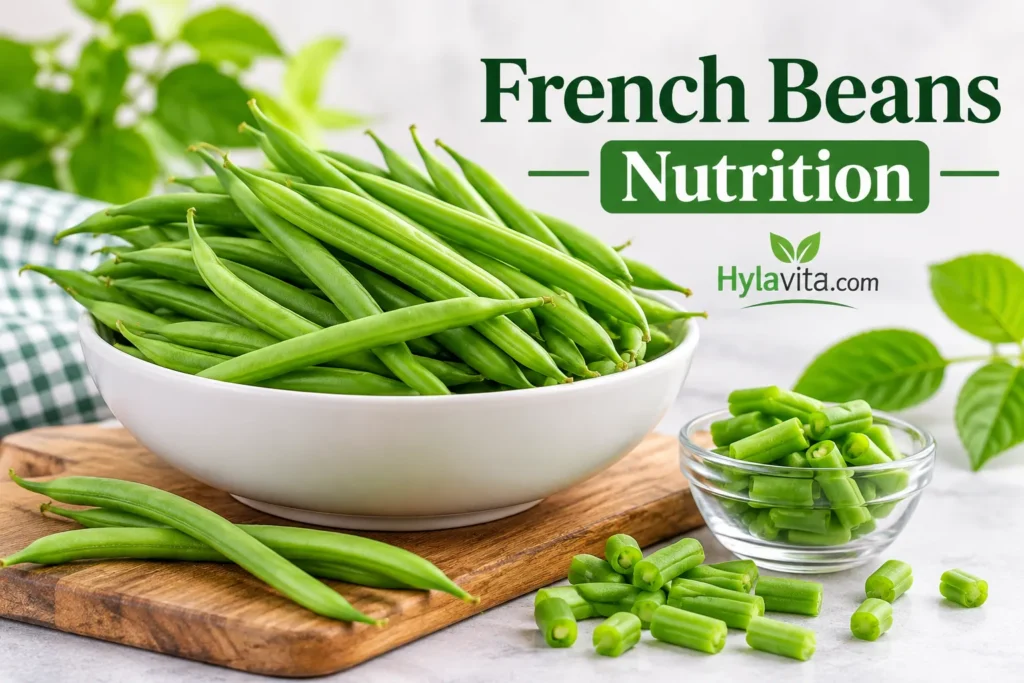
French beans are a nutritious vegetable that fits easily into a healthy diet. They have few calories and provide fiber, vitamins, and minerals. These green vegetables also contain vitamin C, vitamin K, and folate. Their fiber supports healthy digestion and normal bowel movements. You can enjoy French beans boiled, steamed, or cooked with other vegetables. They also make a simple addition to salads, soups, and everyday meals. Understanding French beans nutrition helps you see what this vegetable offers. Let’s look at their calories, nutrients, and possible health benefits.
What Are French Beans?
French beans are young, tender pods of the common bean plant. People also call them green beans, string beans, or snap beans. They usually have a bright green color and a long, slender shape. Their pods contain small, soft seeds that are safe to eat. French beans have a mild, slightly sweet flavor and crunchy texture. People commonly boil, steam, or stir-fry them with other vegetables. They also work well in salads, soups, and many everyday meals.
French Beans Nutrition Facts
French beans are low in calories and contain several useful nutrients. Raw French beans provide approximately 31 calories per 100 grams. They contain carbohydrates, a small amount of protein, and very little fat. Their fiber content also supports normal digestion and bowel health.
Here are the main nutrients found in 100 grams of raw French beans:
- Calories: 31 kcal
- Carbohydrates: 7 grams
- Protein: 1.8 grams
- Fat: 0.2 grams
- Dietary fiber: 2.7 grams
French beans also provide several vitamins and minerals. They contain vitamin C, vitamin K, folate, potassium, calcium, and iron. Vitamin C supports normal immune function, while vitamin K helps blood clot normally. Folate supports healthy cell growth and development. Their nutritional content makes them a useful addition to balanced meals.
French Beans Nutrition per 100 Grams
Raw French beans provide several nutrients in a relatively small serving. They contain few calories, little fat, and a good amount of fiber. The following table shows their approximate nutritional values per 100 grams.
| Nutrient | Amount |
|---|---|
| Calories | 31 kcal |
| Carbohydrates | 7.0 g |
| Protein | 1.8 g |
| Total fat | 0.2 g |
| Dietary fiber | 2.7 g |
| Vitamin C | 12.2 mg |
| Vitamin K | 43 µg |
| Folate | 33 µg |
| Potassium | 211 mg |
| Calcium | 37 mg |
| Iron | 1.0 mg |
These values apply to raw French beans. Cooking can change their nutrient content, especially water-soluble vitamins. French beans also provide small amounts of other essential nutrients.
Health Benefits of French Beans
French beans provide several nutrients that support everyday health. They contain fiber, vitamins, minerals, and natural plant compounds. Adding them to balanced meals can support different body functions.
Support Digestive Health
French beans contain dietary fiber that supports healthy digestion. Fiber helps move food through the digestive system. It also supports regular bowel movements and helps prevent constipation. Eating enough fiber can support overall gut health.
Support Heart Health
French beans contain fiber and potassium, which support heart health. Fiber can help maintain healthy cholesterol levels. Potassium helps regulate blood pressure by balancing sodium’s effects. Their low saturated fat content also makes them heart-friendly.
Help Maintain Healthy Bones
French beans provide vitamin K, calcium, and other useful nutrients. Vitamin K helps the body maintain normal bone function. Calcium supports strong bones and teeth. However, French beans alone cannot meet all daily bone health needs.
Provide Antioxidants
French beans contain vitamin C and other plant compounds. These substances help protect cells against damage from free radicals. Vitamin C also supports normal immune function. Eating different vegetables provides a wider range of protective plant compounds.
Are French Beans Good for Weight Loss?
Yes, French beans can support a healthy weight-loss diet. They contain approximately 31 calories per 100 grams when raw. Their low calorie content makes them useful for lighter meals. French beans also provide dietary fiber, which supports fullness. Feeling full can help you manage hunger between meals. You can add them to salads, soups, or vegetable dishes. However, French beans do not directly burn body fat. Weight loss depends on your overall eating habits and activity levels. Enjoy them with other nutritious foods for balanced meals.
Raw vs. Cooked French Beans Nutrition
Raw and cooked French beans provide similar nutrients, but amounts can change. Cooking softens their texture and makes them easier to chew. Boiling can reduce water-soluble vitamins, especially vitamin C and folate. Some nutrients may also pass into the cooking water. Steaming usually causes less nutrient loss than boiling. It also helps preserve their natural color and texture. For healthier meals, choose steaming, light sautéing, or quick stir-frying. Avoid adding too much oil, butter, or salt. Both raw and cooked French beans can fit into balanced meals. Always wash fresh beans before eating or cooking them.
How to Eat French Beans
French beans are easy to prepare and fit into many everyday meals. You can enjoy them in several simple and healthy ways.
- Steamed or boiled: Cook French beans until tender but slightly crisp. Add a little seasoning for extra flavor.
- Salads and soups: Add chopped beans to fresh salads or vegetable soups. They provide extra texture, fiber, and nutrients.
- Stir-fried vegetables: Cook French beans with carrots, onions, or bell peppers. Use a small amount of oil for cooking.
Always wash French beans before preparing them. Remove their ends and cut them into smaller pieces if needed.
Possible Side Effects of French Beans
French beans are generally safe for most people when properly prepared. However, eating large amounts may cause gas, bloating, or mild digestive discomfort. Some people may also experience individual food sensitivities. Always wash fresh French beans thoroughly before preparing them. Cook them properly to improve their texture and reduce food safety risks. Avoid eating beans that look spoiled or smell unusual. If you experience an allergic reaction after eating them, seek medical advice. Most people can enjoy French beans as part of balanced meals.
Frequently Asked Questions
How Many Calories Are in 100g of French Beans?
Raw French beans contain approximately 31 calories per 100 grams. Their calorie content may change slightly after cooking.
Are French Beans High in Fiber?
French beans provide about 2.7 grams of fiber per 100 grams. This fiber supports digestion and helps maintain regular bowel movements.
Are French Beans Good for Weight Loss?
Yes, French beans can support a weight-loss diet. They are low in calories and provide dietary fiber. Fiber helps you feel fuller for longer.
Conclusion
French beans are a nutritious vegetable with plenty of health benefits. They provide fiber, vitamins, minerals, and very few calories. Their nutrients support digestion, heart health, and normal bone function. They also make a helpful addition to weight-loss diets. You can enjoy them steamed, boiled, or stir-fried with other vegetables. Adding French beans to balanced meals helps increase your daily vegetable intake.
Hylavita’s suggestion to read
- Is Chipotle Healthy? Calories, Ingredients and Nutrition Facts
- How Many Calories Are in French Fries? A Complete Nutrition Guide
- Is Wingstop Healthy? Calories, Fat, and Nutritional Information
Other
French beans nutrition: calories, carbs, GI, protein, fiber, fats
Disclaimer: This article is for informational purposes only and does not replace professional medical advice. Nutritional values may vary depending on preparation and serving size. Individual dietary needs may differ. Consult a healthcare professional for personalized dietary guidance.