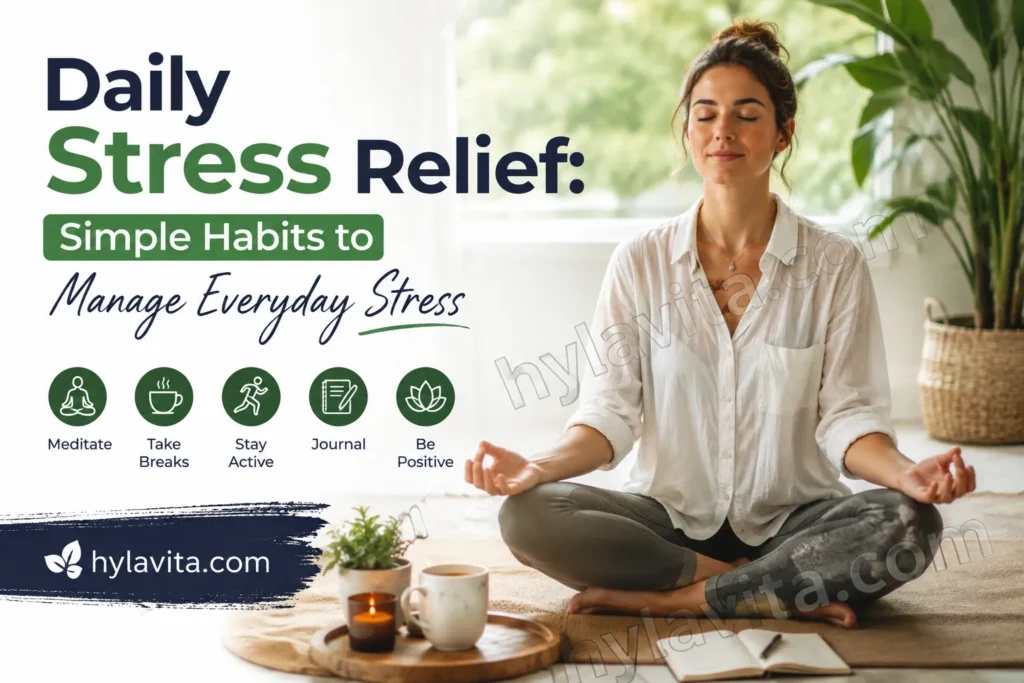
Your shoulders are tight. Your mind won’t slow down. Sound familiar?
Stress shows up in small ways before it becomes a big problem. The good news is that daily stress relief doesn’t require a spa day or a week off work. It comes from small, repeatable habits you can fit into a normal day.
In this article, you’ll find simple, natural techniques that real people use to calm down, refocus, and feel more in control — backed by guidance from sources like the National Center for Complementary and Integrative Health (NCCIH), Mayo Clinic, and the CDC. No jargon, no expensive gadgets — just habits that work, along with an honest look at where they fall short.
Why Daily Stress Relief Matters
Stress isn’t just “in your head.” It affects your body too.
When you’re stressed, your body releases hormones like cortisol and adrenaline. These are useful in short bursts — like when you need to react quickly. But when stress becomes constant, these hormones stay elevated longer than they should.
Over time, this can affect sleep, digestion, mood, and focus. That’s why daily stress relief tips matter more than occasional deep breaths during a crisis. Small habits, done consistently, help keep stress from building up in the first place. This lines up with NCCIH’s overview of relaxation techniques, which notes that regular, ongoing practice tends to work better than occasional use.
The Difference Between Stress and Chronic Stress
A little stress before a job interview is normal. It sharpens your focus.
Chronic stress is different. It’s the kind that lingers for weeks or months, often tied to work, finances, or relationships. This is the type daily habits are best at managing, since it builds up slowly and needs steady counterbalance.
Simple Daily Habits for Stress Relief
You don’t need to overhaul your life. Start with one or two habits and build from there.
1. Practice Deep Breathing
Deep breathing is one of the fastest stress relief techniques available, and it’s free.
Try this: breathe in slowly through your nose for four counts, hold for four counts, then breathe out for six counts. Repeat five times. This simple pattern signals your nervous system to calm down. Research summarized by NCCIH has found that slow, deep breathing may modestly lower blood pressure and reduce cortisol, the body’s main stress hormone — which supports why this habit is such a common first recommendation.
You can do this at your desk, in your car, or lying in bed. It takes less than two minutes.
2. Move Your Body
Exercise doesn’t have to mean a gym session. A 15-minute walk can lower tension and clear mental fog.
Movement helps your body process stress hormones instead of letting them sit and build up. According to Mayo Clinic, physical activity can boost endorphins — the brain’s feel-good chemicals — which can ease stress and lift mood. For example, a short walk after a stressful meeting can help you return to your desk with a clearer head.
If you’re short on time, even stretching for five minutes between tasks helps.
3. Get Consistent Sleep
Poor sleep and stress feed each other. When you’re stressed, sleep suffers. When sleep suffers, stress feels worse the next day.
Try going to bed and waking up at roughly the same time each day, even on weekends. The CDC lists a consistent bed/wake time and a quiet, cool, relaxing bedroom among its core habits for better sleep. This helps regulate your body’s internal clock, which supports better mood and focus.
Avoid screens right before bed if you can. The light and mental stimulation can make it harder to wind down.
4. Limit Caffeine and Sugar Spikes
Too much caffeine can mimic the physical symptoms of anxiety — a racing heart, jitters, and restlessness.
This doesn’t mean you need to cut coffee out completely. Instead, notice how your body reacts and adjust the amount if you feel more anxious after drinking it.
Sugary snacks can cause energy crashes that leave you feeling more tired and irritable later in the day.
5. Write It Down
Journaling isn’t just for teenagers with diaries. It’s a legitimate stress relief tool used by therapists and coaches.
Spend five minutes writing down what’s bothering you. You don’t need perfect sentences. Getting thoughts out of your head and onto paper can make them feel more manageable.
For example, if you’re worried about a work deadline, writing out the actual steps needed to finish it can turn vague anxiety into a clear plan.
Advantages and Disadvantages of These Habits
No single technique works for everyone, and it helps to know the trade-offs before you commit to one.
| Habit | Advantages | Disadvantages |
|---|---|---|
| Deep breathing | Free, works almost anywhere, effects can be felt within minutes | Effect is usually short-lived; not a substitute for treatment of ongoing anxiety disorders |
| Movement / exercise | Improves mood, sleep, and overall health, not just stress | Needs more time and physical readiness; may not be safe for everyone without a doctor’s input |
| Consistent sleep | Supports nearly every other stress-relief habit; broad health benefits | Hard to control if you have shift work, young kids, or insomnia; results build slowly |
| Limiting caffeine/sugar | Can reduce physical anxiety symptoms and energy crashes | Cutting back too fast can cause withdrawal headaches or fatigue; effects vary by person |
| Journaling | Cheap, private, helps organize thoughts into action steps | Doesn’t suit everyone’s learning style; can feel unhelpful or even ruminative for some people if not paired with a plan |
| Herbal tea / gratitude practice | Low effort, easy to build into an existing routine | Evidence is mostly about the ritual and mindset, not a direct chemical effect on stress hormones |
The overall advantage of daily habits like these is that they’re low-cost, low-risk, and cumulative. The main disadvantage is that they treat everyday stress, not clinical anxiety or depression — and results are gradual, not instant, so they can feel underwhelming if you’re expecting quick relief.
Natural Stress Relief Techniques You Can Try Today
Natural stress relief methods focus on using what’s already available to you — your breath, your environment, and your daily routine.
Spend Time Outdoors
Sunlight and fresh air genuinely help. Even ten minutes outside during a lunch break can reset your mood.
Nature doesn’t need to mean a hiking trail. A park bench or your own backyard works fine.
Try Herbal Teas
Chamomile and peppermint tea are often used for their calming properties. While they won’t erase stress on their own, the ritual of making and sipping tea can be a relaxing pause in a busy day.
Practice Gratitude
Naming three things you’re grateful for each day is a small habit with a noticeable effect on mood over time. It shifts attention away from what’s going wrong and toward what’s going right.
This isn’t about ignoring real problems. It’s about balancing your perspective.
Relaxation Techniques for Stress That Take Less Than 10 Minutes
Sometimes you need something quick. These relaxation techniques for stress fit into a short break.
Progressive Muscle Relaxation
Tense one muscle group at a time — starting with your feet — then release it. Work your way up to your shoulders and face.
This helps you notice where you’re holding tension, which many people don’t realize until they try this exercise. NCCIH notes this technique among the relaxation approaches with the most research behind it, alongside deep breathing and guided imagery.
The 5-4-3-2-1 Grounding Method
Name five things you can see, four you can touch, three you can hear, two you can smell, and one you can taste.
This technique pulls your mind out of racing thoughts and back into the present moment. It’s especially useful during sudden waves of anxiety.
Short Meditation Sessions
You don’t need an hour of silence. Even five minutes of sitting quietly and focusing on your breath can lower stress levels.
Free apps and guided audio recordings can help beginners get started without feeling lost.
Building a Sustainable Stress Relief Routine
The habits above only work if you actually stick with them. Here’s how to make that easier.
Start Small
Pick one habit, not five. Trying to change everything at once usually leads to giving up on all of it.
For example, commit to five minutes of deep breathing each morning for a week before adding a second habit.
Attach Habits to Existing Routines
Link a new habit to something you already do. Breathe deeply while your coffee brews. Stretch while waiting for the shower to warm up.
This makes new habits easier to remember and stick to. If you want a fuller framework for stacking small habits like these into your day, see Hylavita’s guide to everyday self-care routines.
Track Your Progress Loosely
You don’t need a detailed spreadsheet. A simple checkmark on a calendar can help you see your consistency and stay motivated.
When to Seek Extra Support
Daily habits help with everyday stress, but they aren’t a substitute for professional help when stress becomes overwhelming.
If stress is affecting your sleep, relationships, or ability to function for an extended period, consider talking to a doctor or licensed therapist. There’s no shame in needing more support than habits alone can provide.
FAQ: Daily Stress Relief
What is the fastest way to relieve stress? Deep breathing is often the fastest method because it works within minutes. Slowing your breath signals your nervous system to calm down, which can ease physical tension almost immediately.
How can I relieve stress naturally without medication? Natural stress relief methods include exercise, deep breathing, time outdoors, journaling, and consistent sleep. These habits address contributing factors to stress rather than just masking symptoms — though they work best alongside professional care for more serious or persistent stress.
What are simple daily habits for stress relief that beginners can start with? Start with just one habit, like a five-minute walk or three slow breaths in the morning. Small, consistent actions are easier to maintain than big lifestyle changes.
Can stress relief techniques actually reduce anxiety long-term? Evidence varies by technique. Reviews compiled by NCCIH point to modest, measurable benefits from things like deep breathing and progressive muscle relaxation, though study sizes are often small and results differ from person to person. These techniques generally work best as a supplement to, not a replacement for, professional mental health care when anxiety is significant.
How long does it take for stress relief habits to work? Some techniques, like deep breathing, offer relief within minutes. Others, like better sleep or regular exercise, may take a few weeks of consistency before you notice a clear difference in your stress levels.
Conclusion
Daily stress relief doesn’t need to be complicated. Small habits — deep breathing, movement, better sleep, and a few minutes outdoors — add up over time. Each comes with real advantages and real limits, so it’s worth picking the ones that fit your life rather than trying to do all of them at once.
You don’t have to try everything at once. Pick one habit from this list and practice it for a week. Notice how you feel, then build from there.
Your calmer, more focused self is built one small habit at a time.been studied for their role in reducing overall stress and anxiety levels over time, though results vary by person.
Disclaimer: This article is for general informational and educational purposes only and is not a substitute for professional medical or mental health advice,