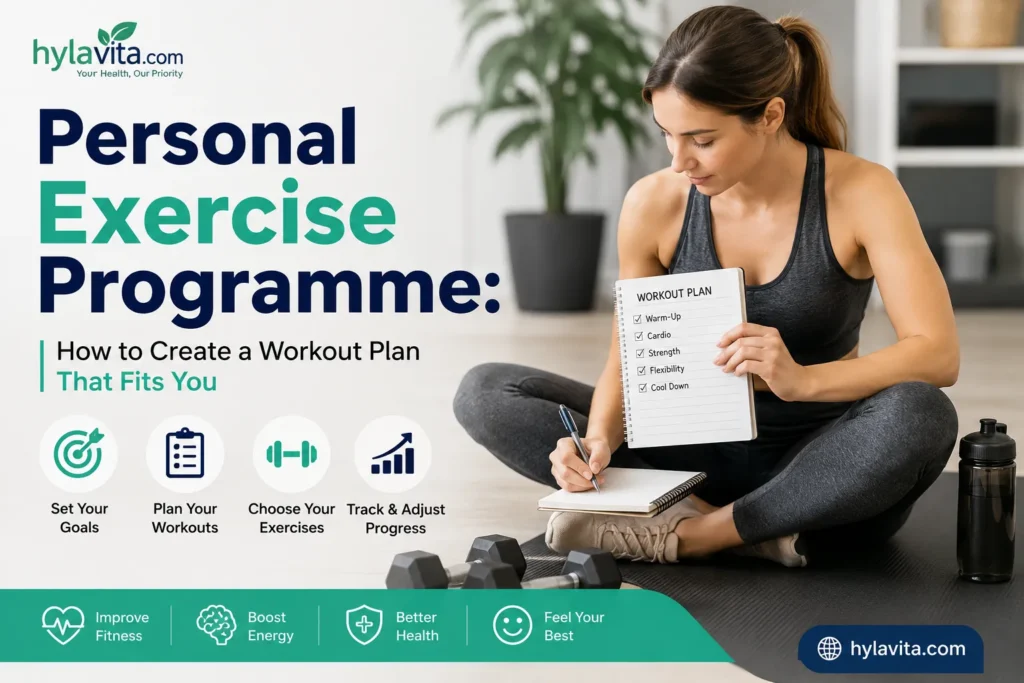
Most workout plans fail for one simple reason: they were never made for you. They were made for someone else’s body, schedule, and goals.
A personal exercise programme fixes that problem. It’s a workout plan built around your life, not a stranger’s Instagram routine. In this guide, you’ll learn exactly how to create a personalized exercise program you can actually stick to, whether you’re a total beginner, a busy student, or a working professional squeezing in gym time between meetings.
For more foundational guides on building healthy habits, browse Hylavita’s fitness and wellness library.
Why a One-Size-Fits-All Workout Plan Doesn’t Work
Generic fitness programs assume everyone has the same starting point. That’s rarely true.
Your friend might recover fast and handle five workouts a week. You might need more rest days. Neither approach is wrong — they’re just different.
For example, a 45-year-old office worker with a bad knee needs a different exercise routine than a 20-year-old college athlete. Copying someone else’s plan often leads to burnout, injury, or simply quitting after two weeks.
The Real Cost of Ignoring Personalization
When a plan doesn’t fit, people don’t just get poor results. They lose motivation. Many give up on exercise altogether, thinking they “failed,” when really the plan failed them.
Step 1: Define Your Fitness Goal Clearly
Before picking a single exercise, get clear on what you actually want. Vague goals lead to vague results.
Instead of saying “I want to get fit,” try something specific like “I want to walk up three flights of stairs without getting winded” or “I want to lose a noticeable amount of body fat in three months.”
Common Goal Categories
- Weight management — losing fat or maintaining a healthy weight
- Strength building — lifting heavier, feeling stronger in daily tasks
- Endurance — running, cycling, or simply not getting tired easily
- General health — lowering stress, improving sleep, supporting heart health
- Flexibility and mobility — moving without pain or stiffness
Pick one main goal to start. You can always add more once the first becomes a habit.
Step 2: Assess Your Current Fitness Level
You can’t build a good personal workout plan without knowing your starting point. This isn’t about judgment — it’s about accuracy.
Ask yourself a few honest questions. How many days a week can you realistically train? Do you have any injuries or health conditions? Have you exercised consistently before, or is this a fresh start?
If you have any existing health conditions, heart issues, or injuries, check with a doctor before starting a new fitness program. This step matters more than people think, especially for anyone over 40 or returning to exercise after a long break.
Step 3: Choose the Right Type of Exercise Routine
A well-rounded exercise routine usually includes a mix of the following. You don’t need all of them every day, but a good week should touch most of these areas.
Cardiovascular Exercise
This includes walking, jogging, cycling, swimming, or dancing. Cardio supports heart health and burns calories. According to the CDC’s Physical Activity Guidelines for Adults, adults should aim for at least 150 minutes of moderate-intensity aerobic activity per week, or 75 minutes of vigorous-intensity activity, plus muscle-strengthening work on two or more days. The World Health Organization’s activity recommendations point to the same range, so this is a widely agreed-upon baseline rather than one source’s opinion — though it’s worth checking either source directly for updates, since guidance can shift over time.
Strength Training
Strength training means working with resistance — weights, resistance bands, or even your own body weight through push-ups and squats. It builds muscle, supports bone health, and boosts metabolism.
Flexibility and Mobility Work
Stretching, yoga, or simple mobility drills keep your joints moving well. This part often gets skipped, but it helps prevent injury and makes other workouts feel easier.
Rest and Recovery
Rest days aren’t laziness. They’re when your muscles actually repair and grow stronger. Skipping rest is one of the fastest ways to burn out or get hurt.
Advantages and Disadvantages of a Personal Exercise Programme
No approach is perfect for everyone. Here’s a balanced look at what you gain — and what you give up — by building your own plan instead of following a pre-made one.
Advantages
- Fits your real life. The schedule, intensity, and exercise choices match your actual calendar, injuries, and preferences, which makes it easier to stick with.
- Lower injury risk. Because the plan accounts for your current fitness level and any limitations, you’re less likely to overreach the way generic programs can push you to.
- Built-in motivation. Working toward a goal you personally chose tends to hold your interest longer than following someone else’s template.
- Flexible and adjustable. You can change the plan as your body, schedule, or goals shift, without waiting on a new “program version.”
- Cost-effective. You don’t need a trainer, app subscription, or gym membership to build or follow one, since CDC guidance confirms that home-based, bodyweight, and free-time activities count toward the same health benefits.
Disadvantages
- Requires some knowledge upfront. Without at least a basic understanding of exercise types, form, and progression, it’s easy to build an unbalanced or inefficient plan.
- No built-in accountability. A trainer or class checks in on you; a self-built plan relies entirely on your own follow-through.
- Trial and error. You may need to adjust the plan a few times before it actually fits, which can feel discouraging early on.
- Easy to underestimate recovery or overtrain. Without outside guidance, it’s common to either push too hard or not push hard enough.
- Not a substitute for professional input if you have an injury, chronic condition, or advanced performance goal — a certified trainer or physical therapist can catch issues a self-designed plan might miss.
Step 4: Build Your Weekly Schedule
Now it’s time to turn all of this into an actual plan. Think in terms of a weekly structure rather than trying to plan every single day perfectly.
A simple beginner-friendly week might look like this:
- Monday: Full-body strength training (30–40 minutes)
- Tuesday: Light cardio, like a brisk walk (20–30 minutes)
- Wednesday: Rest or gentle stretching
- Thursday: Strength training, focusing on different muscles
- Friday: Cardio or a fun activity like a sport
- Saturday: Optional light movement, such as a hike
- Sunday: Full rest
This is just a starting template. Adjust the days and intensity based on your schedule and energy levels.
Matching the Plan to Your Lifestyle
Students often have flexible daytime hours but unpredictable exam weeks. Professionals may only have early mornings or evenings free. Build around your real calendar, not an ideal one that doesn’t exist.
For example, if you only have 20 minutes on weekdays, short and intense sessions work better than long ones you’ll skip.
Step 5: Track Progress and Adjust
A personal exercise programme isn’t set in stone. It should change as your body adapts and your life shifts.
Keep a simple log — a notebook, an app, or even your phone’s notes. Track what you did, how it felt, and any changes in strength, energy, or weight.
Signs It’s Time to Adjust Your Plan
- Workouts feel too easy after a few weeks
- You’re constantly exhausted or sore
- Your schedule has changed
- You’ve hit your original goal and need a new one
Small tweaks work better than starting over completely. If a plan feels stale, change one or two things first, like adding an extra set or swapping one exercise, rather than rebuilding everything from scratch.
Step 6: Stay Consistent Without Burning Out
Consistency beats intensity. A moderate fitness program you follow for months will always beat an extreme one you quit after two weeks.
Start smaller than you think you need to. Three days a week of manageable workouts is far more sustainable than seven days of exhausting ones.
Moreover, allow flexibility. Missing one workout isn’t failure. It only becomes a problem if one missed day turns into a missed month.
Frequently Asked Questions
How long should a personal exercise programme be before I see results? Most people notice small changes in energy and mood within two to three weeks. Visible physical changes, like strength or body composition, usually take six to eight weeks of consistent effort.
Do I need a gym to create a personalized exercise program? No, you don’t need a gym. Bodyweight exercises, resistance bands, and outdoor activities like walking or cycling can build an effective exercise routine at home.
How many days a week should my workout plan include? For most beginners, three to four days a week is a solid starting point. This allows enough recovery time while still building consistency and progress.
Can I follow the same fitness program forever? Not exactly. Your body adapts over time, so a program that worked six months ago may need adjustments now. Reviewing and updating your plan every few months keeps it effective.
Is it okay to design my own personal workout plan without a trainer? Yes, many people successfully build their own plans using reliable guidelines and gradual progress. However, working with a certified trainer can help, especially if you have specific injuries or advanced goals.
Conclusion
Building a personal exercise programme isn’t about following the latest trend or copying someone else’s routine. It’s about understanding your goals, your current fitness level, and your real-life schedule, then designing a plan around them.
Start simple. Set one clear goal, choose a realistic weekly schedule, and track your progress honestly. Adjust as you go, and don’t chase perfection.
Your personalized exercise program doesn’t need to be complicated to work. It just needs to fit you. Start with one small step this week, and build from there. For more health and fitness guides, visit Hylavita.