
What Is the Mediterranean Diet?
The Mediterranean diet is a healthy eating pattern based on traditional foods.It comes from eating habits found in countries around the Mediterranean Sea.
The diet mainly focuses on plant-based foods and healthy sources of fat.Vegetables, fruits, whole grains, beans, nuts, and seeds are common choices.
Olive oil is the main added fat used in many Mediterranean meals.Fish and seafood are also included regularly as protein sources.
Poultry, eggs, and dairy products are usually eaten in moderate amounts.This eating pattern does not require strict calorie counting or meal timing.
Instead, it encourages balanced meals and healthier everyday food choices.
Main Foods Included
Vegetables, fruits, whole grains, beans, nuts, seeds, and olive oil are staples.Fish and seafood are also important parts of this eating pattern.
Foods to Limit
Limit processed meats, sugary drinks, sweets, and highly processed foods.Red meat is generally eaten less often.
How the Diet Works
The diet emphasizes nutritious foods instead of strict eating rules.It can support heart health and overall healthy eating.
What Is Intermittent Fasting?
Intermittent fasting is an eating pattern that focuses on when you eat.It includes periods of eating followed by periods without food.
Unlike diets, it mainly changes meal timing rather than specific foods.
What Intermittent Fasting Means
You eat during a set period and avoid food afterward.The length of each period can vary between different fasting plans.
Common Fasting Schedules
Common methods include time-restricted eating, 5:2 fasting, and alternate-day fasting.
How Eating Windows Work
An eating window is the time when you have your meals.For example, some adults eat within an eight-hour daily window.
Mediterranean Diet vs. Intermittent Fasting: Key Differences
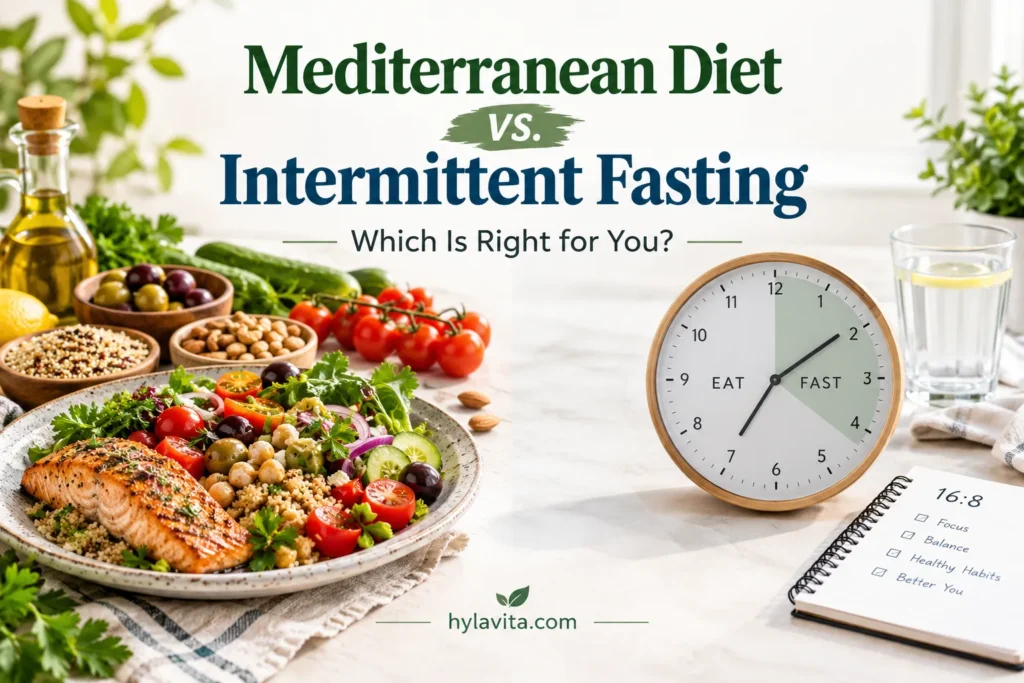
The Mediterranean diet focuses mainly on what you eat each day.Intermittent fasting focuses mainly on when you eat each day.
Both approaches can support healthy habits when used appropriately.
Food Choices
The Mediterranean diet encourages vegetables, fruits, whole grains, beans, nuts, and fish.Intermittent fasting does not specify which foods you must eat.
Meal Timing
The Mediterranean diet does not require a specific eating schedule.Intermittent fasting uses planned periods for eating and fasting.
Main Goals
The Mediterranean diet mainly promotes nutritious foods and overall healthy eating.Intermittent fasting mainly changes eating times and may reduce overall intake.
Lifestyle Requirements
The Mediterranean diet can fit regular daily meals and different schedules.Intermittent fasting requires following specific eating and fasting periods.
Mediterranean Diet vs. Intermittent Fasting: How Do They Work?
The Mediterranean diet improves food quality by emphasizing nutritious whole foods.It provides vegetables, fruits, whole grains, beans, nuts, fish, and healthy fats.
Research links this eating pattern with better heart and metabolic health.
How Fasting Changes Eating Patterns
Intermittent fasting limits the hours when you eat each day.This can reduce overall food intake for some adults.
Research shows it may support weight and metabolic health.
What Research Suggests
Research supports benefits from both approaches, but results can vary.Longer studies are still needed to understand their lasting effects.
Mediterranean Diet Benefits
The Mediterranean diet provides many nutritious foods in a balanced eating pattern.It emphasizes vegetables, fruits, whole grains, beans, nuts, fish, and olive oil.
Research links this pattern with better heart and metabolic health.It may also help improve blood sugar control in adults with diabetes.
Its fiber-rich foods can also support a healthy digestive system.Overall, it encourages healthier food choices without strict eating rules.
Heart Health
The Mediterranean diet can support heart health and lower cardiovascular risks.
Blood Sugar Control
It may improve blood sugar control and support better metabolic health.
Better Food Quality
It encourages nutritious foods while limiting highly processed and sugary foods.
Digestive Health
Its vegetables, fruits, beans, and whole grains provide plenty of dietary fiber.
Overall Healthy Eating
It promotes balanced meals and healthy food choices for everyday eating.
Intermittent Fasting Benefits
Research suggests intermittent fasting may offer some health benefits for adults.Results can vary based on the fasting method and individual health.
Possible Weight-Management Benefits
Some adult studies link intermittent fasting with modest weight loss.However, it does not appear better than regular calorie restriction overall.
Blood Sugar Effects
Some research shows improvements in blood sugar and insulin levels.These effects can differ between people and fasting methods.
Eating-Pattern Changes
Intermittent fasting changes when people eat during the day.This may also change overall food intake for some adults.
Potential Metabolic Benefits
Research suggests possible improvements in several metabolic health markers.More long-term research is still needed to confirm lasting benefits.
Mediterranean Diet vs. Intermittent Fasting for Weight Loss
Both approaches may affect body weight in different ways.The Mediterranean diet focuses on nutritious foods and overall eating quality.
Intermittent fasting mainly changes when people eat during the day.Research suggests neither approach is clearly best for everyone.
Which May Help With Weight Management?
The Mediterranean diet can support healthy weight management when followed consistently.Intermittent fasting may also support weight loss for some adults.
Research shows similar results compared with regular calorie restriction.
Why Calorie Intake Still Matters
Weight changes are influenced by overall energy intake and energy use.Fasting does not guarantee weight loss by itself.
Food quality and overall eating habits also remain important.
What Research Says
Recent research finds intermittent fasting and calorie restriction have similar results.Neither approach consistently produces better long-term weight loss for adults.
Which Is Better for Heart Health?
The Mediterranean diet has strong evidence supporting heart health.It emphasizes vegetables, fruits, whole grains, beans, fish, and healthy fats.
Studies link this pattern with lower risks of cardiovascular problems.
Mediterranean Diet and Heart Health
The diet can support healthier cholesterol, blood pressure, and overall heart health.Its benefits come from the overall eating pattern, not one food.
Intermittent Fasting and Cardiovascular Health
Intermittent fasting may improve some heart-related risk factors in adults.Research shows possible benefits for blood pressure and blood sugar.
However, long-term cardiovascular evidence remains more limited.
What Makes Them Different
The Mediterranean diet focuses mainly on what you eat.Intermittent fasting focuses mainly on when you eat.
For heart health, the Mediterranean diet has stronger long-term evidence.
Which Is Better for Blood Sugar Control?
Both approaches may help improve blood sugar control in adults.Research suggests the Mediterranean diet has consistent benefits for metabolic health.
Mediterranean Eating Pattern
The Mediterranean diet emphasizes vegetables, whole grains, beans, nuts, and healthy fats.Studies show it can modestly improve blood sugar levels and HbA1c.
Intermittent Fasting
Intermittent fasting may also improve blood sugar in some adults.Research shows these benefits can vary between people and fasting methods.
Important Considerations for People With Diabetes
People with diabetes should discuss fasting with their healthcare professional first.Fasting can affect blood sugar and diabetes medicines in different ways.
The Mediterranean diet offers a more consistent long-term eating pattern.
Can You Combine the Mediterranean Diet and Intermittent Fasting?
The two approaches focus on different parts of eating.The Mediterranean diet focuses on food quality and balanced nutrition.
Intermittent fasting focuses on limiting when people eat.Research on combining both approaches remains limited, especially long term.
How the Two Approaches Can Work Together
A person may follow Mediterranean-style foods while using structured eating times.However, fasting is not suitable for everyone.
Potential Advantages
The combination may improve overall food quality and eating patterns.Research suggests intermittent fasting can also support some metabolic health measures.
Things to Consider
Fasting can cause problems for some people, especially with certain health conditions.People with diabetes should discuss fasting with their healthcare professional first.Children and teenagers should not use fasting diets without medical guidance.
Possible Downsides of the Mediterranean Diet
The Mediterranean diet is flexible, but some people may face practical challenges.Costs, preparation time, and food availability can affect how easily you follow it.
Cost and Meal Preparation
Some fresh foods can cost more, depending on location and season.However, beans, lentils, whole grains, and frozen vegetables can reduce costs.
Dietary Adjustments
Changing from processed foods may take time and planning.Some people may need time to enjoy new foods and recipes.
Challenges When Eating Out
Restaurant meals may contain more sodium, added sugars, or saturated fat.Choosing grilled foods and vegetables can make meals fit better.
Possible Downsides of Intermittent Fasting
Intermittent fasting can be difficult for some people to maintain.Research also shows that long-term effects still need more study.
Hunger
Some people may feel hungry or uncomfortable during fasting periods.This can make the eating pattern difficult to maintain.
Difficulty Maintaining Fasting Schedules
Fixed fasting periods may not fit everyone’s daily routine.Social events and regular meal schedules can also create challenges.
Possible Side Effects
Some people may experience headaches, tiredness, or difficulty concentrating.These effects can vary between individuals.
When Fasting May Not Be Appropriate
Fasting may not suit children, teenagers, or people with certain health conditions.People with diabetes should discuss fasting with their healthcare professional first.
Anyone considering major eating changes should seek appropriate medical advice.
Who May Prefer the Mediterranean Diet?
The Mediterranean diet may suit people who prefer regular, balanced meals.It focuses more on food choices than strict meal timing.
People Who Enjoy Regular Meals
Some people prefer eating meals at regular times each day.The Mediterranean diet does not require specific fasting periods.
This can make the pattern easier to fit into daily routines.
People Focused on Food Quality
This diet emphasizes vegetables, fruits, whole grains, beans, nuts, and seeds.It also includes healthy fats, especially olive oil.
It limits highly processed foods, added sugars, and excess saturated fat.
People Seeking a Long-Term Eating Pattern
The Mediterranean diet works as an overall eating pattern.
It does not depend on short-term food restrictions.Its flexible approach can support healthy eating habits over time.
Who May Prefer Intermittent Fasting?
Intermittent fasting focuses mainly on when people eat, rather than specific foods.
People Who Prefer Structured Meal Times
Some adults prefer clear eating periods during their daily routine.A structured pattern may feel simpler for some people.
However, research does not show one fasting pattern suits everyone.
People Who Find Fewer Meals Easier
Some adults may prefer fewer eating occasions each day.This approach can simplify meal planning for certain people.
However, individual responses can vary widely.
Important Limitations to Consider
Intermittent fasting is not suitable for everyone.People with diabetes should discuss fasting with their healthcare professional.
Long-term benefits and safety still need more research. Children and teenagers should not use fasting for weight loss.
Which Is More Sustainable Long Term?
There is no single eating pattern that works best for everyone.Long-term success often depends on personal habits and daily routines.
Lifestyle Compatibility
The Mediterranean diet can fit naturally into regular daily meals.Intermittent fasting may be harder around busy schedules or changing routines.
A sustainable pattern should fit comfortably into someone’s lifestyle.
Flexibility
The Mediterranean diet offers flexibility in food choices and meal planning.People can adapt its foods to local tastes and availability.
Intermittent fasting requires more attention to meal timing.
Social Situations
Regular meals can make family meals and social events easier.Fasting periods may sometimes conflict with shared meals or gatherings.
Social routines can affect how easily someone follows an eating pattern.
Personal Preferences
Personal preferences can strongly influence long-term adherence.Some people enjoy Mediterranean-style foods and regular meals.
Others may prefer more structured eating times.The best choice should support healthy habits without unnecessary restriction.
Mediterranean Diet vs. Intermittent Fasting: Which Is Right for You?
There is no single eating pattern that works best for everyone.The right choice depends on health needs, routines, and personal preferences.
Health Goals
The Mediterranean diet focuses on overall food quality and heart health.It emphasizes vegetables, fruits, whole grains, beans, nuts, and healthy fats.
Intermittent fasting mainly changes when adults eat their meals.Research suggests it may help some adults with weight management.
Eating Preferences
The Mediterranean diet allows regular meals and many different foods.Intermittent fasting requires following specific periods for eating and fasting.
Some adults may find this structure easier to follow.
Daily Schedule
The Mediterranean diet can fit many different daily routines.Intermittent fasting may be harder around work, school, or social meals.
Your schedule can affect how sustainable an eating pattern becomes.
Medical Considerations
People with certain health conditions need professional advice before fasting.This is especially important for people with diabetes using certain medicines.
Children and teenagers should not use fasting for weight loss.For teens, regular nutritious meals support normal growth and development.
Long-Term Sustainability
The Mediterranean diet has strong evidence supporting healthy eating over time.Intermittent fasting has promising research but needs more long-term evidence.
Choose an eating pattern that supports healthy habits without unnecessary restriction.
Frequently Asked Questions
Is the Mediterranean Diet Better Than Intermittent Fasting?
Neither approach is automatically better for everyone.The Mediterranean diet has strong evidence for overall healthy eating.
Intermittent fasting may help some adults with certain health goals.However, more long-term research is still needed.
Can You Lose Weight With Both?
Both approaches may help some adults manage their weight.However, results can vary between individuals.Healthy food choices remain important with either approach.
Can You Combine Mediterranean Eating With Fasting?
Adults may combine these approaches because they focus on different areas.Mediterranean eating focuses mainly on food quality.
Fasting focuses mainly on meal timing.However, fasting is not suitable for everyone.
Which Is Better for Blood Sugar?
The Mediterranean diet supports healthy food choices and may improve blood sugar.Some research also shows benefits from fasting for certain adults.
People with diabetes should discuss fasting with their healthcare professional.Fasting can affect blood sugar and diabetes medicines.
Is Intermittent Fasting Safe for Everyone?
No, intermittent fasting is not suitable for everyone.Children and teenagers should not use fasting for weight loss.
People with certain medical conditions may also need special guidance.Anyone considering fasting should discuss it with a healthcare professional.
Can the Mediterranean Diet Be Followed Every Day?
Yes, the Mediterranean diet can be used as an everyday eating pattern.It includes vegetables, fruits, whole grains, beans, nuts, and seeds.
It also allows flexible choices within a balanced eating pattern.This makes it practical for many people’s daily routines.
Final Thoughts
The Mediterranean diet and intermittent fasting work in different ways.The Mediterranean diet focuses on nutritious foods and overall healthy eating.
Intermittent fasting focuses mainly on when adults eat their meals.The best choice depends on health needs, lifestyle, and personal preferences.
Teens should avoid fasting for weight loss and focus on balanced nutrition.
Hylavita’s Sugestion To Read
- What Is Organic Rice? Benefits, Nutrition, Types, and Side Effects
- What Happens to Your Body When You Cut Sugar for 30 Days?
- Clover Honey: Benefits, Nutrition, Uses & Side Effects
Disclaimer:This article is for general informational and educational purposes only.It does not replace advice from a qualified healthcare professional.
Health needs can differ from person to person.Speak with a healthcare professional before making major dietary changes.