
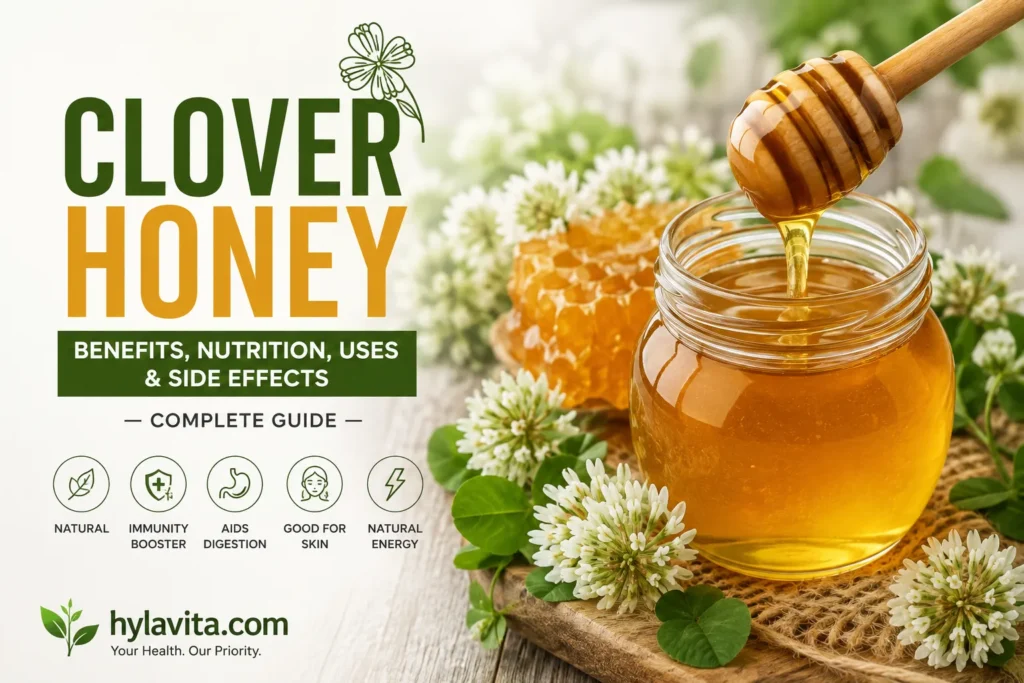
Looking for a natural sweetener that tastes great and offers real health perks? With so many honey types on the grocery store shelf, it can be hard to know which one is best for your morning tea, toast, or overall wellness.That is where clover honey comes in. It is the most popular and widely available honey in the world, famous for its mild, floral flavor and smooth texture. Whether you want to replace refined table sugar or naturally soothe a scratchy throat, this golden liquid has you covered.
In this complete, evidence-based guide, we will break down everything you need to know about clover honey benefits, nutrition facts, calories, and potential side effects. Let us explore the sweet details together.
What Is Clover Honey?
Clover honey is made by bees that collect nectar primarily from clover plants. You will often find white clover and red clover in fields and lawns across North America and Europe. Bees visit millions of tiny clover blossoms to gather this nectar. Once back at the hive, they fan it with their wings to evaporate excess water.
This natural process transforms thin nectar into the thick, golden syrup we know as honey. Because clover grows so abundantly, bees have an easy time finding it. This makes clover honey highly affordable and easy to find. Unlike stronger, darker honeys like buckwheat, it has a light amber color and a mild taste that does not overpower other flavors in your food.
Clover Honey Nutrition and Calories
Many people wonder about the actual health value of their favorite sweeteners. Let us look at the basic clover honey nutrition facts.
Macronutrient Breakdown
A standard serving size is one tablespoon (about 21 grams). According to the USDA FoodData Central, one tablespoon contains:
- Calories: 60–64 kcal
- Carbohydrates: 17 grams
- Sugars: 17 grams
- Protein: 0 grams
- Fat: 0 grams
As you can see, it is purely a carbohydrate source. Think of it as nature’s energy gel. Athletes sometimes use it for a quick carb boost before a workout. However, because it lacks fiber, your body absorbs those carbohydrates very quickly. This is why portion control matters. A good rule of thumb is to treat it like a dessert, not a health food you can eat by the spoonful.
Vitamins and Antioxidants
While it does not provide large amounts of daily vitamins, clover honey does contain trace minerals like potassium and calcium. More importantly, it offers plant compounds called antioxidants. These help protect your cells from damage caused by harmful molecules known as free radicals. Darker honeys usually have more antioxidants, but light clover honey still provides a helpful, everyday defense for your body.
Top Clover Honey Benefits
Why should you choose this over regular white sugar? Here are the main, science-backed clover honey benefits:
- Soothes Coughs and Sore Throats: For generations, parents have given honey to children with colds. In fact, research from the Mayo Clinic suggests that honey can coat the throat and reduce coughing fits, often working better than over-the-counter cough syrups for nighttime relief in children over one year old.
- Rich in Antioxidants: Think of antioxidants like tiny bodyguards for your cells. They patrol your system and neutralize free radicals that can cause premature aging and cellular damage.
- A Better Alternative to Refined Sugar: Although it is still a sugar, clover honey is less processed than white table sugar. It has a slightly lower glycemic index, meaning it raises blood sugar a bit slower than refined sugar. Moreover, it adds moisture and rich flavor to baked goods. (Tip: If a cookie recipe calls for one cup of white sugar, you can often swap it with three-quarters of a cup of clover honey, and reduce other liquids by about two tablespoons).
Advantages and Disadvantages of Clover Honey
To help you make an informed, balanced choice, here is a quick summary of the pros and cons:
| Advantages (Pros) | Disadvantages (Cons) |
|---|---|
| Natural Energy Source: Provides quick, easily digestible carbohydrates for athletes and hikers. | High in Sugar: Still primarily composed of fructose and glucose, which can spike blood sugar if overconsumed. |
| Soothes Throats: Clinically shown to reduce nighttime coughing effectively and safely (for ages 1+). | Not Safe for Infants: Carries a risk of infant botulism for babies under 12 months old. |
| Contains Antioxidants: Offers trace minerals and plant compounds that fight free radicals and support immunity. | Calorie-Dense: Easy to overconsume, potentially leading to weight gain if portions are not carefully measured. |
| Versatile & Mild: Light flavor and smooth texture make it easy to use in cooking, baking, and DIY skincare. | Allergy Risk: Rare but possible allergic reactions to specific bee proteins or local pollens. |
Everyday Uses for Clover Honey
This versatile ingredient belongs in more than just your tea.
- In the Kitchen: You can drizzle it over oatmeal, yogurt, or warm biscuits. It pairs beautifully with sharp cheeses like cheddar or goat cheese on a charcuterie board. It also makes a fantastic natural sweetener for salad dressings and marinades. (Looking for more healthy, natural sweetener ideas? Explore our Nutrition & Diet guides for evidence-based tips).
- In Skincare: Honey is a natural humectant, meaning it draws moisture into the skin. The mild nature of clover honey makes it suitable for most skin types, including sensitive skin. You can mix a tablespoon of it with a little oatmeal to create a gentle, hydrating face mask. Leave it on for 15 minutes, then rinse with warm water for a soft glow.
- As a Natural Energy Booster: Many athletes and hikers keep a small packet of honey in their gear. Spreading a thin layer on a slice of whole-grain toast 30 minutes before a run can give you the fuel you need without weighing down your stomach.
- Bonus Tip for Small Business Owners: Are you selling clover honey at a local farmers market or running an online shop? Keeping track of your inventory and customer orders is crucial for a smooth, professional operation. If you maintain a spreadsheet of your daily sales, knowing how to find duplicates in Excel can save you hours of manual checking, prevent costly shipping errors, and keep your product lists clean.
Potential Side Effects and Risks
Even natural foods have drawbacks if used incorrectly. Here is what to watch out for:
- Not Safe for Infants Under One Year: Never give any type of honey to a baby under 12 months old. The Cleveland Clinic warns that honey can contain dormant spores of Clostridium botulinum. While harmless to older children and adults, a baby’s developing gut flora makes them vulnerable to a rare but serious illness called infant botulism.
- Blood Sugar Spikes: Despite being natural, clover honey is still mostly sugar. Eating too much can cause rapid blood sugar spikes. People with diabetes should monitor their portions carefully and consult a doctor before adding it to a diabetic diet.
- Risk of Weight Gain: Because honey is calorie-dense, eating it in large quantities can lead to unwanted weight gain. Measuring your servings with a standard tablespoon helps you enjoy the flavor without overdoing the calories.
- Allergic Reactions: Though rare, some people may be allergic to specific pollens or bee proteins in honey. If you experience itching, swelling, or dizziness after eating it, stop use immediately and seek medical advice.
Frequently Asked Questions
Is clover honey raw or pasteurized?
It can be either, depending on the brand. Raw clover honey is unheated and unfiltered, meaning it retains more natural enzymes, pollen, and antioxidants. Most commercial brands are pasteurized (heated) to prevent crystallization and extend shelf life, which may reduce some of these beneficial compounds.
Does clover honey crystallize?
Yes, all pure honey will eventually crystallize and turn solid or grainy over time. This is a completely natural process and actually proves your honey is pure and not filled with corn syrup. You can easily return it to a smooth liquid state by placing the sealed jar in a bowl of warm water for 15 minutes.
How many calories are in a tablespoon of clover honey?
One tablespoon of clover honey contains approximately 60–64 calories. While this is slightly more than a tablespoon of white sugar, honey is naturally sweeter and denser, meaning you can often use less of it to achieve the same level of sweetness.
Can diabetics eat clover honey?
Diabetics can eat it in very small, controlled amounts, but they must be highly cautious. Honey still raises blood glucose levels. It is always best to speak with a healthcare provider or registered dietitian to see if it fits safely into your specific meal plan.
(If you enjoy exploring natural, soothing remedies, you might also like our guide on Honeybush Tea: Benefits, Caffeine, Side Effects & How to Brew It.)
Conclusion
To wrap up, clover honey is a delicious, versatile, and mildly sweet addition to your pantry. It offers genuine perks, from soothing a sore throat to providing a natural antioxidant boost. However, it is important to remember that it is still a form of sugar. Enjoy it in moderation, keep it away from infants, and savor its floral flavor in your favorite recipes.
Ready to upgrade your sweetener game? Grab a jar of pure clover honey today and try drizzling it over your morning oats or evening tea. Your taste buds will thank you!
Medical Disclaimer: The information provided in this article is for educational and informational purposes only and is not intended as a substitute for professional medical advice, diagnosis, or treatment.