The front squat is one of the best exercises for building leg strength. It works your quads, core, and upper back all at once. But if your form is off, you won’t get the full benefits.
In this guide, you’ll learn exactly how to do a front squat the right way. We’ll cover proper form, the real benefits, and mistakes to avoid.
Get this move right, and it can boost your squat, your posture, and your overall strength.
What Is a Front Squat?
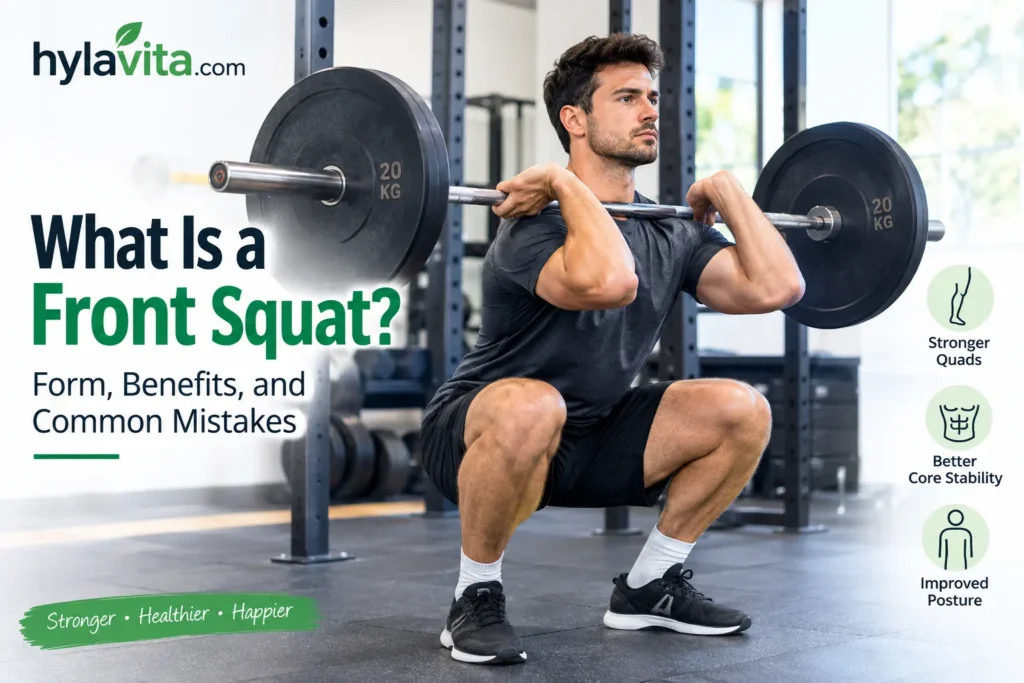
A front squat is a squat where you hold the bar in front of your shoulders. This is different from a back squat, where the bar rests on your upper back.
That small change makes a big difference. It shifts more work onto your quads and core.
Here’s where the bar sits: right across the front of your shoulders. You rest it on your fingertips or crossed arms, close to your neck. This forces you to keep your torso upright. If you lean forward, the bar rolls off your shoulders.
Because of this bar position, your core has to work harder to keep you stable. Your upper back also engages to hold the bar in place. And your quads take on more load than they would in a back squat.
So in short: same basic squat pattern, different bar placement, different muscles doing the heavy lifting.
Front Squat vs. Back Squat: Key Differences
Both are great squats. But they work your body in different ways.
| Factor | Front Squat | Back Squat |
|---|---|---|
| Bar placement | Rests on the front of your shoulders | Rests on your upper back, below your neck |
| Torso angle | Stays upright, or the bar falls forward | Allows more forward lean |
| Muscle emphasis | Focuses on quads and core | Spreads work across quads, glutes, and hamstrings |
| Best suited for | Athletes needing strong quads and good posture (runners, lifters, Olympic lifters) | Lifters wanting to move heavier weight overall; easier for beginners to learn |
Neither one is “better.” They just serve different goals.
How to Do a Front Squat with Proper Form
Good form makes or breaks this lift. Let’s break it down step by step.
Setting Up the Rack Position (Clean Grip vs. Cross-Arm Grip)
You have two ways to hold the bar.
The clean grip looks like the front of an Olympic clean. Your fingers hook under the bar. Your elbows point up and forward. This grip needs good wrist mobility.
The cross-arm grip is easier for beginners. Cross your arms over the bar. Use your hands to hold it in place. This takes pressure off your wrists.
Either way, keep your elbows high. High elbows keep the bar resting on your shoulders. Low elbows let the bar drift forward and fall.
Foot Placement and Stance
Stand with your feet shoulder-width apart. Point your toes slightly outward. This gives you a stable base.
Keep your weight spread evenly across your feet. Don’t let your weight shift to your toes or heels.
The Descent
Start by bending your knees and hips together. Keep your chest up and your torso tall. Don’t let your elbows drop as you go down.
Lower yourself until your hips dip below your knees. This is called “breaking parallel.” Keep your knees tracking over your toes, not caving inward.
Move slowly and stay controlled. Don’t rush the drop.
Driving Back Up
Push through your whole foot, not just your toes. Drive your hips and chest up at the same time. Keep your elbows lifted the entire way up.
Exhale as you push through the hardest part of the rep. Stand tall at the top, then reset for the next rep.
Quick Step-by-Step Recap
- Set your grip (clean or cross-arm), elbows high.
- Stand with feet shoulder-width apart, toes slightly out.
- Brace your core and unrack the bar.
- Bend your knees and hips together, chest up.
- Squat down until your hips dip below your knees.
- Drive up through your whole foot, elbows still high.
- Stand tall, then repeat.
Benefits of the Front Squat
Front squats do more than just build big legs. Here’s what they actually offer.
Builds quad strength
The upright torso shifts more load onto your quads. This makes front squats one of the best quad builders around. Your legs will feel it fast.
Improves core and upper back stability
Holding the bar in front forces your core to work overtime. Your upper back also has to stay tight and strong. Over time, this builds serious core stability.
Better squat posture and carryover to other lifts
Front squats teach you to keep your chest up and torso tall. This posture carries over to other lifts, like back squats and overhead presses. Good habits here help everywhere else.
Reduces spinal loading compared to back squats
Because your torso stays upright, there’s less shear force on your spine. This can make front squats a good option for people with back concerns. Always check with a doctor first if you have existing issues.
Athletic and functional benefits
Many sports need strong quads and good posture, like running and jumping. Front squats mimic movements used in real life and sports. That’s why athletes and coaches use them so often.
Common Front Squat Mistakes (and How to Fix Them)
Even good lifters make these mistakes. Here’s how to spot and fix them.
Elbows Dropping
This is the most common mistake. When your elbows drop, the bar rolls forward off your shoulders.
The fix: Focus on pointing your elbows up and forward the whole time. Imagine someone pulling your elbows toward the ceiling. Practice holding this position without weight first.
Losing Wrist or Rack Mobility
Tight wrists make the clean grip hard to hold. This often causes elbows to drop too.
The fix: Stretch your wrists before you lift. Try the cross-arm grip instead if mobility is limited. You can also use lifting straps made for front squats.
Leaning Too Far Forward
If you lean forward, the bar loses its resting spot. It can slide off your shoulders completely.
The fix: Keep your chest up and proud through the whole squat. Think about staying tall, like a string is pulling your head up. Slow down and check your form in a mirror.
Knees Caving In
This happens when your knees drift inward during the squat. It puts extra stress on your knee joints.
The fix: Push your knees out in line with your toes. Imagine spreading the floor apart with your feet. Strengthening your glutes also helps fix this.
Heels Lifting Off the Ground
If your heels rise, you’ll lose your balance and stability. Your weight shifts too far onto your toes.
The fix: Keep your weight spread evenly through your whole foot. Work on ankle mobility with stretches or mobility drills. Wearing flat, stable shoes can also help.
Front Squat Variations
Not ready for a barbell front squat? Try these variations instead.
Goblet Squat
This is the easiest way to start. Hold a dumbbell or kettlebell close to your chest. It teaches the same upright torso position as a front squat.
Beginners love this move. It’s simple, safe, and builds the right habits early.
Zombie Squat
This one skips the rack position completely. Hold the bar out in front of you with straight arms. Your arms stay extended, like a zombie reaching forward.
This variation removes the need for wrist mobility. It’s great if your wrists can’t handle the regular grip yet.
Front Squat with Straps
Special lifting straps attach to the bar. You hold the straps instead of gripping the bar directly. This takes pressure off tight wrists.
It’s a solid option if you want to build front squat strength. You can use it while you work on wrist mobility separately.
Who Should Do Front Squats?
Front squats aren’t for everyone. But they work great for certain people.
Good for athletes and quad-focused lifters
If you play sports like soccer, basketball, or track, front squats can help. They build the quad strength and posture those sports need. Lifters who want more quad and core work should try them too. Olympic lifters especially benefit, since front squats mirror part of the clean.
Considerations for beginners
New lifters can do front squats, but should start light. Learn the form first with an empty bar or light dumbbell. The goblet squat is a great starting point.
Considerations for limited mobility
Tight wrists, shoulders, or ankles can make front squats tough. Don’t force the clean grip if it hurts your wrists. Try the cross-arm grip or straps instead.
If you have any injuries, check with a doctor first. It’s always better to ask before adding a new exercise.
FAQs About Front Squats
Are front squats harder than back squats?
In some ways, yes. They demand more core strength and mobility. But they’re not always “harder,” just different. Many people find them tough at first, then easier with practice.
How much weight should I front squat compared to back squat?
Most people front squat less than they back squat. A common rule is around 80-85% of your back squat weight. This isn’t exact, though. It depends on your mobility and experience.
Can beginners do front squats?
Yes, beginners can do front squats. Start light and focus on form first. Try a goblet squat if the barbell version feels too hard.
Do front squats build glutes?
Yes, but not as much as back squats do. Front squats mainly target your quads and core. Your glutes still work, just not as the main focus.
Final Thoughts
The front squat is a powerful move for building strength. It targets your quads, core, and upper back all at once. Good posture and control make this exercise stand out.
Remember the basics: elbows up, chest tall, and knees tracking your toes. Start light if you’re new, and build up slowly. Small form fixes make a big difference over time.
If you’re unsure about your technique, ask a coach for help. A trained eye can spot mistakes you might miss. Getting this move right pays off in strength and confidence.
Hylavita’s sugestion to read
- How to Do Cable Dumbbell Curls: A Complete Beginner’s Guide
- Morning vs. Evening Workouts: Which Best Suits Your Body Clock?
- Calisthenics Workout Plan for Beginners: How to Start Today
Disclaimer: This article is for general informational purposes only. It’s not a substitute for professional medical or fitness advice. Talk to a doctor or certified trainer before starting any new exercise, especially if you have an injury or health condition. Perform all exercises at your own risk.