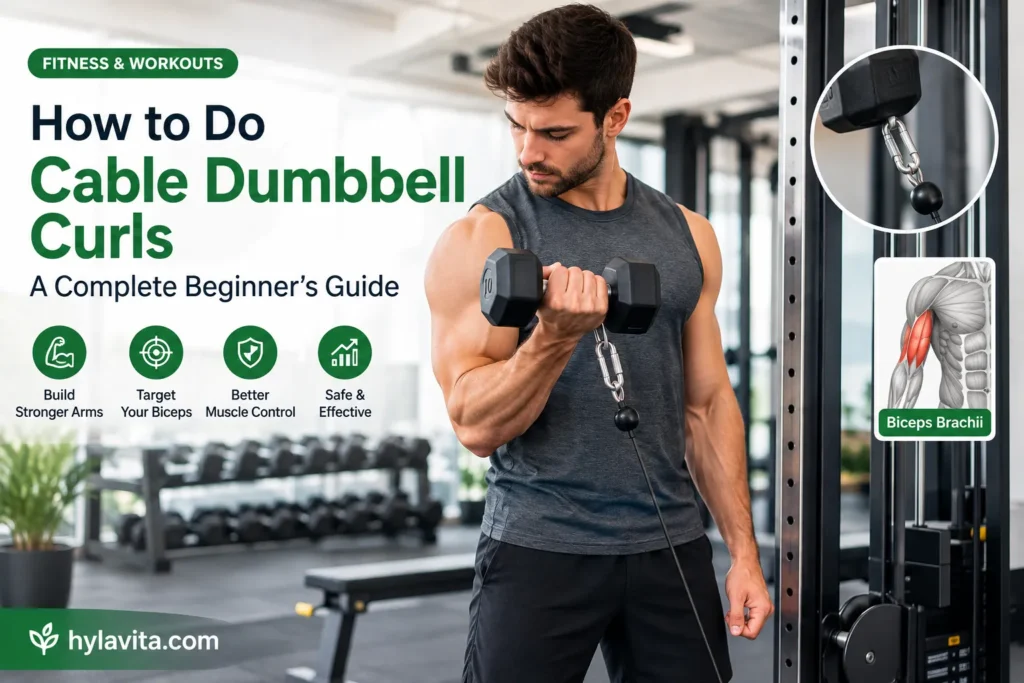
A Complete Beginner’s Guide
Want stronger, more defined arms? This exercise can help.
Cable dumbbell curls mix two tools into one move. You pair a cable machine with a dumbbell. This combo keeps tension on your biceps the whole time, not just part of the rep.
Regular dumbbell curls let momentum take over. Your muscles get a break at the top or bottom. This exercise fixes that. The cable keeps pulling against you throughout the curl.
This guide covers proper setup, form, and common mistakes. By the end, you’ll be ready to try it yourself.
What Are Cable Dumbbell Curls?
Cable dumbbell curls are a hybrid exercise. You attach a dumbbell to a cable machine. Then you curl it up, just like a normal bicep curl.Sounds strange, right? A dumbbell on a cable? Here’s why people do it.
The cable adds steady resistance through the whole movement. A regular dumbbell only feels heavy at certain points. Gravity does most of the work at the top of the curl. With a cable, that doesn’t happen. Your muscle stays under load from start to finish.
How Is This Different From Regular Curls?
Standard dumbbell curls rely on gravity alone. The weight feels lightest at the top of the movement. Standard cable curls use a fixed cable attachment, like a bar or handle.
This exercise combines both tools. You get the cable’s constant tension.lso get the freedom of a dumbbell. You can turn your wrist and adjust your grip. That’s harder to do with a regular cable bar.
The result is a curl that challenges your muscles differently. It’s a solid choice for building arm strength and size.
Muscles Worked in Cable Dumbbell Curls
This exercise mainly targets your upper arm. But other muscles help out too. Let’s break down who’s doing the work.
Primary Muscles (Biceps Brachii)
Your biceps brachii is the main muscle here. It sits on the front of your upper arm. This muscle has two heads, a long one and a short one.
Curling the dumbbell up shortens your biceps. That’s what makes your arm bend at the elbow. The cable’s steady pull keeps this muscle working hard. It stays engaged through the whole range of motion.Over time, this builds size and strength in your biceps. You’ll notice better arm definition too.
Secondary/Stabilizer Muscles (Brachialis, Forearms)
Your biceps get most of the credit. But other muscles pitch in during this move.The brachialis sits underneath your biceps. It also helps bend your elbow. A strong brachialis can even make your arms look bigger. It pushes the biceps up and out.
Your forearm muscles work hard too. They help you grip the dumbbell tightly. Also control your wrist position during the curl.Your shoulders and core help as well. They keep your body stable while you lift. This teamwork makes the exercise more effective overall.
Benefits of Cable Dumbbell Curls
This exercise offers some real perks over regular curls. Here’s what makes it worth trying.
Constant Tension Throughout the Movement
Regular dumbbell curls lose tension at certain points. Gravity does less work when your arm is at the top. Your biceps get a mini break there.Cables don’t work that way. They pull at a steady rate the whole time. Your muscle stays under load from start to finish. This can lead to better strength gains over time.
Better Muscle Isolation
It’s easy to swing your body during regular curls. Your back and shoulders sneak in to help lift the weight.Cables reduce that temptation. The steady pull forces you to control the movement. This keeps the focus on your biceps and arms. Less cheating means better results for the muscle you’re targeting.
Joint-Friendly Alternative
Free weights can feel jerky, especially at the top or bottom. That sudden change in tension can stress your elbows and wrists.Cables move more smoothly. There’s no sudden drop in resistance. This can feel easier on your joints. It’s a good option if you deal with elbow or wrist discomfort.
Equipment Needed
You don’t need much gear for this exercise. Here’s what to grab before you start.First, you need a cable machine. Most gyms have one with adjustable pulleys. Set the pulley to the lowest position for this move.
Next, grab a carabiner or clip attachment. This connects your dumbbell to the cable. Many gyms have these near the cable stations.Finally, pick a dumbbell that fits your strength level. Beginners should start light. You can always increase the weight later.That’s it. No fancy machines or extra tools required. Just a cable station, a clip, and a dumbbell.
Step-by-Step Instructions
Ready to try it? Follow these steps for a safe, effective curl.
Step 1: Set Up the Cable Machine
Adjust the pulley to the lowest setting. Attach a carabiner clip to the cable.
Step 2: Attach the Dumbbell
Clip the dumbbell onto the carabiner. Make sure it’s locked in securely. Give it a light tug to check.
Step 3: Get Into Position
Stand facing the machine, a few feet back. Keep your feet shoulder-width apart. Grip the dumbbell with one hand.
Step 4: Set Your Starting Stance
Let your arm hang straight down. Keep your elbow close to your side. Stand tall with your chest up.
Step 5: Curl the Dumbbell Up
Bend your elbow and lift the dumbbell toward your shoulder. Keep your upper arm still. Only your forearm should move.
Step 6: Squeeze at the Top
Pause briefly when the dumbbell reaches shoulder height. Squeeze your bicep for one second.
Step 7: Lower With Control
Slowly straighten your arm back down. Don’t let the cable snap back. Control the weight the entire way.
Step 8: Repeat
Do your full set on one arm. Then switch and repeat with the other side.
Take your time with each rep. Slow, controlled movement beats fast, sloppy reps every time.
Proper Form and Technique Tips
Good form makes this exercise safer and more effective. Here’s what to keep in mind.
Keep Your Elbow Pinned
Your elbow should stay close to your body. Don’t let it drift forward or backward. This keeps the focus on your biceps.
Avoid Swinging Your Body
Stand tall and stay still during the curl. Don’t rock back and forth to lift the weight. That’s your body cheating, not your muscle working.
Control the Lowering Phase
Don’t just let the dumbbell drop. Lower it slowly and with purpose. This part of the rep matters just as much as the lift.
Breathe Properly
Exhale as you curl the weight up. Inhale as you lower it back down. Steady breathing helps you stay in control.
Keep Your Wrist Straight
Don’t bend your wrist forward or backward. A straight wrist protects the joint. It also keeps tension on your biceps.
Use a Full Range of Motion
Start with your arm fully extended. Curl all the way up to your shoulder. Half reps won’t give you full results.
Start Light
Pick a weight you can control easily. Good form matters more than heavy weight. You can add more weight once you feel confident.
Common Mistakes to Avoid
Even simple exercises can go wrong. Watch out for these common errors.
Using Too Much Weight
Heavy weight often ruins your form. You’ll start swinging or using your back. Drop the weight and focus on control instead.
Letting Your Elbow Move
Your elbow should stay in one spot. If it swings forward, other muscles take over. This reduces the work your biceps actually do.
Rushing the Reps
Fast reps rely on momentum, not muscle. Slow down and feel the movement. Your biceps grow more from controlled tension.
Skipping the Lowering Phase
Many people let the weight drop fast. This wastes half the exercise’s benefit. Lower the dumbbell slowly every single time.
Rounding Your Shoulders
Slouching puts stress on your neck and back. Stand tall with your shoulders back. Good posture protects your body during the lift.
Not Using a Full Range of Motion
Partial curls limit your results. Start with a straight arm. Curl all the way up to your shoulder.
Holding Your Breath
Some people forget to breathe while lifting. This can spike your blood pressure. Breathe out as you curl, breathe in as you lower.
Locking Your Wrist Incorrectly
A bent wrist can strain the joint. Keep your wrist straight and firm. This protects you and keeps tension on your biceps.
Cable Dumbbell Curl Variations
Once you master the basic move, try these variations. They add variety and target your muscles differently.
Single-Arm Cable Dumbbell Curl
This is actually the standard version most people use. You curl one arm at a time.
Working one arm helps you focus better. You can really concentrate on form and muscle contraction. It also helps fix strength differences between your arms. Many people have one arm slightly stronger than the other.
Seated Cable Dumbbell Curl
Try this variation sitting on a bench or chair. Set the bench a few feet from the machine.
Sitting down removes the temptation to swing your body. It forces strict, controlled movement. This variation works great if you struggle with cheating during standing curls. It isolates your biceps even more.
Incline Cable Dumbbell Curl
This variation uses an incline bench facing away from the machine. Lie back on the bench, arm hanging behind you.
This position stretches your bicep more at the start. That extra stretch can boost muscle growth. It’s a more advanced variation, so master the basics first. Your shoulder should feel a deep stretch, not pain.
Cable Dumbbell Curls (Sets, Reps, Frequency)
Knowing how to do the exercise is only half the job. You also need a good plan.
For Beginners
Start with 2 to 3 sets. Aim for 10 to 15 reps per set. Rest 45 to 60 seconds between sets.
For Building Strength
Lower your reps and increase the weight. Try 3 to 4 sets of 6 to 8 reps. Rest 60 to 90 seconds between sets.
For Building Muscle Size
Moderate weight and reps work best here. Aim for 3 to 4 sets of 8 to 12 reps. Rest 45 to 60 seconds between sets.
How Often to Train
Train your biceps two to three times per week. Give your muscles at least one rest day between sessions. This allows time to recover and grow.
Where to Place It in Your Workout
Do this exercise after bigger lifts, like rows or pull-ups. Your biceps work as helpers during those moves. Save isolation exercises like this one for later in your workout.
Progress Gradually
Increase weight only when your form stays solid. Add small amounts, like 2 to 5 pounds. Rushing this step raises your injury risk.
Cable Dumbbell Curls vs. Regular Dumbbell Curls
Both exercises build your biceps. But they work a bit differently. Here’s how they compare.
| Factor | Cable Dumbbell Curls | Regular Dumbbell Curls |
|---|---|---|
| Tension Pattern | Stays steady through the whole movement | Highest in the middle, drops near the top |
| Muscle Activation | Forces strict control, less momentum | Easier to swing slightly without noticing |
| Convenience | Needs a cable machine, best for gyms | Simple and works well at home too |
| Joint Comfort | Smooth movement, easier on joints | Can feel jerky at the top or bottom |
| Best For | Muscle isolation and steady tension | Convenience and quick setup |
Safety Tips and Precautions
Stay safe by keeping these tips in mind.
Check Your Equipment First
Always inspect the carabiner clip before starting. Make sure the dumbbell is locked in tight. A loose clip can cause the weight to drop.
Warm Up Before You Start
Do a few light sets first. This gets blood flowing to your muscles. It also prepares your elbows and wrists for work.
Don’t Skip Rest Days
Your muscles need time to recover and grow. Training the same muscle every day can lead to injury. Space out your bicep workouts during the week.
Stop If You Feel Sharp Pain
Muscle fatigue is normal, but sharp pain isn’t. Stop the exercise right away if that happens. Check your form or rest before trying again.
Keep the Weight Under Control
Never let the cable snap back quickly. This can strain your elbow or shoulder. Always lower the weight slowly and with control.
Use Proper Form Over Heavy Weight
Lifting too heavy often leads to poor form. This raises your risk of injury. Choose a weight you can control the entire time.
Talk to a Doctor if Needed
Check with a doctor before starting if you have joint issues. This is especially important for elbow or wrist problems. It’s always better to ask first.
Final Thoughts / Conclusion
Cable dumbbell curls are a great addition to your arm routine. They combine the best of both worlds.You get steady tension from the cable. You also get the flexibility of a dumbbell. This combo helps build stronger, more defined biceps over time.
Start light and focus on good form. Keep your elbow still and control the movement. Small steps lead to steady progress.Give this exercise a try during your next arm day. Your biceps will thank you.
FAQs
Are cable dumbbell curls good for beginners?
Yes, they’re a great choice for beginners. Start with a light dumbbell first. Focus on learning proper form before adding weight.The cable’s smooth motion makes control easier. This helps you avoid common mistakes like swinging. Just take your time and go slow.
How many sets and reps should I do?
Beginners should aim for 2 to 3 sets. Try 10 to 15 reps per set.Rest 45 to 60 seconds between each set. As you get stronger, you can adjust the numbers. Focus on form before increasing weight or reps.
Can I do cable dumbbell curls at home?
You’ll need a cable machine for this exercise. Most home gyms don’t have one. Some people use resistance bands as a substitute.If you have a cable machine at home, you’re all set. Otherwise, try this exercise at a gym instead. Regular dumbbell curls work well at home too.
Hylavita’s sugestion to read
- Morning vs. Evening Workouts: Which Best Suits Your Body Clock?
- Calisthenics Workout Plan for Beginners: How to Start Today
- Upper Body Dumbbell Workout: 15 Best Exercises
Other readings
- How To Do The Cable Curl
- Cable Curls: Technique, Variations and Benefits
- How to Perform the Cable Curl
Disclaimer: This article is for informational purposes only and isn’t a substitute for professional medical advice. Talk to your doctor before starting any new exercise routine, especially if you have an existing injury or health condition. Perform exercises at your own risk and stop immediately if you feel pain. The author and publisher aren’t liable for any injuries resulting from the use of this information.