
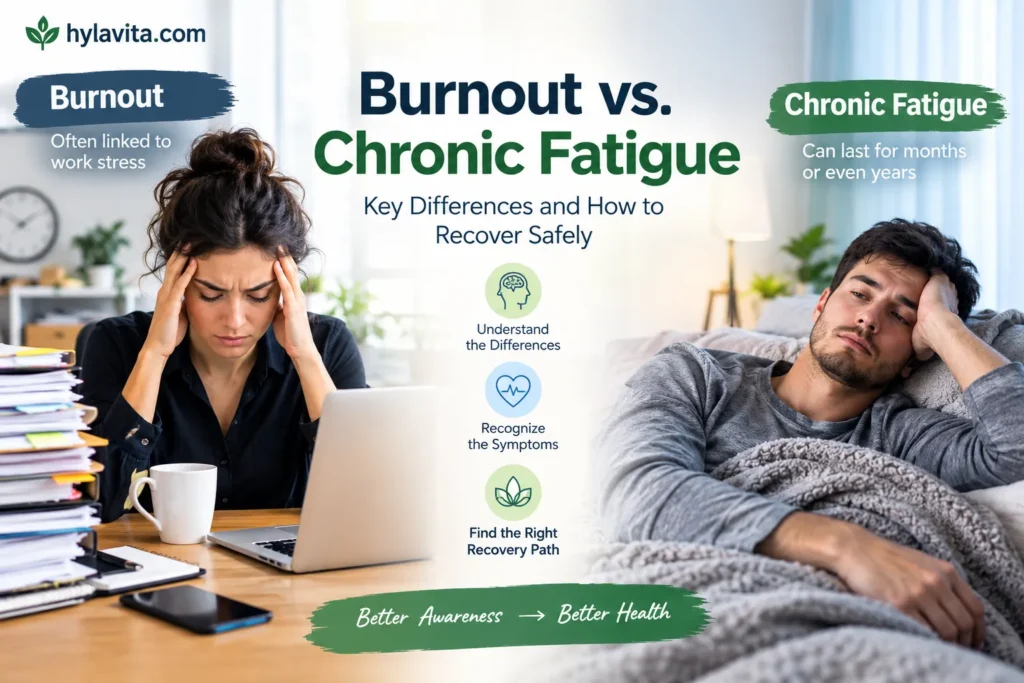
You feel tired all the time. But you’re not sure why.Is it burnout from work stress? Or is it something else, like chronic fatigue?
A lot of people mix these two up. They sound similar. But they’re not the same thing.Burnout comes from ongoing stress, usually at work. It builds up slowly over weeks or months. Rest and changes to your routine often help.
Chronic fatigue is different. It doesn’t always link to stress. It can last for months, even years. Rest alone doesn’t always fix it.Knowing the difference matters a lot. It helps you find the right treatment. It also tells you when to see a doctor.This guide breaks down both conditions clearly. You’ll learn the symptoms of each. You’ll also learn how to recover safely.
What Is Burnout?
Burnout is a state of total exhaustion. It comes from long-term stress, usually work-related.The World Health Organization officially recognizes it. They call it an “occupational phenomenon.” It’s not classified as a medical condition on its own.
Burnout affects your body and your mind. You feel drained, both physically and emotionally. Simple tasks start to feel impossible.It doesn’t happen overnight. It builds up slowly, over weeks or months. Most people ignore the early signs.
Common Causes of Burnout
Work is the biggest trigger for burnout. Here are the usual causes:
- Heavy workloads with no breaks
- Unclear job expectations
- Lack of control over your tasks
- Poor support from managers or coworkers
- Long hours with little rest
- Feeling undervalued or unappreciated
- Constant pressure to meet deadlines
Burnout isn’t just about work, though. Caregiving, parenting, or personal stress can cause it too. Any ongoing pressure without relief can lead there.
Early Warning Signs
Catching burnout early makes recovery easier. Watch for these signs:
- Feeling tired even after sleeping
- Losing motivation for things you liked
- Getting irritable over small things
- Struggling to focus or concentrate
- Feeling cynical or detached from work
- Headaches or muscle tension
- Trouble sleeping, despite feeling exhausted
If these signs feel familiar, don’t ignore them. Early action can stop burnout from getting worse.
What Is Chronic Fatigue?
Chronic fatigue is deep tiredness that doesn’t go away. Rest and sleep don’t fix it.Doctors sometimes call it ME/CFS. That stands for Myalgic Encephalomyelitis/Chronic Fatigue Syndrome. It’s a real, recognized medical condition.
To count as chronic, fatigue must last six months or longer. It also gets worse after physical or mental effort. This is called “post-exertional malaise.”Chronic fatigue affects more than energy levels. It can cause pain, brain fog, and poor sleep. Daily tasks can feel like climbing a mountain.
Common Causes of Chronic Fatigue
Doctors don’t fully understand what causes it. But research points to a few factors:
- Viral infections, like Epstein-Barr virus
- Problems with the immune system
- Hormonal imbalances
- Issues with energy production in cells
- Genetic factors that raise your risk
- Physical or emotional trauma
Sometimes, it starts after a bad infection. Other times, there’s no clear trigger at all.
How It Differs From Everyday Tiredness
Everyday tiredness fades after rest. A good night’s sleep usually fixes it.
Chronic fatigue works differently. Sleep doesn’t restore your energy. You wake up feeling just as drained.Normal tiredness improves with activity, like a short walk. Chronic fatigue gets worse after activity. Even small efforts can wipe you out for days.
Everyday tiredness comes and goes. Chronic fatigue sticks around for months. It disrupts work, relationships, and daily routines.If rest doesn’t help after several weeks, pay attention. This could point to something more than normal tiredness.
Burnout vs Chronic Fatigue Symptoms: A Side-by-Side Comparison
Burnout and chronic fatigue share some symptoms. But they show up in different ways. Here’s a clear breakdown.
Physical Symptoms
Burnout:
- Low energy, especially by day’s end
- Headaches or muscle tension
- Trouble sleeping, despite feeling tired
- Frequent colds or minor illnesses
- Energy often returns after rest or time off
Chronic Fatigue:
- Deep exhaustion that never fully lifts
- Sore muscles and joint pain
- Unrefreshing sleep, even after 8+ hours
- Worse symptoms after physical or mental effort
- Fatigue lasts for six months or longer
Emotional and Mental Symptoms
Burnout:
- Feeling cynical or detached from work
- Irritability over small things
- Loss of motivation and drive
- Reduced sense of accomplishment
- Emotional numbness toward tasks you once enjoyed
Chronic Fatigue:
- Brain fog and trouble concentrating
- Memory problems, like forgetting simple things
- Low mood, sometimes linked to isolation
- Anxiety about triggering worse symptoms
- Mental exhaustion, even from light thinking
Behavioral and Lifestyle Signs
Burnout:
- Pulling away from coworkers or friends
- Skipping tasks or procrastinating often
- Increased absenteeism from work
- Relying on caffeine or stimulants to cope
- Feeling better on weekends or vacations
Chronic Fatigue:
- Cutting back on daily activities to save energy
- Needing to rest after simple tasks
- Avoiding exercise, since it worsens symptoms
- Struggling to keep up with work or school
- Little improvement, even after time off
The biggest difference comes down to recovery. Burnout often improves with rest and boundaries. Chronic fatigue doesn’t respond the same way.
Overlapping Symptoms That Cause Confusion
Burnout and chronic fatigue often look alike. That’s why people mix them up so easily.Both cause deep tiredness that affects daily life. Both make it hard to focus or think clearly. Both can lead to low mood or irritability.
Sleep problems show up in both conditions too. You might feel tired, no matter how much you sleep. This makes it hard to tell them apart.Both conditions can cause physical aches too. Headaches, muscle tension, and low energy are common. These symptoms don’t point to just one cause.
Isolation is another shared symptom. People with burnout often withdraw from coworkers. People with chronic fatigue often withdraw from social life.Even doctors can find this tricky at first. Symptoms alone don’t always give a clear answer. That’s why timing and triggers matter so much.
Burnout usually connects to a clear cause, like work stress. Chronic fatigue often has no obvious trigger at all.Burnout tends to improve with rest and time off. Chronic fatigue doesn’t follow that same pattern.If your fatigue doesn’t lift after weeks of rest, take note. That’s a sign it might be more than burnout.
What Causes Burnout vs Chronic Fatigue Syndrome (CFS)?
Burnout and CFS come from very different places. Knowing the cause helps you find the right fix.
| Factor | Burnout | Chronic Fatigue Syndrome (CFS) |
|---|---|---|
| Main cause | Long-term stress, usually work-related | Not fully understood by doctors |
| Onset | Builds up slowly, over weeks or months | Can start suddenly or develop slowly |
| Trigger | Clear cause, like a stressful job | Often no single clear trigger |
| Possible factors | Heavy workload, poor support, long hours | Viral infections, like Epstein-Barr or COVID-19 |
| Little control over daily tasks | Immune system dysfunction | |
| Unclear job expectations | Problems with cell energy production | |
| Feeling unappreciated at work | Hormonal imbalances, especially adrenal-related | |
| Genetic risk factors | ||
| Major physical or emotional trauma | ||
| Nature of cause | Environmental and situational | Biological and medical |
| Does removing the cause help? | Yes, often improves symptoms | Not always; symptoms can persist |
The Key Difference
Burnout has an obvious cause: ongoing stress. CFS often has no single clear cause at all.
This is why treatment looks different for each. Burnout needs stress relief. CFS often needs medical care and symptom management.
How to Know Which One You’re Experiencing
It’s hard to tell burnout and CFS apart. But a few questions can help you figure it out.
Questions to Ask Yourself
Ask yourself these simple questions:
- Does my tiredness improve after a weekend off?
- Did my symptoms start during a stressful time at work?
- Do I feel better on vacation or days off?
- Does rest actually restore my energy?
- Have my symptoms lasted less than six months?
- Is my exhaustion tied to one specific area of life?
If you answered yes to most of these, it may be burnout. Your symptoms likely connect to stress and environment.
Now ask these instead:
- Does my fatigue stay the same, even after rest?
- Do I feel worse after mild exercise or activity?
- Have my symptoms lasted six months or longer?
- Do I have unexplained pain or brain fog too?
- Did my fatigue start after an illness or infection?
- Does time off make little to no difference?
If these sound familiar, it may be something more. Your symptoms could point to a medical condition.
When Symptoms Point to a Medical Condition
Some signs mean it’s time to dig deeper. Don’t assume it’s just burnout.
Watch for these red flags:
- Fatigue lasting more than six months
- Symptoms that don’t improve with rest or time off
- Worsening symptoms after minor physical effort
- Unexplained pain in muscles or joints
- Brain fog that affects daily function
- Fatigue that started suddenly, after an illness
These signs suggest a medical cause, not just stress. Conditions like CFS need proper diagnosis and care.
Don’t try to self-diagnose based on symptoms alone. A doctor can run tests and rule out other causes.
When to See a Doctor
Some fatigue is normal. But certain signs mean it’s time to get checked.
See a doctor if your fatigue lasts six months or more. This is a key marker for CFS.Also see a doctor if rest doesn’t help at all. Normal tiredness fades with sleep. This shouldn’t be ignored.Watch for symptoms that get worse after activity. This is called post-exertional malaise. It’s a major red flag for CFS.Unexplained pain is another warning sign. This includes muscle aches, joint pain, or frequent headaches.
Brain fog is worth mentioning too. If you struggle to think clearly, tell your doctor.
Sudden fatigue after an illness needs attention. This includes infections like COVID-19 or the flu.See a doctor if burnout symptoms don’t improve. Even after time off or reduced stress, some people don’t feel better.Mental health matters too. Talk to a doctor if you feel hopeless, anxious, or depressed.
Don’t wait too long to seek help. Early diagnosis leads to better treatment and faster recovery.
Your doctor may run blood tests first. This helps rule out issues like thyroid problems or anemia.They may also ask about your sleep, stress levels, and daily habits. Be honest, this helps them understand your situation.If needed, they can refer you to a specialist. This might include a sleep expert or a mental health professional.
How to Recover From Burnout Safely
Burnout recovery takes time. But small steps can make a big difference.
Short-Term Recovery Strategies
Start with these simple actions:
- Take time off, even a few days
- Sleep at least 7 to 9 hours a night
- Step away from screens and emails
- Say no to extra tasks for now
- Spend time outdoors, even a short walk
- Talk to someone you trust about how you feel
- Practice deep breathing to calm your mind
- Eat regular, balanced meals, even when unmotivated
These steps won’t fix everything overnight. But they help calm your body and mind first.
Long-Term Lifestyle Changes
Once you feel a bit better, focus on lasting change.
Try these long-term strategies:
- Set clear boundaries between work and personal time
- Learn to say no without feeling guilty
- Ask for support at work, if possible
- Build regular breaks into your daily routine
- Make time for hobbies you actually enjoy
- Exercise regularly, even light movement helps
- Stay connected with friends and family
- Consider therapy to manage stress long-term
- Reassess your workload with your manager
Burnout often returns if nothing changes. Long-term recovery means changing the habits that caused it.
Recovery looks different for everyone. Be patient with yourself, this takes time.
How to Manage Chronic Fatigue Symptoms
There’s no single cure for chronic fatigue syndrome. But the right approach can ease symptoms and improve daily life.
Medical and Therapeutic Approaches
Work with a doctor to build a treatment plan. Management usually targets specific symptoms, not just fatigue.
Common approaches include:
- Pacing, to balance activity and rest
- Sleep support, to improve rest quality
- Pain management, for muscle or joint aches
- Treating related issues, like low blood pressure
- Nutritional support, for confirmed deficiencies
- Mental health support, like counseling
- Medication, to manage specific symptoms
One important note. Current UK guidelines no longer recommend graded exercise therapy or cognitive behavioral therapy as a cure for ME/CFS. The 2021 update removed exercise as a recommended therapy and highlighted the risk of harm.
Instead, pacing is now the main recommended strategy. It means staying active within your limits, not pushing through fatigue.
Always work with a doctor familiar with CFS. Not all providers understand this condition well.
Daily Energy Management Tips
Living with chronic fatigue means managing energy carefully. Think of your energy like a limited daily budget.
Try these daily strategies:
- Plan activities around your energy levels
- Rest before you feel exhausted, not after
- Break tasks into smaller steps
- Avoid pushing through on “good” days
- Keep a symptom diary to spot patterns
- Prioritize tasks that matter most
- Ask for help with demanding chores
- Stay hydrated and eat balanced meals
- Limit screen time when brain fog hits
Avoid the “boom and bust” cycle. Overdoing it on good days often leads to crashes later.
Small, steady steps work better than big pushes. Progress may be slow, and that’s okay.
Preventing Burnout and Fatigue in the Future
Prevention beats treatment every time. A few daily habits can protect your energy long-term.Start with sleep. Aim for 7 to 9 hours each night. Good sleep supports both body and mind.Set boundaries at work. Don’t answer emails after hours. Protect your personal time, even on busy weeks.
Take real breaks during the day. Step away from your desk, even briefly. Short breaks help you recharge.Learn to say no. You can’t do everything. Saying no protects your time and energy.Move your body regularly. Light exercise, like walking, helps reduce stress. Don’t overdo it, though.
Eat balanced meals throughout the day. Skipping meals can drain your energy fast. Fuel your body consistently.Stay connected to people you trust. Isolation makes stress worse. Talk to friends or family often.Check in with yourself regularly. Notice early signs of stress or fatigue. Don’t wait until you’re overwhelmed.Ask for help when you need it. This includes at work and at home. You don’t have to handle everything alone.
Consider therapy, even without a crisis. It helps you build coping tools early. Prevention works better than crisis management.Review your workload often. Talk to your manager if it’s too much. Adjust before burnout takes hold.Make time for things you enjoy. Hobbies and rest aren’t optional extras. They’re part of staying healthy.Small habits, done consistently, make a big difference. Protecting your energy today prevents bigger problems tomorrow.
Frequently Asked Questions (FAQ)
Is burnout a medical diagnosis?
No, it’s not. The World Health Organization classifies burnout as an “occupational phenomenon.” It’s not listed as a medical condition.
How long does burnout recovery take?
It varies from person to person. Mild burnout may improve in a few weeks. Severe burnout can take several months to heal.
What’s the main difference between burnout and CFS?
Burnout comes from stress, usually work-related. CFS is a medical condition with no single clear cause. Burnout often improves with rest. CFS doesn’t respond the same way.
Can burnout turn into chronic fatigue syndrome?
They’re separate conditions, not stages of one illness. But long-term stress can affect your overall health. It’s best to address burnout early.
Does exercise help with chronic fatigue syndrome?
Not in the way many expect. Current UK guidelines don’t recommend graded exercise as a treatment. Pushing through fatigue can worsen symptoms. Pacing is the recommended approach instead.
Conclusion
Burnout and chronic fatigue can feel similar. But they’re not the same thing.Burnout comes from stress, usually tied to work. It often improves with rest and lifestyle changes.
Chronic fatigue syndrome is different. It’s a medical condition with no single known cause. Rest alone doesn’t fix it.Pay attention to how your body responds. Does rest help? Does time off make a difference?If your fatigue lasts six months or more, see a doctor. This is true even if you’re unsure what’s causing it.
Don’t ignore ongoing exhaustion, whatever the cause. Your energy and wellbeing matter.Small changes can make a real difference. Better sleep, clear boundaries, and support all help.Recovery looks different for everyone. Be patient with yourself along the way.
Hylavita’s sugestion to read
- Bump on Gums: 10 Common Causes You Should Know
- Cosmetic Dental Bonding: Cost, Benefits, and How Long It Lasts
- Inner Knee Pain: 10 Causes, Symptoms & Treatments
Other readings
- Burnout vs chronic fatigue: how to tell them apart
- Chronic Fatigue vs Burnout: How to Tell If It’s ME/CFS
- Burnout vs. Fatigue: What’s the difference?
Disclaimer: This article is for informational purposes only and isn’t medical advice. It doesn’t replace diagnosis or treatment from a qualified healthcare provider. Always talk to a doctor about your symptoms before making health decisions. If you’re experiencing ongoing fatigue or burnout, please seek professional medical guidance.