What Is Plow Pose (Halasana)?
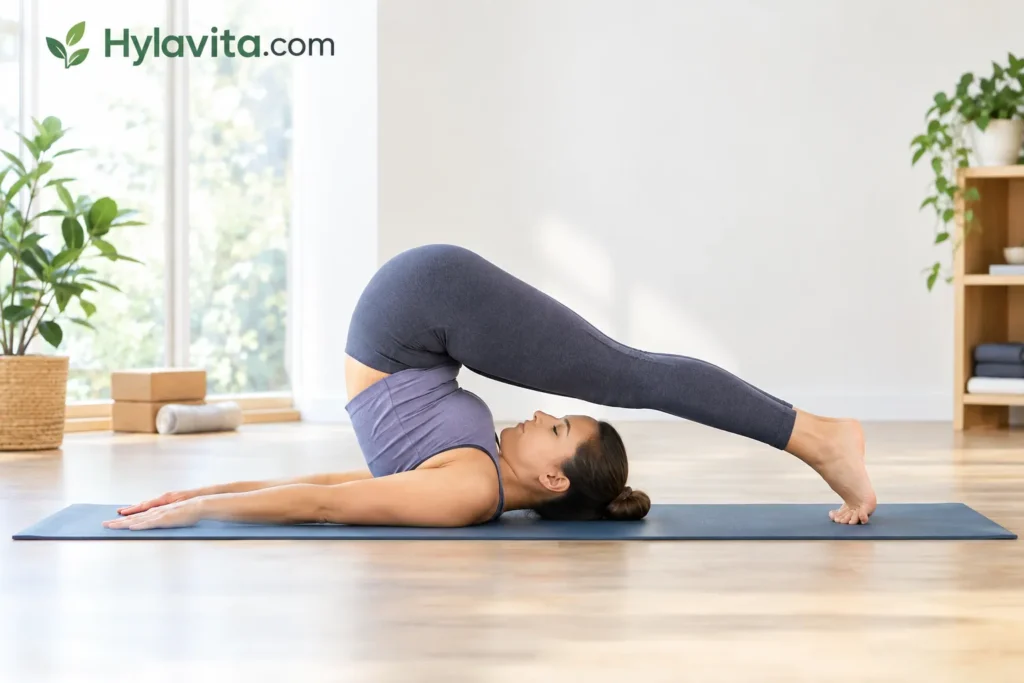
Plow Pose, also called Halasana, is a traditional yoga posture. It gets its name from the shape of a farming plow. You begin by lying on your back on a yoga mat. Then, you lift your legs and move them overhead slowly. In the full pose, your toes may reach the floor behind you. Your shoulders and upper back stay supported on the mat. Your neck should remain still and relaxed throughout the pose. People practice Plow Pose for stretching and body awareness. The pose gently stretches the back, shoulders, and legs. It also requires control, balance, and steady breathing. However, Plow Pose can be challenging for beginners. Proper technique helps reduce unnecessary strain during practice. If you feel pain, stop and return to a comfortable position.
What Are the Benefits of Plow Pose?
May Improve Flexibility
Plow Pose provides a deep stretch through several areas of the body. It mainly stretches the hamstrings, calves, shoulders, and back. Regular gentle stretching can support flexibility and comfortable movement. However, flexibility improves gradually through consistent practice. Never force your body into the pose.
May Stretch the Back and Legs
Plow Pose stretches the back, hamstrings, calves, and shoulder muscles. This makes it a strong stretching posture. The position can also lengthen muscles along the lower back. You should move slowly and avoid forcing your legs overhead. A gentle stretch should not cause pain.
May Support Better Posture
Good flexibility can support healthy posture and easier movement. Plow Pose stretches muscles around the back and shoulders. This may help maintain comfortable movement during daily activities. However, one yoga pose cannot fix poor posture by itself. A balanced exercise routine also matters.
May Promote Relaxation
Plow Pose is often described as a calming yoga posture. Slow breathing can help you stay relaxed during gentle stretching. The pose may feel soothing when practiced comfortably and without strain. However, relaxation benefits can vary between people. Always focus on comfortable breathing and controlled movement.
May Improve Body Awareness
Plow Pose requires careful control, balance, and attention to alignment. Practicing slowly can help you notice how your body feels. You can become more aware of tension, stretching, and body position. This awareness helps you recognize when a movement feels uncomfortable.
How to Do Plow Pose Properly
Step-by-Step Instructions
Start by lying flat on your back on a comfortable yoga mat. Keep your legs together and arms beside your body. Press your palms gently into the mat for support. Slowly lift your legs toward the ceiling with control. Continue moving your legs overhead without forcing the movement. If comfortable, bring your toes toward the floor behind your head. Keep your legs straight, but avoid locking your knees. Keep your shoulders and upper back supported on the mat. Never turn your head while holding Plow Pose. Keep your gaze upward and your neck still. To exit, slowly roll your spine back onto the mat. Move with control rather than dropping your legs suddenly.
Breathing and Body Position
Breathe slowly and comfortably throughout the entire movement. Avoid holding your breath while entering or holding Plow Pose. Keep your neck in a neutral position without turning your head. Let your shoulders support your body while keeping them relaxed. Do not force your feet to reach the floor. Stop if you feel pain or strong pressure around your neck.
Common Plow Pose Mistakes to Avoid
Putting Too Much Pressure on the Neck
Plow Pose can place stress on your neck when performed incorrectly. Keep your head still throughout the pose. Never turn your head while your legs remain overhead. Stop if you feel neck pain or unusual pressure.
Rounding or Forcing the Spine
Do not force your spine into a deeper position. Move only as far as your flexibility allows. Keep the movement controlled and comfortable. Using proper alignment can help reduce unnecessary strain during challenging yoga poses.
Moving Too Quickly
Entering or leaving Plow Pose too quickly can reduce your control. Move slowly through every part of the posture. Controlled movements help you maintain better alignment and body awareness.
Ignoring Pain or Discomfort
A gentle stretch can feel normal during yoga practice. Pain, however, signals that you should stop. Return slowly to a comfortable position. If pain continues, consider speaking with a qualified healthcare professional.
What Are the Risks of Plow Pose?
Plow Pose can feel challenging because it places the body into deep flexion. Good technique and gradual practice can help reduce unnecessary strain. Beginners should avoid forcing their bodies into the full position. Proper instruction can also help with safe alignment and modifications.
Neck and Shoulder Strain
Plow Pose can place pressure around the neck and shoulders. This risk may increase when you shift weight onto your neck. Keep your head still throughout the entire pose. Avoid this pose if you have existing neck problems or discomfort.
Lower Back Discomfort
Limited flexibility can make Plow Pose uncomfortable for your lower back. Forcing your legs overhead may increase unwanted strain. Move only within a comfortable range of motion. Stop the pose if you experience pain during practice.
Balance and Flexibility Challenges
Plow Pose requires flexibility and body control for comfortable practice. Beginners may struggle to maintain proper alignment during this posture. Limited flexibility can make the position feel especially demanding. Use suitable modifications instead of forcing the full pose.
Why Proper Form Matters
Proper alignment helps you practice challenging yoga poses more safely. Enter and leave Plow Pose slowly and with control. Never push beyond your body’s comfortable range of movement. If something causes pain, stop and adjust the pose.
Who Should Avoid or Modify Plow Pose?
People with existing neck or back problems should avoid Plow Pose without guidance. The pose places the body into a demanding position. Anyone with ongoing pain should speak with a healthcare professional first.
People with joint problems or balance concerns may need modifications. Beginners with limited flexibility should not force their legs overhead. A qualified yoga instructor can suggest easier variations and supportive props.
If you have an injury or ongoing pain, seek professional advice. A healthcare professional can help decide whether this pose suits you. Stop immediately if the pose causes pain or unusual discomfort.
How Beginners Can Modify Plow Pose
Beginners should approach Plow Pose slowly and avoid forcing the full position. A folded blanket can support the shoulders during practice. Keep your head and neck on the floor. Let your shoulders rest on the blanket instead.
Move slowly and maintain control throughout the entire movement. Do not force your feet toward the floor behind you. If your legs cannot comfortably reach overhead, choose another pose instead. Bridge Pose or Legs Up the Wall can provide easier alternatives.
Preparatory poses can help you build flexibility and body control gradually. Focus on comfortable movement rather than reaching a deeper position. If you’re new to Plow Pose, practice with a qualified instructor.
Plow Pose vs. Other Yoga Poses
Shoulder Stand
| Feature | Plow Pose | Shoulder Stand |
|---|---|---|
| Position | Legs move overhead | Legs point upward |
| Main focus | Back, legs, and shoulders | Shoulders, core, and balance |
| Movement | Legs move behind the head | Legs stay above the body |
| Difficulty | Challenging | Challenging |
Forward Fold
| Feature | Plow Pose | Forward Fold |
|---|---|---|
| Position | Lying on your back | Standing or sitting |
| Main focus | Back, hamstrings, and shoulders | Hamstrings and back |
| Movement | Legs move overhead | Torso bends forward |
| Difficulty | Challenging | Easy to moderate |
Child’s Pose
| Feature | Plow Pose | Child’s Pose |
|---|---|---|
| Position | Lying on your back | Kneeling |
| Main focus | Back, legs, and shoulders | Hips, back, and relaxation |
| Movement | Legs move overhead | Torso moves toward the floor |
| Difficulty | Challenging | Generally easier |
How Often Should You Practice Plow Pose?
There is no fixed schedule that suits everyone for Plow Pose. Beginners should focus on learning proper technique first. Practice it occasionally within a balanced yoga routine. Give your body enough recovery between challenging sessions. Never practice more often just to improve flexibility quickly. Move slowly and stop when something causes pain. Yoga guidance recommends listening to your body and avoiding movements beyond comfortable limits.
FAQs About Plow Pose
Is Plow Pose good for beginners?
Plow Pose can challenge beginners because it requires flexibility and body control. Start gently and learn proper alignment first. Do not force your legs overhead. A qualified yoga instructor can provide useful modifications.
What muscles does Plow Pose stretch?
Plow Pose mainly stretches the hamstrings, calves, shoulders, and back. The stretch varies between people based on flexibility. You should feel controlled stretching rather than sharp or painful sensations.
Should your feet touch the floor in Plow Pose?
Your feet do not need to touch the floor. Only move as far as feels comfortable for you. Never force your legs downward to reach the floor. Use modifications when needed.
Can Plow Pose hurt your neck?
Plow Pose can strain the neck when performed incorrectly. Keep your head still throughout the posture. Avoid forcing your body into the position. People with existing neck problems should seek professional advice first.
How long should you hold Plow Pose?
There is no single holding time that works for everyone. Beginners should start with a short, comfortable hold. Focus on steady breathing and proper alignment throughout. Stop if you feel pain or unusual pressure. Gradually increase your hold time as your comfort improves.
Conclusion
Plow Pose can provide a useful stretch when practiced with proper technique. It may stretch the back, shoulders, hamstrings, and calves. However, this pose requires flexibility and careful body control. Beginners should progress gradually and avoid forcing their legs overhead. Keep your head still and protect your neck throughout practice. Stop immediately if you feel pain or unusual pressure. People with existing neck or spine problems should seek professional guidance first. Yoga should support your body, not push it beyond comfortable limits. With patience and proper instruction, you can practice safely within your abilities.
Hylavita’s suggestion to read
- 5 Daily Posture Exercises to Fix Forward Head and Slouching
- What Is Cobra Yoga Pose? Benefits and How to Do It
- Psoas Stretches: 10 Best Exercises for Tight Hips & Better Mobility
Disclaimer:This article is for general information and does not replace professional medical advice. Plow Pose may not suit everyone, especially people with neck or back concerns. Stop if you experience pain or unusual discomfort. Speak with a qualified healthcare professional before starting if you have health concerns.