
Introduction
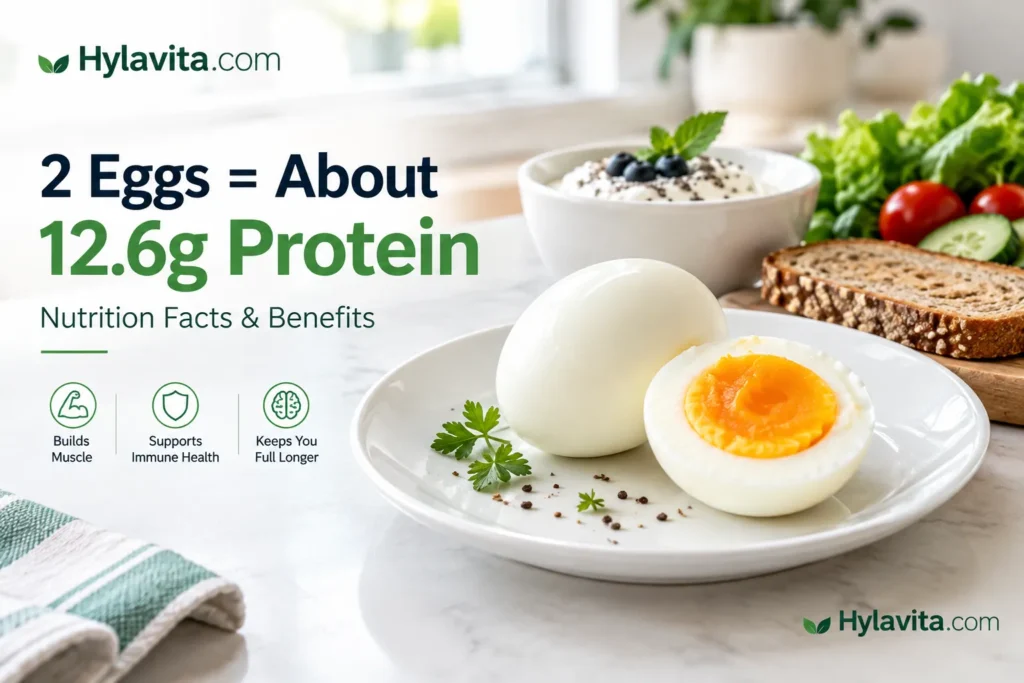
Two large eggs provide about 12 to 13 grams of protein. This makes eggs a simple way to add protein to meals. Eggs also contain healthy fats and several important nutrients. Two large eggs provide roughly 140 to 145 calories, depending on preparation. They also provide vitamins and minerals, including vitamin D, iron, and selenium. Eggs are easy to cook and work well with many foods. You can enjoy them boiled, scrambled, poached, or prepared in other ways. Cooking methods can change the total calories when oil, butter, or other ingredients are added. For this reason, plain eggs have a different nutrition profile than eggs cooked with added fats. Overall, two eggs can provide useful protein as part of a balanced meal.
How Much Protein Is in 2 Eggs?
Protein in 2 Large Eggs
Two large eggs provide about 12.6 grams of protein. One large egg contains roughly 6.3 grams of protein. The exact amount can vary slightly between eggs. Cooking does not remove the protein from eggs. Boiled, poached, or fried eggs still provide similar protein amounts.
Protein in 2 Medium or Small Eggs s
Two medium eggs provide about 11 grams of protein. Two small eggs provide about 9.6 grams of protein. Smaller eggs contain less protein because they contain less edible egg. The difference is small but useful when tracking nutrition.
How Egg Size Changes Protein Content
Egg size directly affects its protein content. Larger eggs contain more edible weight and therefore more protein. A medium egg has about 5.5 grams of protein. A large egg has about 6.3 grams. Jumbo eggs contain even more protein.
Is Egg Protein High Quality?
Yes, eggs provide complete, high-quality protein. They contain all nine essential amino acids your body needs. These amino acids support normal growth, tissue maintenance, and repair. Eggs can therefore fit well into a balanced eating pattern.
2 Eggs Nutrition Facts
Calories in 2 Eggs
Two large raw eggs provide about 144 calories. Cooked eggs can have slightly different values. Added oil, butter, or other ingredients can increase the total calories significantly.
Fat and Saturated Fat
Two large eggs contain about 9.6 grams of fat. They provide roughly 3.2 grams of saturated fat. Most of the fat comes from the yolks.
Carbohydrates and Fiber
Two large eggs contain less than 1 gram of carbohydrates. They provide no dietary fiber. Eggs are therefore naturally very low in carbohydrates.
Vitamins and Minerals
Eggs provide several important vitamins and minerals. These include vitamin A, vitamin B12, riboflavin, selenium, phosphorus, and iron. They also provide choline, which supports normal brain and nervous system function. Nutrient amounts can vary slightly between eggs.
Cholesterol in 2 Eggs
Two large eggs contain about 372 milligrams of cholesterol. Nearly all egg cholesterol is found in the yolk. Dietary cholesterol affects people differently. Overall diet quality and saturated fat intake also matter for heart health.
Egg White vs. Egg Yolk: Where Does the Protein Come From?
| Section | Protein in 2 Large Eggs | Key Information |
|---|---|---|
| Protein in 2 Egg Whites | About 7.2 g | Mostly protein, with very little fat |
| Protein in 2 Egg Yolks | About 5.4 g | Provides protein, fat, and several nutrients |
| Nutrients Found in the Yolk | About 5.4 g protein | Contains choline, vitamin A, vitamin D, B12, iron, and phosphorus |
| Should You Eat the Whole Egg? | About 12.6 g | Whole eggs provide protein and nutrients from both parts |
Values are approximate and based on two large eggs. Exact amounts can vary slightly.
Health Benefits of Getting Protein From Eggs
Supports Muscle Growth and Repair
Egg protein provides essential amino acids your body needs. These amino acids help build and maintain body proteins. Protein also supports muscle repair after normal daily activity. Regular exercise works together with adequate protein intake for muscle development.
May Help You Feel Full
Protein can help you feel satisfied after eating. Eggs provide protein that can support feelings of fullness. This may help you manage hunger between meals. However, overall meal composition also affects how full you feel.
Supports Healthy Body Functions
Protein helps your body make and maintain many important proteins. These proteins support normal body processes and tissue maintenance. Eggs provide essential amino acids that your body cannot produce itself.
Provides Essential Nutrients
Eggs provide protein along with several vitamins and minerals. These include vitamin B12, riboflavin, selenium, and choline. Eating the whole egg provides nutrients from both white and yolk.
Easy to Add to Balanced Meals
Eggs are easy to include in different meals. You can pair them with vegetables, whole grains, beans, or fruit. This creates a more varied and balanced meal.
Are 2 Eggs Enough Protein for a Meal?
How Much Protein Do You Need Daily?
Protein needs vary based on age, body size, activity, and life stage. For healthy adults, the standard recommendation is about 0.8 grams per kilogram of body weight daily. Younger people have different needs because their bodies are still growing.
When 2 Eggs May Be Enough
Two large eggs provide about 12.6 grams of protein. They can contribute a useful amount toward your daily needs. They may work well as part of breakfast or another balanced meal.
When You May Need More Protein
Two eggs may not provide all the protein needed for a meal. You can add other protein foods when appropriate. Your total daily needs depend on your individual age, size, activity, and growth stage.
Easy Foods to Pair With Eggs
Pair eggs with foods like beans, lentils, yogurt, whole grains, or vegetables. These foods add protein, fiber, vitamins, and minerals. A varied meal can provide more nutrients than eggs alone.
2 Eggs Protein Compared With Other Common Foods
| Food | Typical Serving | Approximate Protein | How It Compares With 2 Eggs |
|---|---|---|---|
| 2 Large Eggs | 2 eggs | 12.6 g | Reference amount |
| Greek Yogurt | 170 g, plain nonfat | 17 g | Usually provides more protein |
| Chicken Breast | 3 oz, cooked | 26 g | Provides substantially more protein |
| Cottage Cheese | ½ cup, 2% | 12 g | Provides a similar amount |
| Black Beans | ½ cup, cooked | 8 g | Provides less protein but more fiber |
| Protein-Rich Breakfast Foods | Varies | Varies | Depends on the food and serving size |
Protein values are approximate. Brands, preparation methods, and serving sizes can change the amounts.
Best Ways to Eat 2 Eggs for More Protein
Eggs With Whole-Grain Toast
Pair two eggs with whole-grain toast for a simple breakfast. Whole grains also provide carbohydrates and fiber. Choose bread that lists whole grains as an ingredient.
Eggs With Greek Yogurt
Add plain Greek yogurt alongside your eggs. Greek yogurt provides additional protein and calcium. Choose options with little or no added sugar.
Eggs With Beans or Lentils
Beans and lentils can add more protein and fiber. Add them to scrambled eggs or serve them separately. USDA guidance includes beans and lentils among protein foods.
Eggs With Vegetables
Add vegetables like spinach, tomatoes, peppers, or mushrooms. Vegetables provide fiber, vitamins, minerals, and other beneficial nutrients.
Eggs With Lean Protein Sources
You can pair eggs with lean chicken or other protein foods. This can increase the meal’s total protein. USDA recommends varying your protein choices throughout your diet.
Does Cooking Change the Protein in Eggs?
Raw Eggs vs. Cooked Eggs
Cooking does not simply remove the protein from eggs. Instead, heat changes the protein structure. Research shows cooked egg protein is easier for humans to digest than raw egg protein.
Boiled, Scrambled, and Fried Eggs
Boiled, scrambled, and fried eggs all provide protein. Their total nutrition can change with cooking ingredients. Adding oil, butter, cheese, or other foods increases calories and other nutrients.
Does Cooking Reduce Egg Protein?
Normal cooking does not remove most of an egg’s protein. Heat can make protein easier to digest. Research also shows cooked eggs provide highly digestible essential amino acids.
FAQs About 2 Eggs Protein
How much protein is in 2 eggs?
Two large eggs provide about 12.6 grams of protein. Each large egg contains roughly 6.3 grams. Smaller eggs provide slightly less protein. Exact amounts can vary with egg size.
Is eating 2 eggs a day healthy?
Eggs can fit into a balanced eating pattern for many people. They provide protein and several nutrients. However, individual needs differ. People with specific health concerns should follow advice from their healthcare professional.
Are 2 eggs enough protein for breakfast?
Two eggs provide about 12.6 grams of protein. That can make a useful contribution to breakfast. You can pair eggs with yogurt, beans, or other protein foods. This creates a more varied meal.
Do egg whites have more protein than yolks?
Two large egg whites provide about 7.2 grams of protein. Two yolks provide about 5.4 grams. However, the yolk contains many other nutrients. Eating the whole egg provides protein from both parts.
How many eggs should I eat for protein?
There is no single egg amount that suits everyone. Protein needs depend on age, body size, activity, and overall diet. Eggs can provide part of your protein intake. Include other protein foods for variety and balanced nutrition.
Conclusion
Two large eggs provide about 12.6 grams of high-quality protein. They also provide several important nutrients. These include vitamin B12, vitamin D, selenium, choline, and riboflavin.
Eggs can fit easily into a balanced eating pattern. You can enjoy them with whole grains and vegetables. Adding beans, lentils, yogurt, or other protein foods can increase meal variety. Your protein needs depend on your age, body size, activity, and overall diet. So, two eggs can provide useful protein without needing to be your only source. Choose a variety of nutritious foods throughout the day for a balanced diet.
Hylavita’s suggestion read
- Daily Protein Requirement: How Much Do You Really Need for Muscle Growth?
- Early Signs of Vitamin D Deficiency You Shouldn’t Ignore
- What Is Caquis Fruit? Benefits, Nutrition, Taste & Uses
Health Disclaimer:This article is for general health and nutrition information only. It does not replace professional medical advice, diagnosis, or treatment. Protein needs can vary based on age, health, activity level, and individual needs. Speak with a qualified healthcare professional for personalized dietary guidance.