
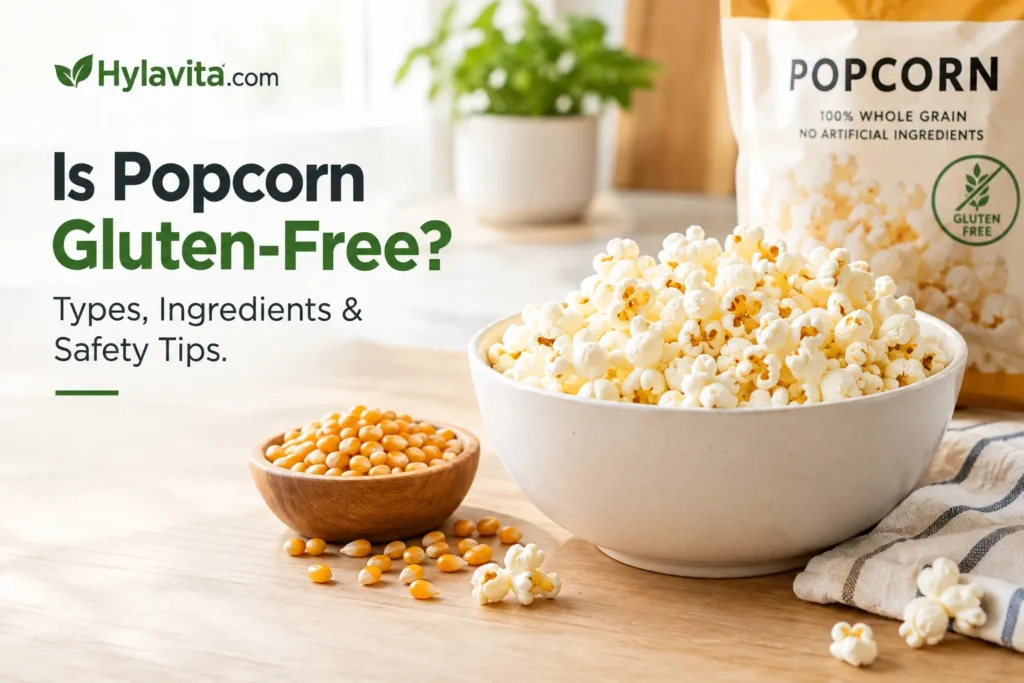
Is Popcorn Gluten-Free?
Yes, plain popcorn is naturally gluten-free. Popcorn comes from corn, not wheat, barley, or rye. These three grains naturally contain gluten.
Gluten is a group of proteins found in certain grains. It is commonly found in foods like bread, pasta, and cereals.
Plain popcorn does not contain these gluten-containing grains. This includes simple air-popped popcorn with no added ingredients.
However, prepared popcorn can contain added ingredients with gluten. Seasonings, flavorings, coatings, or other ingredients may change this. Some products can also face gluten cross-contact during processing.
If you need to avoid gluten, always check the product label. Look for a clear gluten-free claim when possible.
Why Is Plain Popcorn Naturally Gluten-Free?
Popcorn kernels come from a type of corn called maize. Corn does not naturally contain gluten. Gluten occurs naturally in wheat, barley, rye, and their related grains.
Popcorn differs from wheat-based grains because it comes from corn. When heated, popcorn kernels expand and create the familiar fluffy snack. Plain air-popped popcorn contains only the popped corn itself.
However, added ingredients can change whether popcorn remains gluten-free. Butter, oils, seasonings, sauces, and flavorings may contain gluten. Some popcorn can also experience cross-contact during processing or preparation.
Always check the ingredient list on packaged popcorn products. Look for a gluten-free label when you need to avoid gluten carefully. This step helps you choose popcorn that fits your dietary needs.
Which Types of Popcorn Are Gluten-Free?
Air-Popped Popcorn
Plain air-popped popcorn is a simple gluten-free snack choice. It contains popped corn without added ingredients. However, toppings can change its gluten-free status. Seasonings, sauces, cheese powders, and flavored toppings may contain gluten. Always check the ingredients before adding them.
Stovetop Popcorn
Stovetop popcorn usually needs only kernels, oil, and seasoning. Plain popcorn kernels and cooking oils are naturally gluten-free. Choose simple seasonings without wheat, barley, or rye ingredients. Keep your utensils and cooking surfaces clean when avoiding gluten. This helps reduce the chance of gluten cross-contact during preparation.
Microwave Popcorn
Microwave popcorn can be gluten-free, but ingredients vary between brands. Some varieties contain added flavors, seasonings, or other ingredients. These ingredients can sometimes contain gluten or create cross-contact concerns. Check the ingredient list before choosing a product. A clear gluten-free label can also provide useful guidance.
Movie Theater Popcorn
Movie theater popcorn requires extra attention because preparation methods can vary. The popcorn itself may be gluten-free, but toppings can differ. Flavoring ingredients may contain gluten in some products. Shared equipment can also create gluten cross-contact. Ask theater staff about ingredients and preparation when needed.
What Ingredients Can Make Popcorn Contain Gluten?
Plain popcorn does not naturally contain gluten. Gluten usually enters popcorn through added ingredients. Flavored seasonings, coatings, and sauces can sometimes contain gluten. These ingredients may include wheat-based ingredients or other gluten-containing grains. Barley malt and malt extract are also important ingredients to watch. They come from barley, which naturally contains gluten.
Some popcorn products may contain wheat-derived ingredients in their flavorings. This can include certain coatings, seasonings, or other additives. However, you should check each product instead of guessing.
Reading the ingredient label helps you identify possible sources of gluten. Look for wheat, barley, rye, malt, and their derivatives. A product labeled gluten-free must meet FDA requirements when sold in the United States.
Flavored or unusual popcorn deserves extra attention before you eat it. Plain popcorn is easier to check and prepare safely. When unsure, check the manufacturer’s information or contact the company directly.
Is Microwave Popcorn Gluten-Free?
Some microwave popcorn products are gluten-free. However, recipes can vary between brands and flavors. Some products contain added seasonings, flavorings, or other ingredients. These ingredients can affect whether the popcorn contains gluten.
Always check the ingredient list before choosing microwave popcorn. Look for wheat, barley, rye, or malt ingredients. Also check any allergen information provided on the package.
A clear gluten-free claim can make choosing products easier. In the United States, FDA rules require gluten-free foods to meet specific standards. These products must contain less than 20 parts per million gluten.
When possible, choose products clearly labeled gluten-free. Check the package each time you buy it. Ingredients and product recipes can change over time.
Is Movie Theater Popcorn Gluten-Free?
Movie theater popcorn may be gluten-free, but preparation can vary. The popcorn kernels themselves are naturally gluten-free. However, toppings and flavorings may contain gluten. Shared equipment can also create opportunities for gluten cross-contact.
Movie theaters may use different oils, seasonings, and buttery toppings. These ingredients can vary between theaters and products. Because of this, the finished popcorn needs separate consideration. It is not enough to check the popcorn kernels alone.
If you need to avoid gluten carefully, ask theater staff. Ask about the popcorn, toppings, and preparation equipment. This can help you understand how the popcorn is prepared. When information is unclear, check the theater’s ingredient information before eating.
How to Check if Popcorn Is Gluten-Free
Start by reading the complete ingredient list on packaged popcorn. Look for wheat, barley, rye, and malt ingredients. These grains naturally contain gluten.
Check for a clear gluten-free label when buying packaged popcorn. In the United States, this claim must meet FDA requirements. Products labeled gluten-free must contain less than 20 parts per million gluten.
Also, check the allergen information on the package. Wheat must be clearly identified when used as a major allergen.
Remember that flavored popcorn needs extra attention. Seasonings and coatings can contain gluten-containing ingredients. Preparation can also create cross-contact with gluten. If you are unsure, check the manufacturer’s information before eating the product.
Gluten Cross-Contact and Popcorn Safety
Gluten cross-contact happens when gluten-free food touches gluten-containing food. This can happen during cooking, processing, or serving.
Shared cooking equipment and utensils can cause unwanted gluten contact. The same issue can happen with shared seasoning containers. Preparation surfaces may also carry gluten from other foods. These concerns matter especially for people with celiac disease. Even small amounts of gluten can cause problems for them.
At home, keep popcorn equipment and utensils clean between uses. Use separate containers when needed for gluten-free seasonings. When buying prepared popcorn, ask about ingredients and preparation methods. This can help you understand possible cross-contact risks.
Always check labels and choose clearly labeled gluten-free products.
Is Flavored Popcorn Gluten-Free?
Flavored popcorn can be gluten-free, but added ingredients can change its status. Seasonings, coatings, and flavorings may contain wheat or other gluten sources. This can happen with cheese, caramel, chocolate, or spicy popcorn. However, the flavor name alone cannot confirm its gluten status.
Check each flavored popcorn product before eating it. Read the ingredient list carefully for wheat, barley, rye, or malt. Also look for a clear gluten-free claim on the package. In the United States, gluten-free claims must meet FDA requirements.
Do not assume flavored popcorn contains gluten because of its flavor. Also, do not assume it is gluten-free because it looks simple. Checking the label gives you reliable information about the specific product.
Gluten-Free Popcorn: Simple Tips for Buying and Making It
Choose plain popcorn kernels when possible. They make it easier to control added ingredients. Use seasonings and toppings that are clearly gluten-free. Always check their labels before adding them to popcorn.
Keep cooking utensils and preparation surfaces clean between uses. This helps reduce the chance of gluten cross-contact. Store gluten-free ingredients separately when needed. When buying packaged popcorn, check the ingredient list carefully. Look for a clear gluten-free label when available.
If you have celiac disease, take extra care with preparation. When buying prepared popcorn, ask about ingredients and preparation methods. This can help you avoid unexpected gluten exposure.
Frequently Asked Questions About Gluten-Free Popcorn
Is plain popcorn naturally gluten-free?
Yes, plain popcorn is naturally gluten-free. Popcorn comes from corn, not wheat, barley, or rye. Always check added ingredients and preparation methods for possible gluten cross-contact.
Is microwave popcorn gluten-free?
Some microwave popcorn products are gluten-free, but recipes vary. Check the ingredient list and packaging before buying. Flavors and seasonings can change the product’s gluten status.
Is movie theater popcorn gluten-free?
Movie theater popcorn may be gluten-free, but preparation varies between theaters. Toppings, flavorings, and shared equipment can create gluten concerns. Ask staff about ingredients and preparation methods.
Can people with celiac disease eat popcorn?
People with celiac disease can eat popcorn when it is gluten-free. They should check ingredients and avoid gluten cross-contact. A gluten-free label can provide helpful assurance for packaged products.
Does flavored popcorn contain gluten?
Flavored popcorn may or may not contain gluten. Seasonings and coatings can include gluten-containing ingredients. Check each product’s ingredient list and gluten-free labeling before eating it.
Is caramel popcorn gluten-free?
Caramel popcorn can be gluten-free, but recipes vary between products. Check the ingredients, allergen information, and gluten-free label. Do not rely on the flavor name alone.
Conclusion
Plain popcorn is naturally gluten-free because it comes from corn. However, added ingredients can change whether popcorn contains gluten. Seasonings, coatings, and flavorings need careful checking. Always read labels before buying packaged popcorn. Look for wheat, barley, rye, or malt ingredients. A gluten-free label can also provide useful guidance. Preparation methods matter because cross-contact can happen during cooking. This is especially important for people with celiac disease. When buying prepared popcorn, ask about ingredients and preparation methods. The simple takeaway is clear: plain popcorn is gluten-free, but check additions and preparation carefully.
Hylavita’s suggestion to read
- Anti-Inflammatory Foods: How to Reduce Chronic Body Inflammation
- Electrolyte Imbalance: Symptoms, Causes, and Natural Remedies
- What Should a Diabetic Eat? A Complete Food Plan
Disclaimer: This article is for general informational and educational purposes only and should not replace advice from a qualified healthcare professional. Always check food labels and ingredients based on your individual dietary needs. If you have celiac disease or gluten sensitivity, consult your healthcare provider before making dietary changes.