
What Is Orzo?
Orzo is a small type of pasta shaped like rice grains. It may look like rice, but it is not actually rice. Orzo is usually made from durum wheat semolina and water. This gives it the texture and taste of traditional pasta. Its small shape makes it quick and easy to cook. You can find orzo in many soups, salads, and side dishes. It also works well in warm pasta dishes and grain-style bowls. Some recipes use orzo instead of rice in certain dishes. Regular orzo contains wheat, so it is not gluten-free. Whole-wheat versions are also available for people wanting more whole grains. Overall, orzo is simply pasta with a rice-like appearance.
Orzo Nutrition Facts
A typical 2-ounce serving of dry orzo contains about 200 calories. It provides around 42 grams of carbohydrates and 7 grams of protein. Regular orzo contains about 1 gram of fat per serving. It also provides roughly 3 grams of dietary fiber. Orzo can also provide several important vitamins and minerals. Enriched varieties commonly contain iron, thiamin, riboflavin, niacin, and folate. The exact amounts can vary between brands and types. Whole-grain orzo may provide more fiber than regular orzo. How you prepare orzo also affects its overall nutrition. Plain cooked orzo contains fewer calories than creamy orzo dishes. Adding cheese, butter, oil, or rich sauces increases calories and fat. Vegetables and lean proteins can make an orzo meal more balanced.
Is Orzo Healthy?
Yes, orzo can be part of a healthy, balanced diet. It provides carbohydrates that give your body energy. It also provides some protein and small amounts of fiber. Regular orzo is made from refined wheat, so fiber levels vary. Whole-grain orzo can provide more fiber than regular varieties.
Portion size also matters when adding orzo to your meals. A balanced meal can include vegetables, protein, and healthy fats. For example, combine orzo with vegetables and beans or lean protein. These foods add nutrients and can make meals more filling. The ingredients used during cooking also affect the meal’s nutrition. Heavy sauces, large amounts of cheese, butter, or oil add calories. Simple ingredients can keep an orzo dish more balanced. Overall, orzo can fit well into healthy eating patterns.
Potential Health Benefits of Orzo
Provides Energy From Carbohydrates
Orzo provides carbohydrates, which are a main source of energy. Your body breaks carbohydrates down to use them for fuel. Regular orzo mainly contains refined carbohydrates. Choosing whole-grain versions provides more fiber and nutrients.
Can Provide Some Protein
Orzo provides some protein, although it is not a high-protein food. Cooked pasta provides about 6 grams of protein per 100 grams. Adding beans, eggs, chicken, fish, or tofu increases the protein content.
May Support a Balanced Meal
Orzo can fit into meals that include several nutritious food groups. Pair it with vegetables, protein foods, and healthy fats. This creates a more varied and balanced meal. The overall meal matters more than orzo alone.
Whole-Grain Orzo Can Add More Fiber
Whole-grain orzo can provide more fiber than regular orzo. Whole-grain pasta keeps more parts of the grain during processing. Fiber supports normal digestion and helps you feel satisfied after eating. Whole-grain pasta can also provide more protein. Check the package label when choosing whole-grain orzo.
Can Be Combined With Nutritious Foods
Orzo works well with vegetables, beans, lentils, seafood, and lean meats. These foods add vitamins, minerals, protein, and fiber. You can also add nuts or seeds for healthy fats. Using varied ingredients makes an orzo meal more nutritious overall.
Is Orzo Healthy for Weight Loss?
Orzo can fit into a balanced eating pattern, but it is not a weight-loss food. The amount you eat affects the meal’s overall calories. A smaller serving can leave room for vegetables and protein. USDA guidance counts cooked pasta as part of the grains group.
The ingredients added to orzo can change its calorie content. Creamy sauces, butter, cheese, and large amounts of oil add calories. Vegetables can add fiber, vitamins, minerals, and volume. Lean proteins can add protein and make meals more filling. Healthy fats can also add nutrients when used in moderate amounts.
A balanced orzo meal might include vegetables, beans, chicken, fish, or tofu. Whole-grain orzo can provide more fiber than regular orzo. Overall, focus on the whole meal rather than orzo alone. Your overall eating pattern matters more than one specific food.
Is Orzo Healthier Than Rice?
Orzo and rice can both fit into a healthy, balanced eating pattern. Orzo is pasta, while rice is a grain. Their nutrition differs based on the specific type and serving size. Cooked pasta generally provides more protein than cooked white rice. It also tends to contain slightly more calories and carbohydrates.
Brown rice provides more fiber than regular white rice. About 100 grams of cooked brown rice contains 1.6 grams fiber. The same amount of white rice contains about 0.4 grams. Whole-grain orzo can also provide more fiber than regular orzo.
So, neither food is automatically healthier than the other. Your choice depends on the type, portion, and meal. Brown rice and whole-grain orzo can provide more fiber. Adding vegetables and protein can make either option more balanced. The healthiest choice is often the one that fits your needs.
Potential Drawbacks of Eating Orzo
Regular Orzo May Be Low in Fiber
Regular orzo usually contains modest amounts of dietary fiber. One serving provides around two grams of fiber. Fiber helps support normal digestion and overall health. Whole-grain orzo generally provides more fiber than refined orzo.
Portion Sizes Can Add Calories
Orzo contains carbohydrates and calories, especially in larger servings. A typical dry serving contains about 210 calories. Eating larger portions can increase the meal’s total calorie content. A balanced serving can leave room for other nutritious foods.
Sauces Can Increase Fat and Sodium
Plain orzo contains very little fat and sodium. However, sauces and toppings can change the nutrition significantly. Cheese, butter, and creamy sauces can add fat and calories. Salty sauces or broths can also increase sodium.
Traditional Orzo Contains Gluten
Traditional orzo usually uses wheat-based semolina flour. Therefore, regular orzo contains gluten. People avoiding gluten should check product labels carefully. Gluten-free orzo varieties are also available.
How to Make Orzo Healthier
You can make orzo meals healthier with a few simple changes. Start by adding colorful vegetables to your orzo. Peppers, spinach, tomatoes, broccoli, and carrots work well. Vegetables add fiber, vitamins, minerals, and other helpful nutrients.
Next, include a lean protein source with your meal. Chicken, fish, beans, lentils, eggs, or tofu work well. Protein foods can make your meal more balanced.
Choose whole-grain orzo when you can find it. Whole grains provide more fiber and other nutrients. Use healthy fats in moderate amounts, such as olive oil. These fats can add flavor without needing heavy sauces.
Try to limit creamy sauces, excess butter, and salty toppings. Check labels when using packaged sauces or broths. They can contain significant amounts of sodium. Finally, keep your orzo portion balanced with other foods. This leaves room for vegetables, protein, and healthy fats.
Who Should Be Careful With Orzo?
People with celiac disease should avoid traditional orzo because it contains wheat. Gluten can trigger harmful reactions in people with celiac disease. People with non-celiac gluten or wheat sensitivity may also need alternatives. Anyone managing carbohydrate intake should consider portion sizes carefully. Orzo is mainly a carbohydrate-rich pasta, so servings can affect total carbohydrate intake. People with specific dietary restrictions should check ingredient labels before eating orzo. Individual dietary needs can vary based on health conditions and personal goals. A healthcare professional can provide advice for specific dietary needs.
Healthy Ways to Eat Orzo
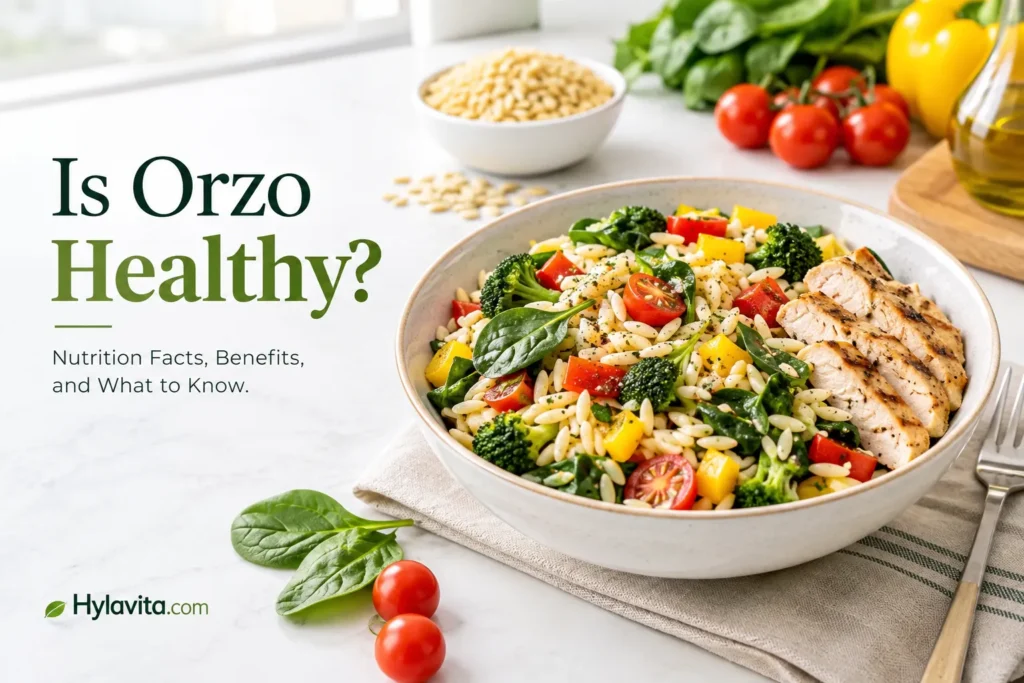
You can enjoy orzo in many simple and nutritious ways. A vegetable orzo bowl can include spinach, tomatoes, peppers, and carrots. These vegetables add important nutrients and variety to your meal.
Try mixing orzo with beans and vegetables for more protein. Beans also provide fiber and several important nutrients. Another option combines orzo with grilled chicken and vegetables. This adds protein while keeping the meal varied.
Mediterranean-style orzo salads can include vegetables, herbs, beans, and olive oil. You can also prepare orzo in broth-based dishes with vegetables and lean protein. Choose lower-sodium broth when possible to limit sodium intake. Overall, combine orzo with nutritious foods for a balanced meal.
FAQs About Orzo
Is Orzo Healthier Than Rice?
Neither is always healthier. Both can fit balanced meals. The better choice depends on type, portion, and ingredients. Brown rice and whole-grain orzo provide more fiber.
Is Orzo Good for Weight Loss?
Orzo can fit a balanced eating pattern. Portion size still matters because orzo provides carbohydrates and calories. Pair it with vegetables and protein for a more balanced meal.
Is Orzo High in Carbohydrates?
Yes, orzo is mainly a carbohydrate-rich pasta. Its carbohydrate content varies by brand and serving size. A half-cup cooked serving counts as one grain ounce-equivalent.
Is Whole-Grain Orzo Healthier?
Whole-grain orzo can provide more fiber than refined orzo. Whole grains retain the bran, germ, and endosperm. Check the ingredient list for whole-grain ingredients when shopping.
Is Orzo Gluten-Free?
Traditional orzo is made from wheat and contains gluten. People avoiding gluten should choose specially labeled gluten-free products. Always check the package for ingredients and allergen information before eating.
Conclusion
So, is orzo healthy? Yes, it can fit into a balanced eating pattern. Orzo provides carbohydrates, some protein, and small amounts of fiber. Portion size still matters when planning your meal. Whole-grain orzo can provide more fiber than regular refined orzo. You can make orzo more nutritious by adding vegetables and protein. Beans, chicken, fish, and vegetables all work well. Try to limit heavy sauces, excess butter, and salty toppings. These additions can increase calories, saturated fat, or sodium. Overall, enjoy orzo as part of a varied, balanced diet.
Hylavita’s suggestion to read
- How Many Calories Are in Provolone Cheese? Full Nutrition Guide
- Anti-Inflammatory Foods: How to Reduce Chronic Body Inflammation
- Low Oxalate Diet: Foods to Eat, Avoid, and Limit
Disclaimer: This article is for general information and does not provide medical advice. Nutritional needs can vary based on your health, diet, and lifestyle. If you have a medical condition or dietary restriction, consult a qualified professional. Do not use this information as a substitute for personalized medical guidance.