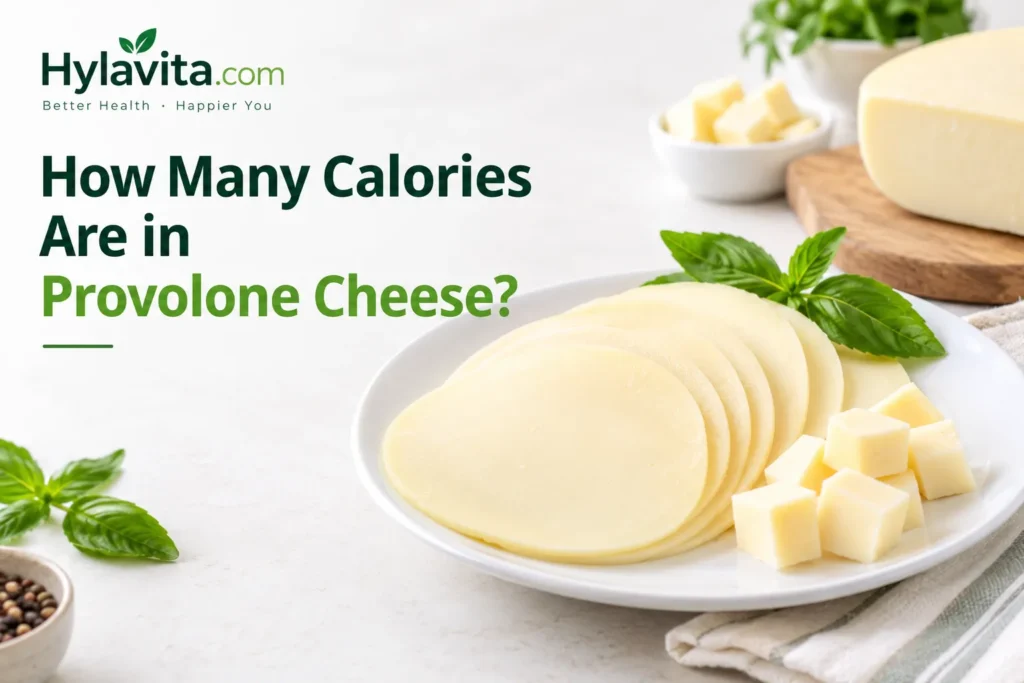
How Many Calories Are in Provolone Cheese?
A typical 1-ounce serving of provolone cheese contains about 100 calories. This serving weighs around 28 grams of cheese. It also provides protein, fat, and small amounts of carbohydrates. The calorie count changes when you eat a larger or smaller portion. For example, two ounces provide roughly 200 calories. A thinner slice may contain fewer calories than a full ounce. The exact amount also depends on the brand and type of provolone. Regular and reduced-fat varieties can have different calorie values. Sliced cheese may also vary in weight from one product to another. For the most accurate information, check the nutrition label on your package. This helps you track calories based on the amount you actually eat.
Provolone Cheese Calories by Serving Size
Calories in 1 Slice of Provolone Cheese
One 21-gram slice of provolone has about 70 calories. It provides roughly 5 grams of protein and 6 grams of fat. The exact amount can vary by slice size and brand. Always check the package label for the most accurate serving information.
Calories in 1 Ounce of Provolone Cheese
One ounce of provolone cheese contains about 100 calories. This serving weighs about 28 grams. It provides around 7 grams of protein and 8 grams of fat. Different provolone products may have slightly different calorie amounts.
Calories in 100 Grams of Provolone Cheese
A 100-gram serving of sliced provolone contains about 357 calories. It provides roughly 23.5 grams of protein and 28.1 grams of fat. It also contains about 2.5 grams of carbohydrates.
Provolone Cheese Nutrition Facts
Provolone cheese provides several nutrients besides calories. A 100-gram serving contains about 357 calories and 23.5 grams of protein. It also provides around 28.1 grams of fat and 2.5 grams of carbohydrates. Provolone is also a good source of calcium, with about 749 milligrams per 100 grams. This amount equals about 58% of the Daily Value. The same serving contains roughly 601 milligrams of sodium.
These values describe a standard sliced provolone reference food. Nutrition can vary between brands and varieties. Reduced-fat provolone can have fewer calories and less fat. Smoked or flavored versions may also have different nutrition values. Check the nutrition label when you need exact numbers.
How Much Protein Is in Provolone Cheese?
Provolone cheese provides a moderate amount of protein per serving. One 1-ounce serving contains about 7 grams of protein. A 21-gram slice provides around 5 grams of protein. Protein helps you feel full after eating. It also supports muscles and other body tissues. Provolone provides similar protein amounts to several other common cheeses. However, the exact amount varies between cheese types and brands. For example, reduced-fat provolone contains about 24.7 grams per 100 grams. Regular provolone contains about 25.6 grams per 100 grams. Serving size also affects how much protein you get. A larger portion provides more protein but also more calories. Check the nutrition label for your specific provolone cheese.
Provolone Cheese Fat and Carbohydrate Content
How Much Fat Is in Provolone Cheese?
Provolone cheese contains a moderate amount of fat per serving. One ounce contains about 7.6 grams of fat. About 4.8 grams come from saturated fat. Fat provides energy and helps the body absorb certain vitamins. Reduced-fat provolone contains less fat than regular provolone. Exact amounts can vary between brands and varieties.
How Many Carbs Are in Provolone Cheese?
Provolone cheese is naturally low in carbohydrates. One ounce contains about 0.6 grams of carbohydrates. A 100-gram serving contains about 2.1 grams of carbs. It contains no dietary fiber in standard nutrition data. This makes provolone a low-carb cheese option. However, flavored products may contain different ingredients and nutrition values. Check the package label for the most accurate information.
Is Provolone Cheese High in Calories?
Provolone cheese is fairly calorie-dense because it contains significant fat. One ounce provides about 100 calories. Most of those calories come from fat and protein. Portion size makes a noticeable difference in total calories. Eating two ounces provides about 200 calories. A smaller slice can contain fewer calories than a full ounce. Provolone can still fit into a balanced eating pattern. Pairing a moderate portion with vegetables, whole grains, or other foods adds variety. Choosing portions that match your overall needs can help maintain balance. Nutrition also varies between brands and provolone varieties. Reduced-fat versions may contain fewer calories than regular provolone. Always check the package label for the most accurate information.
Provolone Cheese vs. Other Popular Cheeses
Provolone has about 100 calories per 1-ounce serving. It provides around 7 grams of protein and 8 grams of fat. Cheddar cheese has a similar calorie level per ounce. Mozzarella often contains fewer calories per similar serving. Swiss cheese also provides protein with a similar calorie range. Exact values depend on the specific cheese and product.
Serving size can make a bigger difference than small cheese differences. A larger portion naturally provides more calories, protein, and fat. Preparation also affects the total calories in your meal. For example, adding cheese to sandwiches increases their overall calorie content. Melted cheese still contains the same calories unless ingredients change. Low-fat versions can also have different nutrition values. Therefore, compare cheeses using the same serving size. Always check the package label for the most accurate information.
Health Benefits of Provolone Cheese
Provolone cheese provides protein, calcium, and several other nutrients. One ounce provides about 7 grams of protein. Protein helps support muscles, bones, and other body tissues. It can also help you feel satisfied after eating. Provolone is also rich in calcium, which supports strong bones and teeth. One ounce provides roughly 210 milligrams of calcium. Provolone also contains vitamin B12, which supports normal blood and nerve function. It provides smaller amounts of phosphorus, zinc, riboflavin, and other nutrients. Provolone can fit into a balanced diet when eaten in suitable portions. Pair it with vegetables, whole grains, fruits, or other nutritious foods. Remember that regular provolone also contains significant fat and sodium.
Ways to Enjoy Provolone Cheese Without Excess Calories
Enjoying provolone starts with choosing a sensible portion size. A smaller portion can add flavor without adding many calories. Pair provolone with vegetables for a more balanced meal. You can add it to salads, sandwiches, or whole-grain bread. These foods provide other nutrients alongside the cheese. You can also use provolone in cooked meals with vegetables. Remember that melted cheese still contains the same calories. The total meal calories depend on all ingredients used. Instead of focusing only on calories, consider the meal as whole. Include protein, vegetables, whole grains, and other nutritious foods regularly. Check the package label because serving sizes vary between products.
Frequently Asked Questions About Provolone Cheese Calories
How many calories are in one slice of provolone cheese?
A 21-gram slice contains about 70 calories. A 28-gram slice provides roughly 100 calories. Slice weights vary between brands, so check the package label.
Is provolone cheese good for a high-protein diet?
Provolone provides about 7 grams of protein per ounce. It can contribute protein to meals and snacks. However, it also contains significant fat and calories.
Is provolone cheese low in carbs?
Yes, provolone is naturally very low in carbohydrates. One ounce contains less than one gram of carbs. Plain provolone also contains no dietary fiber.
Is provolone cheese healthier than cheddar?
Both cheeses provide protein, fat, calcium, and other nutrients. Their nutrition can vary by brand and type. Neither cheese is automatically healthier in every situation. Compare labels for your needs.
Can you eat provolone cheese while trying to manage your weight?
Yes, provolone can fit into balanced meals. Pay attention to serving size and your overall eating pattern. Pairing cheese with vegetables and whole grains can add variety and nutrients.
Conclusion
Provolone cheese contains about 100 calories per 1-ounce serving. A 21-gram slice provides about 70 calories. It also provides protein, calcium, and other important nutrients. Serving size matters because larger portions provide more calories. Provolone can fit into a balanced eating pattern when portions suit your needs. You can enjoy it with vegetables, whole grains, and other nutritious foods. Nutrition values can differ between brands and varieties. Always check the package label for the most accurate information. This helps you understand exactly what your serving provides.
Hylavita’s suggestion to read
- What Is Red Cheese? Nutrition, Benefits, Taste & Uses
- How Many Calories Are in a Teaspoon of Sugar?
- How Much Protein Is in 2 Eggs? Nutrition Facts and Benefits
Disclaimer:The information in this article is for general educational purposes only. Nutrition values can vary between brands, products, and serving sizes. This article does not replace professional medical or dietary advice. Consult a qualified healthcare professional for advice based on your individual needs.