
What Is Red Cheese?
Origin and History
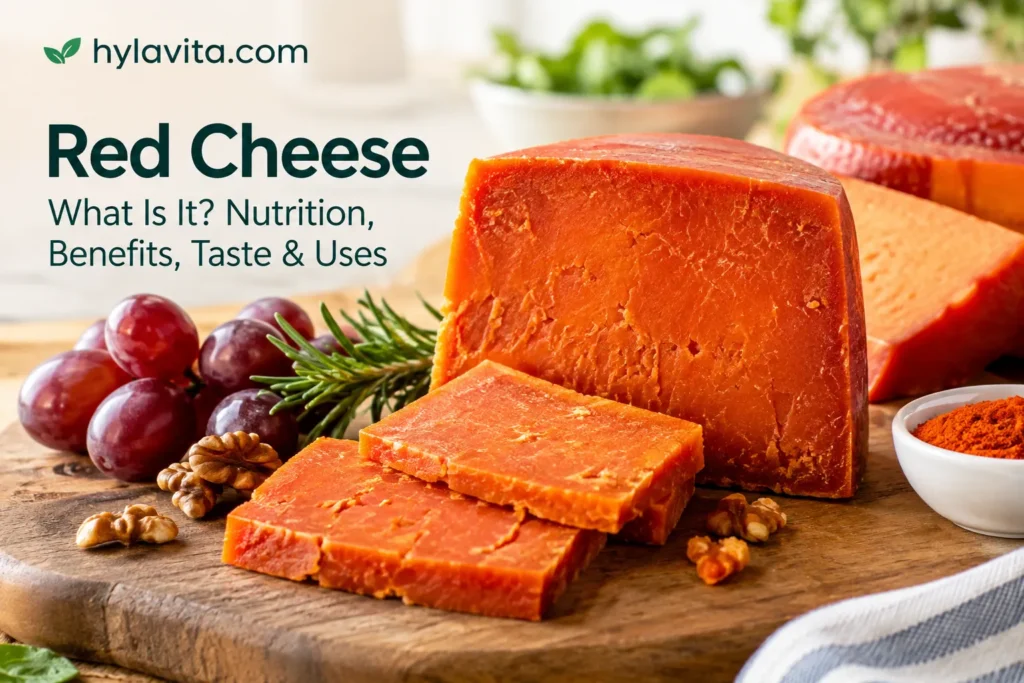
Red cheese isn’t one single cheese. It’s a name for cheeses with a deep orange or reddish color. The most famous one is Red Leicester, made in Leicestershire, England. Cheesemakers there have colored cheese this way since the 1700s. Back then, a deep orange color meant the cheese came from rich, creamy milk. So farmers started dyeing paler cheeses to make them look better. Other red-tinted cheeses include Mimolette from France and some types of Gouda and Cheddar.
How Red Cheese Gets Its Color
The color doesn’t come from the milk itself. It comes from a natural dye called annatto. Annatto comes from the seeds of the achiote tree. This tree grows in South America and the Caribbean. Cheesemakers add annatto during production. It’s heat-stable, so the color stays even after cooking. Annatto has a very mild taste. So it changes the cheese’s look, not its flavor.
Common Varieties of Red Cheese
Red Leicester is the best-known red cheese. It’s a hard, crumbly cheese similar to Cheddar. Mimolette is another popular one. It comes from France and has a bright orange color inside. Some Goudas and Edams also get a red or orange tint from annatto. Even certain Cheddars use this dye for a richer look.
Nutritional Profile of Red Cheese
Calories and Macronutrients
Red cheese is rich and filling. A 100g serving has about 400 calories. That’s a lot for such a small amount. Most of those calories come from fat. Red Leicester has about 33g of fat per 100g. Around 21g of that is saturated fat. It’s also packed with protein. You get about 24g of protein per 100g. Carbs are almost zero. This makes it a good low-carb food choice.
Vitamins and Minerals
Cheese is one of the best natural sources of calcium. Just one slice helps support strong bones and teeth. Red cheese also gives you vitamin B12. This vitamin helps your body make red blood cells. It contains phosphorus too, which works with calcium for bone health. One thing to watch is salt. Red Leicester has about 1.8g of salt per 100g. That’s a fair chunk of your daily limit. Note that the red-orange color comes from annatto, not vitamin A. So don’t expect a vitamin A boost from the color alone.
Comparison to Other Cheeses
How does red cheese stack up against other cheeses? It’s very close to Cheddar in nutrition. Both are high in fat, protein, and calcium. Red Leicester is often a bit moister than Cheddar. This can make it feel slightly less heavy to eat. Compared to softer cheeses like mozzarella, red cheese has more fat and calories. Mozzarella has less fat and fewer calories per serving. So if you want a lighter option, mozzarella wins. But for bold flavor and rich nutrients, red cheese holds its own.
Health Benefits of Red Cheese
Bone and Dental Health
Red cheese is a great source of calcium. Calcium keeps your bones strong and dense. It also protects your teeth from decay. Eating cheese can help balance the acid in your mouth. This lowers your risk of cavities. The phosphorus in cheese works alongside calcium too. Together, they support healthy bone structure over time.
Protein and Muscle Support
Red cheese is packed with high-quality protein. Protein helps your body repair and build muscle. It contains all nine essential amino acids you need. This makes it a complete protein source. Eating enough protein keeps you feeling full longer too. It’s useful after workouts to support muscle recovery. A small serving can add real protein to your day.
Gut Health and Probiotics
Cheese is made through a fermentation process. This process uses live bacteria to develop flavor. Some of these bacteria may survive into your gut. However, red cheese is aged and hard, unlike yogurt. So it has fewer live cultures than soft, fresh dairy foods. If gut health is your main goal, pair it with probiotic foods. Think yogurt, kefir, or fermented vegetables for a bigger boost.
Potential Downsides and Who Should Limit Intake
Red cheese is high in saturated fat and sodium. Eating too much may raise your cholesterol over time. People with high blood pressure should watch their portions. Too much salt isn’t good for heart health either. If you’re lactose intolerant, aged cheese may cause less discomfort. Still, everyone reacts differently, so start with small amounts. People managing weight should also watch portion sizes closely. As with most rich foods, moderation matters most here.
Taste and Texture
Flavor Profile
Red cheese has a mild, slightly sweet taste. Many people describe it as nutty and buttery. As it ages, the flavor gets stronger and deeper. You might notice a hint of caramel too. It’s less sharp than a mature Cheddar. This makes it a great choice for beginners. Kids often enjoy its gentle, friendly flavor.
Texture and Meltability
Red cheese feels firm but slightly crumbly when you cut it. It’s often moister than regular Cheddar. Good quality wedges break into small, flaky pieces. It melts smoothly when heated, without turning greasy. This makes it perfect for toasties and grilled cheese. You’ll get a creamy, gooey texture in cooked dishes. It doesn’t go stringy like mozzarella does.
How It Compares to Cheddar or Gouda
Red cheese and Cheddar share a similar making process. But red cheese is usually moister and crumblier. Cheddar tends to be firmer and slightly sharper in taste. Gouda, on the other hand, is smoother and creamier. Gouda also has a sweeter, more caramel-like flavor. Red cheese sits somewhere between the two in richness. It’s milder than Cheddar but less sweet than Gouda.
Culinary Uses of Red Cheese
Best Pairings (Wine, Fruit, Crackers)
Red cheese pairs beautifully with fruit. Try it with apples, pears, or dried apricots. The sweetness balances the cheese’s rich, savory taste. For wine, go for a full-bodied white. A crisp amber ale also works really well. Serve it on plain crackers or crusty bread. This lets the cheese flavor shine through fully. Add a drizzle of honey for extra sweetness.
Cooking and Melting Applications
Red cheese melts smoothly, making it great for cooking. Grate it over pasta, soups, or baked potatoes. It works perfectly in grilled cheese sandwiches too. Use it to top casseroles for a rich, golden layer. Mix it into mashed potatoes for extra creaminess. It also melts well over nachos or burgers. The color adds a nice visual pop to dishes.
Popular Recipes Featuring Red Cheese
Try a classic cheese and onion sandwich. It’s a British favorite made with red cheese. Cheese scones are another simple, tasty option. Add grated red cheese to a homemade quiche. It also works well in a cheesy soufflé. For something quick, melt it over jacket potatoes. Or toss it into a warm pasta bake.
How to Store Red Cheese
Shelf Life
Unopened red cheese can last up to six months in the fridge. Once opened, it stays fresh for three to four weeks. Being a hard cheese, it lasts longer than soft varieties. Soft cheeses like Brie only last one to two weeks. Always check the “best by” date as a guide. But trust your senses too, not just the date. If it smells or looks off, it’s time to toss it.
Storage Tips for Freshness
Keep your red cheese in the coldest part of the fridge. Aim for a temperature around 34°F to 38°F. Wrap it in wax paper or parchment, not plastic. This lets the cheese breathe while staying protected. Change the wrapping every time you cut into it. If you spot a small mold spot, don’t panic. Just cut off an inch around and below it. For longer storage, you can freeze red cheese too. Just know the texture may turn slightly crumbly after thawing.
Where to Buy Red Cheese
Grocery Store vs. Specialty Shops
Most grocery stores sell red cheese, especially Red Leicester. You’ll usually find it in the deli or cheese aisle. These versions are often mass-produced and pressed into blocks. They’re convenient, affordable, and easy to find. Specialty cheese shops offer a different experience, though. They often carry traditional, clothbound, farmhouse versions. These are aged longer and have more complex flavor. Staff there can also help you pick the right one. If you want something special, a specialty shop is worth it.
Tips for Choosing Quality Red Cheese
Check the label to see how it’s made. Traditional wheels are usually a sign of quality. Look for a natural rind if you can find one. This often means it was aged slower and longer. Give the cheese a sniff before buying, if possible. It should smell rich, not sharp or sour. Check the texture too; it should look moist, not dry. Avoid cheese that looks cracked or has dark patches. Freshly cut cheese from a counter often tastes better. It’s usually fresher than pre-packaged, long-shelf options.
Frequently Asked Questions
Is Red Cheese Natural or Artificially Colored?
Red cheese gets its color from annatto, a natural dye. Annatto comes from the seeds of the achiote tree. It’s not an artificial color at all. Some cheap versions might use synthetic dyes, though. Always check the label if this matters to you. Most traditional red cheeses stick to natural annatto only.
Is Red Cheese Healthy?
Red cheese can be part of a healthy diet. It’s rich in calcium, protein, and vitamin B12. These nutrients support strong bones and muscles. But it’s also high in saturated fat and salt. Eating too much may affect your heart health over time. Like most cheese, it’s best enjoyed in moderation. A small portion a few times a week is fine.
Can Red Cheese Be Part of a Weight Loss Diet?
Yes, red cheese can fit into a weight loss plan. Just watch your portion sizes carefully. It’s calorie-dense, so a little goes a long way. Try pairing it with fruit or a small salad. This adds nutrients without piling on extra calories. Avoid eating it in large amounts daily. Balance is key if weight loss is your goal.
Conclusion
Red cheese is more than just a pretty color. It’s a rich, flavorful cheese with real nutritional value. The orange-red hue comes from annatto, a natural plant dye. It offers calcium, protein, and vitamin B12 in every bite. Just remember to watch your portions, since it’s high in fat and salt. Whether you enjoy it in a sandwich or on a cheese board, it’s a tasty addition to your meals. Pick a good quality wedge, store it properly, and enjoy it in moderation.
Hylavita’s sugestion to read
- 10 Surprising Health Benefits of Celery You Need to Know
- Mediterranean Diet vs. Intermittent Fasting: Which Is Right for You?
- Clover Honey: Benefits, Nutrition, Uses & Side Effects
Other readings
- Red Leicester Cheese — Nutrients, Health Benefits, And Shopping Tips
- Hidden health benefits of cheese
Disclaimer: This article is for general informational purposes only and is not intended as medical or nutritional advice. Please consult a doctor or registered dietitian before making changes to your diet, especially if you have health conditions like high cholesterol, high blood pressure, or lactose intolerance. Nutritional values may vary by brand and preparation method.