
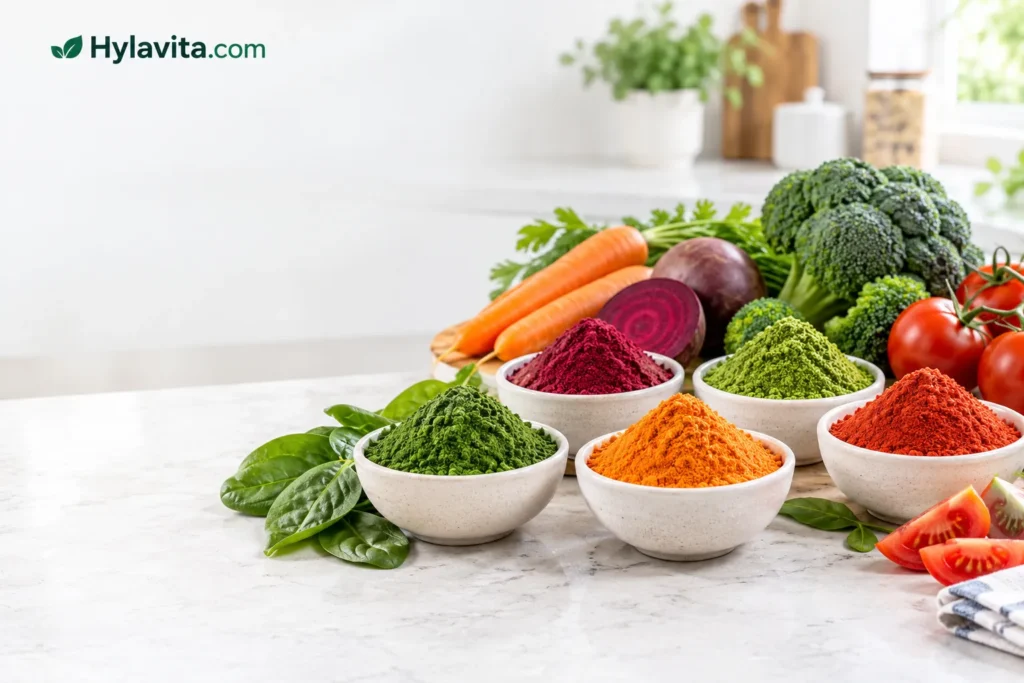
What Is Vegetable Powder?
Vegetable powder is made from vegetables that are dried and finely ground. The drying process removes most of the vegetables’ water content. This creates a lightweight powder that is easier to store.
Vegetable powders can come from carrots, spinach, beets, tomatoes, broccoli, and other vegetables. Some products contain only one vegetable. Others combine several vegetables into one powder.
The nutrition depends on the vegetables used and how they are processed. Some nutrients may decrease during drying, especially heat-sensitive vitamins.
Vegetable powder can add vegetable nutrients to smoothies, soups, sauces, and other foods. However, it should not automatically replace fresh vegetables in your diet. Checking the ingredient list also matters. Some products contain added salt, sugar, or other ingredients.
How Is Vegetable Powder Made?
Vegetable powder starts with fresh vegetables that are cleaned and prepared. The vegetables may be peeled, sliced, or chopped before drying. Some vegetables are briefly blanched before drying to help preserve quality.
Next, the vegetables are dried to remove most of their moisture. Manufacturers can use hot-air drying, freeze-drying, or other methods. The dried vegetables become brittle and easier to grind. They are then milled into a fine powder. Finally, the powder is sifted and packaged in suitable containers.
Vegetable Powder Nutrition Facts
Vegetable powder nutrition depends on the vegetables used and processing method. Different powders can have very different nutrient profiles. Drying removes water, making nutrients more concentrated by weight.
Many vegetable powders provide carbohydrates, fiber, vitamins, minerals, and plant compounds. Some powders contain useful amounts of vitamin A, vitamin C, vitamin K, and folate. They may also provide minerals such as potassium, magnesium, calcium, and iron.
However, drying can affect certain nutrients, especially heat-sensitive vitamins. Vitamin C may decrease during some drying processes. The amount lost depends on the vegetable and processing method.
Always check the nutrition label for exact amounts per serving. Also check the ingredient list for added salt, sugar, or other ingredients. USDA FoodData Central provides food composition information for many foods.
Benefits of Vegetable Powder
Vegetable powder can offer nutrients found naturally in vegetables. Its benefits depend on the vegetables and processing method used.
Provides Nutrients
Vegetable powders can provide vitamins, minerals, fiber, and other nutrients. The exact amounts depend on the vegetables used. Some nutrients may decrease during drying.
May Increase Vegetable Intake
Vegetable powder offers a simple way to add vegetables to meals. It can help add vegetable ingredients to foods you already enjoy. However, it should not completely replace whole vegetables.
Convenient and Easy to Use
Vegetable powder is lightweight, easy to store, and simple to use. You can mix it into smoothies, soups, sauces, or other foods. Its long shelf life also makes storage easier.
Contains Plant Compounds
Vegetables contain plant compounds such as polyphenols, flavonoids, and carotenoids. Some of these compounds remain after processing. Their levels can change depending on the drying method used.
Common Uses of Vegetable Powder
Vegetable powder works well in many everyday foods and drinks. It adds vegetable flavor, color, or nutrients without extra moisture.
Smoothies and Drinks
You can blend vegetable powder into smoothies, shakes, or other drinks. Mild powders can mix easily with fruits, yogurt, or milk. Some vegetable powders can also be mixed into water.
Soups and Sauces
Vegetable powder can add flavor and color to soups and sauces. It can also help thicken some recipes. Tomato, carrot, spinach, and other powders work well here.
Seasoning and Cooking
Vegetable powders can add savory flavor to everyday meals. You can mix them with herbs and spices for seasoning blends. They also work well in dips, dressings, and savory dishes.
Baking and Other Foods
You can add vegetable powder to bread, crackers, pasta, and other baked foods. Some powders also provide natural color and vegetable flavor.
Vegetable Powder vs Fresh Vegetables
| Heading | Vegetable Powder | Fresh Vegetables |
|---|---|---|
| Water Content | Most water is removed during drying. | Naturally contains plenty of water. |
| Nutrient Content | Provides nutrients, but amounts vary by product. | Provides many nutrients naturally. |
| Vitamin C | Some vitamin C may decrease during processing. | Usually provides more vitamin C when fresh. |
| Fiber | May contain fiber, depending on the product. | Naturally provides dietary fiber. |
| Convenience | Easy to store, measure, and add to foods. | Requires washing, cutting, and proper storage. |
| Shelf Life | Usually has a longer shelf life. | Spoils faster and needs refrigeration when appropriate. |
| Serving Size | Small amounts contain concentrated dried vegetables. | Larger portions provide more water and volume. |
| Uses | Works well in smoothies, soups, sauces, and recipes. | Works well in salads, meals, soups, and snacks. |
| Ingredients | Some products may contain salt or other additions. | Usually contains only the vegetable. |
| Overall | A convenient addition to a balanced diet. | An important part of a balanced diet. |
Possible Downsides of Vegetable Powder
Vegetable powder can be useful, but it has some possible downsides. Drying may reduce certain heat-sensitive vitamins, including vitamin C. The amount lost depends on the vegetable and drying method.
Some products contain added salt, sugar, or other ingredients. Always check the nutrition label before choosing a product. Powder also provides less water and volume than fresh vegetables. It should not automatically replace whole vegetables in your diet.
Poor storage can also affect dried food quality and safety. Moisture and unsuitable packaging may allow harmful microorganisms to grow.
Choose products with simple ingredient lists and suitable packaging. Store them according to the package directions.
How to Choose Vegetable Powder
Choose a vegetable powder with a simple and clear ingredient list. Check that vegetables appear as the main ingredients. Look for products without unnecessary added sugar or excess sodium.
Check the Nutrition Facts label for calories, fiber, vitamins, and minerals. Nutrient amounts can vary greatly between different products.
Choose a product that matches your dietary needs and intended use. Also check the package for storage instructions and serving information. A simple vegetable powder can be an easy choice for everyday cooking.
How Much Vegetable Powder Should You Use?
There is no standard amount for every vegetable powder product. Follow the serving size listed on the package. Serving sizes differ between products and are not recommendations.
Start with the labeled serving when adding powder to foods. You can mix it into smoothies, soups, or sauces. Check the label for calories, sodium, fiber, and other nutrients.
Remember that vegetable powder should complement a varied diet. It should not be your only source of vegetables.
Frequently Asked Questions About Vegetable Powder
Is vegetable powder healthy?
Vegetable powder can provide nutrients from vegetables. Its nutritional value depends on ingredients and processing. Choose products with simple ingredients and limited added salt or sugar.
Does vegetable powder count as vegetables?
Vegetable powder comes from vegetables, but it should not replace varied vegetable choices. Fresh vegetables also provide water and volume in meals.
Does vegetable powder contain fiber?
Some vegetable powders contain dietary fiber. The amount depends on the vegetables and processing. Check the Nutrition Facts label for the exact amount.
Can you use vegetable powder every day?
You can include vegetable powder regularly as part of a varied diet. Follow the product’s serving information and choose products with suitable ingredients.
Is vegetable powder better than fresh vegetables?
Neither option is always better. Fresh vegetables provide water, volume, and many nutrients. Vegetable powder offers convenience and easier storage. Both can fit into a balanced diet.
Conclusion
Vegetable powder can be a healthy addition to a balanced diet. It provides nutrients from vegetables in a convenient form. Its nutritional value depends on the vegetables and processing method. Some nutrients may decrease during drying, especially heat-sensitive vitamins.
Choose powders made mainly from whole vegetables. Check the ingredient list for added salt, sugar, or other ingredients. Vegetable powder should complement fresh vegetables, not completely replace them. Using both forms can help add variety and convenience to your meals.
Hylavita’s suggestion to read
- High-Fiber Foods for Gut Health: A Complete Beginner’s Guide
- How Much Protein Is in a Sausage Patty? Nutrition Facts and
- How Many Calories Are in a Yellow Onion? Complete Nutrition Guide
Disclaimer: This article provides general information about vegetable powder and its potential nutritional benefits. It is not intended to replace professional medical or dietary advice. Nutritional values can vary between products, ingredients, and processing methods. Speak with a qualified healthcare professional for advice based on your individual needs.