
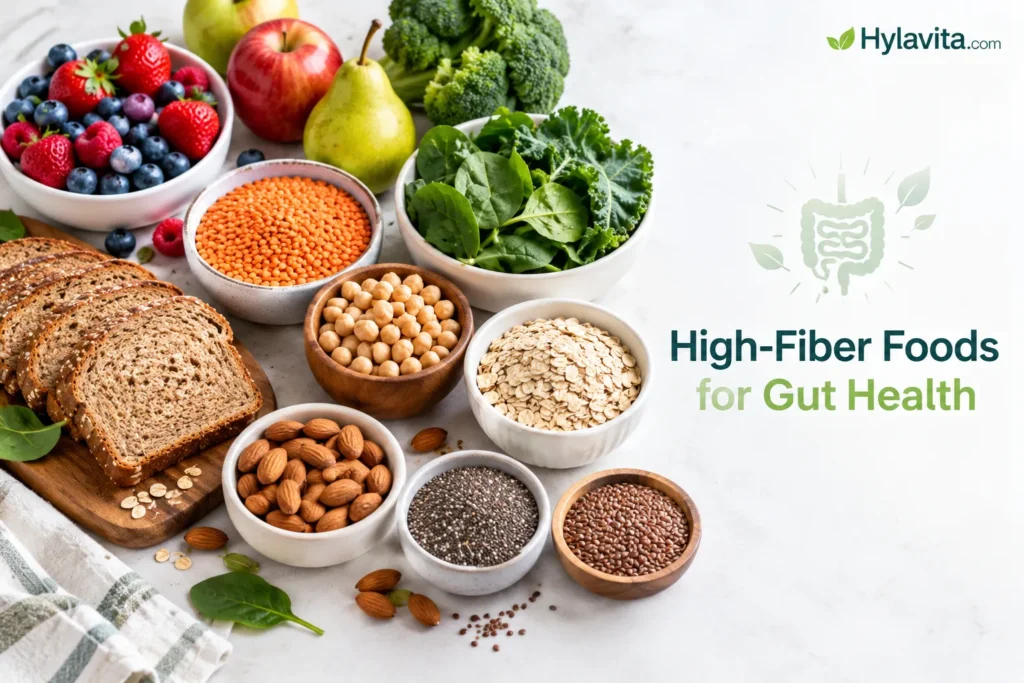
Fiber is an important part of a healthy diet and supports good digestion. It is found naturally in fruits, vegetables, beans, whole grains, nuts, and seeds. Your body does not fully digest fiber like other carbohydrates. Instead, some fiber helps food move through your digestive system. Other types support helpful bacteria in your gut. Eating enough fiber can support regular bowel movements and overall gut health. This guide explains the best high-fiber foods for gut health and simple ways to add more fiber.
What Is Fiber and Why Is It Important for Gut Health?
Fiber is a type of carbohydrate found mainly in plant foods. Your body does not fully digest it like other carbohydrates. Instead, fiber moves through your digestive system and supports healthy digestion. Soluble fiber mixes with water and can be fermented by gut bacteria. Insoluble fiber adds bulk to stool and helps support regular bowel movements. Some fibers also provide food for beneficial bacteria in your gut. These bacteria can produce substances that support the health of your colon. Good fiber sources include fruits, vegetables, beans, whole grains, nuts, and seeds. Eating different fiber-rich foods helps provide different types of fiber. Increasing fiber gradually can also help reduce gas and bloating.
Best High-Fiber Foods for Gut Health
Many everyday plant foods provide plenty of dietary fiber. Eating different foods gives your gut various types of fiber. Fruits are an easy way to increase fiber each day. Apples, pears, berries, oranges, and bananas are good choices. Vegetables like broccoli, carrots, peas, and leafy greens also provide fiber. Beans, lentils, chickpeas, and peas are especially useful fiber sources. They can also provide plant-based protein and other nutrients. Whole grains such as oats, barley, brown rice, and whole-wheat bread contain fiber. Nuts and seeds, including almonds, chia seeds, and flaxseeds, also contribute fiber.
Try to choose whole foods instead of relying only on fiber supplements. Whole foods provide fiber along with vitamins, minerals, and other nutrients. You can add berries to oatmeal or fruit to breakfast. Add beans or lentils to soups, salads, or main meals. Choose whole-grain bread or brown rice instead of refined grains. Add nuts or seeds to yogurt, oatmeal, or salads. Increasing fiber slowly can help reduce gas and bloating. Drinking enough fluids also helps fiber work properly.
How Fiber Helps Your Gut
Fiber supports your gut in several simple and useful ways. Some fibers help food move through your digestive system. This can support regular and easier bowel movements. Fiber can also add bulk to stool and help prevent constipation.
Some types of fiber are fermented by bacteria in your gut. These bacteria use fiber as food and produce helpful compounds. These compounds include short-chain fatty acids, such as butyrate.
Eating different fiber-rich foods can support a varied gut microbiome. Fruits, vegetables, beans, whole grains, nuts, and seeds provide different fibers.
Fiber also works better when you drink enough fluids. Increase your fiber intake gradually to reduce possible bloating or gas.
Overall, fiber supports healthy digestion and helps nourish your gut bacteria. A varied, fiber-rich diet can be an important part of gut health.
How Much Fiber Do You Need?
Fiber needs depend on your age, sex, and daily calorie needs. Most adults should aim for about 14 grams per 1,000 calories. This equals about 25 grams daily for women and 38 grams for men.
Children and teenagers have different fiber needs based on age and sex. For example, boys ages 14 to 18 need about 38 grams daily. Girls in that age range need about 26 grams daily.
Try to get fiber from different plant foods each day. Fruits, vegetables, beans, whole grains, nuts, and seeds are good choices. Increasing fiber slowly can also help your digestive system adjust.
How to Add More Fiber to Your Diet
Adding fiber to your diet does not have to be difficult. Start with small changes and build gradually. This helps your digestive system adjust to more fiber.
Choose whole-grain bread, oatmeal, brown rice, or whole-grain pasta. Add beans, lentils, or chickpeas to soups and main meals. Include fruits and vegetables with meals and snacks. Apples, pears, berries, carrots, and broccoli are simple choices. Nuts and seeds can also add fiber to everyday meals.
You can add berries or sliced fruit to your breakfast. Try adding beans or lentils to salads and soups. Choose whole fruit instead of fruit juice more often. Spread your fiber intake across meals instead of eating it all at once.
Drink enough water and other fluids as you increase fiber. Fluids help fiber work properly and support softer stools.
Make these changes slowly rather than changing your diet overnight. This simple approach can make eating more fiber easier and more comfortable.
What Happens If You Eat Too Much Fiber?
Eating a lot of fiber suddenly can cause digestive discomfort. Common symptoms include gas, bloating, and stomach discomfort.
Some people may also notice changes in their bowel movements. These effects often happen when fiber intake increases too quickly. Your digestive system may need time to adjust to more fiber.
The best approach is to increase fiber gradually over time. Drink enough fluids as you increase your fiber intake. This helps fiber work properly in your digestive system.
If digestive symptoms continue or become bothersome, talk with a healthcare professional. Individual fiber needs can vary based on health and diet.
Frequently Asked Questions About High-Fiber Foods
What are the best high-fiber foods for gut health?
Good choices include beans, lentils, fruits, vegetables, whole grains, nuts, and seeds.
Is fiber good for digestion?
Yes, fiber supports regular bowel movements and healthy digestion.
How can I increase fiber without bloating?
Increase fiber slowly and drink enough fluids throughout the day.
Do high-fiber foods help gut bacteria?
Yes, some fibers are fermented by gut bacteria and support their activity.
Should I increase fiber gradually?
Yes, increasing fiber gradually can reduce gas, bloating, and stomach discomfort.
Conclusion
High-fiber foods can support healthy digestion and regular bowel movements. Good choices include fruits, vegetables, beans, whole grains, nuts, and seeds. These foods provide different types of fiber and important nutrients. Some fibers also help support beneficial bacteria in your gut. Add fiber gradually to help reduce gas and bloating. Drink enough fluids as you increase your fiber intake. Focus on eating a variety of plant foods each day. A balanced, fiber-rich diet can be a simple way to support gut health.
Hylavita’s suggestion to read
- How Much Protein Is in a Sausage Patty? Nutrition Facts and
- Is Orzo Healthy? Nutrition Facts, Benefits, and What to Know
- How Many Calories Are in Provolone Cheese? Full Nutrition Guide
Disclaimer:This article is for general educational purposes only and does not provide medical advice. Fiber needs can vary based on your age, health, and individual dietary needs. Talk with a qualified healthcare professional before making major dietary changes. If you have ongoing digestive problems, seek advice from a healthcare professional.