What Are Biking Quads?
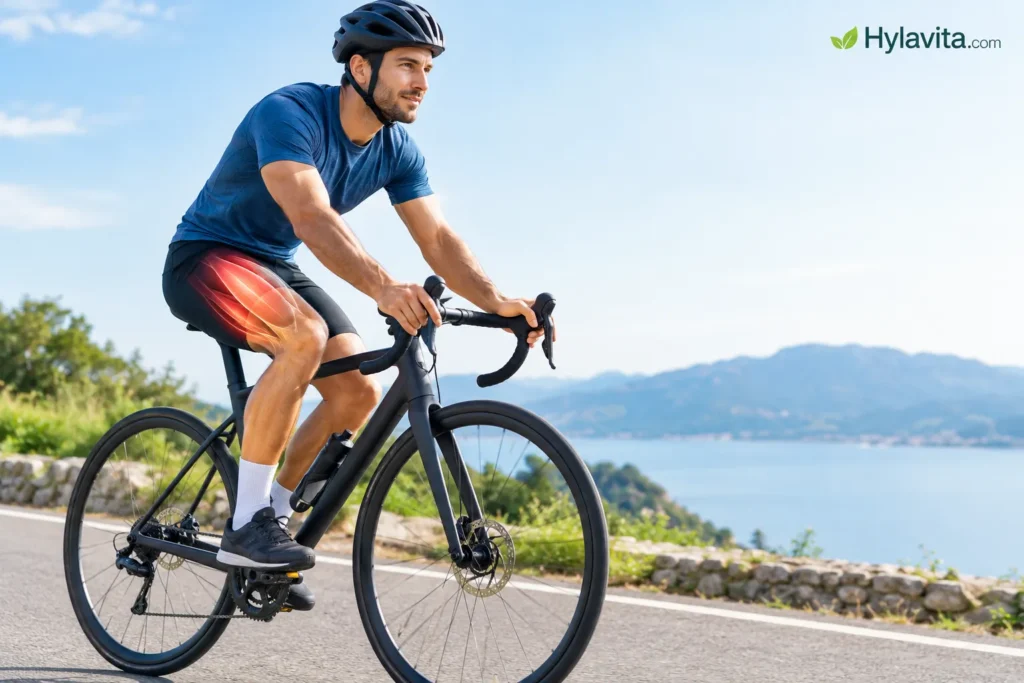
“Biking quads” refers to how cycling works your quadriceps muscles. The quadriceps sit at the front of your thighs. They include four muscles that help straighten your knee. During cycling, your quads work strongly during the downward pedal stroke. They help produce force that moves the pedals forward.
Cycling repeats this movement many times during each ride. This repeated work makes your quads active for much of your cycling session. The effort increases when you pedal against more resistance or climb hills. However, cycling also uses your glutes, hamstrings, and calf muscles.
Does Biking Build Your Quads?
Yes, biking can strengthen your quadriceps and improve their muscular endurance. Your quads work repeatedly while you push the pedals downward. Cycling against resistance makes your muscles work harder during each pedal stroke. Hills, higher resistance, and harder efforts can increase the workload.
However, biking affects endurance and muscle size differently. Regular cycling can improve how long your quads keep working. This is especially true during longer or repeated rides. Building noticeable muscle size usually requires greater resistance and progressive training. Research also supports adding resistance training for greater strength development.
Consistency also matters when training your quads through biking. Regular rides give your muscles repeated opportunities to adapt. For greater muscle development, combine cycling with appropriate strength exercises.
Which Muscles Does Biking Work?
Quadriceps
The quadriceps are among the main muscles used during cycling. They sit at the front of your thighs and help straighten your knees during each pedal stroke. Higher resistance can increase the work placed on these muscles. Your quads also help produce force as you push the pedals downward.
Hamstrings and Glutes
Your hamstrings and glutes also contribute to cycling movements. The hamstrings help control movement around your knee and hip during pedaling. Your glutes help extend your hips and produce pedaling power. Their activity can change depending on your cycling intensity, resistance, and riding position.
Calves and Core
Your calf muscles help transfer force through your ankles during cycling. The gastrocnemius and soleus muscles both contribute to this movement. Your core muscles also help stabilize your body while you pedal. Their effort can vary with your posture, cycling intensity, and riding style.
Benefits of Biking for Your Quads
Biking can improve your quad endurance by making them work repeatedly. Each pedal stroke trains your legs to produce force again. Regular cycling can also improve lower-body strength, especially with added resistance. Harder efforts place greater demands on the muscles used for pedaling.
Cycling also supports repeated lower-body movement without repeated running impacts. Your legs perform thousands of controlled movements during longer rides. This makes biking useful for building muscular endurance over time. However, cycling still creates meaningful muscle fatigue during harder sessions.
Biking can also support better cycling performance as your muscles adapt. Stronger legs can help you produce power more efficiently. Research supports combining cycling with strength training for greater performance benefits.
Biking generally places less impact on your joints than running. However, it still requires proper technique and suitable training progression. These benefits make cycling a useful option for overall leg fitness.
How to Bike for Stronger Quads
Increase Resistance
Increasing resistance makes each pedal stroke more demanding. You can raise resistance on a stationary bike. Outdoors, choose gears that make pedaling harder. Avoid using resistance that makes your technique uncomfortable. Research supports higher-intensity cycling and resistance work for strength gains.
Use Hills or Inclines
Hills naturally increase the resistance against your pedals. They can make your quads work harder during each climb. Start with shorter hills if you are new to cycling. Focus on steady pedaling rather than pushing beyond your current ability.
Add Short Hard Efforts
Short, harder efforts can increase the training demand on your legs. Begin with controlled efforts that match your fitness level. Recover with easier cycling between harder efforts. High-intensity cycling can improve cycling performance and quad strength.
Increase Training Gradually
Increase resistance, duration, or intensity gradually over time. This gives your body time to adapt to training. Avoid making several large changes during the same week.
Proper Biking Technique for Your Quads
Proper bike setup helps you pedal comfortably and maintain controlled movement. Your saddle should allow a slight knee bend at the pedal’s lowest point. Research commonly supports about 25 to 35 degrees of knee flexion. However, the best position can vary between individual riders.
Keep your feet comfortably positioned on the pedals during each stroke. Avoid forcing your knees inward or outward while pedaling. Use a smooth, steady motion instead of pushing with sudden force. Keep the resistance challenging but still manageable for your fitness level.
Maintain a comfortable posture throughout your ride. Keep your torso stable without excessive bending or twisting. Your hands should rest comfortably on the handlebars. A proper bike fit can improve comfort and may reduce unnecessary strain.
Biking vs. Strength Training for Quads
| Feature | Biking | Strength Training |
|---|---|---|
| Main focus | Leg endurance and cycling fitness | Strength and muscle development |
| Quad training | Repeated resistance during pedaling | Direct resistance through exercises |
| Examples | Cycling, hills, resistance riding | Squats, lunges, leg presses |
| Muscle endurance | Very effective | Effective with suitable training |
| Muscle growth | Can help, especially with harder riding | Generally more effective |
| Resistance | Comes from gears, hills, or bike settings | Comes from weights or other resistance |
| General fitness | Excellent for cardiovascular and leg fitness | Excellent for strength and muscle fitness |
| Best approach | Regular cycling with varied intensity | Progressive resistance training |
Biking can support strong, active legs and improve cycling performance. Strength training provides additional resistance for building muscle and strength. Combining both can create a more complete lower-body training routine.
Common Biking Mistakes That Limit Quad Training
Using the wrong seat height can make cycling less comfortable. Your saddle should allow a slight bend in your knee. Resistance that feels too easy may provide less training stimulus. Very high resistance can make pedaling difficult and reduce good technique.
Relying only on easy rides may limit improvements in strength. Include some harder efforts when your fitness allows. Increase your riding time and intensity gradually over time. Sudden increases can place extra stress on muscles and tendons.
Poor technique can also reduce comfort and cycling efficiency. Keep your movements smooth and maintain a comfortable riding position. Adjust your bike setup when your position feels uncomfortable.
How Often Should You Bike to Train Your Quads?
Beginners can start with two or three comfortable rides each week. Regular cyclists can ride more often when recovery stays good. Harder rides place greater demands on your leg muscles. Give your legs easier days between demanding cycling sessions. This allows your body to recover and adapt.
Increase your riding time, resistance, or intensity gradually. Avoid making several big changes at once. Consistent training usually works better than occasional, very hard workouts. If cycling causes pain, reduce the workload and seek appropriate guidance.
Conclusion
Biking definitely works your quads during repeated pedal strokes. Your glutes, hamstrings, calves, and core also support cycling. Regular biking can improve leg endurance, strength, and cycling performance. Higher resistance can increase the workload placed on your quads. Proper bike setup and smooth technique can improve comfort. Consistent training gives your muscles time to adapt. Recovery between harder rides also supports healthy training progress. Biking can build stronger legs, especially with progressive resistance. For greater muscle growth, add suitable strength exercises. A balanced routine can combine biking with strength training.
Hylavita’s suggestion to read
- Active Recovery Days: What to Do on Muscle Recovery Days
- 30-Day Running Plan for Beginners: Build Fitness Step by Step
- Lower Ab Workout: 10 Effective Exercises for a Stronger Core
Disclaimer:This article provides general information about biking, quad training, and exercise. It is not a substitute for professional medical or fitness advice. Consider your fitness level and physical limitations before changing your routine. Stop exercising if you experience pain and seek professional guidance when needed.