The single arm DB row is a popular exercise for building back strength. It uses one dumbbell to train one side at a time. This exercise targets your lats, upper back, shoulders, and biceps. It also engages your core to help keep your body stable. Regular practice can improve upper-body strength and muscle balance. However, proper form is important for getting good results. You should use a manageable weight and control every movement. In this guide, you’ll learn its benefits, muscles worked, and proper technique.
What Is a Single Arm DB Row?
A single arm DB row is a strength exercise performed with one dumbbell. It involves pulling the weight toward your body using one arm. You usually support yourself with one hand on a bench. This position helps keep your body stable during the movement. The exercise mainly targets your back muscles, especially your lats. It also works your upper back, shoulders, and biceps. You train one side at a time, helping address strength differences. It is a useful exercise for building upper-body strength.
Muscles Worked by the Single Arm DB Row
The single arm DB row mainly targets several muscles in your upper body. Your latissimus dorsi (lats) do much of the pulling work. These large back muscles help move your upper arms backward. Your rhomboids and trapezius also work during each repetition. They help move and control your shoulder blades. Your rear deltoids assist with pulling your upper arm backward. The exercise also engages your biceps and forearms as supporting muscles. They help bend your elbow and grip the dumbbell. Your core muscles work to keep your torso stable. They help prevent unwanted twisting during the movement. Together, these muscles make the single arm DB row an effective upper-body exercise.
Benefits of Single Arm DB Row
The single arm DB row offers several benefits for your upper body. It helps build stronger back muscles, especially your lats. Regular practice can also improve your overall upper-body strength. Since you train one arm at a time, both sides work independently. This can help address strength differences between your left and right sides. The exercise also engages your core muscles during each repetition. Your core helps keep your torso steady and prevents excessive twisting. Another benefit is its natural range of motion. You can move your arm freely while maintaining proper control. Overall, this exercise supports back strength, muscle development, and better upper-body control.
How to Do a Single Arm DB Row With Proper Form
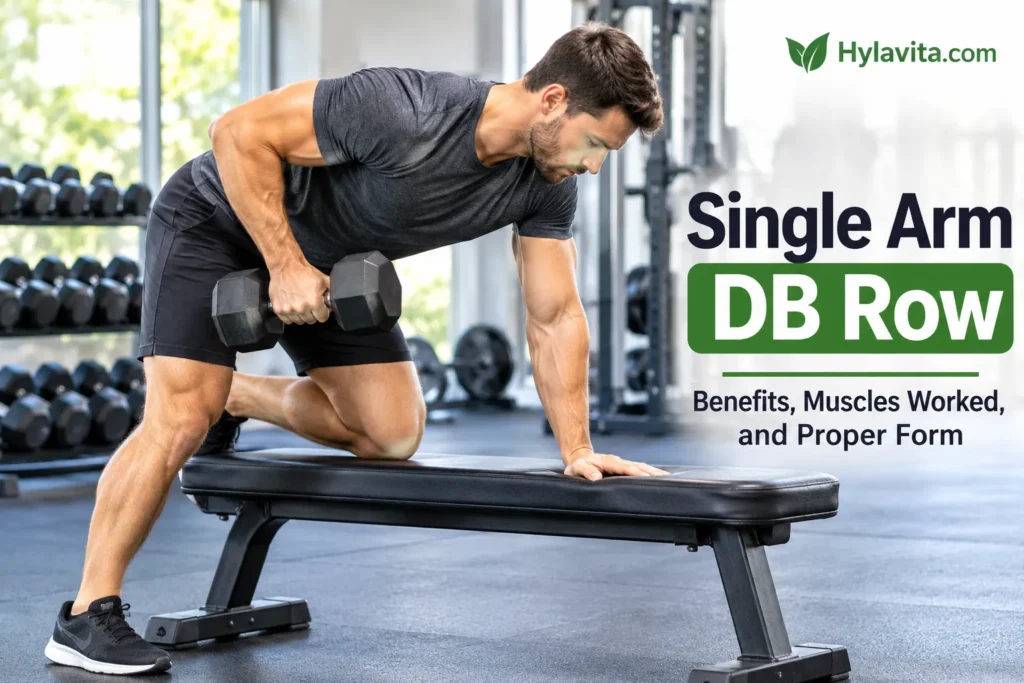
Start by choosing a dumbbell weight you can lift with good control. Place one hand and the same-side knee on a flat bench. Keep your other foot firmly planted on the floor. Hold the dumbbell with your free hand and extend your arm downward. Keep your back straight and your core muscles tight. Let the dumbbell hang naturally below your shoulder. Slowly pull the dumbbell toward your hip while bending your elbow. Keep your elbow close to your body during the movement. Squeeze your back muscles briefly at the top position. Avoid twisting your torso or using momentum to lift the weight. Slowly lower the dumbbell until your arm extends again. Complete your repetitions, then switch sides. Maintain controlled movements throughout every repetition for better technique.
Common Single Arm DB Row Mistakes
Many people make simple mistakes when performing the single arm DB row. These mistakes can reduce exercise quality and affect proper muscle engagement.
- Using too much weight: Heavy dumbbells can make it harder to maintain proper form.
- Twisting the torso: Avoid rotating your body while pulling the dumbbell upward.
- Rounding the back: Keep your spine neutral throughout the entire movement.
- Moving too quickly: Lift and lower the dumbbell with slow, controlled movements.
- Using momentum: Avoid swinging your body to lift the weight.
Focus on proper technique instead of lifting heavier weights. This helps you perform each repetition safely and effectively.
Single Arm DB Row Sets and Reps
Beginners can start with 2 sets of 10–12 repetitions per arm. Focus on proper form before increasing the number of sets. For muscle growth, try 3–4 sets of 8–12 repetitions per arm. Rest for 60–90 seconds between sets to support recovery. Choose a dumbbell that feels challenging but remains manageable. You should complete every repetition without swinging or twisting your body. Adjust the weight and repetitions according to your fitness level.
Single Arm DB Row Variations
You can try different single arm DB row variations in your workouts. Each variation offers a slightly different body position and support.
Bench-Supported Single Arm Dumbbell Row: Place one hand and knee on a bench. Pull the dumbbell toward your hip while keeping your back steady.
Standing Single Arm Dumbbell Row: Stand with your feet firmly planted. Hinge forward slightly and row the dumbbell with one arm. Keep your core tight and avoid twisting your body.
Incline Bench Single Arm Dumbbell Row: Lie chest-down on an inclined bench. Hold a dumbbell in one hand and pull it upward. This position provides chest support during the exercise.
Choose a variation that matches your comfort and fitness level.
Tips for Better Single Arm DB Row Results
Follow a few simple tips to get better results from single arm DB rows.
- Control Every Movement: Lift and lower the dumbbell slowly without swinging.
- Keep Your Elbow Close: Pull your elbow toward your hip during each repetition.
- Choose the Right Weight: Use a weight that allows proper form.
- Breathe Properly: Exhale while lifting and inhale while lowering the dumbbell.
- Train Both Sides: Perform equal sets and repetitions with each arm.
Focus on good technique instead of lifting heavier weights. Consistent practice can help improve your strength and exercise performance.
Frequently Asked Questions
Is the Single Arm DB Row Good for Beginners?
Yes, the single arm DB row is suitable for most beginners. Start with a light dumbbell and learn the correct movement. Focus on proper form before increasing the weight.
Does the Single Arm DB Row Work the Lats?
Yes, this exercise mainly targets your latissimus dorsi muscles. These large back muscles help pull your upper arm backward. It also works your upper back, shoulders, and biceps.
How Heavy Should a Dumbbell Row Be?
Choose a dumbbell that allows controlled movements throughout every repetition. You should complete your sets without swinging or twisting. Start light and increase the weight as your strength improves.
Can I Do Single Arm DB Rows Every Day?
Doing this exercise every day is generally unnecessary. Your muscles need time to recover after strength training. Most people can train their back muscles two or three times weekly. Allow enough recovery time between challenging sessions. Adjust your schedule based on your training level and recovery.
Conclusion
The single arm DB row is a useful exercise for building back strength. It targets your lats, upper back, shoulders, and supporting muscles. It also helps improve upper-body strength and muscle balance. Proper form makes each repetition more controlled and effective. Avoid using heavy weights that affect your technique. Start with a manageable dumbbell and focus on steady movements. Train both arms equally and allow enough time for recovery. With regular practice, this exercise can support your back training goals.
Hylavita’s suggestion to read
- Single Leg Glute Bridge: Benefits, Muscles Worked, and Proper Form
- 10 Best Ankle Stretches to Improve Flexibility and Mobility
- 10 Best Chest Stretches to Improve Flexibility and Mobility
Disclaimer: This article is for informational and educational purposes only. Exercise results may vary depending on fitness level, technique, and consistency. Always use proper form and suitable weights during workouts. Consult a qualified fitness professional if you have pain, injuries, or health concerns.