The single leg glute bridge is a simple exercise for strengthening your lower body. It targets your glutes while also working your hamstrings and core. Unlike regular glute bridges, this exercise uses only one leg. This makes your muscles work harder to maintain balance and stability. You can perform it at home without special equipment. It also helps improve hip control and strength. However, proper form matters for getting the best results. In this guide, you will learn its benefits, muscles worked, and correct technique.
What Is a Single Leg Glute Bridge?
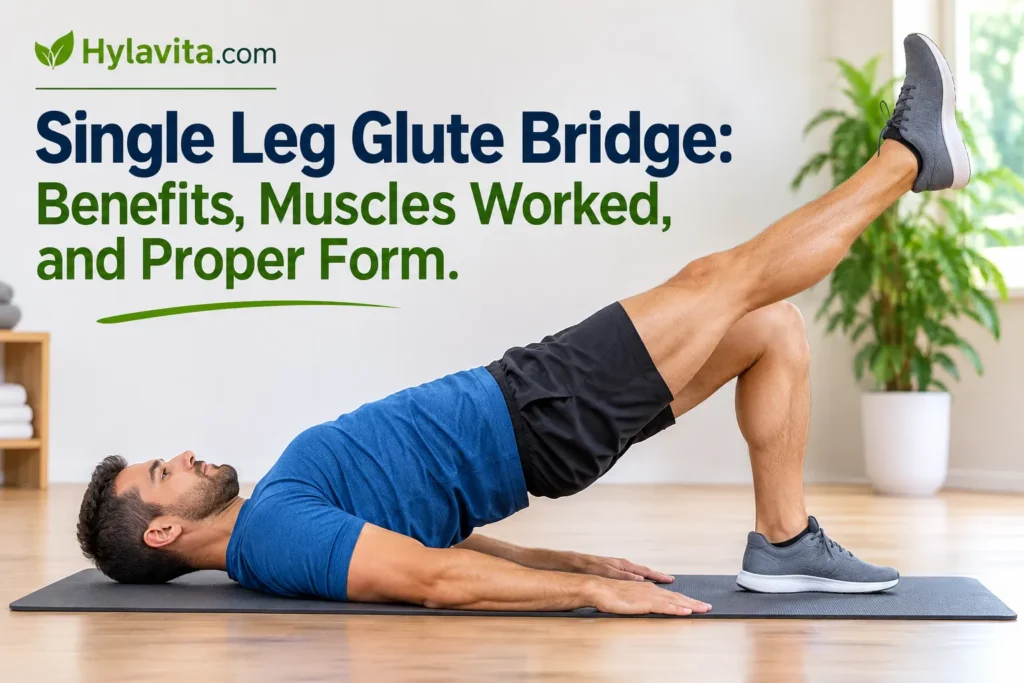
A single leg glute bridge is a bodyweight exercise that targets your glutes. It involves lifting your hips while keeping one foot off the floor. Unlike regular glute bridges, this exercise uses only one supporting leg. This makes your muscles work harder to maintain balance. It also challenges your hip stability and lower-body control. You can perform this exercise at home without special equipment. Its main purpose is strengthening your glutes and supporting muscles.
Muscles Worked by the Single Leg Glute Bridge
The single leg glute bridge mainly targets your glute muscles. However, several other muscles also help you perform this movement.
- Gluteus Maximus: This is your largest glute muscle. It helps extend your hips as you lift your body.
- Gluteus Medius and Minimus: These muscles help keep your pelvis stable. They prevent your hips from dropping or rotating.
- Hamstrings: These muscles support hip extension during the movement. They also help control your leg position.
- Core Muscles: Your abdominal muscles help stabilize your body. They keep your hips and spine properly aligned.
Together, these muscles support controlled movement and better lower-body stability.
Benefits of the Single Leg Glute Bridge
The single leg glute bridge offers several benefits for lower-body strength. It works multiple muscles while challenging your balance and control.
- Builds Stronger Glutes: It targets your glute muscles through hip extension. Regular practice can help improve glute strength.
- Improves Hip Stability: Your supporting muscles work to keep your pelvis level. This helps develop better hip control.
- Supports Muscle Balance: Training one leg at a time highlights strength differences. It helps you work each side independently.
- Strengthens Your Core: Your abdominal muscles help keep your body stable. They work throughout the exercise.
- Improves Lower-Body Control: The movement challenges balance and coordination. It helps you control your hips during exercise.
These benefits depend on proper technique and consistent training.
How to Do a Single Leg Glute Bridge With Proper Form
Follow these steps to perform the single leg glute bridge correctly.
- Lie on your back with your knees bent. Keep both feet flat on the floor.
- Place your feet about hip-width apart. Keep your arms relaxed beside your body.
- Lift one foot off the floor. Bend that knee and keep your thighs aligned.
- Press your supporting heel into the floor. Tighten your glutes and abdominal muscles.
- Slowly lift your hips toward the ceiling. Keep your shoulders and upper back grounded.
- Stop when your shoulders, hips, and knees form a straight line. Avoid arching your lower back.
- Hold this position briefly while maintaining balance. Keep your hips level throughout the movement.
- Slowly lower your hips toward the floor. Complete your repetitions before switching legs.
Breathe out as you lift your hips. Breathe in as you lower them. Move slowly and focus on controlled movement.
Common Single Leg Glute Bridge Mistakes
Small mistakes can reduce the effectiveness of this exercise. They may also place unnecessary stress on your lower back.
- Arching Your Lower Back: Avoid lifting your hips too high. Keep your ribs down and abdominal muscles engaged.
- Letting Your Hips Drop: Keep both sides of your pelvis level. Avoid twisting your body during each repetition.
- Pushing Through Your Toes: Press through your supporting heel and midfoot. This helps maintain stable foot placement.
- Moving Too Quickly: Avoid rushing through repetitions. Use slow movements to maintain better control.
- Lifting Too High: Stop when your body forms a straight line. Do not force your hips beyond this position.
Focus on proper technique instead of completing more repetitions.
Single Leg Glute Bridge Variations
You can try different variations to change the exercise’s difficulty. Start with the basic version before adding extra challenges.
- Elevated Single Leg Glute Bridge: Place your supporting foot on a stable, raised surface. This changes the movement’s range and difficulty.
- Weighted Single Leg Glute Bridge: Place a suitable weight across your hips. Hold it securely while performing each repetition.
- Resistance Band Single Leg Glute Bridge: Place a resistance band around your thighs. Keep gentle outward pressure against the band.
- Single Leg Glute Bridge Hold: Lift your hips and maintain the top position. Hold briefly while keeping your pelvis level.
Choose a variation that matches your current strength and experience. Always maintain control throughout the movement.
How Many Single Leg Glute Bridges Should You Do?
Beginners can start with 2 sets of 8–10 repetitions per leg. Rest for 30–60 seconds between sets. Focus on controlled movement instead of rushing. Train this exercise two or three times weekly. Allow your muscles enough time to recover between sessions. As you get stronger, gradually increase your repetitions or sets. You can also try harder variations later. Stop if you experience pain or lose proper form.
Who Should Do the Single Leg Glute Bridge?
Beginners and experienced exercisers can include this exercise in workouts. It suits people who want stronger glutes and better hip stability. It also helps train each leg independently. Beginners should start with fewer repetitions and controlled movements. People with existing hip, back, or knee injuries should seek professional guidance. Stop if the exercise causes pain or discomfort. You can also try regular glute bridges first.
Frequently Asked Questions
What Are the Benefits of Single Leg Glute Bridges?
Single leg glute bridges strengthen your glutes and supporting muscles. They also challenge hip stability, balance, and core control. Regular practice can improve lower-body strength.
Does the Single Leg Glute Bridge Build Glutes?
Yes, this exercise can help build stronger glute muscles. It makes your glutes work during hip extension. Consistent training and gradual progression support muscle growth.
Are Single Leg Glute Bridges Better Than Regular Glute Bridges?
Both exercises strengthen your glutes effectively. Single leg bridges challenge balance and train each leg independently. Regular bridges offer more stability and suit beginners. Your choice depends on your fitness level and goals.
Conclusion
The single leg glute bridge is an effective lower-body exercise. It strengthens your glutes, hamstrings, and supporting core muscles. It also challenges hip stability and balance. You can perform it at home without special equipment. Start with the basic movement and focus on proper form. Avoid common mistakes that affect your technique. Increase repetitions or difficulty as your strength improves. With consistent practice, this exercise can support your lower-body training goals.
Hylavita’s suggestion to read
- 10 Best Ankle Stretches to Improve Flexibility and Mobility
- 10 Best Chest Stretches to Improve Flexibility and Mobility
- 7 Best Exercises for Agility to Improve Speed and Coordination
Disclaimer: This article is for informational and educational purposes only. The single leg glute bridge may not suit everyone. Consult a qualified healthcare professional before starting new exercises, especially if you have an injury or medical condition. Stop exercising if you experience pain or discomfort.