Agility helps you move quickly while maintaining balance and body control. It plays an important role in sports, fitness, and everyday activities. Good agility allows you to change direction without losing control. It also helps improve footwork, coordination, and reaction time. You can develop these skills through simple and effective exercises. The best exercises for agility train your body to move faster and more smoothly. They also help you respond quickly to different movements. In this guide, we will explore seven effective agility exercises. You can add them to your workout routine and improve gradually.
What Is Agility Training?
Agility training helps your body move quickly and change direction smoothly. It combines speed, balance, coordination, and control during physical movements. These skills help you respond quickly to changing situations. For example, athletes often change direction while running or playing sports. Good agility helps them move without losing balance or control. It also supports better footwork and body movement. You can improve agility through drills, jumps, and quick movements. Regular practice helps your body become more comfortable with these movements.
Benefits of Agility Training
Agility training offers several benefits for fitness and athletic performance. It helps your body move faster and respond to movement changes. Regular practice can also improve balance and body coordination. These skills help you stay steady during quick movements. Agility exercises develop better footwork and movement control. They teach your body to move smoothly in different directions.
This can help you perform better in sports and physical activities. Agility drills also challenge your ability to react quickly. They help you practice responding to visual or movement cues. Some exercises also develop leg strength and explosive power. However, results depend on your training routine and consistency. Start with simple drills and increase difficulty gradually. Always focus on proper technique rather than moving too quickly.
7 Best Exercises for Agility
The best exercises for agility help improve speed, balance, and coordination. They train your body to move quickly in different directions. You can perform many of these exercises at home or outdoors. Start slowly and focus on proper movement and control. Here are seven effective exercises to improve your agility.
1. Ladder Drills
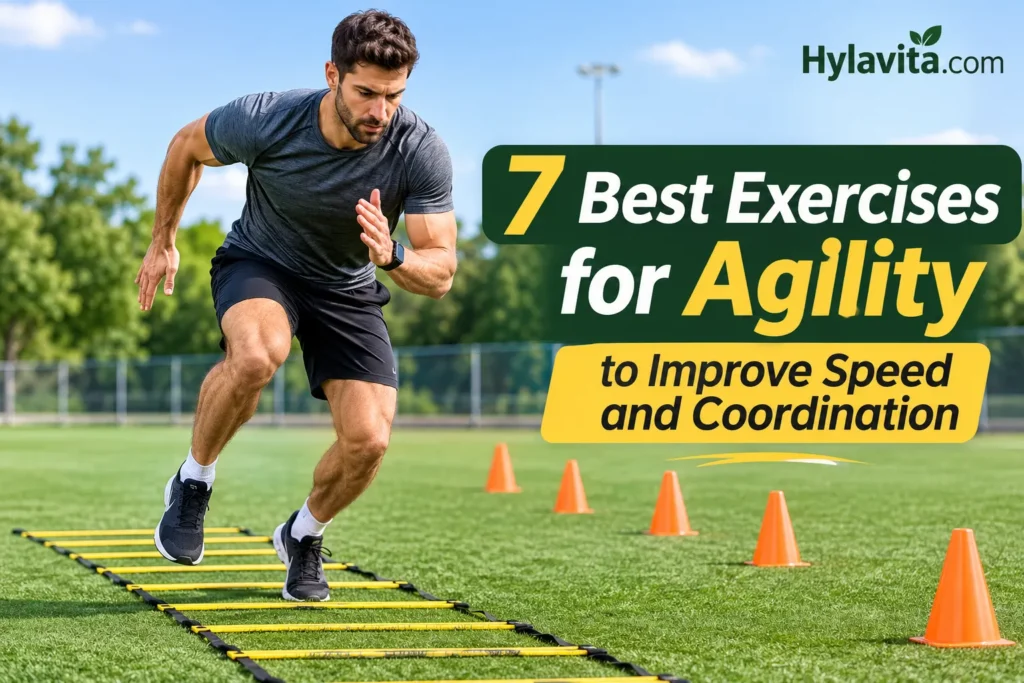
Ladder drills help improve footwork, coordination, and quick movements. You need an agility ladder placed flat on the ground. Start by standing at one end of the ladder. Step through each square using quick and controlled foot movements. You can try one-foot steps, two-foot steps, or lateral steps. Keep your eyes forward and maintain a steady body position. Avoid stepping on the ladder during each movement. Start slowly until you learn each footwork pattern. Regular practice can improve foot placement and movement control. These drills are useful for athletes and beginners.
2. Lateral Shuffle
The lateral shuffle trains your body to move quickly sideways. Start with your feet shoulder-width apart and knees slightly bent. Keep your chest upright and your body facing forward. Push off one foot and move sideways using short steps. Bring your other foot closer without crossing your legs. Continue moving in one direction, then return to your starting position. Keep your hips low and maintain good balance. This exercise helps develop lateral movement speed and control. It also trains muscles used during quick side-to-side movements. Practice slowly before increasing your movement speed.
3. Cone Drills
Cone drills help you practice quick turns and direction changes. Place three to five cones several steps apart. You can arrange them in a straight line or zigzag pattern. Start beside the first cone and move toward the next. Run around each cone while changing direction quickly. Keep your knees slightly bent during sharp turns. Take short steps when slowing down or changing direction. Try to maintain balance throughout the exercise. These drills help improve footwork and movement control. You can adjust cone distances as your skills improve.
4. High Knees
High knees are a simple exercise for quick leg movements. Start by standing tall with your feet hip-width apart. Keep your elbows bent and your arms relaxed. Lift one knee toward your waist while moving the opposite arm. Quickly switch legs and continue alternating between both sides. Land softly on the balls of your feet. Keep your chest upright and avoid leaning backward. Move at a comfortable pace while maintaining proper form. High knees train quick foot movements and running coordination. They also help prepare your body for faster exercises.
5. Shuttle Runs
Shuttle runs combine short sprints with quick direction changes. Mark two lines several meters apart on a flat surface. Start behind one line with your knees slightly bent. Sprint toward the opposite line as quickly as possible. Slow down before reaching the line and touch the ground. Turn around carefully and sprint back to your starting point. Keep your movements controlled during every turn. This exercise trains acceleration, stopping, and changing direction. It also develops speed and fitness for many sports. Start with shorter distances before increasing the challenge.
6. Box Jumps
Box jumps help develop explosive power in your lower body. You need a sturdy box with a suitable height. Stand in front of the box with your feet shoulder-width apart. Bend your knees and swing your arms backward. Jump onto the box using both feet together. Land softly with your knees slightly bent. Keep your feet fully supported on the box. Stand tall before stepping down carefully. Avoid jumping from a box that feels too high. This exercise develops jumping power and lower-body coordination. Focus on safe landings instead of jumping higher.
7. T-Drill
The T-drill trains your body to move in different directions. Place four cones in a T-shaped arrangement. Put one cone at the starting point and another ahead. Place two additional cones on either side of the middle cone. Start at the bottom cone and sprint toward the middle. Shuffle sideways to touch each outside cone. Return to the middle using lateral steps. Then move backward toward your starting position. Keep your body balanced during every direction change. This drill improves footwork and multidirectional movement control. It also helps athletes practice quick transitions between movements.
Tips to Improve Agility Safely
Always warm up before starting agility exercises or intense movements. A short warm-up prepares your muscles for physical activity. Focus on proper technique instead of rushing through exercises. Start with slower movements and increase your speed gradually. Wear comfortable athletic shoes that provide good support and grip. Choose a flat, dry, and non-slip training surface. Avoid exercising when the ground feels wet or unstable. Give your body enough rest between demanding training sessions. Stop exercising if you experience sharp pain or unusual discomfort. These simple steps can help you train safely and consistently.
Conclusion
The seven best exercises for agility can improve speed, balance, and coordination. Ladder drills, cone drills, and shuttle runs build better footwork. Other exercises help develop quick movements and lower-body power. Practice regularly and focus on proper technique. Start slowly and increase difficulty as your skills improve. With consistent training, you can develop better movement control and agility.
Hylavita’s suggestion to read
- Hollow Hold: Benefits, Proper Form, and How to Do It
- What Is a Tricep Press? Benefits, Types, and How to Do It
- 5 Easy Swim Workouts for Beginners (With Sets You Can Follow Today)
Disclaimer: This article provides general information about agility exercises and fitness. It is not a substitute for professional medical advice. Consult a healthcare professional before starting a new exercise routine. Stop exercising if you experience pain or discomfort.