
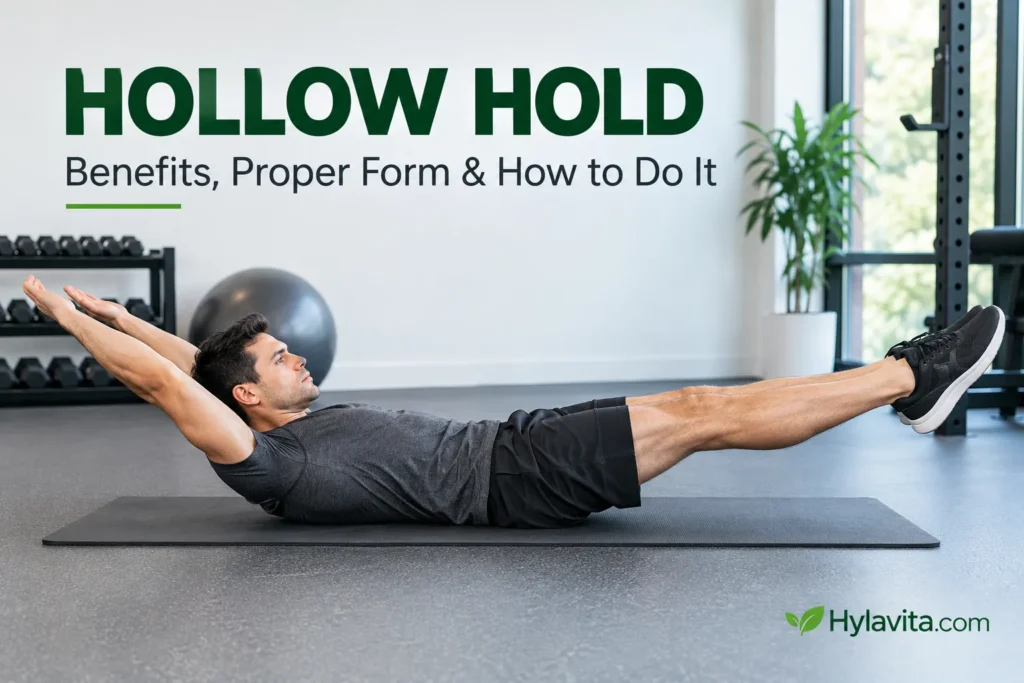
The hollow hold is a simple exercise that helps strengthen your core muscles. It uses your body weight and requires no special equipment. This exercise also improves balance, body control, and core stability. It may look easy, but holding the position takes effort. You need proper form to get the best results. Beginners can start with easier variations and build strength gradually. In this guide, you will learn how to do a hollow hold correctly. We will also cover its benefits, muscles worked, common mistakes, and useful tips.
What Is a Hollow Hold?
A hollow hold is a bodyweight exercise that targets your core muscles. You perform it while lying flat on your back. During the exercise, you lift your arms, shoulders, and legs slightly. Your lower back stays pressed firmly against the floor. This position creates a gentle curve through your body. The goal is to maintain this position without losing control. Your abdominal muscles work hard to keep your body stable. You do not need any equipment to perform this exercise. Beginners can start with bent knees and gradually progress. Regular practice can improve core strength and body control.
Benefits of the Hollow Hold Exercise
The hollow hold offers several benefits for your core and overall fitness. It strengthens important abdominal muscles and improves how your body controls movement. You can also use it to support other exercises and activities.
Strengthens Your Core Muscles
The hollow hold works several muscles around your abdomen. Your abdominal muscles help keep your lower back stable. Regular practice can improve core strength over time. A stronger core supports many daily movements and exercises.
Improves Body Stability and Control
This exercise teaches your body to maintain a steady position. Your core muscles work together to prevent unwanted movement. Better body control can help during workouts and physical activities. It also helps you maintain proper form during other exercises.
Supports Better Gymnastics Performance
Gymnasts often use the hollow body position during training. It helps them develop better body tension and control. These skills support movements like handstands, swings, and other gymnastics skills. Beginners can practice this position to build useful strength.
Builds Core Endurance
The hollow hold requires you to maintain one position for time. Your abdominal muscles work continuously throughout each hold. Regular practice can improve their ability to resist fatigue. Start with short holds and increase your time gradually. Always maintain proper form instead of chasing longer holds.
What Muscles Does the Hollow Hold Work?
The hollow hold mainly targets muscles around your abdomen and hips. These muscles work together to keep your body stable. Each muscle plays a different role during the exercise.
Rectus Abdominis
The rectus abdominis runs along the front of your abdomen. People commonly call these muscles the six-pack muscles. They help keep your torso curled during the hollow hold.
Transverse Abdominis
The transverse abdominis sits deep within your abdominal muscles. It helps support your spine and control your trunk. This muscle works to keep your middle section stable.
Obliques
Your obliques sit along both sides of your abdomen. They help control your trunk and resist unwanted movement. These muscles support stability throughout the hollow hold.
Hip Flexors
Your hip flexors sit around the front of your hips. They help lift and maintain your legs during this exercise. They work alongside your abdominal muscles to hold the position.
How to Do a Hollow Hold Correctly
Learning the correct hollow hold form helps you train safely and effectively. Follow these simple steps to perform the exercise properly.
Step 1: Lie Flat on Your Back
Lie on your back with your legs straight and arms overhead. Keep your arms close to your ears and relax your shoulders. Place your body comfortably on the floor.
Step 2: Press Your Lower Back Into the Floor
Tighten your abdominal muscles and gently tilt your pelvis backward. Press your lower back firmly against the floor. Avoid leaving a gap beneath your lower back.
Step 3: Lift Your Arms and Legs
Slowly lift your shoulders, arms, and straight legs off the floor. Keep your arms beside your ears and point your toes forward. Raise your legs only as low as your back position allows.
Step 4: Hold the Position
Keep your abdominal muscles tight throughout the exercise. Look toward your legs without pulling your neck forward. Breathe normally while maintaining a steady body position. Start with short holds and focus on proper form.
Step 5: Lower Your Body Slowly
Slowly lower your shoulders, arms, and legs toward the floor. Relax your abdominal muscles after returning to the starting position. Rest briefly before repeating the exercise.
Common Hollow Hold Mistakes to Avoid
Proper form helps you get better results from the hollow hold exercise. Some common mistakes can reduce its effectiveness and cause discomfort. Watch out for these errors during your workouts.
Arching Your Lower Back
Lifting your legs too low can cause your lower back to arch. This reduces proper core control and may cause back discomfort. Keep your lower back pressed firmly against the floor.
Incorrect Leg Position
Some people lower their legs beyond their current strength level. This makes it harder to maintain proper body position. Raise your legs higher if your lower back starts lifting.
Holding Your Breath
Holding your breath makes the exercise harder than necessary. Keep breathing slowly while maintaining your hollow hold position. Try steady breathing throughout each repetition.
Using Incorrect Body Position
Lifting your shoulders too high can create unnecessary neck tension. Avoid pulling your head forward or straining your neck. Keep your movements controlled and maintain comfortable body alignment.
Tips to Improve Your Hollow Hold
Improving your hollow hold takes regular practice and proper body control. Start slowly and focus on maintaining the correct position. These simple tips can help you make steady progress.
- Start With Easier Variations: Bend your knees if the full position feels difficult.
- Focus on Proper Form: Keep your lower back pressed against the floor.
- Practice Regularly: Add hollow holds to your core workouts consistently.
- Control Your Breathing: Breathe normally instead of holding your breath.
- Increase Holding Time Gradually: Add a few seconds as your strength improves.
- Avoid Rushing: Focus on controlled movements rather than longer holding times.
Remember, good form matters more than holding the position longer.
Frequently Asked Questions (FAQs)
How to Do a Hollow Body Hold Correctly?
Lie on your back and tighten your abdominal muscles. Press your lower back against the floor. Lift your arms, shoulders, and legs slightly. Hold the position while breathing normally.
What Is the 3-3-3 Rule for Workout?
The 3-3-3 workout rule has different meanings across fitness programs. It often refers to three exercises, three sets, and three repetitions. However, there is no single standard definition.
Which Is Harder, Plank or Hollow Hold?
Both exercises challenge your core muscles in different ways. Many people find full hollow holds harder because they require constant core tension. Difficulty depends on your strength and exercise experience.
Can I Do Hollow Hold Every Day?
You can practice hollow holds regularly if your body recovers well. However, beginners should start with two or three weekly sessions. Allow rest when your muscles feel tired or sore.
Conclusion
The hollow hold is a simple exercise that builds core strength and stability. It also improves body control and supports better movement. Focus on proper form instead of holding the position longer. Start with easier variations if you are a beginner. Practice regularly and increase your holding time gradually. With patience and consistency, you can improve your hollow hold performance.
Hylavita’s suggestion to read
- What Is a Tricep Press? Benefits, Types, and How to Do It
- How to Do Reverse Curls: A Beginner’s Step-by-Step Guide
- How to Do a Cable Pullover: A Beginner’s Step-by-Step Guide
Other
How to do a hollow body hold: a Hinge Health guide
Disclaimer: This article is for informational and educational purposes only. The hollow hold may not suit everyone, especially those with existing injuries or pain. Consult a qualified fitness professional before starting a new exercise routine. Stop exercising if you experience pain or discomfort.