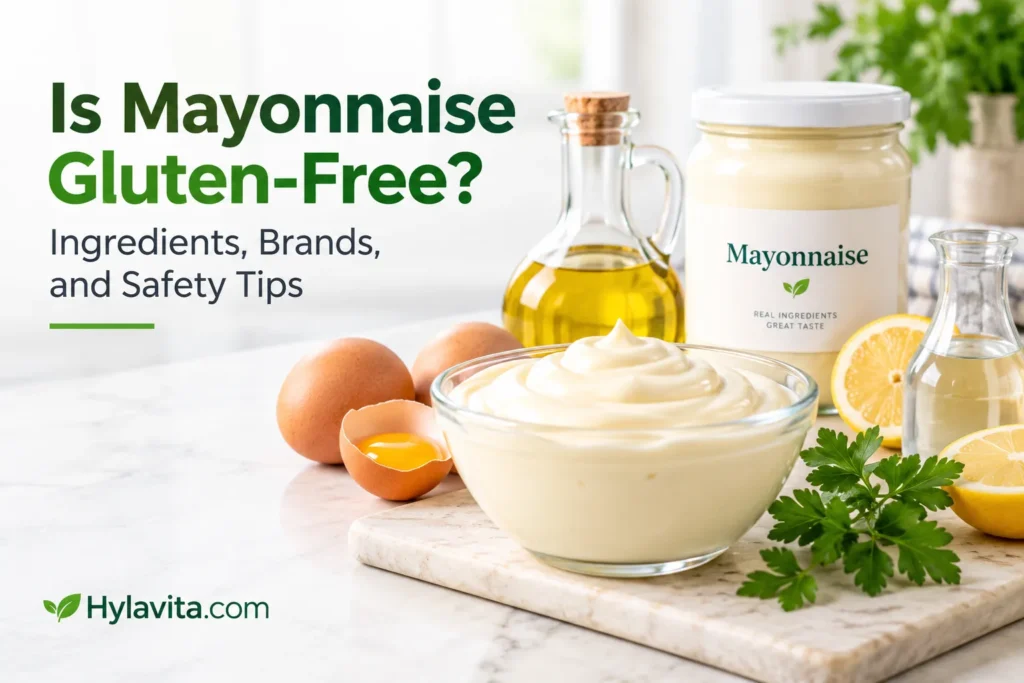
Mayonnaise is a popular condiment used in sandwiches, burgers, and salads. Its creamy texture and mild taste make many meals more enjoyable. If you follow a gluten-free diet, you may wonder about its ingredients. The good news is that traditional mayonnaise is usually gluten-free. It typically contains eggs, oil, vinegar, and seasonings. However, some brands may add ingredients that need closer attention. Flavored varieties can also contain different ingredients. In this guide, you’ll learn about mayonnaise ingredients, popular brands, and safety tips. You’ll also discover how to choose mayonnaise for a gluten-free diet.
Is Mayonnaise Gluten-Free?
Yes, traditional mayonnaise is naturally gluten-free. Most basic recipes use ingredients that don’t contain gluten. These ingredients include eggs, vegetable oil, vinegar, lemon juice, and salt. None of these ingredients naturally contains wheat, barley, or rye.
However, not every mayonnaise product has the same ingredients. Some manufacturers add flavorings, seasonings, or other ingredients. These additions may introduce gluten or create cross-contact risks. Flavored mayonnaise also needs extra attention because recipes can vary.
Most plain mayonnaise products are suitable for gluten-free diets. However, people with celiac disease should check product labels carefully. Look for clear gluten-free labeling whenever possible. If the ingredients or manufacturing details seem unclear, contact the manufacturer before buying.
What Ingredients Are in Mayonnaise?
Mayonnaise gets its creamy texture from a simple mixture of ingredients. Traditional recipes use eggs, oil, vinegar, and basic seasonings. However, commercial products may contain additional ingredients. These additions can affect their gluten-free status. Understanding the ingredients helps you make safer food choices.
Common Ingredients in Traditional Mayonnaise
Traditional mayonnaise usually contains eggs or egg yolks, vegetable oil, and vinegar. Eggs help combine the oil and liquid into a smooth mixture. Vegetable oil gives mayonnaise its rich texture and creamy consistency. Vinegar or lemon juice adds a slightly tangy taste. Salt and seasonings improve its overall flavor. Some recipes also include mustard for extra taste. These basic ingredients are naturally gluten-free.
Ingredients That May Contain Gluten
Some mayonnaise products contain added ingredients that need careful checking. Certain flavorings, sauces, and seasoning blends may contain gluten. Malt vinegar is another ingredient that generally contains gluten from barley. However, not every modified food ingredient contains gluten. Cross-contact can also happen during manufacturing or packaging. Always check product labels and gluten-free statements before buying.
Is Store-Bought Mayonnaise Gluten-Free?
Most store-bought mayonnaise products are naturally gluten-free. Manufacturers usually combine oil, eggs, vinegar, and other ingredients. They mix these ingredients to create a smooth, creamy condiment. However, recipes can differ between brands and product varieties.
Some manufacturers add mustard, spices, flavorings, or other ingredients. These additions may introduce gluten, depending on their sources. Flavored mayonnaise may also have different ingredients than regular versions. Manufacturing facilities can sometimes cause accidental gluten cross-contact.
Always read the ingredient list before purchasing mayonnaise. Check for wheat, barley, rye, and malt-based ingredients. Also, look for a clear gluten-free statement on the packaging. Remember that ingredients and manufacturing practices can change over time. If you have celiac disease, choose products with reliable gluten-free labeling. When information remains unclear, contact the manufacturer directly.
Popular Mayonnaise Brands and Their Gluten-Free Status
Many popular mayonnaise brands offer products made without gluten ingredients. However, ingredients and labeling can vary between products. Here are some well-known brands and their gluten-free information.
Hellmann’s Mayonnaise
Hellmann’s Real Mayonnaise is gluten-free, according to its official website. It uses ingredients such as oil, eggs, vinegar, and seasonings. The brand also offers several other mayonnaise varieties. Always check individual product labels before purchasing. Hellmann’s+1
Duke’s Mayonnaise
Duke’s confirms that its mayonnaise is gluten-free on its official website. Its traditional recipe includes soybean oil, egg yolks, vinegar, and seasonings. It also offers light and flavored varieties. Check each product’s packaging for updated ingredient information. Duke’s Mayo+1
Best Foods Mayonnaise
Best Foods Real Mayonnaise is officially listed as gluten-free. Its ingredients include soybean oil, eggs, vinegar, and seasonings. The brand also sells different mayonnaise varieties. Check the packaging to confirm each product’s gluten-free status. Best Foods US
Kraft Mayonnaise
Kraft offers several mayonnaise products, including regular and flavored varieties. Some varieties are made without gluten-containing ingredients. However, recipes can differ between products. Always read the ingredient list and check current packaging before buying.
Other Gluten-Free Mayonnaise Options
You can also explore brands like Chosen Foods and Blue Plate. Some of their mayonnaise products use naturally gluten-free ingredients. Product recipes and manufacturing practices may change. Always verify the specific product before adding it to your diet.
Can People with Celiac Disease Eat Mayonnaise?
Yes, people with celiac disease can usually eat gluten-free mayonnaise. However, they must check ingredients before choosing any product. Celiac disease requires strict avoidance of gluten-containing foods. Even small amounts of gluten can trigger an immune reaction.
Traditional mayonnaise usually contains naturally gluten-free ingredients. These include eggs, vegetable oil, vinegar, and salt. However, some commercial varieties may contain added gluten ingredients. Always read the ingredient list and check product labels carefully.
Look for products carrying a reliable gluten-free certification. This labeling provides extra confidence about gluten safety standards. Also, consider possible cross-contact during manufacturing and packaging. Shared equipment may expose mayonnaise to gluten-containing ingredients. If product information seems unclear, contact the manufacturer directly. Choosing clearly labeled products can make shopping easier and safer.
Frequently Asked Questions
Which Brands of Mayonnaise Are Gluten-Free?
Many popular brands offer mayonnaise without gluten-containing ingredients. These include Hellmann’s, Duke’s, Best Foods, and some Kraft varieties. However, ingredients can vary between products. Always check the packaging before purchasing.
Is Mayonnaise Okay for a Gluten-Free Diet?
Yes, most traditional mayonnaise is suitable for gluten-free diets. It usually contains eggs, oil, vinegar, and seasonings. These ingredients are naturally gluten-free. However, flavored varieties may contain additional ingredients. Always check product labels for gluten warnings and cross-contact information.
What’s the Healthiest Mayonnaise You Can Eat?
The healthiest mayonnaise depends on your dietary needs and preferences. Look for products with simple ingredients and suitable serving sizes. Some options use olive oil or avocado oil. However, these products still contain calories and fat. Compare nutrition labels before choosing your preferred mayonnaise.
Is Heinz Mayonnaise Gluten-Free?
Heinz mayonnaise products may differ in ingredients and labeling. Check the specific product’s packaging for gluten-containing ingredients. Look for an official gluten-free statement when available. If you have celiac disease, contact Heinz for confirmation. This helps you make a safer choice.
Conclusion
Mayonnaise is generally gluten-free because traditional recipes use naturally gluten-free ingredients. However, some products may contain added ingredients or cross-contact risks. Always check ingredient lists and packaging before making your choice. If you have celiac disease, choose clearly labeled gluten-free products. Pay attention to flavored varieties and changing product recipes. The right mayonnaise can fit comfortably into your gluten-free diet.
Hylavita’s suggestion to read
- Is Butter Gluten Free? What You Need to Know
- Are All Corn Tortillas Gluten-Free? Ingredients and Safety Explained
- Is Candy Gluten-Free? A Guide to Safe Candy Choices
Disclaimer: This article is for informational purposes only and does not replace professional medical advice. Ingredients and manufacturing practices may vary between mayonnaise brands. Always check product labels for gluten-containing ingredients and cross-contact warnings. Consult a healthcare professional if you have celiac disease or specific dietary concerns.