
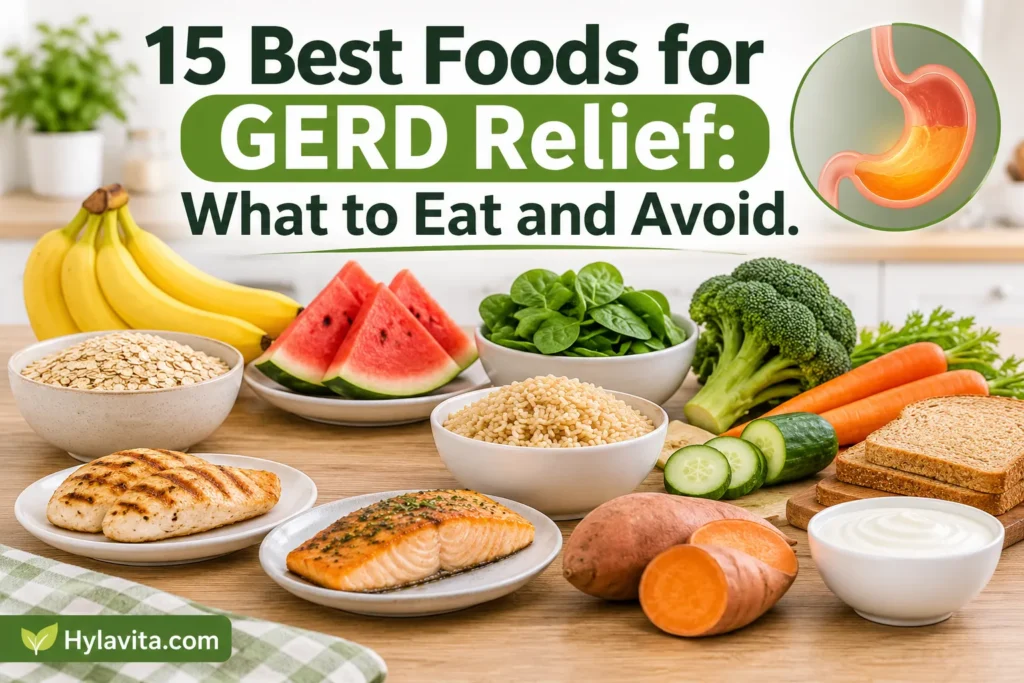
GERD can cause heartburn, chest discomfort, and acid reflux. Certain foods may help manage these uncomfortable symptoms. Choosing the right meals can make eating more comfortable. GERD relief foods are usually mild, nutritious, and lower in fat. However, some foods may trigger symptoms in certain people. This guide covers 15 foods that may suit people with GERD. It also explains which foods to limit and avoid. You will learn simple eating habits that may help. Remember, food triggers vary from person to person. Finding your triggers can help you manage GERD better.
What Is GERD?
GERD stands for gastroesophageal reflux disease. It happens when stomach contents repeatedly flow back into the esophagus. The esophagus is the tube that carries food toward your stomach. A muscle called the lower esophageal sphincter helps prevent this backflow. When it becomes weak or relaxes too often, reflux can occur. This allows stomach acid to irritate the esophagus. Common symptoms include heartburn, chest discomfort, and sour-tasting regurgitation. Some people also experience difficulty swallowing or a persistent cough. Frequent reflux can damage the esophagus without proper treatment.
15 Best Foods for GERD Relief
Choosing suitable foods may help some people manage GERD symptoms. Many people tolerate foods that are mild, nutritious, and lower in fat. However, no single food works for everyone. Your personal food triggers may differ from others. Here are 15 foods worth considering when planning GERD-friendly meals.
1. Oatmeal
Oatmeal is a nutritious breakfast choice for many people with GERD. It contains soluble fiber, which supports healthy digestion. Its low-fat content also makes it a practical meal option. Unlike greasy breakfast foods, plain oatmeal contains very little fat. You can prepare it with water or low-fat milk. Add banana slices for natural sweetness. Avoid adding too much butter, chocolate, or high-fat cream. Choose plain oatmeal without irritating ingredients.
2. Bananas
Bananas are naturally low in acid and easy to include. Their soft texture makes them a convenient snack. They also provide fiber, potassium, and vitamin B6. Many people with acid reflux tolerate bananas well. You can eat one between meals or add it to oatmeal. However, individual reactions can differ. Pay attention to how your body responds after eating them.
3. Melons
Watermelon and cantaloupe are relatively low-acid fruits. Their mild flavor makes them suitable for many people with GERD. Both fruits also contain plenty of water. They provide vitamins and other useful nutrients. You can enjoy fresh melon slices as a snack. Add them to breakfast or a simple fruit bowl. Avoid eating large portions if they cause discomfort.
4. Green Vegetables
Spinach, broccoli, and green beans provide fiber and essential nutrients. These vegetables contain vitamins, minerals, and antioxidants. Their naturally low-fat content makes them useful meal ingredients. You can steam, boil, or lightly cook them. Avoid preparing them with excessive butter or oil. Some people experience gas after eating broccoli. Choose vegetables according to your personal tolerance.
5. Ginger
Ginger has a long history of use for digestive discomfort. Some people use it to manage nausea and stomach upset. However, research does not confirm that ginger treats GERD. Large amounts may actually worsen heartburn in some people. You can add small amounts of fresh ginger to meals. Ginger tea is another option if you tolerate it. Avoid concentrated ginger products if they trigger symptoms.
6. Brown Rice
Brown rice provides carbohydrates and dietary fiber. Its fiber content is higher than that of white rice. It can help make meals more filling and balanced. Brown rice also contains magnesium and other nutrients. You can serve it with grilled chicken or cooked vegetables. Keep sauces and added fats moderate. Plain brown rice is a simple option for GERD-friendly meals.
7. Lean Chicken
Skinless chicken provides protein without much fat. Lower-fat meals may help some people manage reflux symptoms. Chicken also supplies nutrients that support normal body functions. Choose skinless chicken breast for a leaner option. Bake, grill, or poach it instead of frying. Avoid heavy sauces, spicy seasonings, and excess oil. Serve it with rice and cooked vegetables.
8. Fish
Fish provides protein and several important nutrients. Many fish varieties contain less fat than fatty meat cuts. Fatty fish also provide omega-3 fatty acids. However, higher-fat fish may not suit everyone with GERD. Choose portions that match your personal tolerance. Bake, grill, or steam fish instead of deep-frying. Use mild seasonings and avoid spicy sauces.
9. Egg Whites
Egg whites provide high-quality protein with very little fat. They contain fewer calories than whole eggs. Most of an egg’s fat is found in its yolk. This makes egg whites a useful lower-fat breakfast choice. You can boil them or prepare a simple egg-white omelet. Add spinach or other vegetables if tolerated. Avoid using excessive butter or cooking oil.
10. Sweet Potatoes
Sweet potatoes provide fiber, carbohydrates, and important nutrients. They contain beta-carotene, which the body converts into vitamin A. Their natural sweetness makes them easy to enjoy. You can bake, boil, or steam sweet potatoes. Serve them alongside lean protein and cooked vegetables. Avoid deep-frying them or adding heavy toppings. Their simple preparation makes them suitable for balanced meals.
11. Carrots
Carrots contain fiber, beta-carotene, and other nutrients. Beta-carotene helps the body produce vitamin A. You can enjoy carrots raw, steamed, or boiled. Cooked carrots may feel easier to eat for some people. Their mild taste also makes them easy to add to meals. Try adding them to soups or rice dishes. Choose the preparation method that suits your digestion.
12. Cucumber
Cucumber contains plenty of water and very little fat. It also has a mild flavor and relatively low acidity. These qualities make it a suitable snack for many people. You can add fresh cucumber slices to salads. It also works well alongside simple meals. Peel it if the skin bothers your digestion. Remember that individual food tolerance can vary.
13. Lettuce
Lettuce is a mild vegetable with very little fat. It also provides water, fiber, and small amounts of vitamins. You can use it in simple salads or sandwiches. Pair it with cucumber and lean chicken for lunch. Choose mild dressings instead of spicy or creamy options. Avoid ingredients that you know trigger your reflux. Lettuce offers an easy way to add vegetables to meals.
14. Whole-Grain Bread
Whole-grain bread provides fiber and several important nutrients. It contains more fiber than many refined white breads. Fiber helps support regular bowel movements and healthy digestion. You can enjoy whole-grain toast for breakfast. Pair it with egg whites or a small amount of tolerated spread. Avoid adding chocolate, heavy butter, or spicy toppings. Check the ingredients before choosing packaged bread.
15. Low-Fat Yogurt
Low-fat yogurt provides protein, calcium, and other nutrients. Its lower fat content may suit some people with GERD. However, dairy products affect people differently. Some people tolerate yogurt without problems. Others experience discomfort after eating dairy products. Choose plain, low-fat yogurt without added chocolate or rich toppings. Start with a small serving and observe your reaction.
Foods to Avoid or Limit With GERD
Some foods can trigger acid reflux or make symptoms worse. However, food triggers can vary from person to person. Citrus fruits, such as oranges and lemons, may cause discomfort. Tomato-based sauces and foods can also trigger symptoms. Spicy foods and hot sauces may irritate sensitive digestive systems. Chocolate and peppermint can worsen reflux in some people. Coffee and other caffeinated drinks may also trigger heartburn. Fried foods and high-fat meals can increase reflux symptoms. Carbonated drinks may cause bloating and increase discomfort. Alcohol can also worsen symptoms in some people. Try limiting these foods if they trigger your symptoms. Keeping a food diary can help identify your personal triggers. You do not need to avoid every food unnecessarily. Focus on foods that your body tolerates well.
Simple Eating Habits That May Help Manage GERD
Your eating habits can affect how often GERD symptoms appear. A few simple changes may help reduce discomfort. Try eating smaller meals throughout the day. Large meals can increase stomach pressure and worsen reflux. Eat slowly and chew your food properly. Avoid overeating, even when you enjoy your favorite meals. Stay upright after eating instead of lying down. Wait at least three hours before going to bed. This gives your stomach time to empty. Pay attention to foods that trigger your symptoms. Keep a food diary to track meals and discomfort. These small habits may help you manage GERD more comfortably.
Sample One-Day GERD-Friendly Meal Plan
A balanced meal plan can help you choose suitable foods. Here is a simple one-day GERD-friendly meal plan.
- Breakfast: Enjoy plain oatmeal with sliced banana. Prepare it with water or low-fat milk.
- Morning Snack: Eat a small bowl of fresh watermelon or cantaloupe.
- Lunch: Have grilled skinless chicken with brown rice and cooked vegetables.
- Afternoon Snack: Choose plain, low-fat yogurt if you tolerate dairy.
- Dinner: Enjoy baked fish with sweet potatoes and steamed green beans.
Drink water throughout the day and eat comfortable portions. Avoid heavy sauces, excess oil, and spicy seasonings. Adjust these meals according to your personal food triggers. This plan offers general ideas, not a medical diet.
Frequently Asked Questions
What Is the Best Food to Eat for GERD?
There is no single best food for everyone with GERD. Oatmeal, bananas, melons, and green vegetables may suit many people. Choose foods that do not trigger your symptoms.
Are Bananas Good for Acid Reflux?
Yes, many people with acid reflux tolerate bananas well. They are naturally low in acid and provide dietary fiber. However, individual reactions can vary.
Is Oatmeal Good for GERD?
Yes, oatmeal can be a suitable choice for people with GERD. It contains fiber and has very little fat. Enjoy plain oatmeal without heavy cream or chocolate toppings.
Can Drinking Water Help With Acid Reflux?
Drinking water helps maintain hydration and supports normal digestion. It may help clear small amounts of acid from your esophagus. However, water does not treat GERD. Drink moderate amounts throughout the day. Avoid drinking large amounts quickly if they worsen your symptoms.
Conclusion
Choosing the right foods may help you manage GERD symptoms. Oatmeal, bananas, vegetables, and lean proteins are useful options. However, different foods affect people in different ways. Pay attention to your body’s reactions and identify personal triggers. Eat balanced meals and avoid foods that worsen your symptoms. Simple eating habits can also support better symptom management. If symptoms continue or become severe, consult a healthcare professional. Proper guidance can help you manage GERD safely.
Hylavita’s suggestion to read
- Is Peanut Butter Gluten Free? Nutrition, Ingredients, and Facts
- How Many Calories Are in Olive Oil? Nutrition Facts and Health Benefits
- Are Peaches Good for You? Health Benefits and Nutrition Facts
Disclaimer: This article is for informational and educational purposes only. It does not replace professional medical advice, diagnosis, or treatment. GERD symptoms and food triggers can vary between individuals. Consult a qualified healthcare professional for personalized dietary guidance and treatment.